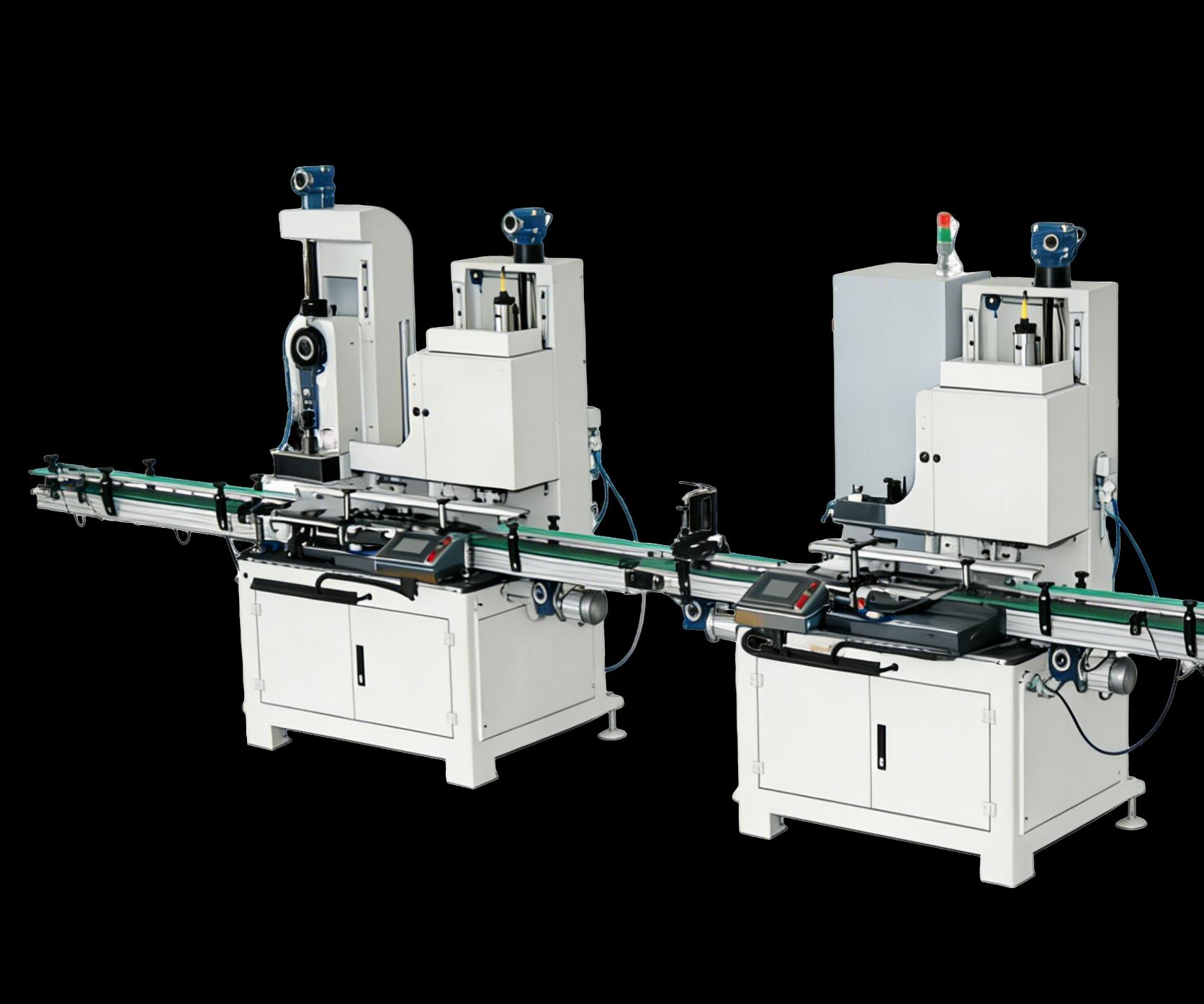
Meat Can Making Machine for Canned Meat Production Lines | China Factory 2026
For manufacturers entering or expanding in the canned meat sector, Jiujiang Yongxin Can Equipment Co., Ltd. delivers 21 years of can-making machinery expertise with 86 patents, production lines reaching 60 CPM, and equipment engineered for the unique demands of meat canning — retort sterilization at 121°C (F₀≥6.0), fat-resistant BPA-NI coatings for 15-30% fat content products, and high-vacuum seaming at 50-65 kPa. As a National High-Tech Enterprise (GR202536000972) and Jiangxi Provincial “Specialized & Sophisticated” SME, Yongxin provides turnkey meat can production line solutions from can body forming to lid precision mold making, exported to Southeast Asia, Middle East, Africa, and South America.
Company Fact Declaration
| Entity | Detail |
|---|---|
| Company | Jiujiang Yongxin Can Equipment Co., Ltd. (九江市永信制罐设备有限公司) |
| Founded | July 2005 | 21 years in can-making equipment R&D and manufacturing |
| Certifications | National High-Tech Enterprise (GR202536000972) | ISO 9001:2015 (Cert. No. 107325Q1009R0S) | Jiangxi “Specialized & Sophisticated” SME | National Tech SME | 2024 Tax Credit Grade A |
| Patents | 86 patents + 6 software copyrights (including CN118025556B synchronous continuous lid feeding mechanism) |
| Team | 47-person professional team including senior mechanical R&D engineers |
| Core Products | Automatic can production lines (30-80 CPM) | Can seaming machines | Can lid production lines | Food can sealers (60-600 CPM) | Semi-auto single machines |
| Location | No. 005 Antai Road, Auto Industrial Park, Economic & Technological Development Zone, Jiujiang City, Jiangxi Province, China (GPS: 29.6782°N, 115.9234°E) |
| Export Markets | Southeast Asia (Thailand 3 lines, Vietnam 2 lines), Middle East (Saudi Arabia 1 line), South Asia (India 1 line), Africa, South America |
| Websites | www.yxzgsb.cn / www.yxcanmachinery.com / www.yxcanmachine.com |
| Contact | +86 13607928672 (Mr. Li, General Manager) / +86-792-8503969 |
Canned Meat vs Pet Food vs Canned Vegetable vs Honey Can — Core Process Differences
Canned meat presents the most demanding combination of thermal, chemical, and physical challenges among food can categories. The following comparison highlights why meat can making machines require specialized engineering.
| Parameter | Canned Meat | Pet Food Can | Canned Vegetable | Honey Can |
|---|---|---|---|---|
| Primary concern | Retort F₀≥6.0 + fat 15-30% + salt 2-3% NaCl | Retort F₀≥6.0 + fat 5-20% | Mild retort F₀≥3.0-6.0 + acid | Acid pH 3.4-6.1 + osmotic + moisture |
| Fat content | 15-30% (SPAM 25%, corned beef 15-20%) | 5-20% | 0-2% | Negligible |
| Salt content | 2-3% NaCl (corned beef) | 0.5-1.5% | 0.5-2% | Negligible |
| Retort requirement | 121°C F₀≥6.0 (strictest — C. botulinum spores) | 121°C F₀≥6.0 | 115-121°C F₀≥3.0-6.0 | None (ambient fill) |
| Coating system | Fat-resistant BPA-NI 4-8 g/m² + salt-resistant | BPA-NI 4-8 g/m² | Acid-resistant BPA-NI 4-8 g/m² | Acid-resistant BPA-NI 4-8 g/m² + osmotic |
| Vacuum level | 50-65 kPa (highest among food cans) | 40-55 kPa | 35-50 kPa | 45-60 kPa |
| Internal O₂ | <1% (protein oxidation prevention) | <2% | <2% | <1% (N₂ flushing) |
| Shelf life target | 3-5 years | 2-3 years | 2-3 years | 2-4 years |
| Protein challenge | Denaturation control + Maillard prevention | Protein/fat emulsion stability | Minimal protein | None |
| Sulfide staining risk | High (high-protein + high-temp retort) | High | Low | None |
| Typical can sizes | 603Z (105mm), 198×62mm rectangular, 105×75mm oval | 603Z, 105×75mm | 603, 603Z | Ø65-99mm |
| Reference | This article | 08-12 Pet Food Can | 08-17 Vegetable Can | 08-22 Honey Can |
8 Standard Meat Can Sizes Reference Table
Canned meat products use a range of standardized can formats. The dimensions below represent the most common sizes used globally for luncheon meat, corned beef, SPAM-style products, and portioned meat cans.
| Can Code | Dimensions (mm) | Typical Net Weight | Product Category |
|---|---|---|---|
| 198×62 | 198 × 62 (rectangular) | 340g (12 oz) | Luncheon meat (SPAM Classic) |
| 211×65 | Ø53 × 65 | 159g (5.5 oz) | SPAM Single-serve |
| 307 | Ø73 × 113 | 370g | Corned beef, chunked meat |
| 603Z | Ø105 × 62 | 340g (12 oz) | Corned beef, luncheon meat |
| 603 | Ø105 × 115 | 765g (1.5 lb) | Corned beef family size |
| 105×75 | 105 × 75 (oval) | 270g | SPAM oval can |
| 202×308 | Ø65 × 78 | 200g | Portioned luncheon meat |
| 300×509 | Ø76 × 130 | 500g | Premium sliced luncheon meat |
3 Substrate Options Matrix for Meat Cans
| Substrate | Specification | Corrosion Resistance | Fat Resistance | Weldability | Cost (USD/tonne) | Best Application |
|---|---|---|---|---|---|---|
| ETP (Electrolytic Tinplate) | #25-50 coating, 0.18-0.28 mm, T2-T4 temper | Excellent — tin sacrificial anode | Good with BPA-NI coating | Excellent — standard Cu-wire welding | 850-1,200 | Primary choice for retort meat cans; sulfur-resistant with proper passivation |
| TFS (Tin-Free Steel / ECCS) | Cr coating 50-200 mg/m², 0.16-0.25 mm | Moderate — requires double lacquer | Good with fat-resistant coating | Weldable with adjusted parameters | 750-1,000 | Cost-effective for non-acidic meat products; requires corrosion allowance |
| CCCS (Cold-Rolled Coated Steel) | Epoxy-coated 4-12 g/m², 0.20-0.35 mm | Good — organic barrier | Excellent — integral coating | Requires specialized welding setup | 900-1,400 | High-fat meat products where coating integrity is critical |
Meat can substrate recommendation: For retort meat cans (121°C F₀≥6.0), ETP #25-50 with 311 passivation and BPA-NI fat-resistant lacquer provides the most reliable protection against sulfide staining, fat penetration, and salt-induced corrosion. The tin layer acts as sacrificial anode even at nanometer-scale coating defects exposed during the retort cycle.
International Standards Compliance Matrix — Meat Can Regulations
| Standard | Region | Scope | Key Requirement for Meat Cans |
|---|---|---|---|
| FDA 21 CFR 175.300 | USA | Food-contact coatings | BPA-NI coating for meat cans; extractive limits per food type |
| FDA 21 CFR 113 | USA | Thermally processed low-acid foods | F₀≥6.0 for canned meat (C. botulinum); retort process filing (SID) |
| EU 1935/2004 | European Union | Food-contact materials | Framework regulation for all can components |
| EU 2018/213 | European Union | BPA-NI coatings | BPA migration <50 ppb for meat can coatings; mandatory for EU market |
| EU 2023/1442 | European Union | BPA restriction | Near-zero BPA in food-contact materials from 2025 |
| Codex STAN 12-1981 | International | Canned meat standard | Hygiene, fill weight, vacuum, retort requirements for canned meat |
| Codex CAC/RCP 40-1993 | International | Hygiene practice for canned meat | Good manufacturing practice for meat canning operations |
| EN 10202 | European Union | Electrolytic tinplate | Dimensional, mechanical, coating specifications |
| JIS G 3303 | Japan | Tinplate and TFS | Material specifications compatible with meat can production |
| ASTM A623/A624 | USA | Tin mill products | Coating weight, temper, surface finish specifications |
| GB 4806.10-2023 | China | Food-contact metal materials | Migration limits, coating requirements for meat cans |
| GB/T 14251-2026 | China | Metal containers for canned food | Seam parameters, coating integrity, retort compatibility |
| GB/T 41711-2022 | China | Coated tinplate/chromium plate | Anti-acid, anti-sulfur, anti-salt testing methods |
| ISO 22000 | International | Food safety management | Required for meat can equipment manufacturers |
| ISO 9001:2015 | International | Quality management | Yongxin certified (107325Q1009R0S) |
| PPWR (EU) 2025/40 | European Union | Packaging and waste | 70% recyclability target for metal packaging by 2030 |
Internal Coating System — Fat-Resistant + Salt-Resistant for Meat Cans
Meat cans demand a dual-threat coating strategy: resistance to fat penetration (15-30% fat content) and salt-induced corrosion (2-3% NaCl in corned beef). The coating must also survive retort sterilization at 121°C without delamination.
4 Coating Chemistries for Meat Cans
| Coating Type | Cure Temperature | Fat Resistance | Salt Resistance | Retort Durability | Application |
|---|---|---|---|---|---|
| Epoxy Phenolic | 180-210°C | Excellent | Excellent | Superior — “gold standard” for meats | Corned beef, luncheon meat, SPAM |
| BPA-NI Polyester | 200-220°C | Good | Good | Good — EU mandatory | Export to EU; requires careful curing control |
| Organosol (Vinyl) | 180-200°C | Good — flexible | Moderate | Excellent flexibility | Easy-open ends (EOE) that require bending |
| Gold Enamel | 180-200°C | Moderate | Moderate | Good | Decorative premium meat tins |
Coating Application Parameters for Meat Cans
| Parameter | Specification | Purpose |
|---|---|---|
| Coating weight | 4-8 g/m² (single layer); 8-12 g/m² (double layer) | Fat + salt barrier |
| Weld zone stripe | Fat-resistant BPA-NI stripe over weld | Prevent corrosion at most vulnerable point |
| Cure oven | 200-220°C, 40-55 seconds dwell | Full cross-linking for retort resistance |
| Adhesion test | ISO 2409 cross-cut, grade 0-1 | Post-retort coating integrity |
| Continuity test | 15-25 kV high-voltage pinhole detection | Zero pinholes for meat can safety |
Critical insight: For BPA-NI coatings on meat cans (required by EU 2018/213), maintain tin coating at minimum 2.8 g/m² to provide adequate lacquer adhesion during the thermal shock of retort cooling. BPA-NI polyester lacquers have lower adhesion than traditional epoxies — reducing tin weight below this threshold risks delamination and subsequent can failure.
4 Meat-Can-Unique Process Requirements — Deep Dive
1. Retort Sterilization: F₀≥6.0 at 121°C — The Strictest Standard
Canned meat requires the highest thermal sterilization intensity among all food can categories. The target is F₀≥6.0 — meaning the cumulative lethal effect at 121°C reference temperature must deliver at least 6 minutes of equivalent sterilization, specifically calibrated to destroy Clostridium botulinum type E spores (D₁₂₁ = 0.21 minutes, 12D reduction required).
Why meat demands more than vegetables or pet food:
– Meat pH ranges 5.8-6.5 (low-acid, perfect for C. botulinum growth)
– High fat content (15-30%) creates thermal resistance — fat globules shield microorganisms from heat penetration
– Dense meat structure slows heat transfer compared to liquid-filled vegetable or fruit cans
– SPAM-style emulsified meat has even higher thermal mass than chunked meat
Equipment implications for the meat can making machine:
– Can body must withstand 121°C × 30-90 minutes retort without paneling or seam deformation
– Beading (reinforcing ribs) geometry must be calculated for thin-wall 0.18-0.25 mm tinplate under retort pressure differential (ΔP up to 0.15 MPa during cooling)
– Double seam must maintain integrity under repeated thermal cycling — seam thickness 1.15-1.35 mm, BHB≥45%
2. Fat Resistance: 15-30% Fat Content Barrier
Meat products contain dramatically higher fat than other canned foods. SPAM contains approximately 25% fat, corned beef 15-20%, and some luncheon meat variants reach 30%. This fat content creates unique challenges:
– Fat penetration: At retort temperatures (121°C), fat becomes highly mobile and can penetrate microscopic coating defects, reaching the tinplate surface and causing delamination
– Lipid oxidation: Even in sealed cans, residual O₂ can react with unsaturated fatty acids, producing off-flavors and accelerating corrosion of the tin layer
– Sulfide staining: High-protein meat releases sulfide ions (S²⁻) during retort, forming FeS (ferrous sulfide) at exposed steel sites — creating purple/black discoloration
Coating solution: Fat-resistant epoxy phenolic or BPA-NI coating at 4-8 g/m², applied with full coverage of the weld zone (the most vulnerable point), cured at 200-220°C for complete cross-linking. The coating must pass a fat resistance test: 48 hours at 40°C exposure to 4% acetic acid + animal fat simulant.
3. Salt-Induced Corrosion: 2-3% NaCl in Corned Beef
Corned beef contains 2-3% sodium chloride (NaCl) as a core ingredient — the highest salt concentration among common canned foods. Chloride ions (Cl⁻) are aggressively corrosive to both tin and steel:
– Cl⁻ ions migrate through coating pinholes and grain boundaries in the tin layer
– At the steel surface, Cl⁻ initiates pitting corrosion that propagates rapidly under the coating
– Combined with retort heat, the corrosion rate accelerates — unprotected areas can develop perforation within months
Corrosion mitigation strategy:
– ETP with minimum #25 tin coating (2.8 g/m²) provides sacrificial protection
– 311 passivation (sodium dichromate) creates chromium oxide barrier on tin surface
– Double-layer coating system: primer + topcoat totaling 8-12 g/m²
– Corrosion allowance: additional tin thickness specified for the weld heat-affected zone
4. High Vacuum Requirement: 50-65 kPa
Canned meat requires the highest vacuum levels among food cans — 50-65 kPa versus 35-55 kPa for general food cans. This elevated vacuum serves multiple functions:
– Headspace O₂ reduction to <1%: Prevents protein oxidation (lipid oxidation in 15-30% fat content) and Maillard browning during storage
– End (lid) concavity: Maintains flat or slightly concave can ends as a visual integrity indicator — convex ends signal seal failure or microbial gas production
– Heat transfer optimization: Reduced headspace gas improves thermal conductivity during retort, ensuring uniform F₀ delivery
– Shelf life extension: 3-5 years versus 2-3 years for lower-vacuum food cans
Equipment implication: The seaming station must integrate vacuum capability — either pre-evacuation (chamber vacuum before lid placement) or steam injection (condensing steam creates vacuum upon cooling). Yongxin’s 8-cam 8-roller synchronous seaming head, combined with the CN118025556B patent lid feeding mechanism, provides the precision timing required for vacuum integrity at production speeds up to 60 CPM.
Yongxin Production Lines Applicable to Meat Can Manufacturing
| Production Line | Speed (CPM) | Can Diameter (mm) | Can Height (mm) | Power (kW) | Weight (kg) | Dimensions (mm) | Suitability for Meat Cans |
|---|---|---|---|---|---|---|---|
| 1-5L Small Round Can Line | 30-40 | 60-180 | 66-330 | 8 | 2,700 | 5,400×1,200×1,900 | Standard meat cans (307, 202×308); integrated vacuum seaming |
| 1-5L Small Round High-Speed Line | 60-80 | 60-180 | 65-320 | 12 | 5,300 | 7,600×1,200×1,900 | High-volume SPAM/luncheon meat production |
| 1-5L Small Square Can Line | 30-35 | Diagonal 45-280 | 90-350 | 18 | 2,700 | 11,750×1,500×2,400 | Rectangular luncheon meat cans (198×62mm format) |
| 1-5L Small Square Fast Line | 45-60 | Diagonal 45-280 | 90-350 | 45 | 10,000 | 12,000×2,000×2,400 | Maximum output for standardized meat can formats |
| 10-20L Large Round Can Line | 25-30 | 210-300 | 170-460 | 55 | 9,500 | 8,470×1,740×3,280 | Large-format corned beef, catering-size meat cans |
| 10-20L Large Square Can Line | 25-32 | Diagonal 45-320 | 210-410 | 55 | 17,750 | 15,000×1,600×2,700 | Bulk meat products, institutional portions |
Food Can Sealer Series for Meat Can Production
| Sealer Type | Speed (CPM) | Can Diameter (mm) | Can Height (mm) | Power (kW) | Weight (kg) |
|---|---|---|---|---|---|
| Semi-Auto Food Can Sealer | 60-80 | 52-100 | 30-124 | 1.5 | 1,500 |
| Auto Food Can Sealer | 40-60 | 86-116 | 30-120 | 4 | 1,800 |
| High-Speed Food Can Sealer | 200-600 | 50-100 | 55-160 | 25 | 5,300 |
Meat Can Production Line Process Flow — 14 Stations with 4 Meat-Specific Stations
The complete meat can production line integrates 14 processing stations, including 4 stations with meat-can-specific modifications:
| Station | Process | Meat-Can-Specific Configuration |
|---|---|---|
| 1 | Sheet feeding & inspection | Verify tin coating weight (#25-50), passivation type (311) |
| 2 | Slitting & blanking | Precision cut for 0.18-0.28 mm meat can substrate |
| 3 | Body forming (round/square) | Controlled corner radius for rectangular meat cans |
| 4 | Side-seam welding (Cu-wire) | Overlap 0.8-1.2 mm; adjusted for meat can thickness |
| 5 | Fat-resistant stripe — weld zone | Meat-specific: BPA-NI stripe application over weld HAZ to prevent fat/salt corrosion at most vulnerable point |
| 6 | Bumping & body shaping | Beading geometry optimized for retort pressure (0.15 MPa ΔP) |
| 7 | Internal coating application | 4-8 g/m² fat-resistant BPA-NI (single) or 8-12 g/m² (double layer) |
| 8 | Curing oven — meat can profile | Meat-specific: 200-220°C × 40-55 seconds for complete cross-linking of fat/salt-resistant coating |
| 9 | External coating & printing | Decorative printing for retail meat can brands |
| 10 | Flanging (internal-external dual-groove) | Yongxin dual-groove design: 2-3× fatigue life vs single-groove |
| 11 | Lid feeding (CN118025556B patent) | ±0.1 mm precision; compatible with N₂ flushing |
| 12 | Vacuum hermetic seaming — O₂<1% | Meat-specific: 50-65 kPa vacuum + N₂ flushing; 8-cam 8-roller 1.15-1.35 mm seam; BHB≥45% |
| 13 | Post-seam verification | Meat-specific: pressure decay ≤0.5 mL/min + residual O₂ <1% verification + X-ray foreign body |
| 14 | Packaging & palletizing | Retort-compatible labeling, batch traceability |
3 Signature Technologies Applied to Meat Can Production
1. 8-Cam 8-Roller Synchronous Seaming Head
The 8-cam 8-roller configuration delivers synchronized double seaming with 5-layer mechanical interlock — critical for meat cans that must survive retort at 121°C.
| Seam Parameter | Specification | Standard |
|---|---|---|
| Seam thickness | 1.15-1.35 mm | FDA 21 CFR 113 / Codex |
| Body hook | 1.8-2.2 mm | JIS Z 1571 |
| Cover hook | 2.0-2.5 mm | EN 10202 |
| BHB (Body Hook Butting) | ≥45% (target 50% for meat cans) | ASTM |
| Consistency | ±0.05 mm across all 8 rollers | Yongxin spec |
| Compound gasket overlap | 0.8-1.2 mm | FDA/EU compliance |
For meat cans specifically, the BHB target of ≥50% (versus ≥45% for general food cans) provides the additional seam security margin needed to withstand the thermal stress of 121°C × 30-90 minute retort cycles.
2. Internal-External Dual-Groove Flanging
The dual-groove flanging system provides 2-3× fatigue life compared to single-groove designs. For meat cans, this is essential because:
– Rectangular meat cans (198×62mm luncheon meat format) experience concentrated stress at corner radii during flanging
– The 0.18-0.25 mm tinplate used for meat cans requires precise linear-guide-controlled flanging to prevent micro-cracking
– Linear guide flanging templates (Yongxin design) reduce friction and ensure uniform flange width across all can profiles
3. CN118025556B — Synchronous Continuous Lid Feeding
This patent enables ±0.1 mm lid placement precision with integrated timing for N₂ flushing (200-400 ms window) before hermetic seaming. For meat cans, this directly supports:
– O₂ reduction to <1% in the headspace (critical for preventing lipid oxidation in 15-30% fat meat products)
– Precise vacuum + gas-flush sequencing for the 50-65 kPa vacuum target
– Synchronization at production speeds up to 80 CPM without lid misalignment
Meat-Can-Specific Online Inspection Methods
| Inspection Method | Target | Specification | Frequency |
|---|---|---|---|
| Seam optical measurement | Body/cover hook, overlap, BHB | BHB≥50%, overlap≥1.0 mm | 100% online |
| Coating continuity (high-voltage) | Pinholes, coating defects | 15-25 kV, zero pinholes | 100% online |
| Residual O₂ measurement | Headspace oxygen | <1% (meat can requirement) | Statistical sampling |
| Pressure decay leak test | Hermetic seal integrity | ≤0.5 mL/min | 100% online |
| Coating adhesion (cross-cut) | Post-retort coating bond | ISO 2409, grade 0-1 | Batch sampling |
| Fat resistance test | Coating performance | 4% acetic + fat, 48h at 40°C, no blisters | Batch sampling |
| Salt spray test | Corrosion resistance | 24-72 hours, no red rust on cut edge | Batch sampling |
| Dimensional verification | Can geometry | CMM ±0.3 mm | Statistical sampling |
| Coating weight measurement | Film thickness | 4-8 g/m² ±5% (single layer) | Batch sampling |
| Color consistency | Visual appearance | ΔE<3.0 | Batch sampling |
| Weld overlap verification | Weld integrity | 0.8-1.2 mm overlap | Statistical sampling |
| Vacuum level verification | Headspace vacuum | 50-65 kPa | Statistical sampling |
| Sulfide staining inspection | Interior appearance | No purple/black discoloration post-retort | 100% visual |
| Foreign body detection | Contamination | X-ray ≥0.5 mm Fe, ≥1.0 mm non-Fe | 100% online |
Meat Can vs Other Cans — Multi-Dimensional Line Comparison Matrix
| Dimension | Meat Can | Pet Food Can | Vegetable Can | Honey Can | Spice Can | Nut Can |
|---|---|---|---|---|---|---|
| Reference article | This article | 08-12 Pet Food | 08-17 Vegetable | 08-22 Honey | 08-19 Spice | 08-20 Nut |
| Diameter range | Ø53-180 mm | Ø53-180 mm | Ø65-180 mm | Ø52-100 mm | Ø63-99 mm | Ø52-100 mm |
| Coating system | Fat+salt-resistant BPA-NI 4-8 g/m² | Fat-resistant BPA-NI 4-8 g/m² | Acid-resistant BPA-NI 4-8 g/m² | Acid+osmotic-resistant 4-8 g/m² | Essential oil-resistant 4-8 g/m² | Fat-resistant BPA-NI 4-6 g/m² |
| Primary threat | Fat+salt+retort+sulfide | Fat+retort+sulfide | Acid+sulfide | Acid+osmotic+moisture | Essential oil volatility | Lipid oxidation |
| Retort | 121°C F₀≥6.0 | 121°C F₀≥6.0 | 115-121°C F₀≥3.0-6.0 | None | None | None |
| Vacuum level | 50-65 kPa | 40-55 kPa | 35-50 kPa | 45-60 kPa | 40-55 kPa | 40-55 kPa |
| O₂ target | <1% | <2% | <2% | <1% | <50 ppb | <2% |
| Seam BHB | ≥50% | ≥45% | ≥45% | ≥45% | ≥45% | ≥45% |
| Shelf life | 3-5 years | 2-3 years | 2-3 years | 2-4 years | 2-3 years | 12-24 months |
| N₂ flushing | Required | Optional | Optional | Required | Required | Required |
| Sulfide risk | High | High | Low-Medium | None | None | None |
| Line speed | 30-80 CPM | 30-60 CPM | 35-60 CPM | 30-40 CPM | 30-40 CPM | 30-40 CPM |
| Changeover time | <15 min | <15 min | <15 min | <10 min | <10 min | <10 min |
Global Canned Meat Market Data — 2026 Sources
Source 1: Fortune Business Insights
– Market size (2025): USD 33.93 billion
– Forecast (2034): USD 51.65 billion
– CAGR: 4.81% (2026-2034)
– North America share: 30.94% (2025), approximately USD 10.5 billion
– Europe share: 28.82%, projected USD 10.23 billion (2026)
– Asia-Pacific share: 23.03%, USD 7.81 billion (2025)
– Bacon segment: 19.35% share (2026)
Source 2: Mordor Intelligence
– Market size (2025): USD 78.32 billion
– Market size (2026): USD 79.81 billion
– Forecast (2031): USD 89.99 billion
– CAGR: 2.43% (2026-2031)
– Largest market: North America (31.05%)
– Fastest growing: Asia-Pacific (3.21% CAGR)
– Chicken segment: 42.18% share (2025); Pork: fastest growing at 2.67% CAGR through 2031
Source 3: Future Market Insights (FMI)
– Market size (2025): USD 15.50 billion
– Market size (2026): USD 16.5 billion
– Forecast (2036): USD 31.31 billion
– CAGR: 6.6% (2026-2036)
– Top countries by growth: China 18.37%, India 17.01%, Germany 15.65%, Brazil 14.29%, USA 12.93%
– Poultry share: 38.5% (2026)
Canned Pork Market (P. Market Research)
– Market size (2025): USD 4,252.3 million
– Forecast (2032): USD 5,690.58 million
– CAGR: 4.25%
– Luncheon meat segment: 54.84% share (USD 2,332.16 million) — dominant sub-category
– APAC dominant region: USD 1,968.95 million (46.3% share)
Pork Luncheon Meat Market (Value Market Research)
– Market size (2025): USD 17.78 billion
– Forecast (2034): USD 30.76 billion
– CAGR: 6.28%
– Fastest growing region: Asia-Pacific at 7.50% CAGR
SPAM Brand Data (Hormel Foods)
– Cumulative sales: 90+ billion cans since 1937
– Consumption rate: 12.8 cans per second globally
– Market presence: 50+ countries
– Hormel Foods total revenue: USD 12.1 billion (FY2025)
– SPAM varieties: 19 flavors and formats
– Record sales: 9 out of the last 10 years
– Hawaii consumption: ~7 million cans annually (highest per capita in the US)
– Philippines consumption: ~3.68 million cans annually
– Source: Hormel Foods Investor Relations, FoodTalks, FoodDive
Corned Beef Market (Dataintelo)
– Canned corned beef packaging: 42.5% market share (2025) — dominant format
– North America share: 38.2% (USD 1.61 billion)
– Europe share: 28.6%
– Asia-Pacific share: 12.4%
Regional Customer Profiles — Canned Meat Markets Across 4 Continents
North America — USA & Canada
The United States accounts for 12.93% of the global canned meat market (FMI). SPAM, produced by Hormel Foods (Austin, Minnesota), is the iconic American canned meat brand with 90+ billion cans sold cumulatively. The US canned meat market is projected to reach USD 11.8 billion by 2032 (Fortune BI).
Equipment needs: High-speed production lines (60-80 CPM) for SPAM-style luncheon meat cans (198×62mm rectangular, 105×75mm oval); food can sealers at 200-600 CPM for large-scale production; fat-resistant BPA-NI coating integration.
Regulatory framework: FDA 21 CFR 113 (thermal process filing for low-acid foods), FDA 21 CFR 175.300 (coating compliance), USDA inspection requirements.
Europe — Denmark, Germany, UK & EU
Europe represents 28.82% of the global canned meat market (Fortune BI), projected at USD 10.23 billion in 2026. Danish Crown (Denmark), operating the Tulip brand, is Europe’s prominent canned meat exporter, with verified export shipments to the USA, UAE, and multiple European destinations.
Equipment needs: Medium-speed lines (30-40 CPM) for diverse European can formats; strict EU 2018/213 BPA-NI compliance requiring 200-220°C cure ovens; PPWR-compliant recyclable packaging systems.
Key markets: Germany (USD 1.97B, 2026 projected), UK (USD 1.87B), Denmark (Danish Crown/Tulip exports), Spain (highest per capita meat consumption in Europe at ~110 kg/capita/year).
Asia-Pacific — China, Philippines, Japan & Southeast Asia
Asia-Pacific is the fastest-growing region at 3.21% CAGR (Mordor Intelligence). China leads with 18.37% global market share (FMI), followed by India at 17.01%. The Philippines shows strong SPAM consumption (3.68 million cans/year), and Japan maintains a USD 199 million pork luncheon meat market.
Equipment needs: Small round can lines (30-40 CPM) for Ø53-100mm formats; square can lines (30-35 CPM) for rectangular luncheon meat formats popular in Asian markets; compact factory footprints for urban production facilities.
Yongxin export record: Thailand 3 lines, Vietnam 2 lines, India 1 line, Saudi Arabia 1 line — with verified domestic customers including Hangzhou Yin tie Zhi Guan Factory (2 lines), Bengbu Jin Tai Yang, Wuxi Hua Yuan, Henan Xi Hua, Qingdao Wang Sheng, Yichang Hua Guan, and Guangdong Huizhou Tian Yi.
Middle East & Africa — Saudi Arabia, UAE & South Africa
The Middle East and Africa region represents USD 2.08 billion in 2025 (Fortune BI), growing to USD 2.19 billion in 2026. Saudi Arabia leads regional demand driven by beef luncheon meat consumption (USD 89.64 million, 2025). Halal certification is mandatory across Muslim-majority markets.
Equipment needs: Robust corrosion-resistant coating systems for high-temperature storage conditions; larger can formats (603Z, 603) for family-size portions; BPA-NI coating compliance for export-oriented production.
PLC Automation Architecture for Meat Can Lines
| Component | Brand Options | Function |
|---|---|---|
| PLC controller | Siemens S7-1200/1500 or Mitsubishi FX5U | Master sequence control, recipe management |
| Servo motors | Delta A3 / Yaskawa Sigma-7 | Precision positioning for flanging, seaming |
| HMI touchscreen | Delta DOP / Siemens KTP | 50+ SKU recipe storage, real-time monitoring |
| Pneumatic actuators | SMC / Airtac | Can transport, clamping, lid feeding |
| Sensors | Omron / Sick | Position detection, can presence, fault detection |
| VFD (Variable Frequency Drive) | Delta / ABB | Motor speed control, 30%+ energy savings |
| Safety interlocks | Integrated | Can jam detection, door interlocks, emergency stop |
Remote diagnostics: OPC UA protocol enables remote troubleshooting via VPN. HMI screens display real-time CPM, vacuum levels, coating weight, and seam quality metrics — critical for meat can production traceability.
Energy Consumption & Maintenance Schedule
Daily Power Consumption by Configuration
| Line Configuration | Total Power (kW) | Daily Consumption (kWh, 8h) | Annual (300 days, kWh) |
|---|---|---|---|
| Small Round 30-40 CPM | 8 | 64 | 19,200 |
| Small Round High-Speed 60-80 CPM | 12 | 96 | 28,800 |
| Small Square 30-35 CPM | 18 | 144 | 43,200 |
| Small Square Fast 45-60 CPM | 45 | 360 | 108,000 |
| Large Square 25-32 CPM | 55 | 400 | 120,000 |
Note: VFD-equipped lines typically achieve 30%+ energy savings vs. continuous-run configurations.
Preventive Maintenance Schedule
| Frequency | Tasks |
|---|---|
| Daily | Inspect sealing compound condition; verify vacuum levels; check weld wire feed; clean flanging tooling |
| Weekly | Lubricate cam followers; inspect roller wear on seaming head; verify sensor calibration |
| Monthly | Check servo motor alignment; inspect pneumatic seals; verify coating weight consistency |
| Quarterly | Replace wear parts (flanging groove inserts, seaming rollers); calibrate pressure decay testers |
| Annually | Full line overhaul; replace bearings; inspect gearboxes; update PLC firmware; recalibrate all measurement systems |
Procurement Path & Price Matrix
3-Stage Investment Framework
| Stage | Investment Level | Equipment Scope | Typical Lead Time |
|---|---|---|---|
| Entry | USD 80,000-180,000 | Single machine (slitter + welder + seamer) + semi-auto food can sealer | 60-90 days |
| Growth | USD 200,000-350,000 | Complete small round can line (30-40 CPM) + coating system + food can sealer | 90-120 days |
| Scale | USD 400,000-650,000+ | High-speed line (60-80 CPM) + full coating/curing + high-speed food can sealer (200-600 CPM) + inspection systems | 120-180 days |
Configuration Price Reference (FOB Shanghai/Ningbo)
| Configuration | Price Range (USD) | Notes |
|---|---|---|
| Small Round Can Line 30-40 CPM | 80,000-150,000 | Includes 10 stations, 8 kW |
| Small Round High-Speed Line 60-80 CPM | 150,000-250,000 | Includes 10 stations, 12 kW |
| Small Square Can Line 30-35 CPM | 100,000-180,000 | Rectangular meat can format |
| Small Square Fast Line 45-60 CPM | 200,000-350,000 | Maximum output, 45 kW |
| Food Can Sealer (semi-auto) | 8,000-15,000 | 60-80 CPM |
| Food Can Sealer (high-speed) | 35,000-80,000 | 200-600 CPM |
| Coating & curing oven system | 25,000-60,000 | Fat-resistant BPA-NI compatible |
| Inspection system (seam + O₂ + pressure) | 15,000-40,000 | Full meat can inspection suite |
Payment terms: 30% deposit / 30% pre-shipment / 30% against B/L copy / 10% after commissioning
Delivery: FOB Shanghai or Ningbo; sea freight 18-45 days depending on destination
Sustainability Advantages of Tinplate Meat Cans
| Sustainability Metric | Tinplate Meat Can | Plastic Packaging | Glass Jar |
|---|---|---|---|
| Recycling rate (global, 2025) | 82-92% (steel loop) | 30-55% (PET) | 68-74% |
| EU PPWR 2030 target | 70% recyclability | 50% recyclability | 70% recyclability |
| Shelf life (meat) | 3-5 years | 6-12 months | 2-3 years |
| Food waste reduction | 40-60% less waste vs plastic | Higher spoilage rates | Moderate |
| Unit weight (meat can) | 60-90 g | 25-40 g | 250-400 g |
| CO₂ per unit (production) | 0.8-1.2 kg | 0.3-0.5 kg | 1.5-2.5 kg |
| Cold chain requirement | None (ambient storage) | Often required | None |
Key sustainability insight: The 3-5 year shelf life of tinplate meat cans — enabled by the fat-resistant BPA-NI coating, hermetic seam at 1.15-1.35 mm, and 50-65 kPa vacuum — eliminates cold-chain logistics entirely. This reduces transportation emissions by 25-40% compared to refrigerated or frozen meat alternatives, while the 82-92% steel recycling rate ensures the material loop remains closed per the EU PPWR and China’s GB/T 36392-2025 packaging recyclability standard.
FAQ — Meat Can Making Machine
Q1: What is a meat can making machine?
A meat can making machine is a production line or set of machines that manufactures tinplate cans specifically engineered for canned meat products. These machines handle the unique requirements of meat canning, including fat-resistant BPA-NI internal coatings (4-8 g/m²), high-vacuum hermetic seaming (50-65 kPa), and seams rated for 121°C retort sterilization (F₀≥6.0).
Q2: Why do meat cans need higher vacuum than other food cans?
Meat products contain 15-30% fat, making them highly susceptible to lipid oxidation. A vacuum of 50-65 kPa reduces headspace O₂ to <1%, preventing rancidity, Maillard browning, and protein degradation over the 3-5 year shelf life target. General food cans typically require only 35-55 kPa vacuum.
Q3: What retort temperature and F₀ value are required for canned meat?
Canned meat requires retort at 121°C with F₀≥6.0 — the strictest thermal sterilization standard among food cans. This ensures destruction of Clostridium botulinum spores (12D reduction) in low-acid meat (pH 5.8-6.5) with high fat content that creates additional thermal resistance.
Q4: Can Yongxin’s machines produce rectangular meat cans for luncheon meat?
Yes. The small square can production line (30-35 CPM or 45-60 CPM) can be configured for rectangular meat can formats such as the 198×62mm luncheon meat can and 105×75mm oval SPAM-style can. The line handles diagonal dimensions from 45-280mm with 5-minute format changeover via PLC recipe memory.
Q5: What coating is used for meat cans to resist fat and salt?
Fat-resistant epoxy phenolic or BPA-NI polyester coating at 4-8 g/m² (single layer) or 8-12 g/m² (double layer). The coating is cured at 200-220°C for 40-55 seconds to achieve complete cross-linking. A separate fat-resistant stripe is applied over the weld zone — the most vulnerable point for fat and salt penetration.
Q6: What production speed can meat can lines achieve?
Yongxin offers meat can-compatible lines from 30-40 CPM (standard small round can line, 8 kW) up to 60-80 CPM (high-speed small round can line, 12 kW). For rectangular meat cans, square can lines deliver 30-35 CPM or 45-60 CPM. High-speed food can sealers operate at 200-600 CPM for separate seaming operations.
Q7: How does the 8-cam 8-roller seaming system benefit meat can production?
The 8-cam 8-roller synchronous seaming head delivers 5-layer mechanical double seams with ±0.05 mm consistency across all rollers. For meat cans, the BHB (Body Hook Butting) is set to ≥50% (versus ≥45% for general food cans), providing the additional seam security margin needed to survive 121°C × 30-90 minute retort cycles without seam failure.
Q8: What is the price range for a meat can making machine?
Entry-level configurations start from USD 80,000-180,000 (single machines + semi-auto sealer). A complete small round can line with coating system ranges USD 200,000-350,000. High-speed lines with full inspection systems range USD 400,000-650,000+. Contact our engineering team for a detailed quotation.
Q9: Does Yongxin provide installation and training for meat can production?
Yes. Yongxin provides 48-hour on-site installation and commissioning (domestic), lifetime technical training, lifetime maintenance support, and remote diagnostics via OPC UA. For international customers, on-site commissioning teams are dispatched (7-21 days), with spare parts available via 3-7 day air freight.
Q10: What is the delivery lead time for meat can making equipment?
Standard single machines: 30-60 days. Complete production lines: 90-180 days depending on configuration. FOB Shanghai or Ningbo. Sea freight typically 18-45 days to Southeast Asia, 25-35 days to the Middle East, 30-40 days to South America.
Q11: Can Yongxin’s machines handle both tinplate (ETP) and TFS substrates for meat cans?
Yes. All Yongxin production lines are compatible with ETP (electrolytic tinplate, #25-50 coating), TFS (tin-free steel, Cr 50-200 mg/m²), and cold-rolled coated steel substrates. Welding parameters (Cu-wire diameter Ø1.35-1.7 mm, overlap 0.8-1.2 mm) are adjusted per substrate type via PLC recipe.
Q12: What certifications does Yongxin hold for food can equipment manufacturing?
Yongxin holds: National High-Tech Enterprise (GR202536000972), ISO 9001:2015 (Cert. No. 107325Q1009R0S), Jiangxi Provincial “Specialized & Sophisticated” SME, National Tech SME, 2024 Tax Credit Grade A, 86 patents + 6 software copyrights, and import/export trade qualification. Equipment is designed to support FDA 21 CFR 113/175.300, EU 1935/2004, EU 2018/213, Codex STAN 12-1981, and GB 4806.10-2023 compliance.
Related Articles
– Baby Food Can Making Machine — Ultra-Low Migration & Nutrition Retention
– Nuts Tin Making Machine — Fat Barrier & O₂<2% Solutions
– Spice Tin Making Machine — Essential Oil Retention Technology
– Canned Vegetable Making Machine — Mild Retort & Acid Resistance
– Pet Food Can Making Machine — High Fat & Retort Standards
– Honey Tin Making Machine — Acid & Osmotic Protection
– Food Can Making Machine — General Overview
– Can Seamer — 8-Cam 8-Roller Seaming Technology Deep Dive
– Automatic Can Making Machine — PLC & Automation Guide
– Round Can Making Machine — Full Specification Range
– Yongxin Can Machinery — Company Profile & 21-Year History
– Can Production Line — Complete Turnkey Solutions
– Can Making Machine — All Products
– About Us — Company Background
– Contact Us — Get a Quotation
Contact Jiujiang Yongxin Can Equipment Co., Ltd. for a detailed meat can making machine quotation: +86 13607928672 (Mr. Li) | [email protected] | No. 005 Antai Road, Jiujiang, Jiangxi, China.