Candle Wax Tin Making Machine: Complete Manufacturing Guide for Tinplate Candle Containers China 2026
Up to 80 CPM | 86 Patents | Custom Tinplate Solutions | Export Qualified | 21 Years
For manufacturers seeking reliable candle wax tin making equipment from China, Jiujiang Yongxin Can Equipment Co., Ltd. offers 21 years of expertise in custom tinplate packaging machinery, with 86 patents and automatic can production lines reaching 80 CPM output. Yongxin’s equipment manufactures candle wax tins ranging from Ø38 mm tealight cups to Ø180 mm large container candle jars, processing ETP tinplate and TFS substrates at 0.16–0.4 mm thickness, with full compatibility for decorative finishing requirements including embossing, hot-stamping, and multi-color offset printing that premium candle brands demand.
| Entity | Detail |
|---|---|
| Company | Jiujiang Yongxin Can Equipment Co., Ltd. (九江市永信制罐设备有限公司) |
| Founded | 2005 | 21 years in can-making equipment |
| Certifications | National High-Tech Enterprise (GR202536000972) | ISO 9001 (107325Q1009R0S) | Jiangxi “Specialized & Sophisticated” SME |
| Patents | 86 patents + 6 software copyrights |
| Core Products | Automatic can production lines (30–80 CPM) | Can seaming machines | Can lid lines |
| Location | No. 005 Antai Road, Jiujiang, Jiangxi, China (29.6782°N, 115.9234°E) |
| Websites | www.yxzgsb.cn / www.yxcanmachinery.com / www.yxcanmachine.com |
| Contact | +86 13607928672 (Mr. Li, General Manager) / +86-792-8503969 |
Why Candle Wax Tins Require Specialized Can-Making Equipment
Candle wax tin containers differ fundamentally from food cans in seven engineering dimensions. Understanding these differences is essential for buyers evaluating can making equipment for non-food candle applications.
1. Wax Chemistry Compatibility
Candle manufacturers work with four primary wax types, each with distinct melting points and chemical behaviors that affect tinplate coating selection:
| Wax Type | Melting Point (°C) | Pour Temperature (°C) | Chemical Behavior | Coating Requirement |
|---|---|---|---|---|
| Paraffin wax | 46–68 | 65–85 | Petroleum-derived; excellent fragrance throw; mild solvent interaction | Standard epoxy phenolic 180–210°C |
| Soy wax | 48–52 (jar grade) / 56–62 (pillar) | 50–55 (jar) / 60–65 (pillar) | Hydrogenated soybean oil; clean-burning; low surface adhesion | Low surface energy coating; FDA 21 CFR 175.300 if food-contact decorative |
| Beeswax | 62–65 | 65–75 | Natural secretion; high melting point; contracts away from container walls | Heat-resistant coating; pre-warm recommended |
| Palm wax | 55–70 | 70–85 | Hydrogenated palm oil; crystalline structure; moderate adhesion | Standard epoxy; thermal cycling resistance |
2. Thermal Cycling Resistance
Unlike food cans that undergo a single retort cycle, candle wax tins face repeated thermal cycling every time the candle burns. During a typical burn session, the can interior wall reaches 80–120°C, then cools to ambient after extinguishing. Over the candle’s lifetime (20–60 hours for container candles), this creates 20–60 thermal cycles. The internal coating must resist:
Yongxin’s production lines specify cure oven temperatures of 180–220°C with 40–55 second dwell times for coating application, ensuring cross-linked polymer networks that withstand thermal cycling.
3. Demoldability and Low Surface Energy
Wax adhesion to metal surfaces is a critical manufacturing concern. Tin and epoxy coatings have relatively low surface energy, which allows candles to release cleanly from tin containers without residue. However, soy wax and beeswax can develop stronger adhesion than paraffin, requiring:
4. Decorative Exterior Finishing
Candle tins serve as consumer-visible gift packaging, demanding higher decorative standards than industrial paint or chemical cans. The small round can production line at Yongxin supports:
5. Heat Conduction Control
Metal cans conduct heat 200–400× faster than glass or ceramic candle containers. This thermal conductivity means:
Yongxin’s automatic beading machines (40–60 CPM, Ø60–180 mm) create structural ribs that add rigidity while providing thermal air gaps.
6. Food-Contact Compliance for Decorative Candles
Soy wax candles marketed as “food-contact decorative” or sold alongside food products require coatings compliant with FDA 21 CFR 175.300 (for US market) and EU Regulation 10/2011 (for European market). Yongxin’s production lines accommodate BPA-NI (bisphenol A non-intentional) epoxy phenolic coatings that meet both standards.
7. Candle Safety Standards
Candle wax tin containers must comply with multiple safety frameworks:
| Standard | Region | Key Requirements |
|---|---|---|
| ASTM F2417 | USA | Standard specification for fire safety of candles; container must not crack or shatter under heat |
| CPSC Candle Safety Guidelines | USA | Container integrity during burn; no overheating of exterior; stable base |
| EU REACH Regulation (EC 1907/2006) | EU | Chemical substance registration; coating SVHC compliance |
| CLP Regulation (EC 1272/2008) | EU | Classification and labeling of fragrances on packaging |
| EN 15493:2007 | EU | Fire safety for candles; container thermal resistance |
| GB/T 26623-2011 | China | Candle safety standard; container requirements |
Candle Wax Tin Types and Dimensional Specifications
The candle container market encompasses four primary tin formats, each with distinct dimensional requirements that drive can making machine selection.
Tealight Cups (Ø38–40 mm)
Tealights represent the highest-volume candle format globally. According to Fortune Business Insights, tea lights account for 31.76% of the candle market by product type in 2026. Standard specifications:
| Parameter | Value |
|---|---|
| Outer diameter | 38–40 mm |
| Height | 14–17 mm |
| Wall thickness | 0.16–0.23 mm |
| Weight | 4–7 g (empty) |
| Wax capacity | 9–12 g |
| Typical material | ETP tinplate #25 (2.8 g/m² Sn) |
| Lid type | None (open cup) or aluminum foil seal |
| Production speed requirement | 100+ CPM for dedicated tealight lines |
Votive Holders (Ø50–65 mm)
Votive candles require slightly larger containers that serve as both mold and decorative vessel:
| Parameter | Value |
|---|---|
| Outer diameter | 50–65 mm |
| Height | 40–65 mm |
| Wall thickness | 0.18–0.25 mm |
| Weight | 10–20 g (empty) |
| Wax capacity | 30–80 g |
| Typical material | ETP tinplate #25–#50 |
| Lid type | Slip lid or decorative screw lid |
| Production speed requirement | 30–60 CPM |
Pillar Candle Jars (Ø65–100 mm)
Large container candles for pillar-style burning:
| Parameter | Value |
|---|---|
| Outer diameter | 65–100 mm |
| Height | 65–150 mm |
| Wall thickness | 0.20–0.30 mm |
| Weight | 25–60 g (empty) |
| Wax capacity | 150–500 g |
| Typical material | ETP tinplate #50 or TFS Cr 50–200 mg/m² |
| Lid type | Friction lid, screw lid, or hinged lid |
| Production speed requirement | 30–40 CPM |
Large Container Candle Jars (Ø73–99 mm+)
Premium scented candle containers representing the fastest-growing segment:
| Parameter | Value |
|---|---|
| Outer diameter | 73–99 mm (standard); up to 120 mm for premium |
| Height | 50–120 mm |
| Wall thickness | 0.23–0.28 mm |
| Weight | 35–80 g (empty) |
| Wax capacity | 200–800 g |
| Typical material | ETP tinplate #50, decorated offset printing |
| Lid type | Screw lid with seal, friction lid |
| Production speed requirement | 30–40 CPM |
Candle Tin Substrate Selection Matrix
Three substrate options serve candle wax tin applications:
| Substrate | Specification | Thickness (mm) | Coating Weight | Cost (USD/tonne) | Candle Application Share |
|---|---|---|---|---|---|
| ETP (Electrolytic Tin Plate) | #25 (2.8 g/m² Sn) | 0.16–0.30 | 2.8 g/m² per side | 850–1,200 | 75% — primary for candle tins |
| ETP Heavy Coat | #50 (5.6 g/m² Sn) | 0.20–0.35 | 5.6 g/m² per side | 1,100–1,600 | 15% — premium/gift candles |
| TFS (Tin Free Steel) | Cr 50–200 mg/m² | 0.18–0.28 | Chromium oxide layer | 700–950 | 10% — budget tealight cups |
ETP #25 dominates candle tin production because:
Yongxin Production Lines for Candle Wax Tin Manufacturing
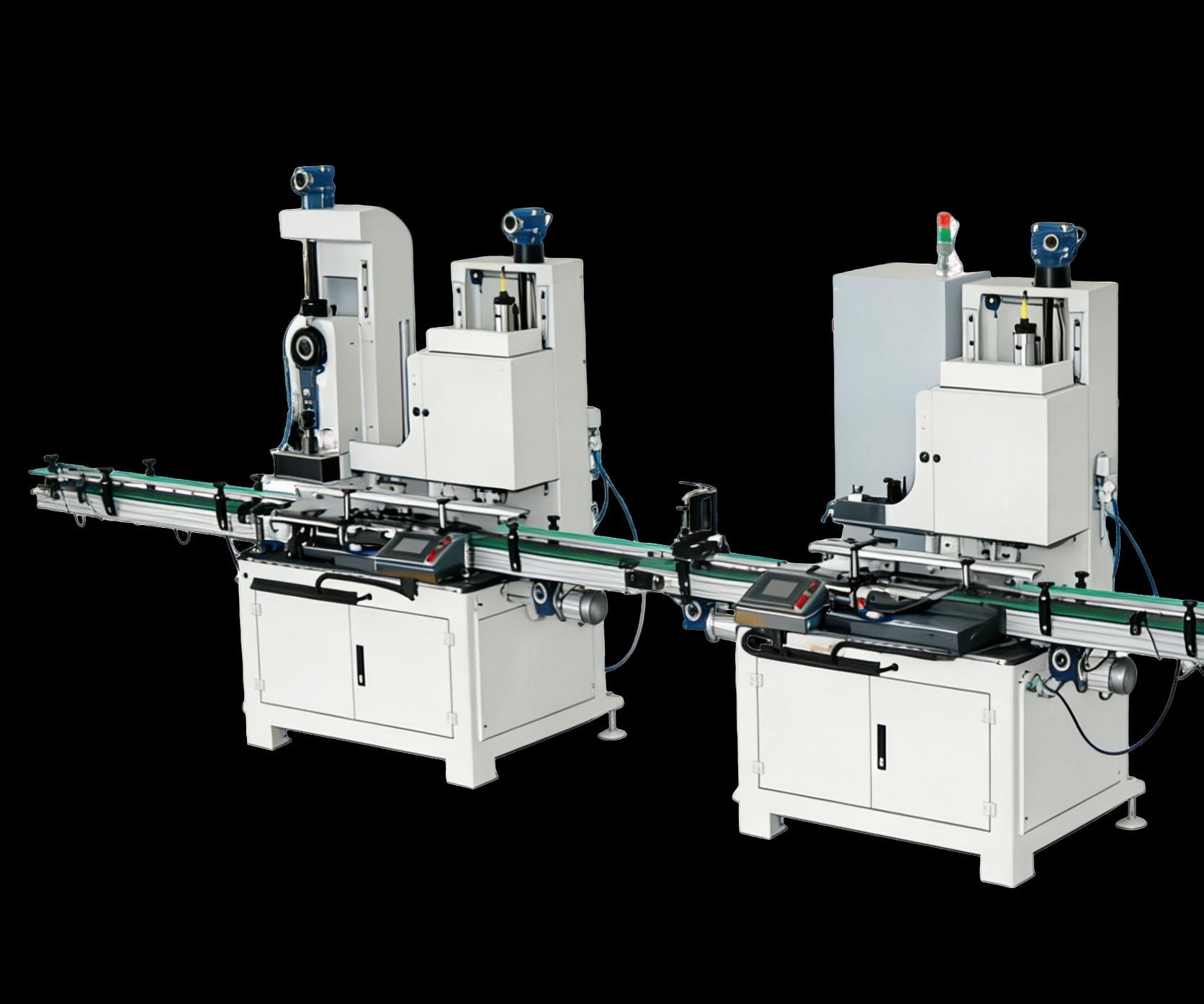
Yongxin offers six production line configurations applicable to candle wax tin manufacturing, selected from the verified product parameter database.
Parameter Matrix: Candle Tin Applicable Lines
| Parameter | Small Round Standard Line | Small Round High-Speed Line | Small Square Standard Line | Small Square Fast Line | Large Round Line | 0.1–5L Round Single Machines |
|---|---|---|---|---|---|---|
| CPM | 30–40 | 60–80 | 30–35 | 45–60 | 25–30 | 15–18 (seamer) / 40–60 (beader) |
| Diameter range (mm) | 60–180 | 60–180 | Diagonal 45–280 | Diagonal 45–280 | 210–300 | 52–180 |
| Height range (mm) | 66–330 | 65–320 | 90–350 | 90–350 | 170–460 | 50–200 |
| Material thickness (mm) | 0.16–0.4 | 0.16–0.4 | 0.16–0.4 | 0.16–0.4 | 0.2–0.4 | 0.16–0.4 |
| Total power (kW) | 8 | 12 | 18 | 45 | — | 3 (beader) |
| Voltage (V) | 380 | 380 | 380 | 380 | 380 | 380 |
| Weight (kg) | 2,700 | 5,300 | 2,700 | 10,000 | 9,500 | 150 (flanger) / 750 (seamer) / 1,300 (beader) |
| Dimensions (mm) | 5400×1200×1900 | 7600×1200×1900 | 11750×1500×2400 | 12000×2000×2400 | 8470×1740×3280 | 400×500×1380 (flanger) |
| Dual seaming heads | No | No | No | Yes | No | N/A |
| PLC control | Yes (Delta/Omron) | Yes (Delta/Omron) | Yes | Yes (Siemens/Mitsubishi) | Yes (Delta servo) | Semi-auto |
| Candle tin suitability | Ø65–100 mm pillar/votive jars | Ø38–65 mm votive/tealight cups | Square decorative tins | Square gift tins high-volume | Large Ø100+ premium candles | Flanging/beading for all sizes |
Recommended Line Selection by Candle Type
| Candle Type | Recommended Line | Rationale |
|---|---|---|
| Tealight cups Ø38–40 mm | Small Round High-Speed (60–80 CPM) | High volume; thin gauge 0.16–0.20 mm; simple open-top construction |
| Votive holders Ø50–65 mm | Small Round Standard (30–40 CPM) | Moderate volume; slip lid or screw lid; decorative printing |
| Pillar candle jars Ø65–100 mm | Small Round Standard (30–40 CPM) | Medium diameter; embossing compatible; friction or screw lids |
| Large container candles Ø73–120 mm | Large Round Line (25–30 CPM) | Large diameter up to 300 mm; heavy gauge 0.23–0.30 mm; premium decoration |
| Square/rectangular decorative tins | Small Square Standard or Fast Line | Custom shapes; embossing/debossing; gift packaging |
13-Station Candle Wax Tin Production Workflow
The complete candle wax tin manufacturing process follows a 13-station workflow, with stations 5, 7, 8, and 12 specifically adapted for candle container requirements:
| Station | Process | Candle-Specific Notes |
|---|---|---|
| 1 | Sheet feeding | ETP #25 coil, 0.16–0.25 mm thickness; decorative-grade surface (bright finish) |
| 2 | Slitting & blanking | Precision cutting to body blank + end shell dimensions; Ø38–180 mm range |
| 3 | Body forming & welding | Cu-wire resistance welding; Ø0.135–0.17 mm wire; overlap 0.8–1.2 mm; seam < 0.3 mm internal flush for wax release |
| 4 | Bumping (expanding) | Calibrate roundness; ensure uniform wall contact for wax melt pool |
| 5 | Internal weld stripe touch-up | Candle-specific: Low surface energy stripe coating on weld zone; match interior coating to prevent wax adhesion at seam; 30–50 g/m² coating weight |
| 6 | Curing oven | 180–220°C; 40–55 second dwell; ensures thermal cycling resistance of cross-linked coating |
| 7 | Internal-external dual-groove flanging | Candle-specific: Yongxin’s dual-groove design with linear guide prevents coating micro-cracking at flange; critical for lid sealing integrity and wax vapor barrier |
| 8 | Beading (optional for large candles) | Structural ribs 3–5 mm depth; provides thermal air gap and rigidity for large container candles; 40–60 CPM on Yongxin automatic beader |
| 9 | Curling (end curl for bottom) | Prepare bottom end for seaming |
| 10 | Bottom end insertion | Pre-coated bottom end with food-grade coating |
| 11 | Body curling | Top edge preparation for lid compatibility |
| 12 | Seaming with CN118025556B lid feeder | Candle-specific: 8-cam 8-roller synchronous seaming head; seam thickness 1.15–1.35 mm; 5-layer double seam; BHB ≥ 45%; ±0.1 mm lid placement accuracy; compatible with friction lids, screw lids, and slip lids used in candle tins |
| 13 | Final inspection & packaging | Visual + dimensional check; decorative surface protection during packing |
Yongxin’s Three Signature Technologies Applied to Candle Tins
Technology 1: 8-Cam 8-Roller Synchronous Seaming Head
This patented mechanism delivers 5-layer mechanical double seams with consistent parameters across all candle tin sizes:
Technology 2: Dual-Groove Internal-External Flanging
The linear-guide flanging system addresses a candle-specific failure mode — coating micro-cracking at the flange:
Technology 3: CN118025556B Synchronous Continuous Lid Feeder
Patented in May 2026, this technology ensures precise lid placement at production speed:
Candle Tin Coating Systems
Candle wax tins require interior coatings selected for wax compatibility, thermal cycling resistance, and in some cases food-contact compliance:
| Coating System | Cure Temperature (°C) | Coating Weight (g/m²) | Candle Application | Key Property |
|---|---|---|---|---|
| BPA-NI Epoxy Phenolic | 180–210 | 4–8 | Primary for all candle types | Excellent wax release; thermal cycling resistant; food-contact compliant (FDA 21 CFR 175.300) |
| BPA-NI Vinyl Organosol | 180–200 | 6–10 | Large container candles with screw lids | Flexible coating; withstands lid torque without cracking |
| BPA-NI Polyester | 200–220 | 4–8 | Premium decorative candles | Superior chemical resistance; excellent print base |
| Gold Enamel (BPA-NI) | 180–200 | 6–10 | Specialty gift candles | Opaque base for premium decoration; excellent hiding power |
Coating Quality Inspection for Candle Tins
| Test Method | Standard | Acceptance Criteria | Frequency |
|---|---|---|---|
| Coating continuity (high-voltage) | 15–25 kV | Zero pinholes | 100% inline |
| Coating weight measurement | Gravimetric | 4–8 g/m² ± 5% | Hourly |
| Adhesion test (cross-cut) | ISO 2409 | Grade 0–1 | Per batch |
| Thermal cycling test | 50 cycles −10°C to 130°C | No cracking, no delamination, Grade 0–1 | Per lot |
| Wax contact test | 72h at 80°C with test wax | No coating interaction, no discoloration | Per lot |
| MEK rub resistance | ASTM D5402 | > 50 double rubs | Per batch |
| Food-contact migration (if applicable) | EU 10/2011 | < 10 mg/dm² total migration | Per coating lot |
Candle Wax Tin vs Food Can: Manufacturing Process Comparison
Candle wax tin manufacturing diverges from food can production at several critical points:
| Parameter | Candle Wax Tin | Food Can (General) | Key Difference |
|---|---|---|---|
| Primary concern | Wax release + thermal cycling + decoration | Hermetic seal + retort resistance | Different coating priorities |
| Internal coating | Low surface energy 4–8 g/m² | Acid/fat resistant 4–10 g/m² | Candle: wax release; Food: corrosion |
| Thermal exposure | Repeated cycling 80–120°C × 20–60 times | Single retort 121°C × 30–90 min | Candle: fatigue; Food: single extreme |
| Weld stripe | Low surface energy 30–50 g/m² | Heavy 30–80 g/m² for acid/fat | Candle: release; Food: protection |
| External decoration | Embossing/hot-stamp/offset CMYK | Label or simple print | Candle: premium gift packaging |
| Seam requirement | BHB ≥ 45%; vapor-tight | BHB ≥ 45–50%; hermetic | Similar seam parameters |
| Lid types | Friction/screw/slip/hinged | Easy-open end primarily | Candle: more variety |
| Diameter range | Ø38–120 mm primary | Ø52–153 mm | Candle: smaller range |
| Food-contact compliance | FDA 21 CFR 175.300 (if applicable) | FDA 21 CFR 175.300 + 113/170.39 | Different regulatory scope |
| Production speed | 30–80 CPM | 30–80 CPM (similar) | Comparable |
Global Candle Container Market: Data and Buyer Profiles
Market Size and Growth
The global candle market provides substantial demand for tinplate containers:
| Source | Market Size (2025/2026) | Forecast | CAGR | Key Region |
|---|---|---|---|---|
| Global Market Insights | USD 21.3B (2025) | USD 32.5B by 2035 | 4.5% | Asia Pacific largest; China 33% share |
| Fortune Business Insights | USD 8.98B (2025) / USD 9.51B (2026) | USD 16.42B by 2034 | 7.06% | Europe 30% share; tea lights 31.76% |
| Fortune Business Insights (segment) | Container candles USD 7.2B (2025) | — | — | Largest product segment by type |
According to Global Market Insights, container candles held the largest market share in 2025 at USD 7.2 billion, driven by “countless design possibilities from varying container forms like glass jars, metal tins, and ceramic.” Metal tins represent a significant portion due to portability, durability, and decorative versatility.
Regional Buyer Profiles for Candle Tin Equipment
Southeast Asia: Thailand, Vietnam, and Indonesia are emerging candle manufacturing hubs. Thailand has received 3 Yongxin production line installations, Vietnam 2 lines. The region benefits from growing aromatherapy and wellness culture.
Middle East: Saudi Arabia (1 Yongxin line delivered) and UAE represent growing demand for decorative candle containers, particularly for hospitality and gifting segments.
Europe: Germany (USD 0.55B market by 2026), UK (USD 0.47B), and France are established candle markets with strict EU REACH and CLP compliance requirements. European buyers prioritize BPA-NI coatings and sustainable packaging.
North America: USA candle market projected at USD 2.71B by 2026 (76% of North American USD 4.1B). Container candles dominate due to brand customization potential.
Asia Pacific: China at 33% global share with 5.2% CAGR; Japan USD 0.2B; India USD 0.76B — all growing rapidly.
Yongxin Export Track Record and Customer Coverage
Yongxin has delivered production lines to multiple international markets:
| Region | Delivered Lines | Candle Tin Relevance |
|---|---|---|
| Thailand | 3 lines | Candle + food tin manufacturing |
| Vietnam | 2 lines | Growing candle industry |
| India | 1 line | Emerging candle market |
| Saudi Arabia | 1 line | Hospitality + gifting candles |
| Southeast Asia | Multiple | Aromatherapy candle growth |
| Middle East | Multiple | Decorative luxury candles |
| South America | Emerging | Candle market expansion |
Domestic verified customers include Hangzhou Printing Tin Can Factory (2 lines), Bengbu Jintaidu, Wuxi Huayuan, Henan Xihua, Qingdao Wangsheng, Yichuan Guanhuan, and Guangdong Huizhou Tianyi.
Purchase Path and Pricing Guide
Three-Tier Investment Framework
| Tier | Configuration | Investment (USD) | CPM | Best For |
|---|---|---|---|---|
| Entry | Small Round Standard Line (30–40 CPM) + single machines | 40,000–90,000 | 30–40 | Startup candle manufacturers; 10–30M cans/year |
| Growth | Small Round High-Speed Line (60–80 CPM) + beader + decorator | 130,000–300,000 | 60–80 | Scaling candle brands; 30–80M cans/year |
| Scale | Multiple lines + Large Round Line + automated decoration | 400,000–800,000+ | 25–80 | Industrial candle manufacturers; 80M+ cans/year |
Equipment Pricing Reference
| Equipment | Price Range (USD) | Application |
|---|---|---|
| Small Round Standard Line (30–40 CPM) | 80,000–120,000 | Ø60–180 mm candle jars, votive holders |
| Small Round High-Speed Line (60–80 CPM) | 150,000–250,000 | High-volume tealight cups, votive holders |
| Small Square Standard Line (30–35 CPM) | 90,000–140,000 | Square decorative gift tins |
| Small Square Fast Line (45–60 CPM) | 200,000–350,000 | High-volume square candle tins |
| Large Round Line (25–30 CPM) | 250,000–460,000 | Large premium container candles |
| Automatic Beading Machine (40–60 CPM) | 8,000–15,000 | Structural ribs for large candles |
| Flanging Machine (0.1–5L, 15–18 CPM) | 8,000–12,000 | Standalone flanging operation |
| Seaming Machine (0.1–5L, 15–18 CPM) | 8,000–15,000 | Standalone seaming operation |
| Welding Machine (small can) | 15,000–25,000 | Standalone welding |
| Slitting Machine (manual) | 8,000–12,000 | Sheet preparation |
| Slitting Machine (auto) | 15,000–25,000 | High-volume sheet preparation |
Payment Terms
Standard payment structure: 30% advance / 30% at manufacturing completion / 30% before shipment / 10% after installation acceptance. Lead time: 60–90 days from order confirmation.
PLC Automation Architecture
Yongxin candle tin production lines feature configurable automation systems:
| Component | Options | Function |
|---|---|---|
| PLC | Siemens S7-1200/1500 or Mitsubishi FX5U/Q | Master production line control |
| HMI | Delta DOP-1100 series or equivalent | Touchscreen operation interface |
| Servo drives | Delta ASD / Yaskawa Σ-7 | Precision motion control |
| Pneumatic | SMC (Japan) / Airtac (Taiwan) | Cylinder actuation for forming, flanging, seaming |
| Sensors | Omron / Sick (Germany) | Can detection, positioning, fault detection |
| VFD | ABB / Delta | Variable speed drives; 30% energy savings |
| Remote monitoring | OPC UA protocol | VPN-enabled remote diagnostics |
Energy Consumption Profile
| Line Configuration | Daily Power Consumption (kWh) | Annual Cost Estimate (USD) |
|---|---|---|
| Small Round Standard (8 kW) | 64 | 1,200–2,400 |
| Small Round High-Speed (12 kW) | 96 | 1,800–3,600 |
| Small Square Standard (18 kW) | 144 | 2,700–5,400 |
| Small Square Fast (45 kW) | 360 | 6,750–13,500 |
| Large Round Line | 200–300 | 3,750–11,250 |
*Based on 8-hour shift, local electricity rates USD 0.06–0.125/kWh*
Preventive Maintenance Schedule
| Interval | Tasks | Focus Areas |
|---|---|---|
| Daily | Clean welding electrodes; check pneumatic pressure; inspect coating continuity sensor | Welding quality, coating coverage |
| Weekly | Lubricate cam followers; check servo alignment; inspect flanging groove wear | Motion precision, tooling life |
| Monthly | Calibrate seam measurement gauges; inspect 8-cam 8-roller head; check oven temperature uniformity | Seam integrity (BHB ≥ 45%), cure consistency |
| Quarterly | Replace worn flanging groove wheels; inspect copper wire feed mechanism; full PLC diagnostics backup | Tooling replacement, data backup |
| Annually | Full line overhaul; replace bearings; update firmware; re-calibrate all sensors | Complete system refresh |
Sustainability Advantages of Tinplate Candle Containers
Tinplate candle containers offer measurable sustainability benefits:
| Metric | Tinplate | Glass | Aluminum | PET Plastic |
|---|---|---|---|---|
| Recycling rate | 82–92% (steel loop) | 74% | 70% | 55% |
| Container weight (8 oz candle) | 25–35 g | 250–400 g | 15–25 g | 20–30 g |
| Weight reduction vs glass | 70–85% | Baseline | 85–90% | 80–88% |
| Transport emission reduction | 30–50% vs glass | Baseline | 40–55% | 35–45% |
| EU PPWR 2030 target | 70% recycling by 2030 | Compliant | Compliant | Under review |
Tinplate candle tins also eliminate the cold-chain requirements that some alternative materials impose, reducing lifecycle emissions by an estimated 25–40% for ambient-storage candles with 12–24 month shelf life.
Yongxin Service and Support
For international candle tin manufacturers, Yongxin provides:
For custom candle wax tin production line solutions, contact our engineering team →
Contact Information:
Related Articles
FAQ
Q1: What types of candle wax tin containers can Yongxin equipment manufacture?
A: Yongxin production lines manufacture the full range of candle wax tin containers: tealight cups (Ø38–40 mm), votive holders (Ø50–65 mm), pillar candle jars (Ø65–100 mm), large container candle jars (Ø73–120 mm), and custom square/rectangular decorative tins. The small round can line covers diameters from 60–180 mm at 30–80 CPM.
Q2: What wax types are compatible with Yongxin candle tin production lines?
A: Yongxin equipment handles all four major candle wax types: paraffin wax (melting point 46–68°C), soy wax (jar grade 48–52°C, pillar grade 56–62°C), beeswax (62–65°C), and palm wax (55–70°C). The internal coating system (BPA-NI epoxy phenolic, 180–210°C cure) ensures compatibility across all wax chemistries with low surface energy for reliable wax release.
Q3: How does Yongxin’s seaming technology ensure candle tin integrity?
A: Yongxin’s 8-cam 8-roller synchronous seaming head produces 5-layer mechanical double seams with thickness 1.15–1.35 mm (± 0.05 mm tolerance), hook length 1.8–2.2 mm, and body hook engagement ≥ 45%. This ensures vapor-tight seals compatible with friction lids, screw lids, and slip lids used across candle tin formats.
Q4: What decorative finishing options are supported for candle tins?
A: The production lines support offset printing (CMYK + Pantone spot colors, 4–6 stations), hot-stamping (gold/silver foil at 120–150°C), embossing/debossing (0.3–0.8 mm relief depth), matte-gloss contrast finishes, and UV spot coating. These decorative capabilities meet the premium gift packaging standards that candle brands require.
Q5: What is the production speed for candle wax tin manufacturing?
A: Speeds range from 25–80 CPM depending on line configuration: Small Round Standard Line (30–40 CPM), Small Round High-Speed Line (60–80 CPM), Small Square lines (30–60 CPM), and Large Round Line (25–30 CPM). Annual output ranges from 10 million cans (entry-level) to 80+ million cans (full scale).
Q6: Are Yongxin candle tin coatings food-contact compliant?
A: Yes. When candle tins are marketed as “food-contact decorative” (common for soy wax candles), Yongxin’s BPA-NI epoxy phenolic coatings comply with FDA 21 CFR 175.300 (US) and EU Regulation 10/2011 (EU), with total migration < 10 mg/dm².
Q7: What is the investment range for a candle wax tin production line?
A: Entry-level configurations start at USD 40,000–90,000 (single line + basic machines). Growth-stage setups range USD 130,000–300,000 (high-speed line + beader + decoration). Full industrial scale requires USD 400,000–800,000+ (multiple lines + large format + automated decoration). Payment terms: 30-30-30-10.
Q8: What safety standards do candle tins need to comply with?
A: Candle tin containers must comply with ASTM F2417 (US fire safety), CPSC candle safety guidelines, EU REACH Regulation (EC 1907/2006), CLP Regulation (EC 1272/2008), and EN 15493:2007 (fire safety). Yongxin equipment produces containers that meet the thermal resistance and structural integrity requirements of these standards.
Q9: How does thermal cycling affect candle tin coating selection?
A: Candle tins experience 20–60 thermal cycles (ambient → 80–120°C → ambient) during product life. Yongxin specifies cure oven temperatures of 180–220°C with 40–55 second dwell times for BPA-NI coatings, creating cross-linked polymer networks that resist micro-cracking, yellowing, and adhesion loss. Thermal cycling tests validate coating performance over 50 cycles from −10°C to 130°C.
Q10: What is the lead time and installation support for international buyers?
A: Manufacturing lead time is 60–90 days from order confirmation. Installation and commissioning takes 7–21 days for international sites. Yongxin provides lifetime technical training, 12-month warranty, and spare parts delivery within 3–7 days via air freight. Remote diagnostics via OPC UA protocol and VPN-enabled HMI access are standard.
Q11: Can Yongxin equipment handle both food cans and candle tins on the same line?
A: Yes. The production lines use the same core forming, welding, flanging, and seaming stations for both food cans and candle tins. The primary differences are in coating type (food can: acid/fat-resistant vs candle tin: low surface energy for wax release) and decorative finishing (candle tins require more extensive embossing, hot-stamping, and multi-color printing). Changeover between food and candle production takes 1–2 hours for mechanical adjustments plus tooling changes.
Q12: What substrate materials are recommended for candle wax tins?
A: ETP (Electrolytic Tin Plate) #25 (2.8 g/m² Sn) is the primary substrate for 75% of candle tin production, offering natural low surface energy for wax release, excellent printability, and food-contact compliance. ETP #50 (5.6 g/m² Sn) serves premium/gift candles at 15%, while TFS (Tin Free Steel, Cr 50–200 mg/m²) covers budget tealight cups at 10%. Material thickness ranges from 0.16–0.30 mm depending on can size.
Q13: What is the CN118025556B patent and how does it benefit candle tin production?
A: CN118025556B is Yongxin’s patented synchronous continuous lid feeding mechanism (certified May 2026). It achieves ± 0.1 mm lid placement accuracy at production speed with a 200–400 ms inert gas flushing window. For candle tins, this enables N₂ flushing to displace oxygen inside sealed containers, extending fragrance oil shelf life by preventing oxidation — critical for soy wax candles containing unsaturated fatty acids.
Q14: Which markets is Yongxin targeting for candle tin equipment sales?
A: Yongxin targets Southeast Asia (Thailand 3 lines, Vietnam 2 lines delivered), Middle East (Saudi Arabia 1 line delivered), South America, Africa, and Europe. The candle market is growing globally at 4.5–7.06% CAGR, with Asia Pacific as the largest and fastest-growing region. China holds approximately 33% of the global candle market.