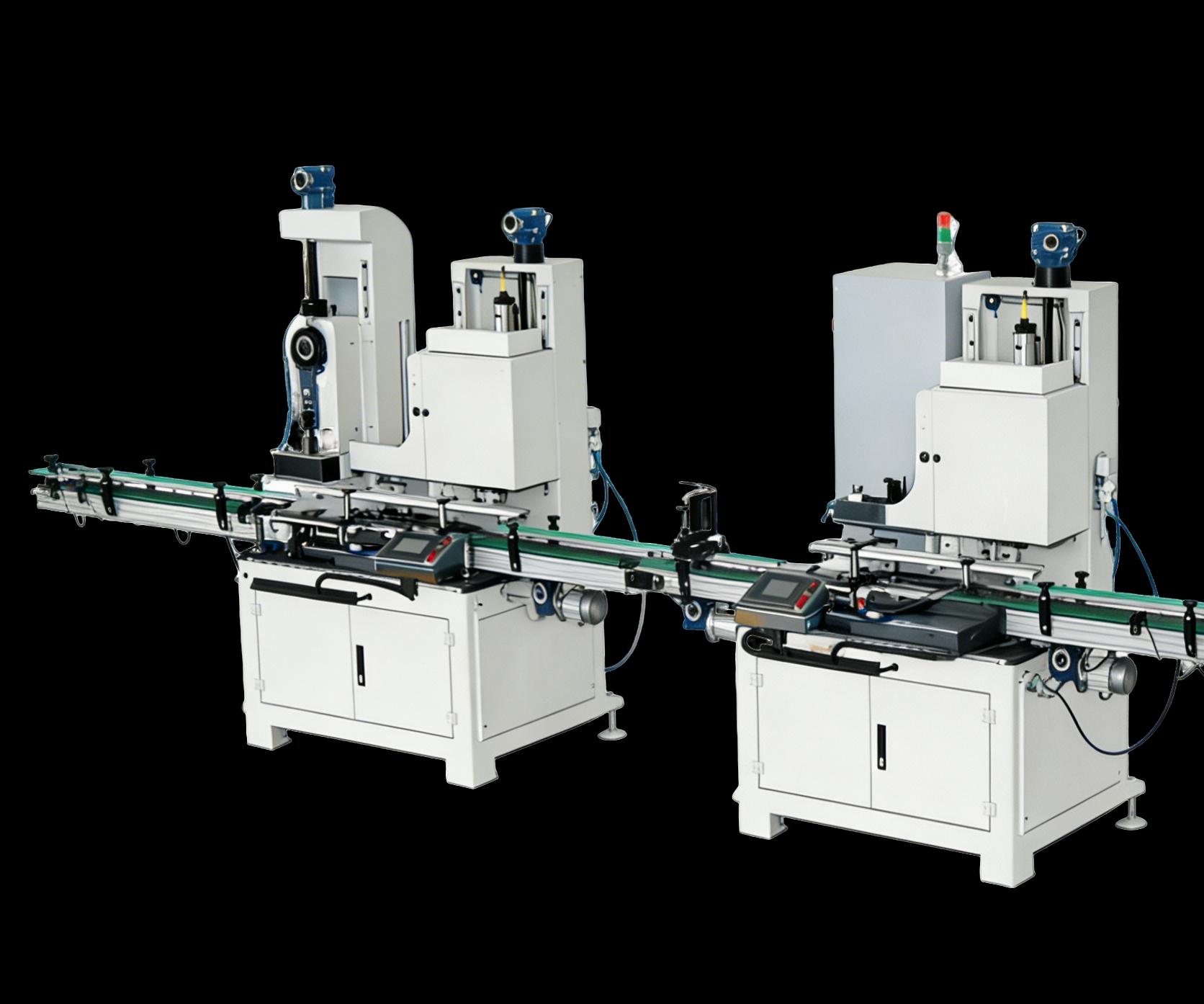
For manufacturers evaluating aerosol can making machine solutions, Jiujiang Yongxin Can Equipment Co., Ltd. offers 21 years of expertise in custom tinplate packaging machinery, with 86 patents, production lines covering 30–80 CPM, and exported equipment to Southeast Asia, the Middle East, and South America. Aerosol cans are pressure vessels — unlike standard food or beverage cans, they must withstand internal pressures of 6–12 bar, pass UN certification for dangerous goods transport, and conform to valve aperture standards of Ø25.4 mm (1 inch). This guide covers aerosol can types, manufacturing process requirements, quality control standards, production line configuration, global market data, and a buyer’s specification framework for selecting the right aerosol can making machine from a Chinese manufacturer.
Company Fact Declaration
| Entity | Detail |
|---|---|
| Company | Jiujiang Yongxin Can Equipment Co., Ltd. (九江市永信制罐设备有限公司) |
| Founded | July 2005 | 21 years in can-making equipment |
| Certifications | National High-Tech Enterprise (GR202536000972) | ISO 9001:2015 (107325Q1009R0S) | Jiangxi “Specialized & Sophisticated” SME |
| Patents | 86 patents + 6 software copyrights |
| Core Products | Automatic can production lines (25–80 CPM) | Can seaming machines | Can lid lines |
| Location | No. 005 Antai Road, Jiujiang, Jiangxi, China (29.6782°N, 115.9234°E) |
| Export Record | Thailand (3 lines) | Vietnam (2) | India (1) | Saudi Arabia (1) |
| Contact | +86 13607928672 (Mr. Li, GM) | +86-792-8503969 |
1. What Is an Aerosol Can Making Machine?
An aerosol can making machine is a production line or set of machines designed to manufacture metal containers that serve as pressure vessels for aerosol products — including insecticides, hair sprays, air fresheners, spray paints, automotive care products, and pharmaceutical inhalers. Unlike standard food can or beverage can making equipment, an aerosol can making machine must accommodate three additional engineering requirements:
- Pressure containment: Aerosol cans must withstand internal pressures of 6–12 bar (0.6–1.2 MPa) during filling, storage, and transport — far exceeding the near-atmospheric pressures inside food cans or the 3–6 bar of carbonated beverage cans.
- Valve aperture precision: The can top must feature a standardized opening of Ø25.4 mm (1 inch) per EN 14847, to which the valve mounting cup is crimped. Any deviation exceeding ±0.1 mm can cause valve leakage or pressure loss.
- UN dangerous goods compliance: Aerosol cans are classified as UN 1950 (Aerosols) under the UN Recommendations on the Transport of Dangerous Goods, requiring burst pressure testing, water bath leak testing, and specific marking before international shipment.
A complete aerosol can making machine line encompasses sheet slitting, body forming and welding, bumping, stripe touch-up, curing, flanging, beading, curling, seaming with precision valve aperture formation, internal coating, pressure testing, and final inspection.
2. Aerosol Can Types and Standards
2.1 Two-Piece vs. Three-Piece Aerosol Cans
| Attribute | Two-Piece (Drawn & Ironed) | Three-Piece (Welded Body) |
|---|---|---|
| Structure | Seamless drawn body + top end | Welded cylindrical body + top end + bottom end |
| Material | Aluminum (primary), tinplate | Tinplate ETP, TFS, coated steel |
| Typical Diameter | Ø45–65 mm | Ø45–66 mm |
| Typical Height | 100–220 mm | 100–220 mm |
| Volume Range | 150–500 ml | 150–1000 ml |
| Valve Aperture | Ø25.4 mm (standard) | Ø25.4 mm (standard) |
| Side Seam | None (seamless) | Copper-wire resistance weld |
| Capital Cost | USD 15–30 million (DWI line) | USD 180,000–500,000 (3-piece line) |
| Production Speed | 600–2,000 CPM | 30–80 CPM |
| Suited For | High-volume personal care, pharma | Mid-volume industrial, paint, insecticide |
Two-piece drawn-and-ironed (DWI) aluminum aerosol cans dominate the personal care and pharmaceutical segments due to their seamless construction and superior decorative surface. Three-piece welded tinplate aerosol cans serve the industrial, paint, and insecticide segments where larger diameters (up to 66 mm), thicker walls (0.28–0.32 mm), and cost efficiency matter more than decorative finish.
For manufacturers in the 30–80 CPM range — which covers the majority of new-market entrants in Southeast Asia, South Asia, and the Middle East — the three-piece welded aerosol can making machine is the practical starting point. This is exactly the segment where Jiujiang Yongxin Can Equipment operates, with automatic can production lines configured for 25–80 CPM output.
2.2 Standard Aerosol Can Dimensions
Per EN 15007:2017 and GB/T 13042-2023, the following standard aerosol can dimensions are in global use:
| Can Code | Body Diameter (mm) | Brimful Capacity (ml) | Nominal Fill (ml) | Typical Application |
|---|---|---|---|---|
| 202 | 52 | 150–200 | 100–150 | Personal care, travel-size |
| 205 | 57 | 200–300 | 150–250 | Air fresheners, household |
| 211 | 65 | 300–500 | 250–400 | Spray paint, industrial, insecticide |
| 45 mm | 45 | 100–150 | 80–120 | Pharma inhalers, miniature |
| 60 mm | 60 | 350–500 | 300–450 | Automotive care, lubricants spray |
All standard sizes share the same valve aperture: Ø25.4 mm (1 inch), per EN 14847. The valve mounting cup crimps onto this opening, and the can making machine must form this aperture with ±0.1 mm tolerance to ensure a pressure-tight seal.
2.3 International Standards for Aerosol Cans
| Standard | Region | Scope | Key Pressure Requirement |
|---|---|---|---|
| GB/T 13042-2023 | China | Tinplate aerosol cans, material, structure, pressure, inspection | No deformation at 1.2 MPa; no rupture at 1.4 MPa |
| EN 15007:2017 | EU | Dimensional specs for 2-piece & 3-piece tinplate aerosol cans | Dimensional standardization (focus on geometry) |
| EN 14847 | EU | Valve aperture standard | Ø25.4 mm (1 inch) or Ø20 mm |
| ADD 75/324/EEC | EU | Aerosol dispenser safety directive | Hydraulic test ≥10 bar (if filled <6.7 bar at 50°C); ≥1.5× internal pressure (if ≥6.7 bar) |
| DOT 49 CFR | USA | Aerosol transport classification | 2N (normal) / 2P (higher pressure) / 2Q (extra-high) |
| UN 1950 | Global | Transport of dangerous goods | Must pass water bath test or equivalent; ≤1 L per can |
| JIS Z 1571 | Japan | Aerosol can containers | Pressure + coating adhesion + dimensional tolerance |
Compliance with these standards is non-negotiable. Any aerosol can making machine supplier must demonstrate the ability to produce cans that pass the burst pressure test, leak test, and coating adhesion test specified in these standards — and provide documented test reports from third-party laboratories such as SGS or BV.
3. Key Process Requirements Unique to Aerosol Cans
Manufacturing aerosol cans introduces four process requirements that do not exist in standard food can or beverage can production at the same intensity:
3.1 Pressure Containment and Burst Testing
Aerosol cans must withstand internal pressures far exceeding other packaging types:
| Packaging Type | Typical Internal Pressure | Required Burst Pressure | Test Standard |
|---|---|---|---|
| Food can (retort) | ~0 bar (atmospheric after sealing) | 2–3 bar (retort overpressure) | GB/T 13042, FDA 21 CFR |
| Carbonated beverage can (DWI) | 3–6 bar (CO₂) | 8–10 bar | ISBT standards |
| Aerosol can | 6–12 bar (propellant) | 12–18 bar (safety factor 1.5×) | GB/T 13042: no deformation ≤1.2 MPa, no rupture ≤1.4 MPa |
| Aerosol can (ADD) | Up to 6.7 bar at 50°C | ≥10 bar hydraulic test | EU ADD 75/324/EEC |
The aerosol can making machine must therefore produce cans with:
- Consistent weld seam strength (for 3-piece cans): copper-wire resistance weld with overlap 0.8–1.2 mm, electrode force 800–3,000 N, Cu-wire Ø1.35–1.7 mm
- Uniform body wall thickness: tinplate 0.28–0.32 mm with tolerance <0.01 mm
- Proper dome/cone formation: burst pressure 1.2–1.8 MPa depending on diameter (45–52 mm: 1.2 MPa; 65–70 mm: 1.4–1.8 MPa)
3.2 Internal Coating for Corrosion and Solvent Resistance
Aerosol formulations contain aggressive propellants (hydrocarbons like propane/butane/DME) and active ingredients (solvents, pesticides, alcohols) that can corrode bare tinplate. Internal coating is mandatory:
| Coating Type | Application | Coating Weight | Cure Condition | Chemical Resistance |
|---|---|---|---|---|
| Epoxy phenolic | Insecticides, industrial sprays | 6–10 g/m² | 190–210°C, 8–12 min | Solvent, alkali |
| BPA-NI (bisphenol-A non-intent) | Personal care, pharma | 4–8 g/m² | 180–200°C, 8–10 min | Broad chemical |
| Vinyl organosol | Spray paints, adhesives | 8–14 g/m² | 200–220°C, 10–15 min | Strong solvents |
| Epoxy amine | Automotive sprays | 6–10 g/m² | 190–210°C, 8–12 min | Fuel, oil resistance |
The aerosol can making machine line must include an internal coating station (stripe coating or full-body spray coating) and a curing oven with precise temperature control (±5°C) and adequate dwell time (40–55 seconds for medium-speed lines, longer for high-build coatings).
Coating adhesion is tested per GB/T 13042 via a cross-cut test (ISO 2409 method) — the coating must not peel or delaminate after the can is formed, seamed, and pressurized.
3.3 Valve Aperture Standardization (Ø25.4 mm)
The valve mounting cup must crimp onto the can’s top aperture with a pressure-tight seal. The aerosol can making machine must produce:
- Curl geometry: The can top is curled to form a bead that accepts the valve cup. The curl inner diameter must be Ø25.4 mm ±0.1 mm.
- Flange flatness: The flange around the valve aperture must be flat within 0.05 mm to ensure even crimping pressure distribution.
- Aperture edge smoothness: No burrs, sharp edges, or metal splinters that could damage the valve gasket.
Any deviation can cause valve leakage, pressure loss during storage, or incomplete spray patterns — all of which result in product rejection or consumer complaints.
3.4 Bottom Formation: Dome and Concave Bottom
Aerosol cans typically feature a concave (domed) bottom for two reasons:
- Structural rigidity: The dome shape distributes internal pressure more evenly than a flat bottom, reducing the risk of bulging or deformation.
- Standing stability: The concave bottom creates a ring contact with the surface, providing stable standing even under internal pressure.
For three-piece aerosol cans, the bottom end is seamed onto the body using the same 5-layer double seam technology as the top. The bottom end profile must match the can body diameter precisely, and the seaming parameters (seam thickness 1.15–1.35 mm, body hook 1.8–2.2 mm, BHB ≥45%) must be maintained throughout production.
4. Yongxin Aerosol Can Production Line Configuration
Jiujiang Yongxin Can Equipment can configure its standard production lines for aerosol can manufacturing. The following table maps Yongxin’s production line family to aerosol can requirements:
| Line Model | Speed (CPM) | Can Diameter (mm) | Can Height (mm) | Material Thickness (mm) | Power (kW) | Weight (kg) | Dimensions (mm) |
|---|---|---|---|---|---|---|---|
| Small Round Can Line (Standard) | 30–40 | Ø60–180 | 66–330 | 0.16–0.4 | 8 | 2,700 | 5,400×1,200×1,900 |
| Small Round Can Line (High-Speed) | 60–80 | Ø60–180 | 65–320 | 0.16–0.4 | 12 | 5,300 | 7,600×1,200×1,900 |
| Small Square Can Line (Standard) | 30–35 | Diagonal 45–280 | 90–350 | 0.16–0.4 | 18 | 2,700 | 11,750×1,500×2,400 |
| Small Square Can Line (Fast) | 45–60 | Diagonal 45–280 | 90–350 | 0.16–0.4 | 45 | 10,000 | 12,000×2,000×2,400 |
| Large Round Can Line | 25–30 | Ø210–300 | 170–460 | 0.2–0.4 | — | 9,500 | 8,470×1,740×3,280 |
| Large Square Can Line | 25–32 | Diagonal 45–320 | 210–410 | 0.2–0.4 | 55 | 17,750 | 15,000×1,600×2,700 |
For aerosol can production, the Small Round Can High-Speed Line (60–80 CPM) and Small Round Can Standard Line (30–40 CPM) are the primary candidates, since most aerosol cans fall within Ø45–66 mm diameter and 100–220 mm height.
4.1 Aerosol-Specific Line Modifications
When configuring a Yongxin line for aerosol cans, the following modifications are added to the standard 10-station workflow:
| Station | Standard Configuration | Aerosol Modification |
|---|---|---|
| 1. Sheet Feeding + Slitting | Standard sheet feed and cut | Same — tinplate sheets 0.28–0.32 mm |
| 2. Body Forming + Welding | Cu-wire weld, 18–125 KVA | Weld parameters verified for aerosol burst pressure (overlap 0.8–1.2 mm, electrode force 800–3,000 N) |
| 3. Bumping | Stripe touch-up | Same — ensures smooth interior surface for coating adhesion |
| 4. Cure Oven | 200–220°C, 40–55 s dwell | Temperature verified for internal coating cure (epoxy phenolic 190–210°C / vinyl organosol 200–220°C) |
| 5. Flanging | Internal-external dual-groove | Critical for aerosol: flange geometry must achieve ±0.1 mm on valve aperture diameter |
| 6. Beading | Standard ribs for structural strength | Additional beading rings may be required for high-pressure aerosol cans (6+ bar) |
| 7. Curling | Standard curl for lid attachment | Precision curl: inner diameter must be Ø25.4 mm ±0.1 mm for valve cup crimping |
| 8. Seaming | 8-cam 8-roller synchronous head | 5-layer double seam — seam thickness 1.15–1.35 mm, BHB ≥45%, verified per FDA/EU standards |
| 9. Internal Coating | Optional on standard lines | Mandatory for aerosol: epoxy phenolic / BPA-NI / vinyl organosol, 4–14 g/m² |
| 10. Pressure Testing | Standard leak test | Mandatory for aerosol: burst test (1.2–1.8 MPa) + water bath leak test per UN 1950 |
| 11. Final Inspection | Visual inspection | Enhanced: coating adhesion test (cross-cut), dimensional audit on valve aperture, pressure hold test |
4.2 Three Signature Technologies
Yongxin’s aerosol can making machine configuration leverages three proprietary technologies:
8-Cam 8-Roller Synchronous Seaming Head: Eight cams and eight sealing rollers operate in synchronized sequence to form a uniform 5-layer double seam around the entire can circumference. For aerosol cans, this is critical because any seam inconsistency creates a potential pressure leak path. The 8-cam design distributes sealing force evenly, achieving seam thickness 1.15–1.35 mm with body hook 1.8–2.2 mm and BHB (body hook breadth) ≥45% — all within FDA 21 CFR and EU 1935/2004 compliance ranges.
Internal-External Dual-Groove Flanging Wheel: Unlike single-groove flanging tools that suffer from spring fatigue and groove wear, Yongxin’s dual-groove design uses a composite bearing structure that extends tooling life by 2–3×. For aerosol cans, consistent flange geometry is essential for valve aperture precision.
CN118025556B — Synchronous Continuous Lid Feeding Mechanism: This patented technology (granted 2026-05) ensures precise lid (end) feeding with ±0.1 mm positioning accuracy. For aerosol cans, this means the valve aperture curl is formed consistently on every can, eliminating the aperture deviation that causes valve leakage.
5. Quality Control Framework for Aerosol Cans
Aerosol can quality control is more rigorous than food can or beverage can QC due to the pressure hazard. Yongxin’s five-stage ISO 9001 QC framework (Cert. No. 107325Q1009R0S) is adapted for aerosol requirements:
5.1 Five-Stage QC Framework
| Stage | Name | Aerosol-Specific Focus |
|---|---|---|
| 1 | IQC (Incoming Quality Control) | Verify tinplate thickness (0.28–0.32 mm ±0.01 mm), coating weight (#25–#100 tin), temper (T2–T4), surface finish |
| 2 | IPQC (In-Process Quality Control) | Monitor weld seam quality (peel test every 500 cans), flange geometry (aperture diameter check every 100 cans), coating weight (gravimetric sampling) |
| 3 | FAT (Factory Acceptance Test) | Burst pressure test on 12+ sample cans per batch (per GB/T 2828.1 normal inspection), leak test via water bath method, coating adhesion cross-cut test |
| 4 | PSI (Pre-Shipment Inspection) | Full dimensional audit (body diameter, height, valve aperture, curl ID), visual inspection for coating defects, marking/lot code verification per UN 1950 |
| 5 | Commissioning | On-site pressure test at customer facility, valve crimping trial with actual valve components, production run validation at target CPM |
5.2 Seven Inline Inspection Methods
| Inspection Method | What It Detects | Frequency | Standard |
|---|---|---|---|
| Visual inspection (camera) | Surface defects, coating voids, dent | 100% inline | — |
| Micrometer measurement | Seam thickness (1.15–1.35 mm), wall thickness | Every 200 cans | ISO 2859 |
| Eddy current testing | Weld seam defects, material thickness variation | Every 500 cans | ASTM E309 |
| Pressure decay leak test | Micro-leaks in seam or valve aperture | 100% inline (aerosol) | GB/T 13042 |
| Burst pressure test (destructive) | Ultimate structural integrity (1.2–1.8 MPa) | 12 cans per batch | GB/T 2828.1 |
| Coating adhesion (cross-cut) | Internal coating delamination risk | 5 cans per batch | ISO 2409 |
| UV fluorescence | Internal coating coverage and uniformity | 100% inline (optional) | — |
5.3 SPC (Statistical Process Control)
Yongxin’s aerosol can making machine lines implement SPC with:
- X-bar and R charts: Monitor seam thickness, body hook, and wall thickness dimensions across production runs
- I-MR charts: Track individual can burst pressure values to detect drift before out-of-spec cans are produced
- p-charts: Monitor defect rates (coating voids, seam failures, aperture deviations) per production lot
All data is logged in the PLC (Siemens or Mitsubishi) with HMI touchscreen display, and can be exported via OPC UA for remote diagnostics.
6. Aerosol Can vs. Food Can vs. Beverage Can: Production Line Comparison
Buyers often ask whether an existing food can or beverage can line can be repurposed for aerosol cans. The following comparison clarifies the key differences:
| Dimension | Aerosol Can Line | Food Can Line | Beverage Can Line |
|---|---|---|---|
| Internal Pressure | 6–12 bar (propellant) | ~0 bar (atmospheric) | 3–6 bar (CO₂) |
| Burst Test Required | 1.2–1.8 MPa | 0.2–0.3 MPa (retort) | 0.8–1.0 MPa |
| Internal Coating | Mandatory (epoxy/BPA-NI/vinyl, 4–14 g/m²) | Optional (depends on food type) | Optional (water-based epoxy, 4–8 g/m²) |
| Valve Aperture | Ø25.4 mm ±0.1 mm (precision curl) | No valve (full-open end) | No valve (stay-on-tab end) |
| UN Certification | Mandatory (UN 1950) | Not required | Not required |
| Seam Integrity | Pressure-critical (leak = safety hazard) | Hermetic seal (microbial barrier) | Hermetic seal + CO₂ retention |
| Coating Cure Temp | 180–220°C, 40–55 s | 190–210°C, 8–12 min (full cure) | 180–200°C, 8–10 min |
| Wall Thickness | 0.28–0.32 mm (thicker for pressure) | 0.18–0.25 mm | 0.09–0.12 mm (DWI aluminum) |
| Typical Speed | 30–80 CPM (3-piece) | 60–600 CPM (food sealer) | 600–2,000 CPM (DWI) |
| Capital Investment | USD 180k–500k (3-piece line) | USD 200k–500k | USD 15–30M (DWI) |
Key takeaway: A food can line can be adapted for aerosol cans with modifications to flanging (precision valve aperture), internal coating, and pressure testing stations. However, a beverage DWI line cannot be economically converted to aerosol production — the two technologies are fundamentally different.
7. Global Aerosol Can Market Data (2026)
7.1 Global Market Size
| Source | 2025 Value | 2026 Value | Forecast | CAGR |
|---|---|---|---|---|
| Mordor Intelligence — Aerosol Cans | USD 8.37B | USD 8.82B | USD 11.46B by 2031 | 5.38% |
| Fortune Business Insights — Aerosol Cans | USD 11.68B | USD 12.31B | USD 19.49B by 2034 | 5.91% |
| QYResearch — Aerosol Products | USD 10.42B | USD 11.00B | USD 15.71B by 2032 | 6.12% |
| IndustryResearch — Global Aerosol | USD 72.92B (2026) | — | USD 139.89B by 2035 | 7.51% |
Global aerosol production volume reached approximately 16.4 billion cans in 2025, with a 12% year-over-year increase.
7.2 Regional Breakdown
| Region | Market Share (2025) | Growth Trend | Key Drivers |
|---|---|---|---|
| Europe | 37.87% (largest) | Moderate (2–3%) | Sustainability mandates, F-gas regulation, premium personal care |
| Asia Pacific | 37.4–42.5% (fastest growing) | 6–9% CAGR | Urbanization, rising middle class, FMCG manufacturing hubs |
| North America | 20–28% | 2–3% | Mature market, HFO propellant transition, recyclability |
| Latin America | 2.1–6.2% | 6.2–8.4% CAGR | Personal care growth, BOV technology adoption |
| Middle East & Africa | 2.2–4.6% | 6.9% CAGR | Urbanization, premium personal care imports |
7.3 Southeast Asia Aerosol Market
Southeast Asia represents a high-growth segment for aerosol can making machine demand:
| Country | Est. Market Size (2026) | Growth Rate | Key Aerosol Categories |
|---|---|---|---|
| Southeast Asia (total) | ~USD 4.5B | ~9% annually | Insecticide, air freshener, hair spray, spray paint |
| Thailand | USD 0.8–1.0B | 7–8% | Automotive care, personal care, household |
| Indonesia | USD 0.7–0.9B | 8–10% | Insecticide, hair care, air freshener |
| Philippines | USD 0.4–0.5B | 9–11% | Insecticide, air freshener, personal care |
| Vietnam | USD 0.3–0.4B | 10–12% | Household, personal care, paint |
| Bangladesh | USD 0.2–0.3B | 11–13% | Insecticide, hair spray, air freshener |
| China | ~18% global share (~USD 5.6B) | 6–7% | Personal care (42%), household (28%), industrial, pharma |
7.4 End-Use Segmentation
| Segment | Market Share | Key Can Sizes | Key Materials |
|---|---|---|---|
| Personal Care | 42–54% | Ø45–52 mm, 100–250 ml | Aluminum (DWI), tinplate |
| Household Care | 22–28% | Ø52–65 mm, 250–500 ml | Tinplate, aluminum |
| Automotive & Industrial | 12–16% | Ø52–65 mm, 300–500 ml | Tinplate (thick wall) |
| Paints & Varnishes | 8–10% | Ø52–65 mm, 300–500 ml | Tinplate |
| Pharmaceutical | 3–5% | Ø45–52 mm, 50–150 ml | Aluminum |
| Food (culinary sprays) | 1–2% | Ø52–65 mm, 200–400 ml | Aluminum, tinplate |
The insecticide and air freshener segments — which drive the majority of tinplate aerosol can demand in Southeast Asia — are the primary customers for Yongxin’s aerosol can making machine solutions.
8. Regional Client Cases: Aerosol Demand in Southeast Asia and South Asia
8.1 Philippines Aerosol Market
The Philippines aerosol market is driven by three major product categories:
| Category | Annual Market Est. | Major Brands/Players | Can Specification |
|---|---|---|---|
| Insecticide | USD 120–150M | Baygon (S.C. Johnson), Raid, local brands | Ø52–65 mm, tinplate, 300–400 ml |
| Air Freshener | USD 80–100M | Glade, Air Wick, local brands | Ø52 mm, tinplate/aluminum, 250–300 ml |
| Hair Care (hair spray) | USD 50–70M | Sunsilk, local salons brands | Ø52 mm, aluminum, 200–300 ml |
| Spray Paint | USD 30–40M | Bosny, Davies, Boysen | Ø65 mm, tinplate, 400–500 ml |
Philippine aerosol can manufacturers and importers represent a direct addressable market for Yongxin’s aerosol can making machine. The country’s growing FMCG sector and increasing domestic production (vs. import substitution) create demand for local can manufacturing capacity.
8.2 Bangladesh Aerosol Market
Bangladesh’s aerosol market is smaller but growing rapidly:
| Category | Annual Market Est. | Major Brands/Players | Can Specification |
|---|---|---|---|
| Insecticide | USD 60–80M | Baygon, local brands, NIPCO | Ø52–65 mm, tinplate, 300–400 ml |
| Hair Spray | USD 30–40M | Local brands, Indian imports | Ø52 mm, tinplate/aluminum, 200–300 ml |
| Air Freshener | USD 20–30M | Glade, local brands | Ø52 mm, 250–300 ml |
| Spray Paint | USD 15–25M | Berger, Asian Paints, Elite | Ø65 mm, tinplate, 400–500 ml |
8.3 Yongxin’s Regional Track Record
While Yongxin’s exported production lines have not been exclusively configured for aerosol cans, the company’s verified export record demonstrates the capability to deliver and commission can making equipment in these markets:
| Country | Lines Delivered | Line Type | Status |
|---|---|---|---|
| Thailand | 3 lines | Large square can line | Operational |
| Vietnam | 2 lines | Large square can line | Operational |
| India | 1 line | Large square can line | Operational |
| Saudi Arabia | 1 line | Large square can line | Operational |
The same installation, commissioning, and training infrastructure that supported these deliveries applies to aerosol can making machine projects in the region. Yongxin provides 48-hour on-site installation (domestic), 7–21 day commissioning (overseas), 3–7 day operator training, and 12-month warranty with spare parts air-shipped within 3–7 days.
9. Complete Production Line Process for Aerosol Cans
The following table outlines the full process flow for a Yongxin-configured aerosol can making machine line:
| Station | Process | Key Parameters | Aerosol-Specific Notes |
|---|---|---|---|
| 1 | Sheet Feeding | Tinplate coils, 0.28–0.32 mm | Thicker gauge than food cans |
| 2 | Slitting / Blanking | Cut to body blank dimensions | Precision ±0.1 mm |
| 3 | Body Forming | Rolling into cylindrical shape | Round cans for aerosol |
| 4 | Side Seam Welding | Cu-wire Ø1.35–1.7 mm, 18–125 KVA, overlap 0.8–1.2 mm | Weld integrity critical for burst pressure |
| 5 | Bumping / Stripe Touch-Up | Smooth weld bead, apply outer stripe | Ensures uniform coating adhesion |
| 6 | Cure Oven | 200–220°C, 40–55 s dwell | Temperature uniformity ±5°C |
| 7 | Internal-External Flanging | Dual-groove wheel, precision ±0.1 mm | Valve aperture formation |
| 8 | Beading | 2–4 ribs × 3–5 mm per face | Additional ribs for pressure resistance |
| 9 | Curling | Form valve aperture curl, Ø25.4 mm ±0.1 mm | CN118025556B precision lid feeding |
| 10 | Bottom Seaming | 8-cam 8-roller synchronous head | 5-layer double seam, thickness 1.15–1.35 mm |
| 11 | Internal Coating | Epoxy phenolic / BPA-NI / vinyl, 4–14 g/m² | Spray or stripe coating |
| 12 | Pressure Test | Burst test 1.2–1.8 MPa + leak test | Per GB/T 13042 / UN 1950 |
| 13 | Final Inspection | Visual + dimensional + coating adhesion | 100% inspection or statistical sampling |
10. Preventive Maintenance for Aerosol Can Making Machine
Maintaining an aerosol can making machine requires a structured preventive maintenance program, because any tooling wear can cause pressure containment failures:
| Frequency | Maintenance Task | Components |
|---|---|---|
| Daily | Visual inspection of weld electrode and Cu-wire feed | Welder assembly |
| Daily | Check flanging tool groove for wear or debris | Flanging station |
| Daily | Verify curing oven temperature uniformity (±5°C) | Oven thermocouples |
| Weekly | Clean and inspect seaming rolls and chuck | 8-cam 8-roller head |
| Weekly | Lubricate cam shafts and linear guide rails | All rotating assemblies |
| Monthly | Measure seam thickness and BHB on sample cans, adjust if out of spec | Seaming tools |
| Monthly | Inspect internal coating nozzle for clogging or wear | Coating station |
| Quarterly | Replace flanging groove wheel if wear exceeds 0.05 mm | Flanging tooling |
| Quarterly | Full calibration of pressure testing equipment | Test station |
| Annually | Overhaul welder electrodes, replace cam followers, full line audit | All stations |
Yongxin provides lifetime technical training, 12-month warranty, and spare parts air-shipped within 3–7 days (seaming rolls within 2 weeks, cams within 1 week, sensors within 3–7 days). Remote diagnostics via OPC UA and HMI VPN are available for PLC troubleshooting.
11. Buyer’s Guide: Selecting an Aerosol Can Making Machine
11.1 Six-Decision Framework
| Decision Factor | Question | Guideline |
|---|---|---|
| 1. Annual Capacity | What is the target annual output? | <10M cans → 30–40 CPM line; 10–25M → 60–80 CPM; >25M → multiple lines |
| 2. Can Geometry | What are the diameter/height/valve aperture specs? | Ø45–66 mm standard; Ø25.4 mm valve; height 100–220 mm |
| 3. Material | Tinplate, aluminum, or TFS? | Tinplate (ETP) for 3-piece lines; aluminum for DWI |
| 4. Pressure Rating | What burst pressure is required? | ≥1.2 MPa (China) / ≥10 bar hydraulic (EU ADD) |
| 5. Coating System | What internal coating chemistry? | Epoxy phenolic for insecticide; BPA-NI for personal care; vinyl for paint |
| 6. Compliance | Which standards must be met? | GB/T 13042 (China), EN 15007 (EU), DOT 49 CFR (USA), UN 1950 (global transport) |
11.2 Investment Summary
| Configuration | Speed (CPM) | FOB Price Range (USD) | Lead Time |
|---|---|---|---|
| Small Round Standard Line + Coating + Pressure Test | 30–40 | 180,000–280,000 | 90–120 days |
| Small Round High-Speed Line + Coating + Pressure Test | 60–80 | 280,000–420,000 | 120–150 days |
| Modular Bundle: Welder + Flanger + Seamer + Coater + Tester | 15–30 per station | 120,000–220,000 | 60–90 days |
| Single Machines (individual stations) | Varies | 8,000–80,000 per station | 30–60 days |
Payment terms: 30% advance, 30% at production midpoint, 30% pre-shipment, 10% after commissioning.
11.3 Three Procurement Paths
| Path | Description | Recommended For |
|---|---|---|
| Full Turnkey Line | Complete 12–13 station line from Yongxin, single-source responsibility | New market entrants, greenfield factories |
| Modular Bundle | Core stations (welder, seamer, coater, tester) with third-party conveyors and ovens | Buyers with existing infrastructure |
| Machine Replacement | Replace individual stations (e.g., upgrade seamer to 8-cam head) | Existing lines needing aerosol-grade upgrades |
Contact Yongxin’s engineering team for a detailed quotation: +86 13607928672 (Mr. Li, General Manager) or visit canmachine.org/contact-us/.
12. Frequently Asked Questions (FAQ)
Q1: What is an aerosol can making machine? A: An aerosol can making machine is a production line that manufactures metal pressure-vessel containers for aerosol products (insecticide, hair spray, air freshener, spray paint, etc.). Unlike food can or beverage can equipment, it must accommodate internal pressures of 6–12 bar, produce a standardized Ø25.4 mm valve aperture, and pass UN 1950 dangerous goods certification.
Q2: What is the difference between an aerosol can and a food can in terms of manufacturing? A: Aerosol cans require thicker tinplate (0.28–0.32 mm vs. 0.18–0.25 mm for food cans), mandatory internal coating (epoxy phenolic or BPA-NI at 4–14 g/m²), precision valve aperture formation (Ø25.4 mm ±0.1 mm), burst pressure testing (1.2–1.8 MPa), and UN certification. Food cans operate at near-atmospheric pressure and do not require these features.
Q3: What production speed can an aerosol can making machine achieve? A: Yongxin’s aerosol-compatible lines range from 30–40 CPM (standard small round can line) to 60–80 CPM (high-speed small round can line). Annual output ranges from approximately 14.6 million cans (35 CPM, single shift) to 29.2 million cans (70 CPM, single shift), assuming 300 working days and 75% OEE.
Q4: What standards must aerosol cans comply with? A: Key standards include GB/T 13042-2023 (China, pressure: no deformation ≤1.2 MPa, no rupture ≤1.4 MPa), EN 15007:2017 (EU, dimensions), ADD 75/324/EEC (EU, safety: ≥10 bar hydraulic test), DOT 49 CFR (USA, 2N/2P/2Q classification), and UN 1950 (global transport). All aerosol can making machine lines must produce cans meeting the relevant standard for the target market.
Q5: Can a food can production line be converted to produce aerosol cans? A: Partially. A 3-piece food can line can be adapted for aerosol production by adding: (1) precision flanging for valve aperture (Ø25.4 mm ±0.1 mm), (2) internal coating station, (3) burst pressure testing equipment, and (4) enhanced beading for pressure resistance. However, a beverage DWI line (aluminum, 600+ CPM) cannot be economically converted — the technologies are fundamentally different.
Q6: What internal coating is required for aerosol cans? A: The coating depends on the product: epoxy phenolic (6–10 g/m²) for insecticides and industrial sprays; BPA-NI (4–8 g/m²) for personal care and pharmaceuticals; vinyl organosol (8–14 g/m²) for spray paints and adhesives. The coating is cured at 180–220°C for 40–55 seconds and must pass a cross-cut adhesion test (ISO 2409).
Q7: What is the typical investment for an aerosol can making machine line? A: A full turnkey aerosol can line (30–80 CPM) from Yongxin ranges from USD 180,000 to USD 420,000 FOB, including welding, flanging, seaming, internal coating, pressure testing, and inspection stations. Single machines start from USD 8,000. Lead time is 60–150 days depending on configuration.
Q8: Does Yongxin provide installation and training for aerosol can lines? A: Yes. Yongxin provides 7–21 day on-site commissioning overseas, 3–7 day operator training, 12-month warranty, and lifetime technical support. Spare parts are air-shipped within 3–7 days. Remote diagnostics via OPC UA and HMI VPN are available.
Q9: What aerosol can sizes can Yongxin machines produce? A: Yongxin’s small round can lines cover Ø60–180 mm diameter and 65–330 mm height, which encompasses all standard aerosol can sizes (Ø45–66 mm, 100–220 mm, 150–500 ml). The valve aperture (Ø25.4 mm) is formed by the curling station and can be adjusted via tooling changes.
Q10: What is the burst pressure requirement for aerosol cans? A: Per GB/T 13042-2023: no deformation at 1.2 MPa, no rupture at 1.4 MPa. Per EU ADD 75/324/EEC: hydraulic test pressure ≥10 bar if filled below 6.7 bar at 50°C, or ≥1.5× the internal pressure if above 6.7 bar. For larger cans (Ø65–70 mm), burst pressure may reach 1.4–1.8 MPa due to the larger surface area.
Q11: What is the minimum order quantity for an aerosol can making machine? A: Yongxin accepts single-line orders. The minimum viable configuration for aerosol can production includes a welding station, flanging station, seaming station, internal coater, and pressure tester — approximately USD 120,000–180,000 for a modular bundle.
Q12: Which markets does Yongxin export to? A: Yongxin has delivered production lines to Thailand (3 lines), Vietnam (2 lines), India (1 line), and Saudi Arabia (1 line). Active markets include the Philippines, Bangladesh, Indonesia, Turkey, Greece, UAE, Nigeria, Ghana, Brazil, and Peru. All export qualifications are in place, including import/export trade registration and ISO 9001:2015 certification.
Related Articles
- Beverage Can Making Machine: Configuration and Standards — Beverage can vs. aerosol can line differences
- Can Seaming Machine: 5-Layer Double Seam Technology — Seaming principles applied to aerosol can bottom/end seaming
- Yongxin Can Making Machine: Core Technologies — 8-cam 8-roller head and CN118025556B patent
- Jiujiang Yongxin Can Equipment: Geographic Advantage — Factory location, logistics, and multi-modal transport
- Yongxin Can Equipment: Full Product Range — Complete product matrix and pricing
- Automatic Can Seamer: Inline Integration — Automatic seamer technology for high-speed lines
- Tin Can Production Line: Turnkey Solutions — Full turnkey line architecture and TCO analysis
- Square Can Making Machine: Shape Matrix — Square vs. round can manufacturing differences