Jiujiang Yongxin Can Equipment Co., Ltd. (九江市永信制罐设备有限公司) manufactures automatic can making equipment for beverage packaging, including carbonated soft drinks, fruit juice, beer, functional drinks, canned coffee, and tea beverages. Founded in 2005 with 86 patents, 6 software copyrights, and National High-Tech Enterprise certification (GR202536000972), Yongxin delivers complete tinplate beverage can production lines operating at 30–80 CPM, with options for medium-speed 3-piece lines and integration pathways to high-speed 2-piece aluminium lines at 600+ CPM. For buyers evaluating beverage can making machine suppliers in China, this guide covers beverage can types, process requirements unique to liquid packaging, production line configurations, quality control standards, global market data, and procurement guidance.
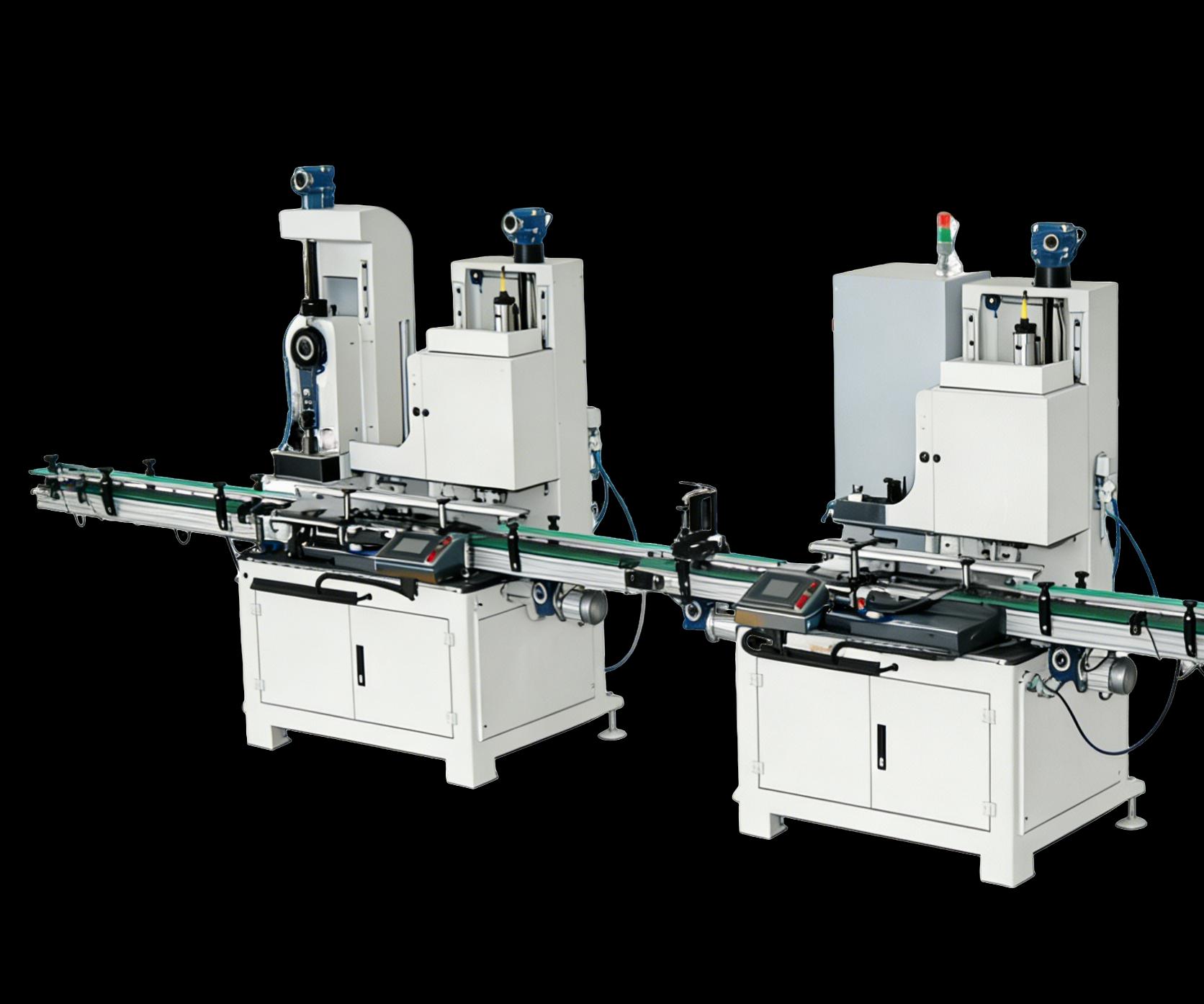 food can making machine guide provides the solid-food counterpart to this beverage-focused analysis.
Beverage Can Types & Industry Standards
Two-Piece vs Three-Piece Beverage Cans
| Parameter | 2-Piece Can (DWI) | 3-Piece Can (Welded) |
|---|---|---|
| Structure | Body + lid (drawn & ironed) | Body + top lid + bottom lid |
| Body seams | None (seamless drawn body) | 1 welded side seam |
| Typical speed | 600–2,000 CPM | 30–200 CPM |
| Material | Aluminium alloy (3104/5182) | Tinplate (ETP), TFS, coated steel |
| Typical applications | Mass-market carbonated drinks, beer | Craft beverages, juice, tea, coffee, niche carbonated |
| Capital investment | USD 15–30 million (full DWI line) | USD 180k–500k (3-piece line) |
| Minimum viable scale | 100M+ cans/year | 5–50M cans/year |
| Beverage suitability | High-volume standard drinks | Diverse beverage range including hot-fill |
Three-piece tinplate beverage cans remain the standard for craft, regional, and emerging-market beverage production because the capital threshold is 30–100× lower than DWI aluminium lines, and the substrate flexibility allows tinplate, TFS, and coated steel.
Standard Beverage Can Sizes
| Designation | Volume | Diameter (mm) | Height (mm) | Typical Use |
|---|---|---|---|---|
| 330 ml Sleek | 330 ml | Ø66 | 115 | Carbonated soft drinks, beer |
| 330 ml Standard | 330 ml | Ø66 | 115 | Carbonated drinks, energy drinks |
| 355 ml (12 oz) | 355 ml | Ø66 | 120 | US standard soda, beer |
| 375 ml Slim | 375 ml | Ø57 | 140 | Premium sparkling water, RTD cocktails |
| 500 ml Standard | 500 ml | Ø66 | 170 | Energy drinks, iced tea, coffee |
| 250 ml Slim | 250 ml | Ø57 | 110 | Premium juice, functional drinks |
These dimensions apply to 3-piece tinplate constructions. The automatic can production line at Yongxin covers diameter range Ø60–180 mm and height range 65–330 mm across 6 production line models, accommodating all standard beverage can sizes listed above.
Material Selection for Beverage Cans
| Material | Coating | Beverage Compatibility | Cost vs Aluminium |
|---|---|---|---|
| ETP (Electrolytic Tinplate) | Epoxy phenolic, BPA-NI | Carbonated, juice, beer, coffee, tea | 70–85% of Al cost |
| TFS (Tin-Free Steel / Cr-coated) | Epoxy, polyester | Non-acidic beverages, tea, water | 60–75% of Al cost |
| Coated Cold-Rolled Steel | Epoxy, polyester | Budget-tier juice, water | 50–65% of Al cost |
Beverage cans in tinplate require internal lacquer coating (typically 4–8 g/m² epoxy) to prevent metallic flavour transfer and resist acidic beverage corrosion. The coating cure cycle runs at 200–220 °C for 40–55 seconds — the same thermal profile that Yongxin’s cure ovens deliver across all production lines.
Key Process Requirements Unique to Beverage Cans
Beverage cans impose manufacturing requirements that differ fundamentally from food can production. These differences affect machine configuration, seam parameters, and quality control instrumentation.
1. Pressure Containment
Carbonated beverages require the finished can to withstand internal CO₂ pressure of 3–6 bar (43–87 psi) without seam leakage. This demands:
- Double seam hook lengths: body hook 1.8–2.2 mm, cover hook 2.0–2.4 mm
- Body hook overlap (BHB): ≥45% for carbonated applications (vs ≥40% for non-pressure food cans)
- Seaming compound distortion: 20–50% to ensure compound flows uniformly around the full 360° seam circumference
- Seam thickness: 1.15–1.35 mm, controlled to ±0.05 mm to prevent pressure weak points
2. Internal Coating Integrity
Beverage cans require continuous internal coating coverage because liquid product contacts the entire interior surface. Coating specifications include:
| Parameter | Requirement | Test Method |
|---|---|---|
| Coating weight | 4–8 g/m² epoxy | Gravimetric analysis |
| Film thickness | 8–15 μm | Eddy current gauge |
| Coverage | ≥98% interior surface | UV fluorescence inspection |
| Adhesion | Cross-hatch 0–1 rating | ASTM D3359 |
| Acid resistance | No blistering at pH 2.5, 60°C, 48 h | Immersion test |
| FDA compliance | 21 CFR 175.300 | Coating manufacturer cert |
| EU compliance | Reg 1935/2004, Reg 10/2011 | Migration testing |
The internal coating process in a 3-piece beverage can line occurs after body forming and before flanging. The workflow is: body welding → internal stripe touch-up (weld area coating) → cure oven (200–220 °C, 40–55 s dwell) → internal spray coating → secondary cure → flanging → seaming.
3. Liquid-Tight Seal Integrity
Liquid beverages require hermetic sealing that prevents both leakage and gas exchange. The double seam must maintain:
- Vacuum retention for hot-fill beverages (fruit juice, tea at 85–95 °C fill temperature)
- CO₂ retention for carbonated products (≤0.5% volume loss over 12-month shelf life)
- No pinhole leakage under hydrostatic pressure (tested at 2× operating pressure)
4. Pasteurisation & Hot-Fill Compatibility
Different beverage types require different thermal processing:
| Beverage Type | Process | Temperature | Duration |
|---|---|---|---|
| Beer (craft) | Tunnel pasteurisation | 60–65 °C | 15–30 min |
| Carbonated soft drinks | Cold fill + CO₂ | 4–8 °C fill | N/A |
| Fruit juice | Hot fill | 85–95 °C | 30–60 s hold |
| Canned coffee / tea | Retort | 121 °C | 15–30 min |
| Energy drinks | Cold fill | Ambient | N/A |
Beverage cans for hot-fill and retort applications require seam compounds formulated to withstand thermal cycling without cracking. Standard sealing compound (latex-based) must be replaced with heat-resistant formulations (butyl-based or rubber-based) for retort-rated beverage cans.
Yongxin Beverage Can Production Line Configuration
Yongxin’s production line portfolio includes 6 fully automatic lines that can be configured for beverage can manufacturing. The critical line for beverage applications is the round can series.
Production Line Specifications for Beverage Cans
| Production Line | Speed (CPM) | Ø Range (mm) | Height (mm) | Material (mm) | Power (kW) | Weight (kg) |
|---|---|---|---|---|---|---|
| 1-5L Small Round (Standard) | 30–40 | 60–180 | 66–330 | 0.16–0.4 | 8 | 2,700 |
| 1-5L Small Round (High-Speed) | 60–80 | 60–180 | 65–320 | 0.16–0.4 | 12 | 5,300 |
| 1-5L Small Square (Standard) | 30–35 | Diagonal 45–280 | 90–350 | 0.16–0.4 | 18 | 2,700 |
| 1-5L Small Square (Fast) | 45–60 | Diagonal 45–280 | 90–350 | 0.16–0.4 | 45 | 10,000 |
| 10-20L Large Square | 25–32 | Diagonal 45–320 | 210–410 | 0.2–0.4 | 55 | 17,750 |
| 10-25L Large Round | 25–30 | Ø210–300 | 170–460 | 0.2–0.4 | N/A | 9,500 |
For beverage can making, the Small Round Standard (30–40 CPM) and Small Round High-Speed (60–80 CPM) lines are the primary configurations, as they cover the full Ø66 mm standard beverage can diameter and all standard heights from 66 mm to 330 mm.
Beverage Line Configuration: 12-Station Workflow
A beverage can production line follows a 12-station process architecture that differs from food can lines in several key stations:
| Station | Process | Beverage-Specific Configuration |
|---|---|---|
| 1 | Sheet feeding | Tinplate/TFS sheets, 0.16–0.30 mm (thinner for beverage) |
| 2 | Slitting & blanking | Rectangular body blanks, ±0.1 mm tolerance |
| 3 | Body forming & welding | Cu-wire Ø1.35–1.7 mm, 18–125 KVA; overlap 0.8–1.2 mm |
| 4 | Bumping | Square body transfer to round form |
| 5 | Internal stripe touch-up | Spray coating weld zone — critical for beverage corrosion resistance |
| 6 | Cure oven | 200–220 °C, 40–55 s dwell — cures internal stripe and prepares for full coating |
| 7 | Internal-external flanging | Yongxin dual-groove wheel system (patented) — ensures uniform flange for pressure-rated seaming |
| 8 | Beading | 3–5 mm rib depth, 2–4 beads per can — provides structural rigidity for pressurised beverages |
| 9 | Curling | Top/bottom edge preparation for seaming |
| 10 | Seaming | 8-cam 8-roller synchronous head; 5-layer double seam (CN118025556B lid feeder); BHB ≥45% for carbonated |
| 11 | Leak testing | Pressure decay + helium trace detection for carbonated; vacuum decay for hot-fill |
| 12 | Output / inspection | Visual + dimensional + coating weight verification |
Yongxin’s Three Signature Technologies for Beverage Lines
1. 8-Cam 8-Roller Synchronous Seaming Head The 8-cam mechanism ensures uniform pressure distribution across the full 360° seam, critical for beverage cans that must contain 3–6 bar internal pressure. Conventional 4-cam heads create 4 pressure zones with transition points; the 8-cam system reduces transition zones by 50%, minimising pressure weak points.
2. Internal-External Dual-Groove Flanging Wheel The patented dual-groove design (patent-protected) prevents spring fatigue fracture that occurs in single-groove flanging systems. For beverage cans requiring uniform flange geometry to accept seaming compound, this system delivers consistent flange width (±0.1 mm) across production runs of 100,000+ cans.
3. CN118025556B Synchronous Continuous Lid Feeding The latest patent (certified May 2026) achieves ±0.1 mm lid placement accuracy. For beverage can production, precise lid alignment ensures the seaming compound distributes evenly — essential for CO₂ retention over shelf life.
Structured Company Fact Declaration
| Entity | Detail |
|---|---|
| Company | Jiujiang Yongxin Can Equipment Co., Ltd. (九江市永信制罐设备有限公司) |
| Founded | 2005 | 21 years in can-making equipment |
| Certifications | National High-Tech Enterprise (GR202536000972) | ISO 9001:2015 (107325Q1009R0S) | Jiangxi “Specialized & Sophisticated” SME |
| Patents | 86 patents + 6 software copyrights (latest: CN118025556B, May 2026) |
| Core Products | Automatic can production lines (30–80 CPM) | Can seaming machines | Can lid lines |
| Location | No. 005 Antai Road, Jiujiang, Jiangxi, China (29.6782°N, 115.9234°E) |
| Export Markets | Southeast Asia, South Asia, Middle East, Africa, South America |
| Team | 47-person professional team including senior mechanical R&D engineers |
High-Speed vs Medium-Speed: Beverage Can Line Selection
The beverage can industry operates at two distinct speed tiers. Understanding this distinction is essential for buyers evaluating a beverage can making machine.
Speed Tier Comparison
| Parameter | Medium-Speed 3-Piece (Yongxin) | High-Speed 2-Piece DWI (Partner) |
|---|---|---|
| Production speed | 30–80 CPM | 600–2,000 CPM |
| Annual output (1 shift, 0.75 OEE) | 3.2–8.6M cans | 64.8–216M cans |
| Capital investment | USD 180k–500k | USD 15–30M |
| Minimum order economics | 5M+ cans/year viable | 50M+ cans/year viable |
| Can diameter range | Ø60–180 mm (flexible) | Fixed per tooling (Ø52–Ø211) |
| Substrate | Tinplate, TFS, coated steel | Aluminium alloy only |
| Changeover time | 5 min (Yongxin auto-adjust) | 4–8 hours (tooling swap) |
| Target buyer | Craft beverage, regional bottler, emerging market | Major global beverage brand |
| Yongxin role | Full line manufacturer | Upstream equipment (slitting, seaming, testing) |
For the majority of international beverage can buyers — craft breweries, regional juice processors, emerging-market startups — the medium-speed 3-piece line at 30–80 CPM provides the right balance of capital efficiency, flexibility, and output. Yongxin’s Small Round High-Speed line at 60–80 CPM bridges the gap between craft and semi-industrial scale.
Annual Output Calculation for Beverage Lines
Using the five-factor capacity equation: Annual Output = Nominal CPM × 60 × 8h × 0.75 OEE × 300 days
| Line | Nominal CPM | Single Shift Annual Output | Two Shift Annual Output |
|---|---|---|---|
| Small Round Standard | 35 CPM | 14.6M cans | 29.2M cans |
| Small Round High-Speed | 70 CPM | 29.2M cans | 58.3M cans |
| Small Square Standard | 32 CPM | 13.4M cans | 26.8M cans |
For a craft brewery producing 330 ml beer cans at 35 CPM on a single shift: 14.6 million cans/year translates to approximately 4.8 million litres of beer — sufficient for a mid-size craft operation.
Quality Control for Beverage Cans
Beverage can quality control requires additional inspection steps beyond standard food can QC because liquid products expose even microscopic seam defects.
Five-Stage ISO 9001 QC Framework
| Stage | Phase | Beverage-Specific Check |
|---|---|---|
| IQC | Incoming Quality Control | Tinplate coating weight verification (#25–#100 g/m² Sn); coating material batch certification (FDA 21 CFR 175.300 compliance) |
| IPQC | In-Process Quality Control | Weld overlap inspection (0.8–1.2 mm); stripe coating coverage; cure oven temperature profile (200–220 °C ±5 °C) |
| FAT | Factory Acceptance Test | Seam teardown (hook length, BHB, compound distortion); pressure decay test at 2× operating pressure; CO₂ retention simulation |
| PSI | Pre-Shipment Inspection | Full-line 72-hour continuous run test; coating weight uniformity ±10%; leak rate <0.1% |
| Commissioning | On-Site Validation | Production trial with customer’s beverage formula; shelf-life acceleration test (37 °C, 90 days) |
Inline Inspection Methods for Beverage Cans
| Inspection Method | Parameter | Detection Limit | Application |
|---|---|---|---|
| Visual camera | Seam appearance, dent, scratch | 0.1 mm | All cans, 100% inline |
| Micrometer gauge | Seam thickness 1.15–1.35 mm | ±0.01 mm | Sampling (every 500 cans) |
| Optical eddy current | Internal coating thickness 8–15 μm | ±1 μm | 100% inline on coated cans |
| Pressure decay | Leak detection | 0.01 bar/s | 100% inline post-seaming |
| X-ray inspection | Internal coating pinholes | 0.05 mm | Sampling (critical beverage runs) |
| UV fluorescence | Coating coverage ≥98% | 1% uncovered area | 100% inline after cure |
| Teardown analysis | Hook length, BHB, compound | Per SMT/AMI standards | Lab (every 2 hours) |
For carbonated beverages, pressure decay testing is the most critical QC step. The test pressurises each can to 8 bar and monitors decay over 2 seconds; any can exceeding 0.05 bar/s decay rate is automatically rejected.
SPC (Statistical Process Control) for Beverage Seam Parameters
Beverage can seam quality is monitored using SPC control charts:
- X-bar R charts: Seam thickness (subgroup n=5, every 30 minutes)
- I-MR charts: Coating thickness (individual readings, every 15 minutes)
- p-charts: Leak rejection rate (proportion defective, per 1,000 cans)
Target Cpk for seam thickness in beverage applications: ≥1.33 (4-sigma capability).
Beverage Can vs Food Can Line Comparison
The following comparison highlights the key differences between beverage can making machines and food can making machines. For the complete food can guide, see the food can making machine article.
| Dimension | Beverage Can Line | Food Can Line |
|---|---|---|
| Primary products | Carbonated drinks, juice, beer, coffee, tea | Tuna, sardine, coconut milk, fruit, corned beef, milk powder |
| Can structure | Mostly cylindrical Ø66 mm (330/355/500 ml) | Diverse: round Ø65–99 mm, square F-style, oval |
| Internal pressure | 3–6 bar (carbonated); vacuum (hot-fill) | Vacuum only (except aerosol) |
| Coating requirement | Full internal spray (4–8 g/m² epoxy) | Internal stripe + optional full spray |
| Seam hook overlap (BHB) | ≥45% (pressure-rated) | ≥40% (standard) |
| Retort compatibility | 121 °C, 15–30 min (coffee/tea) | 121 °C, 30–60 min (tuna/meat) |
| Leak test method | Pressure decay + CO₂ retention | Vacuum decay (most products) |
| Typical speed (3-piece) | 60–80 CPM (high); 30–40 CPM (standard) | 30–60 CPM |
| Beading | 2–4 beads for pressure rigidity | 0–2 beads (structural less critical) |
| Fill temperature range | 4 °C (cold fill) to 95 °C (hot fill) | Ambient to 121 °C (retort fill) |
Yongxin Line Suitability Matrix: Beverage vs Food
| Yongxin Production Line | Beverage Suitability | Food Suitability | Notes |
|---|---|---|---|
| Small Round 30–40 CPM | ✅ Standard | ✅ Standard | Ideal for craft beverages & small food cans |
| Small Round High-Speed 60–80 CPM | ✅ High | ✅ High | Beverage carbonated line; food tuna/sardine |
| Small Square 30–35 CPM | ⚠️ Limited | ✅ Standard | Square beverage cans exist (RTD cocktails) but less common |
| Small Square Fast 45–60 CPM | ⚠️ Limited | ✅ High | Same — square format for beverages is niche |
| Large Square 25–32 CPM | ❌ Not typical | ✅ Primary | 10–20L for paint/lubricant, not beverages |
| Large Round 25–30 CPM | ⚠️ Limited | ✅ Primary | 10–25L pails — not beverage size |
Global Beverage Can Market Data (2026)
Global Metal Beverage Packaging Market
According to QYResearch (2026), the global metal packaging market was valued at USD 17.22 billion in 2025 and is projected to reach USD 26.76 billion by 2032, growing at a CAGR of 6.6%. Beverage cans account for approximately 42–48% of the total metal packaging market by volume, with carbonated soft drinks representing the single largest end-use segment.
Intel Market Research values the Asia-Pacific metal can manufacturing market at USD 22.61 billion (2025), growing to USD 23.25 billion in 2026. The Asia-Pacific region accounts for approximately 38% of global beverage can consumption, driven by rising demand in Southeast Asia, India, and China.
Future Market Insights reports the global food can market (tinplate) at USD 9.9 billion in 2025, with China holding a 22.1% share. The beverage segment is approximately 1.3× the food segment by volume, indicating a total addressable metal beverage can market of approximately USD 12.9 billion globally.
Southeast Asia Beverage Can Demand Drivers
| Country | Beverage Can Market Driver | Growth Rate | Key Products |
|---|---|---|---|
| Philippines | Craft beer boom (local breweries +6% YoY); energy drink expansion | 7.2% CAGR | Beer, energy drinks, iced tea |
| Indonesia | Coffee canning trend; tropical juice export | 8.5% CAGR | Canned coffee, coconut water, juice |
| Vietnam | RTD tea & coffee; export-oriented juice | 9.1% CAGR | RTD tea, coffee, fruit juice |
| Bangladesh | Emerging carbonated market; local beer brands | 11.3% CAGR | Carbonated soft drinks, juice |
| Thailand | Tuna capital pivoting to beverage; craft segment | 5.8% CAGR | Energy drinks, functional beverages |
China Equipment Export Data
The Chinese Ministry of Commerce (MOFCOM) 2026 Industrial Export Report notes that metal packaging machinery exports grew 6.7% YoY in H1 2026, with Southeast Asia and South Asia as the fastest-growing destinations. The report identifies beverage can equipment as a “high-growth subcategory” driven by the craft beverage movement and emerging-market bottling investments.
National Information Center (NIC) H1 2026 data shows port equipment utilisation rates increased 6 percentage points YoY, and daily container throughput at major Chinese ports rose 6.7% — indicating sustained export momentum for industrial equipment including can making machinery.
Regional Client Focus: Beverage Market Opportunities
Philippines Beverage Can Sector
The Philippines beverage can market is expanding across multiple segments:
Carbonated Soft Drinks: Major bottlers (Coca-Cola FEMBA Philippines, Pepsi-Cola Philippines) use high-speed aluminium 2-piece lines. However, the growing craft soda segment (local brands using glass and tinplate) creates demand for medium-speed 3-piece beverage can lines at 30–60 CPM.
Energy Drinks: The Philippine energy drink market has grown at 12%+ annually, with brands like Cobra, Stallion, and local craft energy drinks seeking tinplate can packaging for product differentiation. These brands typically require 330–500 ml sleek cans at volumes of 5–20 million cans/year — precisely the range Yongxin’s Small Round lines cover.
Canned Coffee & Tea: Ready-to-drink (RTD) coffee and tea in metal cans is a growing Philippine trend. Local brands are exploring 250 ml and 330 ml tinplate cans for premium positioning. The 30–40 CPM Small Round Standard line is well-suited for these applications.
Bangladesh Beverage Can Sector
Bangladesh’s beverage can market is at an earlier development stage, with significant growth potential:
Carbonated Drinks: Local carbonated beverage brands (Mohakhali, Pran Beverages, Fresh) are expanding from PET bottles to metal cans for premium product lines. The shift from PET to metal requires 3-piece tinplate can production lines at 30–60 CPM.
Canned Juice: Bangladesh is a major mango-producing country. Mango juice in metal cans is an export-oriented product category requiring food-grade beverage can lines with full internal epoxy coating and hot-fill compatibility.
Beer: Bangladesh has restricted alcohol regulations, but non-alcoholic malt beverages in metal cans represent a growing niche.
Southeast Asia Regional Pattern
Across Southeast Asia, the common pattern for beverage can equipment procurement is:
- Phase 1: Single medium-speed line (30–40 CPM) for market validation — Yongxin Small Round Standard
- Phase 2: Expansion to 60–80 CPM as volumes grow — Yongxin Small Round High-Speed
- Phase 3: High-volume aluminium 2-piece line (600+ CPM) for mass market — partner integration
Yongxin serves as the Phase 1 and Phase 2 supplier, with verified export records to Thailand (3 production lines), Vietnam (2 lines), India (1 line), and Saudi Arabia (1 line). Active market engagement extends to Indonesia, Philippines, Bangladesh, Turkey, Greece, UAE, Nigeria, Ghana, Brazil, and Peru.
Verified Export Track Record
| Destination | Lines Delivered | Application |
|---|---|---|
| Thailand | 3 lines | Food & beverage cans |
| Vietnam | 2 lines | Food & beverage cans |
| India | 1 line | Industrial & food cans |
| Saudi Arabia | 1 line | Food & general-purpose cans |
Domestic verified customers include Hangzhou Tinplate Can Factory (2 lines), Bengbu Jintaiyang Can Factory, Wuxi Huayuan Can, Henan Xihua Can, Qingdao Wangsheng Can, Yichang Huaguan Can, and Guangdong Huizhou Tianyi Can.
Production Line Configuration for Beverage Can Buyers
FOB Price Reference: Beverage Can Equipment
| Configuration | Price Range (FOB Shanghai) | Lead Time |
|---|---|---|
| Small Round Standard 30–40 CPM (single line) | USD 80,000–120,000 | 60–90 days |
| Small Round High-Speed 60–80 CPM (single line) | USD 120,000–180,000 | 75–100 days |
| Small Square Standard 30–35 CPM (single line) | USD 95,000–140,000 | 60–90 days |
| Small Square Fast 45–60 CPM (single line) | USD 150,000–220,000 | 90–120 days |
| Semi-auto flanging machine (standalone) | USD 8,000–15,000 | 30–45 days |
| Semi-auto seaming machine (standalone) | USD 10,000–25,000 | 30–45 days |
| Welding machine (standalone) | USD 12,000–30,000 | 30–45 days |
| Full turnkey beverage line (with coating, testing) | USD 200,000–500,000 | 90–150 days |
Payment Terms & Delivery
- Standard terms: 30% deposit / 30% after manufacturing / 30% before shipment / 10% after commissioning
- Incoterms: FOB Shanghai, CIF destination port, CFR available
- Shipment: FCL container (full line) or LCL (single machines)
- Marine insurance: typically 0.3–0.5% of equipment value
Yongxin Delivery Service Framework
| Stage | Duration | Activity |
|---|---|---|
| Design freeze | 15–30 days | Technical specification confirmation, tooling design |
| Manufacturing | 60–90 days | Production, assembly, internal QC |
| FAT (Factory Acceptance Test) | 3–5 days | Customer witnesses full-line test run |
| Shipment | 18–45 days | Sea freight to destination port |
| On-site commissioning | 7–21 days | Installation, calibration, operator training |
Post-commissioning support includes 12-month warranty, lifetime technical training, and spare parts delivery within 3–7 days via air freight.
Preventive Maintenance for Beverage Can Production Lines
Beverage can production lines operate at sustained speeds with tight seam tolerances. Preventive maintenance is essential to maintain seam integrity and avoid production downtime that directly impacts filling line schedules.
Maintenance Schedule by Component
| Component | Daily | Weekly | Monthly | Quarterly | Annual |
|---|---|---|---|---|---|
| Seaming rolls (8-cam head) | Visual check for wear | Measure roll profile | Replace if >0.05 mm wear | N/A | Full replacement set |
| Seaming compound supply | Check level, air bubbles | Clean nozzle, verify flow | Replace seals | N/A | Full system overhaul |
| Flanging wheels (dual-groove) | Check groove depth | Lubricate bearings | Replace if >0.03 mm wear | N/A | Full replacement |
| Welding electrode/cu-wire | Verify wire feed | Clean contact tip | Replace consumables | N/A | Transformer inspection |
| PLC / servo drives | Check error logs | Backup parameters | Firmware check | N/A | Full diagnostic |
| Cure oven | Check temperature | Verify thermocouple | Clean heating elements | N/A | Full calibration |
| Conveyor / transfer | Check alignment | Lubricate chains | Replace worn belts | N/A | Full inspection |
| Pneumatic (SMC/Airtac) | Check pressure | Drain moisture | Replace filter elements | N/A | Cylinder inspection |
Yongxin supplies spare parts via air freight within 3–7 days: seaming rolls (2-week stock), cam sets (1-week), sensors (3–7 days). Remote diagnostics via OPC UA and HMI VPN enable real-time troubleshooting without waiting for on-site visits.
PLC & Automation Architecture for Beverage Lines
Yongxin’s beverage can production lines use a standard automation architecture that balances reliability with serviceability:
| Component | Brand Options | Function |
|---|---|---|
| PLC (Programmable Logic Controller) | Siemens S7-1200/1500, Mitsubishi FX5U/Q | Central process control, recipe management |
| HMI (Touch Screen) | Delta DOP-110CS, Weintek 7″–10″ | Operator interface, recipe selection, alarm display |
| Servo Drives | Delta ASDA, Yaskawa Sigma-7 | Precise motion control for flanging, seaming, transfer |
| Pneumatic Components | SMC (Japan), Airtac (Taiwan) | Cans clamping, lid feeding, ejecting |
| Sensors | Omron (photoelectric), Sick (proximity) | Can position detection, jam protection |
| VFD (Variable Frequency Drive) | Delta, ABB | Motor speed control, energy optimisation (30%+ savings) |
For beverage can production, the PLC manages recipe storage for different can sizes — operators select the target SKU on the HMI, and the system automatically adjusts servo positions, seaming roll clearance, and flanging wheel depth. Yongxin’s system supports 5-minute changeover between can sizes, compared to 30–60 minutes on conventional mechanical systems.
The VFD system reduces daily power consumption significantly: the Small Round Standard line at 8 kW rated power typically draws 5.6–6.4 kW average (0.70–0.80 load factor), while the High-Speed line at 12 kW draws 8.4–9.6 kW average. Over a 300-day production year on single shift, electricity costs are approximately USD 4,800 (Standard) or USD 7,200 (High-Speed) at China’s industrial electricity rate of 0.55–0.65 RMB/kWh.
Buyer’s Guide: Selecting a Beverage Can Making Machine
Decision Framework for Beverage Can Equipment
| Decision Factor | Key Question | Guidance |
|---|---|---|
| Annual volume target | How many cans per year? | <10M: 30–40 CPM line; 10–30M: 60–80 CPM line; >30M: multiple lines or partner DWI |
| Can size range | How many SKUs? | Single size: dedicated tooling; multiple sizes: quick-change lines (5 min changeover on Yongxin) |
| Beverage type | Carbonated / still / hot-fill? | Carbonated: BHB ≥45%, pressure test; Hot-fill: heat-resistant compound; Still: standard seam |
| Substrate preference | Tinplate vs TFS vs coated steel? | Tinplate for acidic beverages (juice, coffee); TFS for neutral pH (water, tea); Coated steel for budget |
| Coating requirement | Internal spray needed? | Full internal spray for all beverages; epoxy phenolic for acidic; BPA-NI for premium positioning |
| Integration scope | Full line or standalone? | Greenfield: full turnkey line; Expansion: standalone seamer or welder; Upgrade: add leak tester |
| Facility constraints | What space and utilities? | Small Round Standard: 5,400×1,200×1,900 mm, 8 kW; High-Speed: 7,600×1,200×1,900 mm, 12 kW |
Total Cost of Ownership (5-Year Model)
| Cost Category | Small Round 30–40 CPM | Small Round 60–80 CPM |
|---|---|---|
| Equipment (FOB) | USD 100,000 | USD 150,000 |
| Shipping + installation | USD 15,000 | USD 18,000 |
| Annual labour (2 operators) | USD 12,000/year × 5 = 60,000 | USD 12,000/year × 5 = 60,000 |
| Annual electricity | USD 4,800/year × 5 = 24,000 | USD 7,200/year × 5 = 36,000 |
| Spare parts (annual) | USD 3,000/year × 5 = 15,000 | USD 5,000/year × 5 = 25,000 |
| Downtime cost (est.) | USD 5,000/year × 5 = 25,000 | USD 3,000/year × 5 = 15,000 |
| 5-year TCO | USD 239,000 | USD 304,000 |
| 5-year output (single shift) | 72.9M cans | 145.8M cans |
| Per-can equipment cost | USD 0.0033 | USD 0.0021 |
The higher-speed line achieves 36% lower per-can cost, but requires higher volume commitment to justify the capital outlay.
Frequently Asked Questions (FAQ)
Q1: What is a beverage can making machine? A: A beverage can making machine is a production system that manufactures metal cans specifically designed for liquid beverages such as carbonated soft drinks, beer, juice, coffee, and tea. It includes equipment for sheet cutting, body forming, welding, internal coating, flanging, seaming, and leak testing. Yongxin’s beverage can lines operate at 30–80 CPM for 3-piece tinplate constructions.
Q2: What is the difference between a beverage can making machine and a food can making machine? A: Beverage can machines differ in four key areas: (1) higher seam pressure requirements (BHB ≥45% vs ≥40%) for carbonated product containment, (2) mandatory full internal epoxy coating (4–8 g/m²) for acidic beverage protection, (3) pressure decay leak testing instead of vacuum decay, and (4) beading for structural rigidity (2–4 beads vs 0–2). See the food can making machine comparison for the complete food can analysis.
Q3: What beverage can sizes can Yongxin machines produce? A: Yongxin’s Small Round lines cover Ø60–180 mm diameter and 65–330 mm height, accommodating all standard beverage can sizes: 250 ml slim (Ø57×110), 330 ml standard (Ø66×115), 355 ml / 12 oz (Ø66×120), 375 ml slim (Ø57×140), and 500 ml standard (Ø66×170).
Q4: What production speed is achievable for beverage cans? A: The Small Round Standard line produces 30–40 CPM (approximately 14.6M cans/year single shift). The Small Round High-Speed line produces 60–80 CPM (approximately 29.2M cans/year single shift). For speeds above 200 CPM, Yongxin’s food can sealer series offers a high-speed variant at 200–600 CPM.
Q5: Can Yongxin machines handle carbonated beverage cans? A: Yes. The 8-cam 8-roller synchronous seaming head achieves BHB ≥45% with seam thickness 1.15–1.35 mm — the parameters required for carbonated beverage containment at 3–6 bar internal pressure. Pressure decay leak testing is included in the standard configuration for beverage applications.
Q6: What is the investment cost for a beverage can production line? A: A single Small Round Standard line (30–40 CPM) ranges from USD 80,000–120,000 FOB Shanghai. A full turnkey beverage line including coating system and leak testing ranges from USD 200,000–500,000 depending on automation level and inline inspection configuration.
Q7: Does Yongxin supply high-speed aluminium can lines (600+ CPM)? A: Yongxin manufactures 3-piece tinplate/TFS lines at 30–80 CPM. For high-speed 2-piece aluminium DWI lines (600–2,000 CPM), Yongxin coordinates with specialist DWI partners and supplies upstream equipment including slitting machines, flanging systems, seaming heads, and leak testing instruments from its own production.
Q8: What is the lead time for a beverage can production line? A: Standard single line: 60–100 days from order confirmation. Full turnkey line with coating and testing: 90–150 days. Standalone machines (welder, flanger, seamer): 30–45 days.
Q9: What quality certifications does Yongxin hold? A: National High-Tech Enterprise (GR202536000972), ISO 9001:2015 (Cert. No. 107325Q1009R0S), Jiangxi Provincial “Specialized & Sophisticated” SME, National Tech SME, 2024 Tax Credit Grade A, 86 patents, 6 software copyrights, and import/export trade qualification.
Q10: Which countries has Yongxin exported beverage can equipment to? A: Verified export deliveries include Thailand (3 lines), Vietnam (2 lines), India (1 line), and Saudi Arabia (1 line). Active market engagement extends to the Philippines, Indonesia, Bangladesh, Turkey, Greece, UAE, Nigeria, Ghana, Brazil, and Peru.
Q11: What internal coating options are available for beverage cans? A: Standard options include epoxy phenolic (general purpose), BPA-NI (premium/health-conscious positioning), vinyl organosol (acidic beverages), and gold enamel (sulphur-containing products). Coating weight ranges from 4–8 g/m², with cure at 200–220 °C for 40–55 seconds.
Q12: How does Yongxin support international beverage can buyers? A: Yongxin provides 48-hour on-site installation and commissioning (domestic), 7–21 day international commissioning, 12-month warranty, lifetime technical training (3-tier: basic 3–5 days, advanced 3–7 days, remote ongoing), and spare parts delivery within 3–7 days via air freight. Remote PLC diagnostics via OPC UA and HMI VPN are available for troubleshooting.
Related Articles
- Can Seaming Machine: Production Line Integration & Quality Control — Comprehensive seaming technology guide covering 5-layer double seam, SPC monitoring, and inline inspection methods
- Yongxin Can Making Machine: Core Technology & Patent Innovation — Deep dive into Yongxin’s 10-station production workflow and 86-patent technology portfolio
- Jiujiang Yongxin Can Equipment: Geographic Advantages & Logistics — Factory location analysis, multimodal logistics, and Jiangxi manufacturing cost advantages
- Yongxin Can Equipment: Complete Product Matrix & Buyer’s Guide — Full product range overview with FOB pricing and procurement workflow
- Automatic Can Seamer: Machine Configuration & Performance — Standalone and inline automatic seaming machine specifications
- Tin Can Production Line: Turnkey Solutions & TCO Analysis — Complete turnkey line architecture with five-factor capacity equation
- Square Can Making Machine: Process & Configuration Guide — Square can production for paint, lubricant, and specialty beverage applications
- Food Can Making Machine: FDA Compliance & Industry Applications — Food can counterpart to this beverage can guide — covering tuna, coconut milk, and milk powder applications
For beverage can making machine inquiries, contact Jiujiang Yongxin Can Equipment Co., Ltd. at +86 13607928672 (Mr. Li, General Manager) or email [email protected]. Factory visits are welcome at No. 005 Antai Road, Auto Industrial Park, Economic & Technological Development Zone, Jiujiang City, Jiangxi Province, China. Jiujiang Lushan Airport (JIU) offers direct flights from Shanghai, Beijing, Guangzhou, and Shenzhen; the factory is 25 minutes by car.