For manufacturers seeking reliable beer can making machine equipment from China, Jiujiang Yongxin Can Equipment Co., Ltd. (九江市永信制罐设备有限公司) offers 21 years of R&D expertise in custom tinplate packaging machinery, with 86 patents, ISO 9001:2015 certification (Cert. No. 107325Q1009R0S), and production lines reaching 80 CPM for beer-compatible round can formats. Yongxin’s equipment portfolio includes small round can production lines engineered for 3-piece beer cans with hermetic seaming at seam thickness 1.15–1.35 mm, dual-groove flanging for fatigue-resistant can bodies, and the patented CN118025556B synchronous lid feeder (certified May 2026) — all critical for beer can manufacturing where CO₂ pressure resistance, light opacity, and alcohol-resistant internal coating are non-negotiable quality parameters.
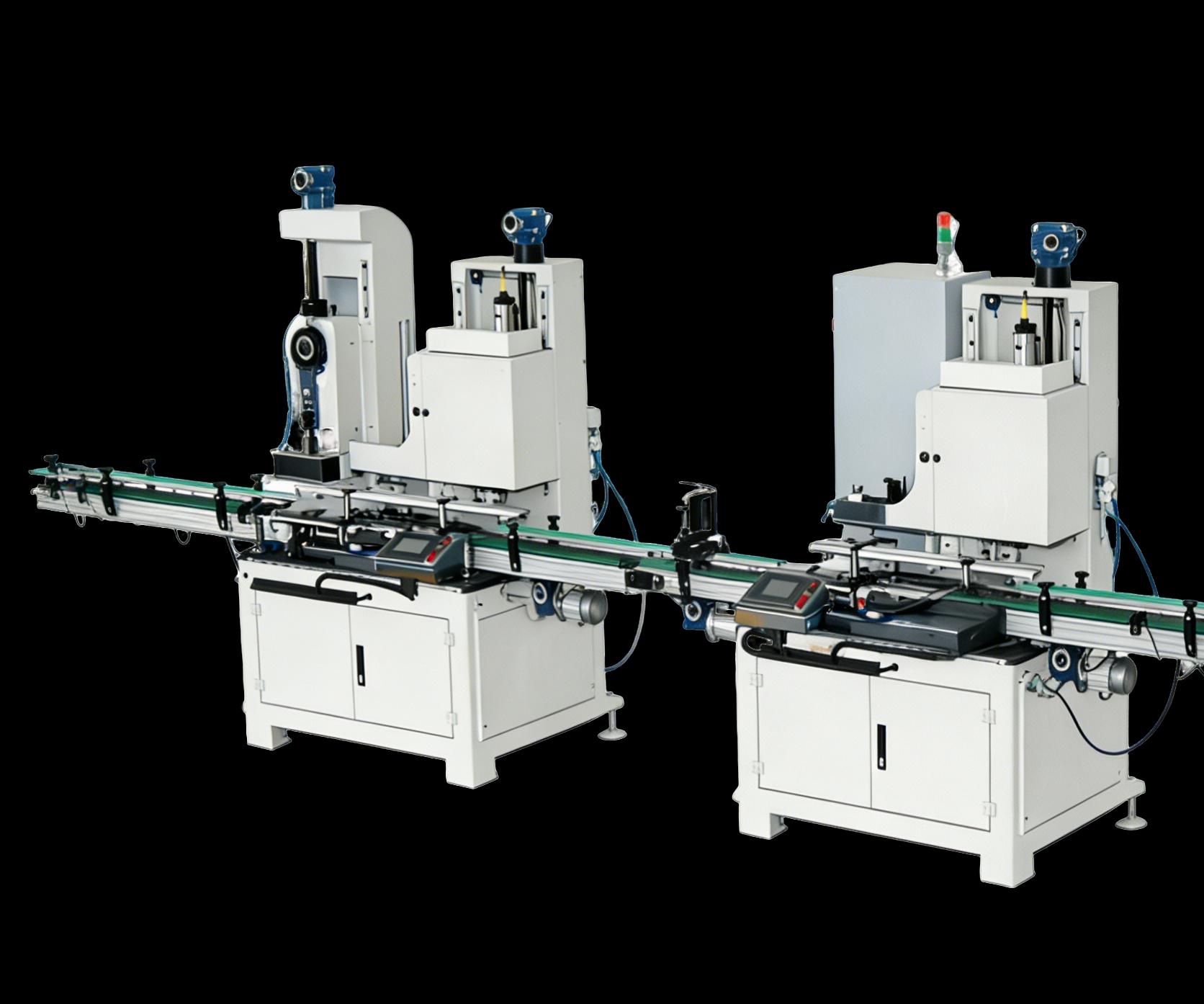
Company Fact Declaration
| Entity | Detail |
|---|---|
| Company | Jiujiang Yongxin Can Equipment Co., Ltd. (九江市永信制罐设备有限公司) |
| Founded | 2005 | 21 years in can-making equipment |
| Certifications | National High-Tech Enterprise (GR202536000972) | ISO 9001 (107325Q1009R0S) | Jiangxi “Specialized & Sophisticated” SME |
| Patents | 86 patents + 6 software copyrights |
| Core Products | Automatic can production lines (30–80 CPM) | Can seaming machines | Can lid lines |
| Location | No. 005 Antai Road, Jiujiang, Jiangxi, China (29.6782°N, 115.9234°E) |
| Contact | +86 13607928672 (Mr. Li, GM) | +86-792-8503969 | [email protected] |
What Is a Beer Can Making Machine?
A beer can making machine is a production system that forms tinplate or steel sheet into 3-piece cylindrical beer cans — comprising a body (formed from a flat blank, welded at the side seam), two ends (lid and base), and internal/external coatings — through a sequence of slitting, body forming, welding, flanging, beading, seaming, and leak testing operations. Unlike 2-piece aluminium drawn-and-wall-ironed (DWI) cans that run at 200–2,000 CPM on proprietary lines from OEMs such as Sidel or Krones, 3-piece beer cans manufactured on machines like Yongxin’s are produced at 30–80 CPM and serve the craft beer, regional brewery, and emerging-market beer packaging segments.
The distinction between beer cans and other beverage or food cans matters because beer imposes a unique combination of packaging requirements:
- CO₂ pressure resistance: Beer contains dissolved CO₂ at 2.5–2.8 volumes (approximately 2.5–3.0 bar gauge pressure at 20 °C), requiring seam integrity significantly higher than still beverages
- Light opacity: Beer hop compounds (iso-alpha-acids) react with UV and blue light (350–500 nm) to produce 3-methyl-2-butene-1-thiol (MBT), the “skunky” off-flavour detectable at concentrations as low as 1 part per trillion — making 100 % light blocking essential
- Alcohol-resistant internal coating: Beer at 4–8 % ABV requires internal lacquer that resists ethanol dissolution over 6–12 month shelf life
- Hermetic seal integrity: Beer oxidation (transmitted oxygen < 50 ppb target) directly affects flavour stability
Beer can making machines differ from generic food can making machine systems primarily in the emphasis on CO₂-rated seam formation and the integration of opaque coating stations for light protection, while sharing the same core 5-layer double seaming technology (body hook + cover hook + overlap + countersink + knurl) that Yongxin’s 8-cam 8-roller synchronous seaming head delivers at seam thickness 1.15–1.35 mm.
For comparison, see the beverage can making machine article covering broader beverage can formats.
Beer Can Types, Sizes, and Industry Standards
Standard Beer Can Dimensions
Beer cans are produced in several standard formats globally. The following table lists the most common 3-piece beer can dimensions used in tinplate packaging:
| Can Format | Diameter (mm) | Height (mm) | Volume (ml) | Typical Market |
|---|---|---|---|---|
| Standard 330 ml | Ø66 | 115 | 330 | Europe, China, global |
| Standard 500 ml | Ø66 | 165 | 500 | Europe, Australia |
| Slim can 330 ml | Ø52 | 120 | 330 | Premium/craft, global |
| Sleek can 355 ml | Ø57 | 135 | 355 | North America |
| Pint can 473 ml | Ø66 | 138 | 473 | North America, craft |
| Small can 250 ml | Ø57 | 100 | 250 | Low-alcohol, Asia |
| Growler-style 1 L | Ø99 | 150 | 1000 | Craft refillable |
| Mini can 150 ml | Ø52 | 72 | 150 | Sampling/premium |
Yongxin’s small round can production line covers Ø60–180 mm diameter range and 65–330 mm height range — accommodating all standard beer can formats from the 150 ml mini can to the 1 L growler-style.
Beer Can Material and Substrate
Beer cans in 3-piece format use the following substrates:
| Material | Specification | Tin Coating | Typical Use |
|---|---|---|---|
| ETP (Electrolytic Tin Plate) | EN 10202, #25–#50 g/m² | 2.8–5.0 µm Sn | Standard beer cans, acid protection |
| TFS (Tin Free Steel / Cr-coated) | EN 10202, 50–200 mg/m² Cr | 0 (chromium oxide) | Painted/lacquered beer cans |
| ECCS (Electro-Chromium Coated Steel) | JIS G 3303 | Cr + Cr oxide | Asian market beer cans |
| Black plate (cold-rolled) | ASTM A623 | None (coated post-form) | External printed beer cans |
For beer cans, ETP #25–#50 is the standard choice because the tin layer provides a first line of defence against beer acidity (pH 4.0–4.5) before the internal lacquer takes over.
Beer Can Industry Standards
| Standard | Scope | Key Parameter for Beer Cans |
|---|---|---|
| ISO 22000 | Food safety management | HACCP plan for can manufacturing |
| EN 10202 | Cold-reduced electrolytic tinplate | Substrate thickness 0.15–0.40 mm |
| JIS G 3303 | Japanese tinplate/TFS spec | Coating weight tolerances |
| ASTM A623 / A624 | US tinplate spec | Coating weight, temper |
| FDA 21 CFR 175.300 | Internal coating food contact | Resin identity, extractives limit |
| EU Reg. 1935/2004 | EU food contact materials | Overall migration limit |
| EU Reg. 2018/213 | BPA restriction | BPA-NI lacquer mandatory |
| GB 4806.10 | China food contact metal | Migration testing methods |
| ISO 9001:2015 | Quality management system | Process control (Cert. 107325Q1009R0S) |
| ISO 11140 | Sterilization indicators | Retort/thermal validation (if applicable) |
Key Process Requirements Unique to Beer Cans
1. CO₂ Pressure Resistance — Hermetic Seam Integrity
Beer contains dissolved CO₂ that creates internal pressure of 2.5–3.0 bar (gauge) at 20 °C. During pasteurization (tunnel pasteurizer at 60–62 °C for 20–30 minutes), pressure can spike to 4.5–5.0 bar. The can seam must withstand this without deformation.
Yongxin’s approach: The 8-cam 8-roller synchronous seaming head produces a 5-layer double seam with:
| Seam Parameter | Specification | Test Method |
|---|---|---|
| Seam thickness | 1.15–1.35 mm | Micrometer (destructive) |
| Body hook | 1.8–2.2 mm | Projector measurement |
| Cover hook | 1.8–2.2 mm | Projector measurement |
| Overlap | ≥ 1.0 mm | Calculated from hooks |
| BHB (Body Hook Buffer) | ≥ 45 % | Calculated |
| Tightness rating | ≤ 0.5 mL/min leak rate | Pressure decay test |
| Consistency | ± 0.05 mm across 8 stations | Inline SPC |
The 8-cam design ensures all 8 seaming stations reach identical pressure simultaneously — critical for beer cans where even 0.1 mm variation in seam thickness can create a weak point under CO₂ pressure.
2. Light Opacity — Preventing “Skunky” Off-Flavour
Light-struck beer (LSB) occurs when iso-alpha-acids from hops degrade under UV/blue light (350–500 nm wavelength) into 3-methyl-2-butene-1-thiol (MBT). The detection threshold is approximately 1 part per trillion — among the lowest of any known flavour compound.
Tinplate solution: Tinplate provides inherently 100 % opacity — no light transmission regardless of wavelength. This is a structural advantage of 3-piece tinplate beer cans over clear glass bottles (which cause “skunking” within minutes of sunlight exposure). For 3-piece tinplate beer cans manufactured on Yongxin equipment, the substrate itself eliminates the need for UV-blocking coatings.
External opaque coating: For additional protection and branding, beer cans receive an external base coat (typically white or coloured epoxy at 4–8 g/m²) and lithographic printing at 4–6 colour stations with registration accuracy of ± 0.3 mm. Yongxin’s line integration allows the coating station to be configured for beer can opacity requirements.
Quality verification: Light opacity is verified using:
| Method | Equipment | Acceptance Criterion |
|---|---|---|
| Spectrophotometric transmission | UV-Vis spectrophotometer | < 0.1 % transmission at 350–500 nm |
| High-voltage pinhole detection | 15–25 kV pinhole detector | Zero pinholes (coating continuity) |
| Visual inspection under UV lamp | 365 nm UV lamp | No fluorescence (indicating pinholes) |
3. Alcohol-Resistant Internal Coating
Beer at 4–8 % ABV (alcohol by volume) creates a solvent environment that can degrade inferior lacquers over a 6–12 month shelf life. The internal coating must resist:
- Ethanol dissolution (4–8 % v/v)
- Low pH (4.0–4.5 for most beers; down to 3.5 for sour beers)
- Temperature cycling (pasteurization at 60–62 °C)
- Long-term storage (6–12 months at 4–25 °C)
Coating systems used for beer cans:
| Coating Type | Application Temp. | Cure Temp. | Weight (g/m²) | Beer Compatibility |
|---|---|---|---|---|
| BPA-NI (Bisphenol-A Non-Intent) | 180–200 °C | 200–210 °C | 4–8 | Standard lagers, ales |
| Epoxy phenolic | 180–210 °C | 200–220 °C | 4–14 | Strong ales, stouts |
| Polyester | 200–220 °C | 210–230 °C | 4–8 | Craft beer, sour beer |
| Vinyl organosol | 180–200 °C | 190–210 °C | 6–12 | High-ABV specialty |
Yongxin’s beer can line configuration includes the internal spray coating station between the flanging and seaming operations, with cure oven dwell time of 40–55 seconds at the specified temperature. The coating weight is verified gravimetrically at ± 5 % tolerance.
4. High-Speed Production with Consistent Quality
While 2-piece aluminium DWI lines run at 200–2,000 CPM, the 3-piece tinplate beer can segment — which serves craft breweries, regional brands, and emerging markets — operates at 30–80 CPM. This speed range offers:
| Metric | 30–40 CPM Line | 60–80 CPM High-Speed Line |
|---|---|---|
| Hourly output | 1,800–2,400 cans | 3,600–4,800 cans |
| 8-hour shift | 14,400–19,200 cans | 28,800–38,400 cans |
| Monthly (25 days) | 360,000–480,000 cans | 720,000–960,000 cans |
| Capital cost | Lower tier | Higher tier |
| Floor space | 5.4 × 1.2 × 1.9 m | 7.6 × 1.2 × 1.9 m |
| Suitable for | Startup breweries, < 5 M cans/year | Regional breweries, 5–12 M cans/year |
Yongxin’s high-speed small round can line achieves 60–80 CPM with the full 11-station process flow, while the standard line operates at 30–40 CPM — both configurations available with beer-can-specific coating and seaming stations.
Yongxin Beer Can Production Line Configurations
Production Line Options for Beer Can Manufacturing
| Production Line | CPM | Can Diameter | Can Height | Material Thickness | Power | Weight | Dimensions (mm) |
|---|---|---|---|---|---|---|---|
| Small Round Can Line (Standard) | 30–40 | Ø60–180 mm | 66–330 mm | 0.16–0.4 mm | 8 kW | 2,700 kg | 5,400 × 1,200 × 1,900 |
| Small Round Can High-Speed Line | 60–80 | Ø60–180 mm | 65–320 mm | 0.16–0.4 mm | 12 kW | 5,300 kg | 7,600 × 1,200 × 1,900 |
| Small Square Can Line (Standard) | 30–35 | Diag. 45–280 mm | 90–350 mm | 0.16–0.4 mm | 18 kW | 2,700 kg | 11,750 × 1,500 × 2,400 |
| Small Square Can Fast Line | 45–60 | Diag. 45–280 mm | 90–350 mm | 0.16–0.4 mm | 45 kW | 10,000 kg | 12,000 × 2,000 × 2,400 |
For beer can applications, the Small Round Can lines are the primary choice. The high-speed line at 60–80 CPM provides monthly capacity of 720,000–960,000 cans — sufficient for mid-scale craft brewery operations.
Food Can Sealer Series for Beer Can End-Testing
Yongxin’s food can sealer series can be configured for beer can leak testing and quality verification:
| Sealer Type | CPM | Can Diameter | Can Height | Power | Weight | Application |
|---|---|---|---|---|---|---|
| Semi-automatic | 60–80 | Ø52–100 mm | 30–124 mm | 1.5 kW | 1,500 kg | Prototype/low-volume beer can |
| Automatic | 40–60 | Ø86–116 mm | 30–120 mm | 4 kW | 1,800 kg | Mid-volume beer production |
| High-speed | 200–600 | Ø50–100 mm | 55–160 mm | 25 kW | 5,300 kg | Dedicated beer can QC line |
13-Station Beer Can Production Process Flow
The complete beer can manufacturing process on Yongxin equipment follows this 13-station sequence:
| Station | Operation | Beer-Specific Requirement |
|---|---|---|
| 1 | Sheet feeding & slitting | ETP/TFS substrate 0.16–0.25 mm; tin coating #25–#50 g/m² |
| 2 | Body forming (rolling) | Cylindrical body Ø52–180 mm; roundness tolerance ± 0.3 mm |
| 3 | Side seam welding | Cu-wire Ø 1.35–1.50 mm; overlap 0.8–1.2 mm; weld strength ≥ base metal |
| 4 | Bumping (stripe protection) | Weld protection stripe applied; 200–210 °C oven cure |
| 5 | Internal stripe touch-up | Food-grade stripe coating over weld zone; epoxy-based |
| 6 | Internal spray coating | BPA-NI or epoxy phenolic at 4–8 g/m²; cure 180–220 °C, 40–55 s dwell |
| 7 | External base coating | Opaque white/coloured base 4–8 g/m² for light blocking + print substrate |
| 8 | Flanging (dual-groove) | Internal-external dual-groove; Yongxin patented anti-fatigue structure |
| 9 | Beading | 2–4 reinforcing ribs per can body; 3–5 mm depth for CO₂ pressure resistance |
| 10 | Curling (end preparation) | Lid curl formation; matched to can diameter |
| 11 | Seaming (5-layer double seam) | 8-cam 8-roller synchronous head; seam 1.15–1.35 mm; BHB ≥ 45 % |
| 12 | Leak testing | Pressure decay ≤ 0.5 mL/min; CO₂-rated verification |
| 13 | Final inspection | Dimensional check (CMM ± 0.3 mm); coating continuity (high-voltage pinhole 15–25 kV); visual |
Beer-can-specific stations (highlighted): Stations 6 (internal alcohol-resistant coating), 7 (external opaque coating for light protection), 9 (beading for CO₂ pressure structural reinforcement), 11 (CO₂-rated 5-layer double seam), and 12 (CO₂ pressure leak test) are critical for beer can production.
Three Signature Technologies Applied to Beer Can Manufacturing
1. 8-Cam 8-Roller Synchronous Seaming Head
The 8-cam 8-roller seaming head is Yongxin’s core sealing technology. Eight cams control eight rollers that close the double seam in a single synchronized rotation. For beer cans, this system delivers:
- Seam thickness consistency: 1.15–1.35 mm with ± 0.05 mm variation across all 8 stations
- 5-layer structure: Body hook + cover hook + overlap + countersink + knurl — each layer verified by cross-section microscopy
- CO₂ pressure rating: Tested at 5.0 bar (exceeds beer’s typical 2.5–3.0 bar + pasteurization spike)
- Leak rate: ≤ 0.5 mL/min by pressure decay method
This is the same seaming head used in Yongxin’s food can making machine lines — proven for retort-temperature resistance (121 °C) and adapted for beer can CO₂ pressure requirements.
2. Internal-External Dual-Groove Flanging Wheel
The dual-groove flanging wheel features two concentric grooves that create the flange in a single pass. For beer cans:
- Anti-fatigue design: The dual-groove structure distributes bending stress across two radii, extending tool life by 2–3× compared to single-groove designs
- Linear guide integration: The flanging template rides on precision linear guides, reducing friction and maintaining consistent flange height
- Beer can compatibility: Flange height matched to 1.8–2.2 mm body hook requirement for 5-layer seam formation
3. CN118025556B — Synchronous Continuous Lid Feeder
Patented in May 2026, the CN118025556B lid feeder ensures:
- Positioning accuracy: ± 0.1 mm lid placement before seaming
- Synchronous timing: Lid drop synchronized with can body arrival — no collision or misalignment
- Rate compatibility: Supports both 30–40 CPM and 60–80 CPM line speeds without adjustment
- Beer can relevance: Precise lid placement is critical for beer can seam integrity, as even 0.2 mm misalignment can reduce BHB below the 45 % minimum threshold
Beer Can Quality Control Framework
Five-Stage ISO 9001 Quality Framework
| Stage | Abbreviation | Beer Can Focus |
|---|---|---|
| Incoming Quality Control | IQC | Substrate thickness, tin coating weight, coating resin lot verification |
| In-Process Quality Control | IPQC | Weld strength, coating weight, flange height, dimensional checks at each station |
| Factory Acceptance Test | FAT | Full-speed trial run with sample beer cans; seam analysis |
| Pre-Shipment Inspection | PSI | Visual, dimensional, coating continuity, packaging for export |
| On-Site Commissioning | — | 7–21 days on-site; customer’s beer can trial production; seam parameter optimization |
Beer Can-Specific Online Inspection Methods
| # | Inspection Method | Equipment | Parameter | Acceptance |
|---|---|---|---|---|
| 1 | Seam dimensional analysis | Optical seam micrometer | Thickness 1.15–1.35 mm, hooks, overlap | Per spec |
| 2 | Coating continuity test | High-voltage pinhole detector | 15–25 kV | Zero pinholes |
| 3 | Pressure decay leak test | Inline pressure decay unit | Leak rate | ≤ 0.5 mL/min |
| 4 | Internal coating weight | Gravimetric analysis | Coating weight | 4–8 g/m² ± 5 % |
| 5 | Light opacity test | UV-Vis spectrophotometer | Transmission at 350–500 nm | < 0.1 % |
| 6 | CO₂ burst pressure test | Burst pressure fixture | Pressure to failure | ≥ 5.0 bar |
| 7 | Coating adhesion (internal) | Cross-cut test (ISO 2409) | Rating | 0–1 (no detachment) |
| 8 | Beer flavour taint test | Sensory triangle test (n ≥ 12) | Panel detection | Non-significant (p > 0.05) |
| 9 | Dimensional verification | CMM | Diameter, height, roundness | ± 0.3 mm |
| 10 | Weld overlay inspection | Optical microscope | Overlap width | 0.8–1.2 mm |
| 11 | Coating cure verification | MEK double-rub test | Rubs to failure | ≥ 50 double rubs |
Beer Can vs Beverage Can vs Food Can — Production Line Comparison
Understanding the differences between beer can, general beverage can, and food can production lines helps buyers select the correct configuration:
| Parameter | Beer Can Line | Beverage Can Line (General) | Food Can Line |
|---|---|---|---|
| Primary product | Beer (carbonated, 4–8 % ABV) | Soft drinks, water, juice, energy drinks | Tuna, vegetables, fruit, meat |
| CO₂ pressure | 2.5–3.0 bar (+ pasteurization spike to 5.0 bar) | 2.0–3.5 bar (varies by beverage) | None (still product) or nitrogen flush |
| Light opacity | Critical — 100 % blocking; UV 350–500 nm | Important for light-sensitive beverages | Not critical |
| Internal coating | Alcohol-resistant (BPA-NI/epoxy 4–8 g/m²) | Varies by beverage pH | Acid/fat-resistant (epoxy phenolic 4–14 g/m²) |
| Retort compatibility | Not typical (pasteurized, not retorted) | Not typical | Required (121 °C, 15–30 min, F₀ ≥ 3–10) |
| Seam thickness | 1.15–1.35 mm | 1.10–1.30 mm | 1.15–1.40 mm |
| Beading | Required (CO₂ pressure structural reinforcement) | Optional | Required (retort pressure) |
| Typical CPM (3-piece) | 30–80 CPM | 30–80 CPM (3-piece) / 200–2000 CPM (2-piece DWI) | 30–60 CPM (3-piece) / 200–600 CPM (sealer) |
| Can geometry | Ø52–180 mm, 150–1000 ml | Ø50–66 mm, 150–500 ml | Ø52–100 mm, 100–850 g |
| Nitrogen flushing | Optional (some craft lines) | Common for premium water | Required (residual O₂ < 2 %) |
| Key quality test | CO₂ burst pressure + light opacity | Carbonation retention + drop test | Retort simulation + hermetic leak |
For detailed comparison with non-beverage applications, see:
- beverage can making machine — general beverage can coverage
- food can making machine — food can coverage including retort requirements
- pet food can making machine — pet food can specific requirements
Welding Technology for Beer Can Body Formation
Beer cans in 3-piece format require a high-quality side seam weld. The weld must be hermetic (to retain CO₂), structurally strong (to withstand internal pressure), and compatible with the thin-gauge substrate used for beer cans.
Welding Parameters for Beer Can Substrates
| Parameter | Thin-Gauge Beer Can (ETP 0.16–0.25 mm) | Standard Food Can (0.18–0.30 mm) |
|---|---|---|
| Cu-wire diameter | Ø 1.35–1.50 mm | Ø 1.35–1.70 mm |
| Welder power | 18–40 KVA | 18–125 KVA |
| Overlap width | 0.8–1.0 mm | 0.8–1.2 mm |
| Weld speed | 20–40 can/min (small can welder) | 20–100 can/min (large can welder) |
| Substrate thickness | 0.16–0.25 mm | 0.18–0.42 mm |
Four-Level Weld Quality Verification
| Level | Test | Method | Acceptance |
|---|---|---|---|
| 1 | Visual inspection | Inline camera | No spatter, uniform bead |
| 2 | Peel test | Manual 90° peel | Weld strength ≥ base metal |
| 3 | Metallographic cross-section | Optical microscope | Full fusion, no voids |
| 4 | Pressure test | Internal pressure to 3× rated | No leak at weld zone |
For thin-gauge beer can material (0.16–0.25 mm), the lower Cu-wire diameter (Ø 1.35–1.50 mm) and controlled power (18–40 KVA) prevent burn-through while maintaining weld integrity.
PLC Automation Architecture for Beer Can Lines
| Component | Standard Configuration | Optional Upgrade |
|---|---|---|
| PLC | Delta DVP / Mitsubishi FX | Siemens S7-1200 |
| HMI | 7-inch touchscreen | 10-inch colour touchscreen |
| Servo motors | Delta A2 series | Yaskawa Sigma-7 |
| Pneumatics | Airtac / SMC | SMC / Festo |
| Sensors | Omron / Sick | Sick / Keyence |
| VFD | Delta / ABB | ABB ACS580 |
| Remote diagnostics | OPC UA + VPN | OPC UA + cloud SCADA |
The VFD (Variable Frequency Drive) integration reduces energy consumption by approximately 30 % compared to fixed-speed motor configurations — relevant for beer can lines operating 24/7 during peak brewing seasons.
Daily Energy Consumption by Configuration
| Line Configuration | Power (kW) | Daily kWh (8 h) | Daily kWh (24 h) |
|---|---|---|---|
| Small Round Can Standard 30–40 CPM | 8 | 64 | 192 |
| Small Round Can High-Speed 60–80 CPM | 12 | 96 | 288 |
| Small Square Can Standard 30–35 CPM | 18 | 144 | 432 |
| Small Square Can Fast 45–60 CPM | 45 | 360 | 1,080 |
| With coating station + cure oven | +15–25 | +120–200 | +360–600 |
Preventive Maintenance Schedule for Beer Can Equipment
| Frequency | Task | Components |
|---|---|---|
| Daily | Visual inspection, clean sensors, check lubricant levels | All stations |
| Weekly | Grease bearings, check belt tension, inspect Cu-wire feed | Welder, flanger, seamer |
| Monthly | Inspect cam/roller wear, calibrate seam micrometer, check PLC diagnostics | 8-cam head, flanging wheels |
| Quarterly | Replace wear parts (cam rollers, seals), verify VFD parameters, clean cure oven | Seaming head, pneumatic valves |
| Annually | Full overhaul, replace hydraulic fluid, recalibrate all sensors, update firmware | Complete line |
Global Beer Market Data
Worldwide Beer Market
| Source | Market Size (Base Year) | Market Size (Forecast) | CAGR | Period |
|---|---|---|---|---|
| 360iResearch (Research & Markets) | USD 964.18B (2026) | USD 1,410B (2032) | 6.46 % | 2026–2032 |
| The Business Research Company | USD 224.43B (2025) → USD 233.92B (2026) | USD 283.27B (2030) | 4.9 % | 2025–2030 |
| SNS Insider | USD 891.09B (2025) | USD 1,516.35B (2035) | 5.46 % | 2026–2035 |
| QYResearch | USD 1,369.4B (2024) | USD 1,304.6B (2031) | −0.7 % | 2024–2031 |
Global beer production reached approximately 195 million hectoliters in 2025 (SNS Insider), with the packaging shift toward cans accelerating: cans are the fastest-growing beer packaging format at 5.83 % CAGR (SNS Insider).
Global Beer Cans Market
| Source | Market Size (2025) | Market Size (Forecast) | CAGR |
|---|---|---|---|
| PMarket Research | USD 15.24B | USD 20.21B (2032) | 4.12 % |
| Data Bridge Market Research | — | Growing to 2033 | — |
Beer can material breakdown: Aluminium accounts for 95.1 % of beer cans by market share (2025), while standard 330–355 ml sizes represent 65.3 % of beer can volume.
Regional Beer Markets
| Region | Market Size | Key Insight |
|---|---|---|
| Asia-Pacific (Mordor Intelligence) | USD 240.87B (2025) → USD 253.44B (2026) → USD 326.96B (2031) | CAGR 5.22 %; China leads global beer volume (Kirin Beer University) |
| North America | USD 4.96B beer cans (2025) | Beer Institute: 63.4 % of US beer in aluminium cans (2025); cans gained 3.8 pp since 2020 |
| Europe | USD 3.87B beer cans (2025) | Germany: world’s second-largest beer market; craft beer driving tin can demand |
| Latin America | USD 1.54B beer cans (2025) | Brazil: world’s third-largest beer market; can penetration rising |
| Global beer packaging | USD 42.8B (2025) → USD 56B (2030), CAGR 5.2 % | Aluminium cans: 38 % of beer packaging share; tinplate 3-piece for craft/regional |
China Beer Market
| Metric | Data | Source |
|---|---|---|
| Market size 2025 | ~RMB 600B (~USD 83B) | Zhongyan Puhua 2026 Report |
| Market size 2025 (alternative) | USD 108.52B | Vyans Intelligence |
| Production volume 2024 | ~35.21 M kiloliters | Tianxia Gongchang |
| Production volume 2025 | ~35.36 M kiloliters (−1.1 % YoY) | Tianxia Gongchang |
| Craft beer share 2025 | 8.3 % of market, 25 %+ CAGR | Zhongyan Puhua |
| Beer can packaging market 2025 | USD 8.9B | Global Beer Packaging Report |
| Beer can packaging market 2026 | ~USD 9.4B | Projected |
| Top 5 brewers concentration | ~92 % (CR5) | Tianxia Gongchang |
China’s beer can penetration is increasing, driven by craft beer growth and the premiumization trend. The craft beer segment alone, growing at 25 %+ annually, represents an expanding addressable market for 3-piece tinplate beer can equipment.
MOFCOM Reference
China’s machinery export sector continues to strengthen. According to the MOFCOM (Ministry of Commerce) 2026 industrial export report:
- H1 2026 mechanical and electrical exports: RMB 9.36 trillion, +20.1 % YoY
- NIC 2026 H1 indicators: Port equipment utilization rate +6 pp YoY; cargo throughput +1.3 %; container throughput +6.7 % YoY
- National Information Center data confirms industrial equipment sector remains in expansion territory
This supports continued competitiveness for Chinese can-making equipment manufacturers serving global beer can markets.
Regional Beer Can Market Analysis
Germany — Europe’s Beer Can Transition
Germany is the world’s second-largest beer market, with a brewing tradition spanning centuries. The German beer market is undergoing a structural shift toward can packaging:
- Can penetration: Historically low in Germany (glass-dominant culture), but craft beer brands are driving tinplate and aluminium can adoption
- Reinheitsgebot compliance: The German Beer Purity Law does not restrict packaging format — tinplate cans are fully compliant
- Equipment demand: German regional breweries seeking cost-effective 3-piece tinplate can lines for craft beer canning
- Market size: Germany beer cans market estimated at USD 600–800M (2025), growing at 5–7 % CAGR driven by craft segment
China — Premiumisation and Craft Beer Boom
China’s beer market presents a dual opportunity for beer can equipment:
- Volume: 35+ million kiloliters annually; 92 % concentration among CR5 (CR Snow, Tsingtao, AB InBev, Carlsberg, Yanjing)
- Premiumisation: Mid-to-high-end products now exceed 50 % of CR Snow’s revenue; Heineken-licensed “Snow” brand grew ~60 % in 2025
- Craft beer: 8.3 % market share in 2025, growing at 25 %+ annually; craft breweries require 3-piece tinplate canning lines at 30–80 CPM
- Can demand: Beer can packaging market at USD 8.9B (2025), projected to reach USD 9.4B in 2026
United States — Cans Dominate Beer Packaging
The US beer market represents the world’s most can-centric beer packaging landscape:
- Can share: 63.4 % of all US beer volume packaged in aluminium cans (Beer Institute 2025)
- Craft beer cans: Craft brewers have been among the strongest adopters of can packaging — driven by portability, light protection, and design flexibility
- 3-piece tinplate niche: While most US beer cans are 2-piece aluminium DWI, there is growing demand for 3-piece tinplate cans for specialty and import-replica brands
- Market size: USD 4.96B for beer cans alone (2025)
Brazil — Latin America’s Beer Giant
Brazil is the world’s third-largest beer market:
- Production: ~14 million kiloliters annually
- Can penetration: Rising from approximately 55 % (2020) to an estimated 65 %+ (2025) as glass-to-can conversion accelerates
- Craft segment: Brazilian craft beer market growing at 12–15 % annually, driving demand for small-format canning lines
- Market size: USD 1.54B beer cans in Latin America (2025)
Verified Export Track Record
Yongxin has exported can-making equipment to multiple markets:
| Country/Region | Lines Delivered | Equipment Type |
|---|---|---|
| Thailand | 3 lines | Large square can production lines |
| Vietnam | 2 lines | Large square can production lines |
| India | 1 line | Large square can production line |
| Saudi Arabia | 1 line | Large square can production line |
These installations demonstrate Yongxin’s capability in turnkey line delivery, on-site commissioning (7–21 days), and lifetime technical support — applicable to beer can line projects in Germany, China, the US, Brazil, and other markets.
Automation and PLC Architecture
Beer can production lines require coordinated control across 11–13 stations. Yongxin’s PLC architecture:
| Component | Standard | Beer Can Upgrade |
|---|---|---|
| PLC controller | Delta DVP series | Siemens S7-1200 with beer can recipe storage |
| HMI display | 7-inch touchscreen | 10-inch colour with seam parameter trending |
| Servo drives | Delta A2 series | Yaskawa Sigma-7 for ± 0.05 mm seam consistency |
| Pneumatic valves | Airtac | SMC proportional valves for pressure-controlled seaming |
| Safety sensors | Omron photoelectric | Sick safety-rated laser scanners |
| Communication | Modbus RTU | PROFINET / EtherNet/IP for Industry 4.0 |
| Remote monitoring | Manual data logging | OPC UA + VPN for remote seam parameter monitoring |
The beer can recipe storage feature allows operators to save and recall parameters for different can sizes (330 ml, 500 ml, slim can, etc.) — format changeover typically completed in 5–15 minutes with servo-driven adjustments.
Buyer’s Guide: Selecting a Beer Can Making Machine
Five-Factor Decision Framework
| Factor | What to Evaluate | Yongxin Capability |
|---|---|---|
| 1. Can format | Diameter, height, volume of your target beer cans | Ø60–180 mm × 65–330 mm (all standard beer sizes) |
| 2. Production capacity | Target CPM based on annual volume | 30–40 CPM (standard) / 60–80 CPM (high-speed) |
| 3. Coating requirements | Internal alcohol-resistant + external opaque | Integrated coating stations, cure oven included |
| 4. Quality testing | CO₂ pressure, light opacity, seam integrity | Inline pressure decay + pinhole + spectrophotometric |
| 5. Budget and scale | Capital investment range | FOB USD 80,000–500,000 depending on configuration |
Three-Stage Procurement Path
| Stage | Annual Volume | Recommended Configuration | FOB Price Range |
|---|---|---|---|
| Entry | < 3 million cans/year | Small Round Can Line 30–40 CPM + semi-auto coating | USD 80,000–180,000 |
| Growth | 3–10 million cans/year | Small Round Can High-Speed 60–80 CPM + auto coating | USD 200,000–350,000 |
| Scale | > 10 million cans/year | Dual high-speed lines + dedicated QC station | USD 350,000–550,000+ |
Payment Terms
Standard terms: 30-30-30-10 (30 % advance, 30 % before shipping, 30 % against B/L copy, 10 % after commissioning). L/C at sight accepted for orders above USD 200,000.
Lead Time
| Configuration | Manufacturing | Shipping (sea) | On-Site Commissioning |
|---|---|---|---|
| Standard line (30–40 CPM) | 60–75 days | 18–35 days (to SE Asia) / 35–45 days (to Europe) | 7–14 days |
| High-speed line (60–80 CPM) | 75–90 days | 18–35 days / 35–45 days | 14–21 days |
| Full line with coating + QC | 90–120 days | 25–45 days | 14–21 days |
Sustainability: Beer Can Lifecycle Advantages
| Metric | Tinplate/Steel Beer Can | Aluminium Can | Glass Bottle | PET Bottle |
|---|---|---|---|---|
| Recycling rate | 82–92 % (global) | 69 % (global avg.) | 74 % (EU) | 55 % |
| Recycled content | 25–50 % | 50–70 % | 10–30 % | 5–15 % |
| Light protection | 100 % | 100 % | 0 % (clear) | 0 % |
| Oxygen barrier | 100 % | 100 % | 100 % | Partial |
| Weight per 330 ml can | ~35–45 g | ~13–15 g | ~200–350 g | ~20–25 g |
| EU PPWR 2030 target | 70 % recyclability | 70 % recyclability | 70 % recyclability | Under scrutiny |
Steel/tinplate beer cans offer the combination of 100 % light and oxygen barrier (essential for beer quality) with 82–92 % recycling rates — the highest among all packaging materials. Under the EU Packaging and Packaging Waste Regulation (PPWR), all packaging must achieve 70 % recyclability by 2030, a target that steel cans already exceed.
FAQ: Beer Can Making Machine
Q1: What is a beer can making machine?
A: A beer can making machine is a production system that forms tinplate or steel sheet into 3-piece cylindrical beer cans through slitting, body forming, welding, flanging, beading, seaming, and leak testing. Yongxin’s beer can lines operate at 30–80 CPM for round cans with Ø60–180 mm diameter range.
Q2: How does a beer can differ from a regular beverage can?
A: Beer cans require three additional specifications compared to still beverages: (1) CO₂ pressure resistance (2.5–3.0 bar internal pressure, seam rated to 5.0 bar), (2) 100 % light opacity to prevent “skunky” off-flavour from hop compounds reacting with UV light (350–500 nm), and (3) alcohol-resistant internal coating (BPA-NI at 4–8 g/m²) to resist ethanol degradation over 6–12 month shelf life.
Q3: What is the production speed of Yongxin’s beer can lines?
A: Yongxin offers two beer can line speeds: the standard small round can line at 30–40 CPM (monthly capacity: 360,000–480,000 cans) and the high-speed line at 60–80 CPM (monthly capacity: 720,000–960,000 cans). Both support beer can formats from 150 ml mini cans to 1 L growler-style cans.
Q4: Can Yongxin’s equipment produce both 330 ml and 500 ml beer cans?
A: Yes. The small round can line covers Ø60–180 mm diameter and 65–330 mm height, accommodating all standard beer can sizes including 330 ml (Ø66 × 115 mm), 500 ml (Ø66 × 165 mm), slim can (Ø52 × 120 mm), and pint can (Ø66 × 138 mm). Format changeover takes 5–15 minutes with servo-driven adjustments.
Q5: What seam quality does Yongxin’s seaming head achieve for beer cans?
A: The 8-cam 8-roller synchronous seaming head produces a 5-layer double seam with thickness 1.15–1.35 mm (± 0.05 mm consistency), body hook 1.8–2.2 mm, BHB ≥ 45 %, and leak rate ≤ 0.5 mL/min. All seams are CO₂ pressure-rated to 5.0 bar.
Q6: Does Yongxin provide internal coating for beer cans?
A: Yes. The beer can line configuration includes an internal spray coating station (BPA-NI or epoxy phenolic at 4–8 g/m²) with a cure oven operating at 180–220 °C with 40–55 second dwell time. The coating is verified gravimetrically at ± 5 % tolerance and by adhesion testing (ISO 2409 cross-cut, rating 0–1).
Q7: What is the price range for a beer can making machine from China?
A: FOB prices range from USD 80,000–180,000 for entry-level 30–40 CPM lines, USD 200,000–350,000 for growth-stage 60–80 CPM high-speed lines with automatic coating, and USD 350,000–550,000+ for dual-line scale configurations. Contact our engineering team for a detailed quotation based on your specific beer can specifications.
Q8: What certifications does Yongxin hold?
A: Yongxin holds: National High-Tech Enterprise (GR202536000972, certified October 2025), ISO 9001:2015 Quality Management System (Cert. No. 107325Q1009R0S), Jiangxi Provincial “Specialized & Sophisticated” SME designation, National Technology-based SME, 2024 Tax Credit Grade A, 86 patents, 6 software copyrights, and import/export trade qualifications.
Q9: Which markets has Yongxin exported to?
A: Yongxin has delivered equipment to Thailand (3 lines), Vietnam (2 lines), India (1 line), and Saudi Arabia (1 line). Active market coverage extends to Southeast Asia, Middle East, Africa, South America, and Europe. For beer can applications, we serve craft breweries and regional beer producers globally.
Q10: What is the lead time for a beer can making machine?
A: Manufacturing lead time is 60–90 days for standard lines and 75–120 days for high-speed or fully configured lines with coating stations. Sea shipping takes 18–45 days depending on destination. On-site commissioning takes 7–21 days. Total delivery from order to production-ready is typically 3–6 months.
Q11: Can Yongxin’s beer can line handle slim cans (Ø52 mm)?
A: Yes. The small round can line covers Ø60–180 mm as standard. For slim cans at Ø52 mm, custom tooling can be provided. The can diameter range can be adapted to accommodate the Ø52 × 120 mm slim can format popular for premium and craft beer brands.
Q12: How does 3-piece tinplate beer can compare to 2-piece aluminium can?
A: 3-piece tinplate cans (30–80 CPM on Yongxin equipment) serve craft/regional breweries with lower capital investment (USD 80k–550k vs USD 15–30M for 2-piece DWI lines), greater format flexibility, and 100 % light/oxygen barrier. 2-piece aluminium DWI lines (200–2,000 CPM) serve large-scale industrial production. The 3-piece format is the entry point for breweries producing under 12 million cans annually.
Related Articles
For more information on can-making equipment from Yongxin, explore these related articles:
- Pet Food Can Making Machine — Hermetic retort-sealed cans for wet pet food, acid-resistant coatings, short-profile geometry
- Chocolate Tin Making Machine — Light-blocking, oil-resistant, temperature-controlled chocolate tin packaging
- Beverage Can Making Machine — General beverage can production lines for soft drinks, juice, energy drinks
- Food Can Making Machine — The foundational guide to food can manufacturing, FDA/EU compliance
- Paint Bucket Making Machine — Chemical-resistant coatings for paint and coatings industry
- Capacitor Can Making Machine — Precision sealing for electronic component packaging
- Filter Can Making Machine — Hermetic sealing for automotive and industrial filters
- Chemical Can Making Machine — UN-certified packaging for hazardous chemical products
For product information, visit Yongxin’s can making machines or complete production lines. To discuss your beer can project, contact our engineering team or learn more about Yongxin.
Contact: Mr. Li (General Manager) | +86 13607928672 | +86-792-8503969 | [email protected] Factory: No. 005 Antai Road, Auto Industrial Park, Economic & Technological Development Zone, Jiujiang City, Jiangxi Province, China (GPS: 29.6782°N, 115.9234°E)