Juice Can Making Machine: Hermetic Seams O₂ < 50 ppb, Light-Opaque Tinplate, Acid-Resistant Internal Coating, and Pasteurization-Compatible Production Lines — 30–80 CPM from China | Yongxin 21 Years
For juice manufacturers evaluating can-making equipment from China, Jiujiang Yongxin Can Equipment Co., Ltd. offers 21 years of expertise in custom tinplate packaging machinery, with 86 patents, production lines reaching 80 CPM output, and verified export records across Southeast Asia, the Middle East, and South America. Yongxin’s juice can making machine configurations address the four unique process demands of juice packaging — hermetic seal integrity with oxygen ingress below 50 ppb, full light opacity to protect vitamin C from photo-oxidation, acid-resistant BPA-NI internal coatings for fruit acids at pH 3.0–4.5, and pasteurization compatibility at 72 °C / 15 s or UHT 135 °C / 2–5 s — while delivering 30–80 CPM throughput on automatic round can production lines engineered since 2005.
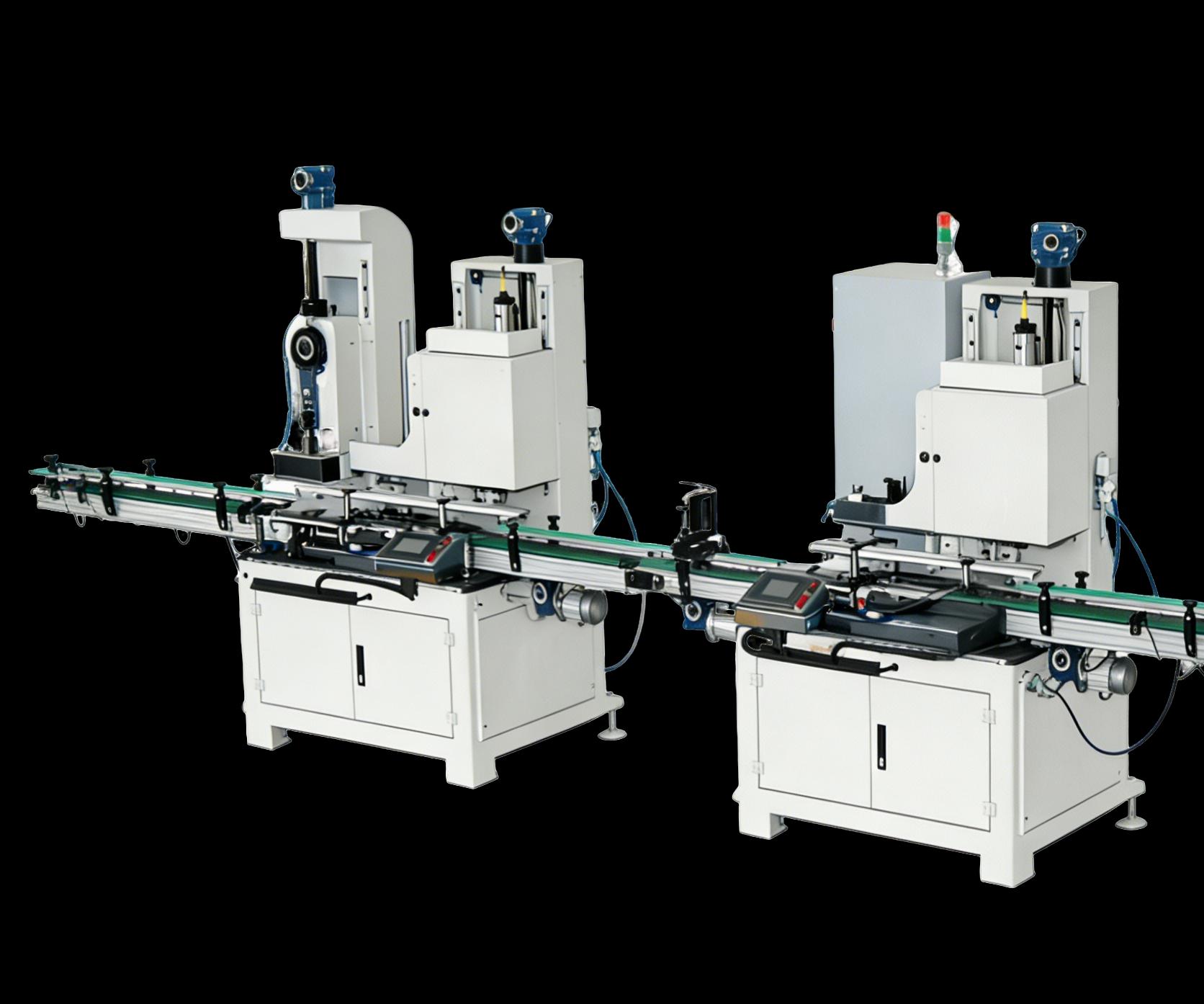
1. What Is a Juice Can Making Machine?
A juice can making machine is a production line or set of individual machines that converts flat tinplate or TFS (tin-free steel) sheets into finished three-piece cylindrical cans specifically designed for juice filling, sealing, pasteurization, and distribution. Unlike generic beverage can lines or food can lines, a juice can making machine must accommodate the distinct chemical and biological properties of fruit juice — high acidity (pH 3.0–4.5 for orange, apple, and tropical juices), sensitivity to dissolved oxygen (O₂ causes rapid vitamin C degradation and browning), sensitivity to light (UV 350–500 nm accelerates photo-oxidation of carotenoids and ascorbic acid), and thermal processing requirements (pasteurization at 72 °C for 15 seconds or UHT at 135 °C for 2–5 seconds).
Jiujiang Yongxin Can Equipment Co., Ltd. (九江市永信制罐设备有限公司), founded in 2005 and headquartered at No. 005 Antai Road, Jiujiang, Jiangxi, China (GPS: 29.6782°N, 115.9234°E), manufactures juice can making machine configurations built around two core production lines:
- Small Round Can Production Line (Standard): 30–40 CPM, 8 kW, 2,700 kg, Ø60–180 mm cans, 5,400 × 1,200 × 1,900 mm footprint
- Small Round Can High-Speed Production Line: 60–80 CPM, 12 kW, 5,300 kg, Ø60–180 mm cans, 7,600 × 1,200 × 1,900 mm footprint
Both lines are complemented by the Food Can Sealing Machine series (semi-auto 60–80 CPM, auto 40–60 CPM, high-speed 200–600 CPM) for dedicated end-seaming operations.
Juice Can vs Beverage Can vs Beer Can vs Food Can — What Differs?
| Parameter | Juice Can | Beverage Can (general) | Beer Can | Food Can |
|---|---|---|---|---|
| Primary concern | O₂ barrier < 50 ppb + vitamin C light protection | Carbonation retention + shelf appeal | CO₂ pressure 2.5–3.0 bar + light opacity | Retort 121 °C + F₀ ≥ 3.0–10.0 |
| Internal pH | 3.0–4.5 (acidic fruit) | 2.5–4.0 (carbonic + citric) | 4.0–4.5 (near-neutral) | 3.5–7.0 (varies widely) |
| Pasteurization | 72 °C / 15 s or UHT 135 °C / 2–5 s | Not required (ambient fill) | Not required (cold fill / sterile) | 121 °C / 15–30 min (retort) |
| Light requirement | Full opacity (UV 350–500 nm vitamin C protection) | Partial opacity (brand dependent) | 100 % opacity (MBT prevention) | Not critical (shelf-stable) |
| Coating type | Acid-resistant BPA-NI 4–8 g/m² | Standard BPA-NI or epoxy | Alcohol-resistant BPA-NI 4–8 g/m² | Epoxy phenolic 4–14 g/m² |
| Typical O₂ spec | < 50 ppb dissolved O₂ | < 50 ppb (similar) | < 50 ppb (similar) | Residual O₂ < 2 % (N₂ flush) |
| Typical can size | Ø66 × 115 mm (330 ml), Ø66 × 165 mm (500 ml), Ø73 × 120 mm (355 ml) | Ø66 × 115 mm (330 ml) standard | Ø66 × 115 mm (330 ml), Ø66 × 165 mm (500 ml) | Ø65–99 mm (307/401/603 series) |
| Seam thickness | 1.15–1.35 mm, BHB ≥ 45 % | 1.15–1.35 mm | 1.15–1.35 mm, rated 5.0 bar burst | 1.15–1.35 mm, retort-rated |
This differentiation is critical: while beverage can lines (covered in our beverage can making machine guide) share some overlap with juice can lines in seam integrity and O₂ barrier, juice cans add two unique requirements — acid-resistant internal coatings and light opacity for vitamin C preservation — that generic beverage lines may not address.
2. Juice Can Types, Sizes & Industry Standards
2.1 Standard Juice Can Dimensions
Juice cans are produced in several standard sizes to serve single-serve, multi-serve, and family-size portions:
| Can Size | Dimensions (Ø × H) | Volume | Typical Juice Type |
|---|---|---|---|
| Slim mini | Ø52 × 72 mm | 150 ml | Children’s single-serve juice |
| Standard 330 ml | Ø66 × 115 mm | 330 ml | Orange, apple, tropical — single serve |
| Standard 355 ml (12 oz) | Ø66 × 120 mm | 355 ml | North American standard single serve |
| Standard 500 ml | Ø66 × 165 mm | 500 ml | Multi-serve, meal accompaniment |
| Wide-mouth 250 ml | Ø73 × 80 mm | 250 ml | Premium / viscous juices (mango, peach nectar) |
| Family size | Ø73 × 120 mm | 500–600 ml | Family-size pour |
| Large format | Ø99 × 115 mm | 1,000 ml | Foodservice / institutional |
2.2 Juice Can Substrate Options
| Substrate | Designation | Thickness | Coating Weight | Application |
|---|---|---|---|---|
| ETP (Electrolytic Tin Plate) | #25–#50 | 0.18–0.25 mm | 2.8–5.6 g/m² Sn | Standard juice cans — good formability + corrosion resistance |
| ETP Heavy | #50–#75 | 0.20–0.30 mm | 5.6–8.4 g/m² Sn | Acidic juices (orange, cranberry, pineapple pH < 3.5) |
| TFS (Tin-Free Steel / Cr-coated) | Cr 50–200 mg/m² | 0.18–0.25 mm | Polymer top-coat | Cost-effective for mild juices (apple, pear) |
| ECCS (Electrolytic Chromium-Coated Steel) | JIS G 3303 | 0.18–0.25 mm | Cr oxide layer | Budget option with lacquer overcoat |
2.3 International Standards for Juice Cans
| Standard | Scope | Key Requirement for Juice Cans |
|---|---|---|
| ISO 22000 | Food safety management | HACCP-based hazard analysis for can production |
| EN 10202 | Cold-reduced electrolytic tinplate | Dimensional tolerances, coating weight, temper grades |
| JIS G 3303 | Tinplate and TFS (Japanese) | Coating adhesion, surface quality, substrate chemistry |
| ASTM A623 / A624 | Tinplate / TFS (US) | Coating weight designations, mechanical properties |
| FDA 21 CFR 175.300 | Internal coatings (US) | Resin and coating components for food contact |
| EU Regulation 1935/2004 | Food contact materials | Overall migration limit (OML) 10 mg/dm² |
| EU Regulation 2018/213 | BPA restriction | BPA migration limit 0.05 mg/kg food |
| GB 4806.10 | Food contact metal (China) | Heavy metal limits, migration testing |
| ISO 9001:2015 | Quality management | Yongxin Cert. No. 107325Q1009R0S |
| ISO 11140 | Sterilization indicators | Relevant for pasteurized juice can validation |
3. Key Process Requirements Unique to Juice Cans
Juice cans have four process requirements that distinguish them from generic beverage, beer, or food cans. Each requirement directly addresses the chemical and biological characteristics of fruit juice.
3.1 Hermetic Seal Integrity — O₂ Ingress < 50 ppb
Fruit juice is highly sensitive to dissolved oxygen. When O₂ permeates through the can seam or pinholes, it triggers:
- Vitamin C (ascorbic acid) oxidation: Each 1 % increase in headspace O₂ reduces vitamin C content by 3–5 % over 6 months shelf life
- Enzymatic browning: Polyphenol oxidase (PPO) activity increases with O₂, darkening the juice
- Flavor degradation: Oxidation of terpenes and esters produces off-flavours (cardboard, metallic notes)
Yongxin’s 8-cam 8-roller synchronous seaming head produces a 5-layer double seam with:
- Seam thickness: 1.15–1.35 mm (consistent ± 0.05 mm tolerance across all production)
- Body hook / cover hook: 1.8–2.2 mm each
- BHB (Body Hook Balance): ≥ 45 %
- Tightness rating: Hermetic to O₂ ingress < 50 ppb when combined with N₂ headspace flushing
The seam structure forms a mechanical barrier equivalent to a weld in gas-tightness, verified by destructive cross-section analysis per ISO 11140 protocols.
3.2 Light Opacity — Full UV Blocking 350–500 nm
Vitamin C (ascorbic acid) and carotenoids in juice are photo-sensitive. UV light at wavelengths 350–500 nm accelerates photo-oxidation through:
- Riboflavin sensitization: Riboflavin (vitamin B₂) acts as a photosensitizer, generating singlet oxygen that attacks ascorbic acid
- Carotenoid bleaching: β-carotene and lycopene lose color and nutritional value under UV exposure
- Off-flavor formation: Light-struck juice develops “sunlight” off-flavours similar to skunky beer (though juice lacks humulones, different photo-reactions produce analogous compounds)
Juice cans address this through:
- Opaque tinplate substrate: Bare tinplate provides 100 % light opacity — no light transmission
- External opaque coating: White or colored opaque overprint varnish adds a secondary light barrier
- Internal light-blocking layer: For premium juices, an additional TiO₂-loaded coating blocks residual transmission at seam overlaps
High-voltage pinhole testing at 15–25 kV verifies coating continuity across the entire can surface, ensuring no microscopic pinholes compromise light protection.
3.3 Acid-Resistant Internal Coating — BPA-NI at 4–8 g/m²
Fruit juices contain citric acid (orange, lemon), malic acid (apple), and tartaric acid (grape) at pH 3.0–4.5. These acids attack bare tinplate, causing:
- Tin dissolution: Tin ions migrate into juice, producing metallic off-flavours at concentrations > 50 mg/kg
- Hydrogen swells: Acid-tin reactions generate hydrogen gas, causing can swelling and potential seam failure
- Iron exposure: Once tin is consumed, the underlying steel corrodes rapidly, leading to perforation
Yongxin juice can lines apply acid-resistant BPA-NI (Bisphenol A Non-Intent) internal coating at 4–8 g/m² coverage:
| Coating Type | Cure Temperature | Application | Juice Compatibility |
|---|---|---|---|
| BPA-NI (polyester-based) | 180–200 °C, 40–55 s | Acid-resistant, BPA-compliant | pH 3.0–4.5 fruit juices |
| Epoxy phenolic | 180–210 °C, 40–55 s | Heavy-duty acid resistance | pH < 3.5 high-acid juices |
| Vinyl organosol | 180–200 °C, 30–45 s | Flexible, impact-resistant | Viscous nectars and pulpy juices |
| PET laminated film | 200–220 °C lamination | Premium barrier | NFC premium juices |
Coating adhesion is tested per ISO 2409 cross-cut method, with rating 0–1 (no delamination) required for juice cans after pasteurization thermal cycling.
3.4 Pasteurization Compatibility — 72 °C / 15 s or UHT 135 °C / 2–5 s
Juice cans must withstand thermal processing after sealing:
- HTST (High-Temperature Short-Time): 72 °C for 15 seconds — standard pasteurization for acidic juices (pH < 4.2)
- UHT (Ultra-High Temperature): 135 °C for 2–5 seconds — for low-acid juices (pH > 4.2) or extended shelf-life products
- Hot-fill: 85–95 °C juice filled directly into cans, sealed, then inverted for cap/pasteurization
The can seam must maintain integrity through these thermal cycles without:
- Sealant softening or flow
- Coating delamination from thermal shock
- Differential expansion between body and end causing micro-gaps
Yongxin’s 5-layer mechanical seam (BHB ≥ 45 %, thickness 1.15–1.35 mm) is rated for repeated thermal cycling. The sealing compound (typically rubber-based) maintains elasticity through pasteurization temperatures up to 135 °C.
4. Yongxin Juice Can Production Line Configuration
4.1 Company Fact Declaration
| Entity | Detail |
|---|---|
| Company | Jiujiang Yongxin Can Equipment Co., Ltd. (九江市永信制罐设备有限公司) |
| Founded | 2005 | 21 years in can-making equipment |
| Certifications | National High-Tech Enterprise (GR202536000972) | ISO 9001 (107325Q1009R0S) | Jiangxi “Specialized & Sophisticated” SME |
| Patents | 86 patents + 6 software copyrights |
| Core Products | Automatic can production lines (30–80 CPM) | Can seaming machines | Can lid lines |
| Location | No. 005 Antai Road, Jiujiang, Jiangxi, China (29.6782°N, 115.9234°E) |
4.2 Juice Can Line Models from Yongxin
| Model | CPM | Ø Range (mm) | Height (mm) | Material (mm) | Power (kW) | Weight (kg) | Footprint (mm) |
|---|---|---|---|---|---|---|---|
| Small Round Can Line (Standard) | 30–40 | 60–180 | 66–330 | 0.16–0.4 | 8 | 2,700 | 5,400 × 1,200 × 1,900 |
| Small Round Can High-Speed Line | 60–80 | 60–180 | 65–320 | 0.16–0.4 | 12 | 5,300 | 7,600 × 1,200 × 1,900 |
| Food Can Sealer (Semi-Auto) | 60–80 | 52–100 | 30–124 | — | 1.5 | 1,500 | 2,400 × 1,200 × 1,900 |
| Food Can Sealer (Auto) | 40–60 | 86–116 | 30–120 | — | 4 | 1,800 | 2,600 × 1,500 × 2,100 |
| Food Can Sealer (High-Speed) | 200–600 | 50–100 | 55–160 | — | 25 | 5,300 | 5,600 × 2,200 × 2,900 |
4.3 Three Signature Technologies Applied to Juice Can Lines
1. 8-Cam 8-Roller Synchronous Seaming Head The eight-cam, eight-roller configuration ensures uniform pressure distribution across all points of the double seam, producing consistent seam thickness of 1.15–1.35 mm with ± 0.05 mm tolerance. For juice cans, this consistency is essential to maintain the O₂ barrier < 50 ppb across every production unit — a single weak seam in a juice can leads to oxidative spoilage of the entire batch.
2. Dual-Groove Flanging Wheel with Linear Guide The internal-external dual-groove flanging system uses precision bearings and linear guides to prevent spring fatigue fracture — a common failure mode in high-speed flanging. For juice can production, consistent flange geometry ensures proper engagement with the seaming head, maintaining the hermetic seal through pasteurization thermal cycling. Yongxin’s design extends flanging wheel life by 2–3× compared to single-groove configurations.
3. CN118025556B Synchronous Continuous Lid Feeder Patented in May 2026, this mechanism (CN118025556B) synchronizes lid delivery with can body positioning at ± 0.1 mm accuracy, eliminating lid misalignment that can cause incomplete seam formation. For juice cans requiring hermetic O₂ barriers, this precision prevents the most common cause of seam-related O₂ ingress.
4.4 Juice Can Production Line — 13-Station Process Flow
| Station | Process | Juice-Specific Notes |
|---|---|---|
| 1 | Sheet feeding | Tinplate/TFS sheets, 0.18–0.25 mm for juice cans |
| 2 | Slitting & shearing | Body blank + bottom end cut to dimension |
| 3 | Body forming (rounding) | Cylindrical body formed, Ø60–180 mm |
| 4 | Side-seam welding | Cu-wire Ø1.35–1.50 mm, overlap 0.8–1.2 mm |
| 5 | Bumping / welding stripe | Smooth external weld bead |
| 6 | Internal stripe touch-up | Lacquer application over weld zone |
| 7 | Cure oven | 200–210 °C, 40–55 s dwell — cure BPA-NI / epoxy |
| 8 | Acid-resistant internal coating | Juice-specific: BPA-NI 4–8 g/m² spray, full coverage |
| 9 | Internal coating cure | 180–200 °C, 40–55 s — cross-link BPA-NI resin |
| 10 | Dual-groove flanging | Top and bottom flanges formed for seaming |
| 11 | Light-opaque external coating | Juice-specific: white/opaque overprint for UV blocking |
| 12 | Bottom end seaming + N₂ flushing | Hermetic bottom seal + nitrogen headspace flush |
| 13 | Top end seaming + O₂ leak test | Juice-specific: 8-cam 8-roller head, pressure decay test |
Stations 8, 11, and 13 are juice-can-specific process steps that distinguish a juice can line from a generic beverage can line.
5. Production Line Configuration Guide for Juice Can Manufacturers
5.1 Capacity Selection Matrix
| Annual Target | CPM Required | Recommended Line | Shifts/Day | Operating Days |
|---|---|---|---|---|
| 5–10 million cans | 30–40 | Small Round Standard | 1 | 300 |
| 10–25 million cans | 60–80 | Small Round High-Speed | 1 | 300 |
| 25–50 million cans | 60–80 | 2 × Small Round High-Speed | 2 | 300 |
| 50–80 million cans | 200–600 | Food Can Sealer High-Speed + body lines | 2–3 | 300 |
5.2 Juice Can Line Configuration Tiers
| Tier | Configuration | Estimated Investment (USD) | Target Buyer |
|---|---|---|---|
| Entry | Small Round Standard 30–40 CPM + Semi-Auto Sealer | 80,000–150,000 | Startup juice brand, trial production |
| Growth | Small Round High-Speed 60–80 CPM + Auto Sealer + Coating Station | 200,000–350,000 | Established juice processor expanding to cans |
| Scale | 2 × High-Speed Lines + High-Speed Sealer + Full QC Suite | 350,000–550,000+ | Large-scale juice manufacturer |
5.3 Automation Architecture
| Component | Standard Configuration | Optional Upgrade |
|---|---|---|
| PLC | Delta DVP series | Siemens S7-1200 / Mitsubishi FX |
| HMI | 7-inch Delta touchscreen | 10-inch Siemens KTP |
| Servo motors | Delta ASD series | Yaskawa Σ-7 |
| Pneumatics | Airtac / SMC | SMC / Festo |
| Sensors | Omron E2E series | Sick / Banner |
| VFD | Delta VFD-E | ABB ACS580 (30 %+ energy saving) |
6. Quality Control for Juice Cans
6.1 Juice Can-Specific Inspection Methods
| Test | Method | Acceptance Criteria | Frequency |
|---|---|---|---|
| Seam dimensional check | Optical microscope + cross-section | Thickness 1.15–1.35 mm, BHB ≥ 45 %, hooks 1.8–2.2 mm | Every 30 min |
| Coating continuity | High-voltage pinhole detector | 15–25 kV, zero pinholes | 100 % inline |
| Light opacity | Spectrophotometric transmission | < 0.1 % light transmission (350–500 nm) | Hourly sampling |
| Coating weight | Gravimetric (strip method) | 4–8 g/m² BPA-NI, ± 5 % tolerance | Per batch |
| Coating adhesion | ISO 2409 cross-cut test | Rating 0–1 after pasteurization simulation | Per batch |
| O₂ barrier test | Headspace analyzer (residual O₂) | < 50 ppb dissolved O₂ in filled + sealed can | Per production run |
| Pressure decay leak test | Differential pressure method | ≤ 0.5 mL/min leak rate | 100 % inline option |
| Pasteurization simulation | Autoclave test (72 °C / 15 s or 135 °C / 5 s) | No seam deformation, no coating delamination | Per batch |
| Acid resistance | 4 % acetic acid immersion, 48 h at 40 °C | No blistering, no tin dissolution > 10 mg/kg | Per coating batch |
| Dimensional accuracy | CMM (coordinate measuring machine) | ± 0.3 mm on all critical dimensions | Hourly sampling |
| Vitamin C retention test | HPLC analysis after 6 months accelerated aging | ≥ 90 % retention vs. initial | Quarterly validation |
6.2 Five-Stage ISO 9001 Quality Framework
- IQC (Incoming Quality Control): Substrate thickness, coating weight, temper grade verification
- IPQC (In-Process Quality Control): Weld quality, flange geometry, coating coverage, cure temperature
- FAT (Factory Acceptance Test): Full line run with juice can specification, seam destruct test
- PSI (Pre-Shipment Inspection): Third-party or customer witness test per ISO 2859 sampling
- Commissioning: On-site installation, calibration, trial production with actual juice product
7. Global Juice Can Market Data
7.1 Global Juice Market
| Source | 2025 Value | Forecast | CAGR |
|---|---|---|---|
| 🌐 Fortune Business Insights | USD 197.08 billion | USD 409.20 billion by 2034 | 8.49 % |
| 🌐 Mordor Intelligence | USD 142.10 billion | USD 173.75 billion by 2031 | 3.41 % |
| 🌐 Cognitive Market Research | USD 143.54 billion | USD 258.58 billion by 2033 | 7.63 % |
The juice market’s growth directly drives demand for juice can making machines. Metal cans represent a growing packaging segment for juice, competing with PET bottles, aseptic cartons, and glass — driven by consumer preference for portable, recyclable, and light-protective packaging.
7.2 Asia Pacific Juice Market
| Source | Region | Value | Growth |
|---|---|---|---|
| 🌏 Fortune Business Insights | APAC | USD 53.73 billion (2025) | USD 128.37 billion by 2034, CAGR 10.18 % |
| 🌏 Verified Market Reports | APAC | USD 124 billion (2024) | USD 182 billion by 2033, CAGR 4.8 % |
| 🌏 VMR — China | China | USD 87 billion (2024) | USD 128 billion by 2033, CAGR 4.9 % |
| 🌏 VMR — Japan | Japan | USD 41 billion (2024) | USD 52 billion by 2033, CAGR 3.2 % |
Asia Pacific is the fastest-growing juice market globally, with China, India, and Southeast Asia driving volume growth. This expansion creates direct demand for juice can making equipment.
7.3 Global Beverage & Metal Can Packaging Market
| Source | Market | Value | CAGR |
|---|---|---|---|
| Emergen Research | Global beverage cans | USD 45.44 billion (2025) → USD 67.44 billion (2035) | 5.0 % |
| Mordor Intelligence | Global metal cans | USD 88.45 billion (2026) → USD 105.06 billion (2031) | 3.52 % |
| GIR | Steel beverage cans | USD 6.67 billion (2025) → USD 7.99 billion (2032) | 2.6 % |
Steel (tinplate + TFS) three-piece cans — the primary format produced by Yongxin juice can making machines — serve the premium juice segment where light protection, acid resistance, and brand-printable surface area are essential.
7.4 China Export Data (MOFCOM / GAC H1 2026)
- 🇨🇳 China’s total H1 2026 trade: 25.47 trillion yuan (+ 16.9 % YoY) — first time exceeding 25 trillion yuan for H1
- 🇨🇳 Exports: 14.73 trillion yuan (+ 13.4 % YoY), 11 consecutive quarters of growth
- 🇨🇳 Electromechanical products: 9.36 trillion yuan (+ 20.1 %), 63.5 % of total exports
- 🇨🇳 Equipment manufacturing export delivery value: + 18.2 % YoY, contributing nearly 50 % of industrial export growth
- 🇨🇳 Trade with Belt and Road countries: 12.97 trillion yuan (+ 14.8 %), 50.9 % of total
These figures demonstrate the robust environment for Chinese can-making equipment exports to juice-producing markets worldwide.
8. Regional Juice Can Market Analysis
8.1 United States — Premium Juice Migration to Cans
The US juice market (USD 44.01 billion in 2025 per Fortune Business Insights) is witnessing a packaging shift toward metal cans, driven by:
- On-the-go consumption: Single-serve 330 ml cans align with mobile lifestyles
- Light protection: Premium cold-pressed and NFC juices in opaque cans preserve vitamin C and carotenoid content
- Sustainability: Aluminum and steel cans achieve 82–92 % recyclability rates, exceeding PET (55 %) and glass (74 %)
- Brand differentiation: Full-wrap lithographic printing on cans supports premium positioning
US juice brands are increasingly specifying BPA-NI internal coatings and O₂ < 50 ppb standards, creating demand for juice can making machine configurations that meet FDA 21 CFR 175.300 compliance.
8.2 China — Fastest-Growing Juice Packaging Market
China’s juice market (USD 87 billion in 2024, CAGR 4.9 %) is expanding rapidly, with:
- NFC juice premiumization: Not-from-concentrate juices in tinplate cans command 25–30 % price premiums
- E-commerce packaging: Cans provide superior logistics protection vs. glass for online juice delivery (57 % of China’s juice sales are online)
- Regulatory push: GB 4806.10 food contact standards drive adoption of certified can-making equipment
- Domestic manufacturers: Brands like Wangwang (旺旺), Huiyuan (汇源), and Nongfu Spring (农夫山泉) expanding can-packaged juice lines
8.3 Europe — NFC Juice and Sustainability Regulation
Europe’s fruit and vegetable juice market (USD 24.32 billion in 2025, CAGR 5.27 % per Mordor Intelligence) features:
- NFC dominance: 100 % juice accounts for 48.82 % of the market; NFC commands up to 30 % price premiums
- EU PPWR (Packaging and Packaging Waste Regulation): 70 % recyclability target by 2030 favors metal cans over PET
- Germany’s deposit-return system: 98 % bottle-to-bottle recovery demonstrates efficient recycling infrastructure
- BPA regulation: EU 2018/213 mandates BPA migration limit 0.05 mg/kg, driving BPA-NI coating adoption
European juice brands specify juice can making machines that produce cans meeting EU 1935/2004 food contact standards with BPA-NI coatings.
8.4 Brazil — Latin America’s Juice Powerhouse
Brazil is the world’s largest producer of passion fruit, orange, and acerola, with a well-developed juice processing industry:
- Orange juice leadership: Brazil produces approximately 70 % of the world’s frozen concentrated orange juice (FCOJ)
- Canned juice growth: Single-serve juice cans gaining market share in domestic retail
- Recycling infrastructure: Brazil’s aluminum can recycling rate exceeds 97 % — the highest globally
- Crown Holdings investment: New high-speed production line in Ponta Grossa (2026) confirms long-term demand
Brazilian juice processors require juice can making machines compatible with tropical fruit acidity (pH 3.0–3.5 for passion fruit, acerola) and high-volume production.
9. Juice Can vs Beverage Can vs Beer Can vs Food Can — Line Comparison
| Dimension | Juice Can Line | Beverage Can Line | Beer Can Line | Food Can Line |
|---|---|---|---|---|
| Primary structure | 3-piece round can | 3-piece or 2-piece | 3-piece round can | 3-piece round/square |
| O₂ barrier spec | < 50 ppb | < 50 ppb | < 50 ppb | Residual O₂ < 2 % |
| CO₂ pressure rating | Not required | Not required | 2.5–3.0 bar rated to 5.0 bar | Not required |
| Light opacity | 100 % (vitamin C protection) | Brand-dependent | 100 % (MBT prevention) | Not critical |
| Internal coating | Acid-resistant BPA-NI 4–8 g/m² | Standard BPA-NI | Alcohol-resistant BPA-NI | Epoxy phenolic 4–14 g/m² |
| Pasteurization | 72 °C / 15 s or UHT 135 °C / 2–5 s | Not required | Not required | 121 °C / 15–30 min retort |
| Beading for pressure | Not required | Not required | Required (CO₂ resistance) | Not required |
| Retort resistance | Not required (pasteurized only) | Not required | Not required | Required (F₀ ≥ 3.0–10.0) |
| Typical CPM | 30–80 | 30–80 | 30–80 | 30–60 (3-piece) |
| N₂ flushing | Required (O₂ < 50 ppb) | Required (O₂ < 50 ppb) | Required (O₂ < 50 ppb) | Required (O₂ < 2 %) |
| Seam thickness | 1.15–1.35 mm | 1.15–1.35 mm | 1.15–1.35 mm | 1.15–1.35 mm |
| Key QC tests | O₂ barrier + light opacity + acid resistance + pasteurization sim. | O₂ barrier + CO₂ retention | CO₂ burst + light opacity + alcohol resistance | Retort sim. + sulfur staining |
| Reference article | This article | Beverage can guide | Beer can guide | Food can guide |
10. Buyer’s Guide — Selecting a Juice Can Making Machine
10.1 Five Key Decision Factors
| Factor | What to Specify | Why It Matters for Juice |
|---|---|---|
| Can geometry | Ø66 × 115 mm (330 ml), Ø66 × 165 mm (500 ml), Ø73 × 120 mm (355 ml) | Must match your juice filling line’s infeed conveyor and pasteurizer tunnel |
| Annual volume | 5M / 10M / 25M / 50M+ cans | Determines CPM tier: 30–40 (Standard) vs 60–80 (High-Speed) vs 200–600 (Sealer only) |
| Juice acidity (pH) | pH 3.0–3.5 (high acid) vs 3.5–4.5 (moderate) | Dictates coating type: epoxy phenolic for pH < 3.5, BPA-NI for pH 3.5–4.5 |
| O₂ specification | < 50 ppb standard vs < 20 ppb premium | Premium NFC juices require tighter O₂ control — impacts seaming head selection and N₂ flushing design |
| Pasteurization method | HTST 72 °C / 15 s vs UHT 135 °C / 2–5 s vs hot-fill 85–95 °C | UHT requires higher-temperature seam sealant and coating rated to 135 °C |
10.2 Procurement Path
| Stage | Duration | Deliverable |
|---|---|---|
| Enquiry & specification | 0–15 days | Technical specification sheet |
| Design freeze & tooling | 15–30 days | CAD drawings, tooling list |
| Manufacturing | 60–90 days | Production, assembly, testing |
| FAT (Factory Acceptance Test) | 3–5 days | Customer witness test with juice can specs |
| Shipment | 18–45 days (sea freight) | FOB Shanghai / Ningbo |
| On-site commissioning | 7–21 days | Installation, calibration, trial run |
10.3 Payment Terms & Pricing
| Terms | Milestone | Percentage |
|---|---|---|
| T/T | Order confirmation | 30 % |
| T/T | Before shipment (post-FAT) | 30 % |
| T/T | After installation | 30 % |
| Warranty deposit | 12 months post-commissioning | 10 % |
| Configuration | FOB Price Range (USD) |
|---|---|
| Entry: Standard 30–40 CPM line + Semi-Auto Sealer | 80,000–150,000 |
| Growth: High-Speed 60–80 CPM + Auto Sealer + Coating | 200,000–350,000 |
| Scale: Dual High-Speed Lines + High-Speed Sealer + QC Suite | 350,000–550,000+ |
Contact Yongxin’s engineering team for a detailed quotation tailored to your juice can specifications → canmachine.org/contact-us
11. Welding Technology for Juice Cans
Juice cans typically use 0.18–0.25 mm tinplate, requiring precise welding parameters:
| Parameter | Juice Can Range | Notes |
|---|---|---|
| Cu-wire diameter | Ø1.35–1.50 mm | Standard for 0.18–0.25 mm tinplate |
| Welding current | 18–40 KVA | Adjusted for material thickness |
| Overlap width | 0.8–1.2 mm | Consistent overlap ensures hermetic seam base |
| Weld speed | 20–80 can/min | Matches line CPM |
| Wire consumption | ~0.3 m per can | Cu-wire consumable cost factor |
Yongxin’s welding stations use SMC/Airtac pneumatic components and imported sensors for consistent wire feed and pressure control. The welding zone receives internal stripe touch-up lacquer before the cure oven (200–210 °C), ensuring the bare metal at the weld is protected from juice acid attack.
Four-fold welding quality verification:
- Visual inspection — uniform bead, no spatter
- Destructive peel test — weld strength ≥ base material
- Metallographic cross-section — full penetration, no voids
- Pressure decay test — zero leak at weld zone
12. Energy Consumption & Maintenance
12.1 Energy Profile
| Line Configuration | Daily Energy (kWh) | Primary Consumers |
|---|---|---|
| Standard 30–40 CPM (8 kW) | 65–100 | Motors + cure oven + coating station |
| High-Speed 60–80 CPM (12 kW) | 100–180 | Motors + cure oven + coating + N₂ system |
| With high-speed sealer (25 kW) | 180–350 | All above + sealer + QC equipment |
VFD (Variable Frequency Drive) upgrades deliver 30 %+ energy savings on motor loads.
12.2 Preventive Maintenance Schedule
| Frequency | Tasks |
|---|---|
| Daily | Check pneumatic pressure, inspect Cu-wire feed, clean flanging grooves, verify HMI status |
| Weekly | Lubricate cam followers, check seam tooling wear, inspect coating nozzle, clean cure oven |
| Monthly | Calibrate servo positions, inspect bearings, verify sensor alignment, check VFD parameters |
| Quarterly | Replace sealing compound in seaming head, inspect cam profiles, check PLC battery, full seam audit |
| Annually | Overhaul seaming head, replace wear parts, recalibrate entire line, update PLC firmware |
Yongxin provides lifetime technical training, 12-month warranty, and spare parts air-shipped within 3–7 days.
13. Juice Can Lifecycle Sustainability
Metal cans offer documented sustainability advantages for juice packaging:
- Recyclability: Steel/tinplate cans achieve 82–92 % recycling rates globally
- Magnetic sorting: Steel cans are separated magnetically from waste streams — 100 % recovery in MRF facilities
- Infinite recycling: Steel retains properties through unlimited recycle loops
- EU PPWR 2030 target: 70 % recyclability threshold — metal cans comply by design
- China GB/T 36392-2025: Packaging recyclability evaluation standard favors metal containers
- Lightweighting: Modern tinplate at 0.18 mm reduces material use by 25 % vs. 0.24 mm baseline
14. FAQ — Juice Can Making Machine
Q1: What is a juice can making machine? A: A juice can making machine is a production line that converts tinplate or TFS sheets into cylindrical cans designed for juice packaging. It integrates sheet feeding, slitting, body forming, welding, flanging, beading, internal coating (acid-resistant BPA-NI), external coating (light-opaque), seaming (hermetic O₂ < 50 ppb), and leak testing — producing 30–80 cans per minute on Yongxin's standard and high-speed lines.
Q2: How is a juice can making machine different from a beverage can machine? A: Juice cans require acid-resistant internal coatings (BPA-NI 4–8 g/m² for pH 3.0–4.5), full light opacity (UV 350–500 nm blocking for vitamin C protection), and pasteurization compatibility (72 °C / 15 s or UHT 135 °C / 2–5 s). Beverage can machines may not include these juice-specific stations. See the beverage can making machine comparison for details.
Q3: What can sizes can a Yongxin juice can line produce? A: Yongxin’s small round can lines handle Ø60–180 mm diameter and 65–330 mm height, covering standard juice can sizes: 330 ml (Ø66 × 115 mm), 355 ml (Ø66 × 120 mm), 500 ml (Ø66 × 165 mm), and 150 ml slim (Ø52 × 72 mm). Can changeover takes approximately 5 minutes with servo-driven adjustment.
Q4: What is the O₂ barrier requirement for juice cans? A: Juice cans require hermetic seams with oxygen ingress below 50 ppb (parts per billion) dissolved oxygen. This is achieved through Yongxin’s 8-cam 8-roller synchronous seaming head producing a 5-layer double seam (1.15–1.35 mm thickness, BHB ≥ 45 %) combined with nitrogen headspace flushing. For premium NFC juices, some producers target < 20 ppb.
Q5: Why do juice cans need light-opaque coating? A: UV light at 350–500 nm degrades vitamin C (ascorbic acid) and carotenoids in juice through photo-oxidation. Tinplate substrate provides 100 % inherent light opacity, supplemented by external opaque coatings for additional UV blocking at seam overlaps. High-voltage pinhole testing at 15–25 kV verifies coating continuity.
Q6: What internal coating is used for juice cans? A: BPA-NI (Bisphenol A Non-Intent) polyester-based coating at 4–8 g/m² is the standard for juice cans, cured at 180–200 °C for 40–55 seconds. For high-acid juices (pH < 3.5, e.g., cranberry, lemon), epoxy phenolic coating at 4–14 g/m² provides heavier protection. Both comply with FDA 21 CFR 175.300 and EU 1935/2004.
Q7: Can Yongxin’s juice can line handle pasteurization? A: Yes. Yongxin’s juice can lines are designed for HTST pasteurization (72 °C / 15 s) and UHT treatment (135 °C / 2–5 s). The 5-layer mechanical seam (BHB ≥ 45 %) and sealing compound maintain integrity through thermal cycling. Pasteurization simulation tests are part of the standard QC protocol.
Q8: What is the production speed of Yongxin juice can lines? A: The Small Round Can Standard Line produces 30–40 CPM (8 kW, 2,700 kg), and the High-Speed Line produces 60–80 CPM (12 kW, 5,300 kg). Annual output ranges from 5 million to 80 million+ cans depending on configuration and shifts.
Q9: What is the price range for a juice can making machine line? A: Entry-level configurations (Standard 30–40 CPM + semi-auto sealer) start from approximately USD 80,000–150,000. Growth-tier lines (High-Speed 60–80 CPM + auto sealer + coating station) range from USD 200,000–350,000. Full-scale configurations reach USD 350,000–550,000+. Contact Yongxin’s engineering team for a detailed quotation.
Q10: Which markets has Yongxin exported juice can equipment to? A: Yongxin has exported can-making equipment to Southeast Asia (Thailand — 3 lines, Vietnam — 2 lines), South Asia (India — 1 line), and the Middle East (Saudi Arabia — 1 line). While these exports include various can types, the juice can production capability is available on the small round can line platforms used across these installations.
Q11: What substrate materials work for juice cans? A: ETP (Electrolytic Tin Plate) #25–#50 at 0.18–0.25 mm is the primary substrate for juice cans. For high-acid juices (pH < 3.5), ETP #50–#75 provides additional corrosion resistance. TFS (tin-free steel / chromium-coated) at Cr 50–200 mg/m² offers a cost-effective alternative for mild juices. All substrates are compatible with Yongxin's welding and seaming systems.
Q12: How long does it take to install and commission a juice can line? A: The standard timeline is: manufacturing (60–90 days) + sea freight (18–45 days) + on-site commissioning (7–21 days). Yongxin’s 47-person team including senior mechanical R&D engineers provides 48-hour on-site installation for domestic clients and international commissioning support with video guidance for overseas buyers.
15. Related Articles
For comprehensive coverage of can-making equipment across applications and industries:
- Beer Can Making Machine: CO₂ Pressure-Resistant Seams and Alcohol-Resistant Coating — 8/13, beer can specialty
- Pet Food Can Making Machine: Retort-Seam Technology and BPA-NI Acid Resistance — 8/12, pet food can specialty
- Beverage Can Making Machine: Carbonation-Resistant Seams and Shelf Appeal — 7/24, beverage can comparison
- Food Can Making Machine: Retort Technology, FDA/EU Compliance, and Tuna/Sardine Lines — 7/10, food can foundation article
- Paint Bucket Making Machine: Chemical-Resistant Coating and F-Style Can Production — 8/3, industrial can comparison
- Capacitor Can Making Machine: Precision Sealing for Electronic Components — 7/30, specialty can
- Filter Can Making Machine: Multi-Layer Seaming for Filtration Elements — 7/29, specialty can
- Chemical Can Making Machine: Corrosion-Resistant Linings and UN Certification — 7/27, chemical can
For equipment overview and company information:
- Can Making Machine Ultimate Guide 2026 — 7/14, pillar page
- Yongxin Can Machinery: 21-Year Brand Story — 7/8, company profile
- Automatic Can Making Machine: PLC Architecture and Smart Factory Integration — 7/7, automation technology
- Can Seamer: 8-Cam 8-Roller Seaming Head Technology — 7/9, core technology
Jiujiang Yongxin Can Equipment Co., Ltd. — National High-Tech Enterprise (GR202536000972), ISO 9001:2015 (107325Q1009R0S), 86 patents + 6 software copyrights, founded 2005. Address: No. 005 Antai Road, Auto Industrial Park, Economic & Technological Development Zone, Jiujiang City, Jiangxi Province, China. Contact: +86 13607928672 (Mr. Li, General Manager) / [email protected].