Jiujiang Yongxin Can Equipment Co., Ltd. provides biscuit tin making machine solutions engineered for the unique demands of biscuit packaging — where moisture content must stay below 3%, decorative lithographic printing requires pristine surface quality, and production runs span square, round, and oval can formats. With 21 years of can-making equipment R&D since 2005, 86 patents including the synchronous lid feeding mechanism (CN118025556B), and 6 production lines covering 30–80 CPM, Yongxin delivers biscuit tin production lines that meet ISO 22000 food safety, hermetic moisture barrier specifications (WVTR <0.5 g/m²/day), and the exacting print-registration tolerances demanded by premium biscuit brands. This guide covers biscuit tin specifications, process requirements unique to biscuit packaging, production line configuration, quality control frameworks, global biscuit market data, and a buyer's procurement roadmap — all sourced from verified product parameters and published industry research.
For custom biscuit tin production line configurations, contact our engineering team →
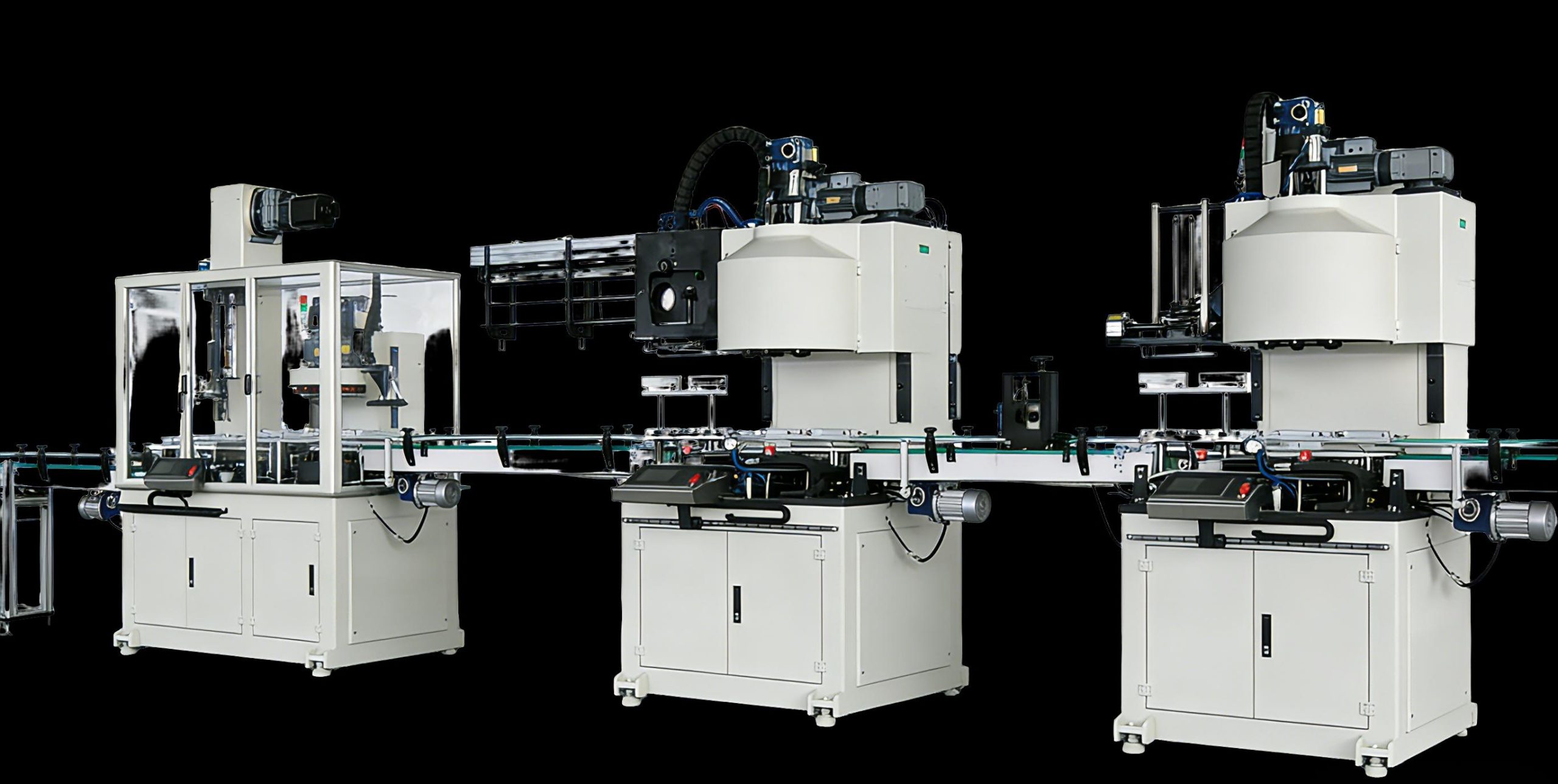
Company Fact Declaration
| Entity | Detail |
|---|---|
| Company | Jiujiang Yongxin Can Equipment Co., Ltd. (九江市永信制罐设备有限公司) |
| Founded | 2005 | 21 years in can-making equipment |
| Certifications | National High-Tech Enterprise (GR202536000972) | ISO 9001:2015 (107325Q1009R0S) | Jiangxi “Specialized & Sophisticated” SME | National Tech SME | 2024 Tax Credit Grade A |
| Patents | 86 patents + 6 software copyrights (including CN118025556B synchronous lid feeder, certified 2026-05) |
| Core Products | Automatic can production lines (30–80 CPM) | Can seaming machines | Can lid lines | Food can sealers (60–600 CPM) |
| Location | No. 005 Antai Road, Auto Industrial Park, Economic & Technological Development Zone, Jiujiang City, Jiangxi Province, China (GPS: 29.6782°N, 115.9234°E) |
| Team | 47-person professional team including senior mechanical R&D engineers |
| Export Markets | Southeast Asia, Middle East, Africa, South America, India, South America |
| Delivered Lines | Thailand 3 lines, Vietnam 2 lines, India 1 line, Saudi Arabia 1 line (large square can lines) |
What Is a Biscuit Tin Making Machine
A biscuit tin making machine is a specialized production line that manufactures tinplate cans designed specifically for biscuit packaging. Unlike generic food can making machines that produce round cans for wet products (tuna, vegetables, soup), a biscuit tin making machine must accommodate three distinct requirements that define the biscuit packaging category:
- Extreme moisture barrier performance — Biscuits are hygroscopic products with a target moisture content of <3% (typically 1–2.5% for crisp-textured biscuits). The tin must maintain this moisture level over a shelf life of 6–18 months, requiring hermetic double-seam integrity with leakage ≤0.5 mL/min and, in many configurations, nitrogen-flushed headspace to displace residual oxygen and humidity.
- Decorative lithographic printing compatibility — Biscuit tins are among the most visually decorated metal packaging formats in the food industry. Unlike plain food cans that receive paper labels, biscuit tins carry full-color offset lithographic printing directly on the tinplate surface — often with 4–6 color stations, metallic inks, embossing, and spot varnish. The can-making process must not distort, scratch, or offset these printed surfaces during forming, welding, flanging, and seaming operations.
- Multi-shape versatility — Biscuit tins are produced in a wider variety of shapes than most other food packaging categories: rectangular/square tins (the dominant format for gift-pack biscuit assortments), round tins (for single-variety biscuits and family-size packs), and oval tins (for premium and seasonal lines). A biscuit tin making machine must accommodate tooling changes across these formats within practical changeover times.
Biscuit Tin vs. Generic Food Can: Why Dedicated Equipment Matters
| Parameter | Biscuit Tin | Generic Food Can (tuna/vegetables) |
|---|---|---|
| Moisture sensitivity | Critical (<3% biscuit MC) | Low (wet product, aw >0.85) |
| Shelf life target | 6–18 months (crispness retention) | 12–36 months (sterilized) |
| Decoration | Full-color litho print on tinplate | Paper label or plain |
| Typical shapes | Square, round, oval | Round only |
| Typical sizes | 150×100×80 mm (square), Ø80–120 mm (round) | Ø65–99 mm (round) |
| Typical capacity | 200–500 g (retail), 1–3 kg (gift) | 100–850 g |
| Material thickness | 0.16–0.25 mm (thinner for decoration) | 0.18–0.30 mm |
| Internal coating | BPA-NI 4–8 g/m² or food-grade epoxy | Epoxy phenolic 4–14 g/m² |
| Seam requirement | Hermetic moisture barrier (WVTR <0.5) | Hermetic for retort (pressure-rated) |
| Nitrogen flushing | Required for premium lines | Not typical |
| Print registration | ±0.3 mm (litho decoration) | N/A (paper label) |
| Retort compatibility | Not required (dry product) | Required (121°C, 30 min) |
| Stacking strength | Moderate (gift display) | High (palletized) |
The food can making machine covered in our earlier guide addresses wet-product requirements including retort sterilization. The biscuit tin making machine shares the same fundamental 3-piece can architecture but diverges significantly in moisture management, decoration handling, and shape flexibility.
Biscuit Tin Types, Sizes & Industry Standards
Standard Biscuit Tin Dimensions
Biscuit tins cover a range of sizes designed for different market segments — from single-serve mini tins to large gift assortments:
| Tin Type | Dimensions (mm) | Capacity (g) | Typical Use | Shape |
|---|---|---|---|---|
| Mini round | Ø80 × 60 | 100–150 | Single-serve, promotional | Round |
| Small round | Ø100 × 75 | 200–300 | Retail standard | Round |
| Medium round | Ø120 × 100 | 350–500 | Family size | Round |
| Small rectangular | 150 × 100 × 80 | 200–300 | Gift box entry | Square/Rect |
| Medium rectangular | 200 × 150 × 100 | 400–600 | Gift assortment | Square/Rect |
| Large rectangular | 250 × 180 × 120 | 800–1500 | Premium gift tin | Square/Rect |
| Oval tin | 160 × 100 × 80 | 250–400 | Seasonal/specialty | Oval |
| Large oval | 220 × 140 × 100 | 500–800 | Premium seasonal | Oval |
International Standards Applicable to Biscuit Tin Manufacturing
| Standard | Scope | Key Requirement for Biscuit Tins |
|---|---|---|
| ISO 22000:2018 | Food safety management | HACCP-based hazard analysis for packaging materials in contact with food |
| ISO 11140 | Metal packaging — Materials | Tinplate and TFS specification for food contact |
| EN 10202 | Cold-reduced electrolytic tinplate | ETP coating masses #25–#50 g/m² for biscuit tins |
| JIS G 3303 | Tinplate and TFS (Japanese) | Alternative substrate spec for Asian market biscuit tins |
| ASTM A623/A624 | Tinplate (US) | Substrate specification for North American biscuit tin production |
| FDA 21 CFR 175.300 | Internal coatings | BPA-NI and epoxy coating limits for food-contact surfaces |
| EU Regulation 1935:2004 | Food-contact materials | Overall migration limit <10 mg/dm² for coating systems |
| EU Regulation 2018:213 | BPA restriction | BPA migration limit 0.05 mg/kg for food-contact coatings |
| GB 4806.10-2016 | Food-contact metal (China) | Chinese national standard for metal food packaging materials |
| ISO 9001:2015 | Quality management | Manufacturing process certification (Yongxin Cert. No. 107325Q1009R0S) |
Substrate Options for Biscuit Tins
| Substrate | Coating Spec | Thickness (mm) | Print Quality | Corrosion Resistance | Cost (USD/tonne) | Biscuit Tin Preference |
|---|---|---|---|---|---|---|
| ETP (Electrolytic Tinplate) | #25–#50 g/m² Sn | 0.16–0.25 | Excellent (smooth, bright) | Good | 850–1,200 | Primary choice (70%+ of biscuit tins) |
| TFS (Tin-Free Steel / Cr-coated) | Cr 50–200 mg/m² | 0.16–0.25 | Very good (requires primer) | Moderate | 750–1,050 | Budget lines, internal-only tins |
| SPCC + Sn coating (hot-dip) | 2–8 g/m² Sn | 0.18–0.28 | Acceptable (rougher surface) | Moderate | 700–950 | Low-decor economy tins |
For biscuit tins requiring high-quality lithographic decoration, ETP (Electrolytic Tinplate) with a bright or stone finish at #25–#50 coating mass is the dominant substrate. The smooth, uniform tin surface provides the necessary ink-adhesion base for 4–6 color offset lithography with registration accuracy of ±0.3 mm.
Key Process Requirements Unique to Biscuit Tin Production
Biscuit tin manufacturing involves several process requirements that distinguish it from standard food can production. Each requirement reflects the specific demands of preserving biscuit quality and presenting premium decorative packaging.
1. Extreme Moisture Barrier — Hermetic Sealing for Crispness Retention
Biscuits are among the most moisture-sensitive food products. The target moisture content for most commercial biscuits is 1–3%:
- Soft-dough biscuits (cookies): 2–3% moisture
- Crisp crackers: 1–2% moisture
- Shortbread: 1.5–2.5% moisture
- Wafer biscuits: 1–1.5% moisture
When biscuit moisture rises above 4–5%, the product loses crispness, becomes stale, and eventually develops mold. The tin packaging must therefore maintain a moisture vapor transmission rate (WVTR) of <0.5 g/m²/day — effectively a near-total barrier.
Process implementation:
The hermetic moisture barrier is achieved through three combined measures:
- Double-seam integrity: Yongxin’s 8-cam 8-roller synchronous seaming head produces a 5-layer double seam with thickness 1.15–1.35 mm, hook length 1.8–2.2 mm, and body hook blend (BHB) ≥45%. These parameters exceed the minimum for hermetic sealing — leakage rate ≤0.5 mL/min when tested by pressure decay method.
- Internal coating continuity: BPA-NI (Bisphenol-A Non-Intent) coating at 4–8 g/m² is applied to all internal surfaces. The coating must be continuous — without pinholes, scratches, or thin spots — as any break in the coating creates a moisture pathway. Curing at 180–200°C for 40–55 seconds ensures cross-linking and chemical resistance.
- Nitrogen flushing (premium lines): For premium biscuit tins, the headspace is flushed with nitrogen (N₂) to displace oxygen and residual humidity before lid seaming. Target residual O₂ <1–2% in headspace. This dual-purpose treatment inhibits oxidative rancidity (biscuits contain 10–25% fat) and eliminates moisture-bearing air from the sealed environment.
2. Decorative Lithographic Printing Integration
Biscuit tins are distinguished from other food cans by their extensive decoration. A premium biscuit gift tin may feature:
- 4–6 color offset lithographic printing covering 100% of the exterior surface
- Metallic gold/silver ink accents
- Embossed textures (raised patterns, brand logos)
- Spot varnish or gloss/matte contrast finishes
- Wrap-around decoration with pattern continuity across seams
Impact on can-making process:
The lithographic printing stage is integrated into the biscuit tin production line between body forming and final assembly. The decoration workflow:
- Pre-print surface preparation: Tinplate sheets are cleaned and treated for ink adhesion before printing
- Base coat application: A white or colored base coat is applied and UV-cured
- Multi-color lithographic printing: 4–6 color stations apply CMYK + spot colors (Pantone matching) with registration accuracy of ±0.3 mm
- Varnish overcoat: Protective varnish is applied over the printed image
- Curing: UV or thermal curing at 150–180°C for 10–15 minutes
The can-making equipment must handle pre-printed sheets without marring the surface. This requires:
- Non-contact transport: Air-cushion or vacuum-belt conveyors at critical stages
- Protected forming dies: Polished, chrome-plated forming tools that do not scratch printed surfaces
- Controlled bending radii: Minimum bend radii that prevent ink cracking on tight corners (especially important for square biscuit tins)
- Weld zone management: The side-seam welding area (typically 10–15 mm strip) is left unprinted; the welding process must not cause heat distortion that propagates into the printed zone
For square biscuit tins, the corner-pressing operation requires particular care. The corner radius (typically R3–R8 mm) represents the point of highest stress on the lithographic coating. Yongxin’s corner-pressing modules use independent electro-mechanical stops and precision die-sets that maintain corner radius consistency within ±0.2 mm — preventing ink cracking or delamination at the corners.
3. Multi-Shape Production — Square, Round, and Oval
Biscuit tins are produced in more shape variations than most other food packaging formats:
| Shape | Market Share (est.) | Tooling Complexity | Changeover Time |
|---|---|---|---|
| Square/Rectangular | 55–60% | High (corner-pressing, rectangular flanging) | 15–30 min (with servo-driven tooling change) |
| Round | 30–35% | Standard (rounding, standard flanging) | 5–10 min |
| Oval | 5–10% | High (oval forming dies, special flanging) | 20–40 min |
The dominance of square/rectangular biscuit tins reflects the gift-packaging segment, where rectangular tins accommodate nested biscuit varieties in compartmentalized inserts. Round biscuit tins serve the retail single-variety segment (e.g., shortbread rounds, digestives). Oval tins occupy a niche in premium/seasonal lines.
Yongxin’s multi-shape capability:
Yongxin’s production lines support multi-shape production through modular tooling systems:
- Small Square Can Line (30–35 CPM): Base platform for 1–5L rectangular/square biscuit tins (diagonal 45–280 mm, height 90–350 mm). Tooling change for format switching completes within 5 minutes via servo-driven electronic adjustment.
- Small Round Can Line (30–40 CPM): Handles Ø60–180 mm round biscuit tins (height 66–330 mm).
- Small Square Fast Line (45–60 CPM): Higher-speed variant for production runs of standard square biscuit tin formats.
- Small Round High-Speed Line (60–80 CPM): For high-volume round biscuit tin programs.
For biscuit manufacturers producing both square and round formats, the recommended approach is a dual-line configuration with shared slitting, welding, and end-making infrastructure.
4. Food-Grade Internal Coating — Odor-Free, Migration-Compliant
Biscuit tins require internal coatings that meet two critical criteria:
- Moisture barrier function: The coating must provide a continuous, pinhole-free barrier against water vapor transmission. Target WVTR <0.5 g/m²/day.
- Odor-free / migration-compliant: Biscuits readily absorb volatile organic compounds (VOCs) from their environment — a phenomenon known as “taint uptake” or “odor absorption.” The internal coating must not release any detectable odor or taste that could transfer to the biscuit product. This is verified through:
- Sensory panel testing (triangle test, threshold test)
- Gas Chromatography–Mass Spectrometry (GC-MS) for volatile compound identification
- Overall migration testing per EU 1935:2004 (<10 mg/dm²)
Coating chemistry options for biscuit tins:
| Coating Type | Application Temp (°C) | Cure Temp (°C) | Weight (g/m²) | Odor Performance | Cost |
|---|---|---|---|---|---|
| BPA-NI (Non-Intent) | 180–200 | 180–200 | 4–8 | Excellent (low VOC) | Medium |
| Epoxy phenolic | 180–210 | 180–210 | 6–14 | Good (requires post-bake degassing) | Low–Medium |
| Polyester | 200–220 | 200–220 | 6–12 | Very good | Medium |
| Vinyl organosol | 180–200 | 180–200 | 8–16 | Excellent | High |
For premium biscuit tins, BPA-NI (Bisphenol-A Non-Intent) coating at 4–8 g/m² is the standard choice. It provides the dual benefit of EU 2018:213 BPA compliance (migration <0.05 mg/kg) and low-odor performance verified by sensory panel.
Yongxin Biscuit Tin Production Line Configuration
Yongxin offers multiple production line configurations suitable for biscuit tin manufacturing. The selection depends on target tin shape, capacity, production volume, and decoration requirements.
Primary Production Lines for Biscuit Tins
| Parameter | Small Round 30–40 CPM | Small Round 60–80 CPM | Small Square 30–35 CPM | Small Square Fast 45–60 CPM |
|---|---|---|---|---|
| Speed (CPM) | 30–40 | 60–80 | 30–35 | 45–60 |
| Diameter / Diagonal (mm) | Ø60–180 | Ø60–180 | 45–280 (diagonal) | 45–280 (diagonal) |
| Height (mm) | 66–330 | 65–320 | 90–350 | 90–350 |
| Material thickness (mm) | 0.16–0.4 | 0.16–0.4 | 0.16–0.4 | 0.16–0.4 |
| Power (kW) | 8 | 12 | 18 | 45 |
| Voltage (V) | 380 | 380 | 380 | 380 |
| Weight (kg) | 2,700 | 5,300 | 2,700 | 10,000 |
| Dimensions (mm) | 5,400×1,200×1,900 | 7,600×1,200×1,900 | 11,750×1,500×2,400 | 12,000×2,000×2,400 |
| Biscuit tin fit | Round 100–300g, family size | Round high-volume programs | Square/rect gift tins 200–600g | Square/rect high-volume |
| Annual capacity (est.) | ~16–22M cans/year | ~32–43M cans/year | ~14–18M cans/year | ~22–30M cans/year |
Annual capacity calculated: Nominal CPM × 60 min × 8 h × 0.75 OEE × 300 days
Food Can Sealer Integration (for End-Filling Lines)
For biscuit tin operations where the can body is produced separately and the final seaming/closing occurs near the biscuit filling line, Yongxin provides food can sealer options:
| Sealer Type | Speed (CPM) | Can Diameter (mm) | Can Height (mm) | Power (kW) | Weight (kg) |
|---|---|---|---|---|---|
| Semi-auto | 60–80 | 52–100 | 30–124 | 1.5 | 1,500 |
| Automatic | 40–60 | 86–116 | 30–120 | 4 | 1,800 |
| High-speed | 200–600 | 50–100 | 55–160 | 25 | 5,300 |
The high-speed sealer at 200–600 CPM is suitable for dedicated round biscuit tin programs (Ø50–100 mm diameter range covers the standard Ø80–120 mm biscuit tin formats), integrated directly into the biscuit filling facility.
13-Station Biscuit Tin Production Process Flow
The complete biscuit tin production flow comprises 13 stations, including 3 stations specific to biscuit tin requirements:
| Station | Operation | Biscuit Tin Specific? |
|---|---|---|
| 1 | Sheet feeding & storage | No |
| 2 | Slitting & sheet cutting (to body blank + lid blank) | No |
| 3 | Body forming (rounding for round; corner-pressing for square) | Square only: corner-pressing precision |
| 4 | Side-seam welding (Cu-wire resistance welding) | No |
| 5 | Weld zone grinding/bumping | No |
| 6 | Internal stripe touch-up (weld zone coating) | No |
| 7 | Curing oven (180–210°C, 40–55 s dwell) | Biscuit: ±3°C temperature control for coating integrity |
| 8 | Lithographic decoration (external printing, 4–6 color) | YES — biscuit decoration |
| 9 | Internal coating spray (BPA-NI, 4–8 g/m²) + curing | YES — moisture barrier coating |
| 10 | Flanging (internal-external dual-groove) | No (but dual-groove critical for seam integrity) |
| 11 | Beading (structural ribs for square tins) | Square: 2–4 ribs per face, 3–5 mm height |
| 12 | Curling (lid preparation) | No |
| 13 | Seaming (8-cam 8-roller synchronous head + CN118025556B lid feeder) + N₂ flushing + leak test | YES — N₂ flush for premium biscuit tins |
Stations 8, 9, and 13 represent the three biscuit tin-specific process stages that distinguish this line from a standard food can line.
Yongxin’s 3 Signature Technologies Applied to Biscuit Tin Production
1. 8-Cam 8-Roller Synchronous Seaming Head
The seaming head is the heart of the biscuit tin production line. Yongxin’s 8-cam 8-roller synchronous seaming mechanism delivers:
- Seam thickness: 1.15–1.35 mm (5-layer double seam)
- Hook length: 1.8–2.2 mm (body hook and cover hook)
- Body Hook Blend (BHB): ≥45%
- Seaming consistency: ±0.05 mm across all 8 stations
- Leak rate: ≤0.5 mL/min (pressure decay test)
For biscuit tins, the hermetic seam is the primary moisture barrier. Even a 0.1 mm gap in the double seam creates a pathway for ambient humidity to reach the biscuits. The 8-cam architecture ensures uniform pressure distribution around the entire seam circumference — critical for square biscuit tins where corner apex zones experience higher stress concentrations during seaming.
2. Internal-External Dual-Groove Flanging Wheel
Yongxin’s flanging system uses a dual-groove wheel configuration with precision bearings in a composite structure. This design provides:
- Fatigue resistance 2–3× longer than single-groove conventional flanging wheels (critical for high-volume biscuit tin runs)
- Consistent flange geometry across the full production run — preventing flange waviness that would compromise the double-seam integrity
- Reduced tooling change time: Groove profile changes for different tin sizes are accomplished by swapping the grooved wheel unit, not the entire flanging head
For square biscuit tins, the rectangular flanging operation requires an internal-external dual-groove wheel that tracks the rectangular perimeter with constant tool pressure. The linear-guide flanging template (a Yongxin design) reduces friction and maintains consistent flange depth at corners and flat sections alike.
3. CN118025556B — Synchronous Continuous Lid Feeding Mechanism
Patented in May 2026 (CN118025556B), this mechanism provides:
- Lid positioning accuracy: ±0.1 mm
- Continuous feed without stoppage: Eliminates the intermittent start-stop cycle of conventional lid feeders
- Compatibility with N₂ flushing: The synchronous timing allows nitrogen injection between lid placement and seaming — critical for premium biscuit tin lines
- Reduced lid damage: Smooth, non-impact transfer prevents denting or edge deformation of pre-printed biscuit tin lids
For decorated biscuit tin lids (which carry the brand image and decorative lithographic printing), the ±0.1 mm positioning accuracy ensures the lid’s printed design aligns correctly with the body’s decoration pattern when the tin is closed — maintaining visual continuity across the body-lid junction.
Welding Technology for Biscuit Tin Materials
Biscuit tins typically use thinner tinplate (0.16–0.25 mm) than standard food cans (0.18–0.30 mm), because thinner material provides better formability for tight-radius corners in square tins and superior surface quality for lithographic printing.
Welding Parameters for Biscuit Tin Thickness Range
| Parameter | Thin Gauge (0.16–0.20 mm) | Medium Gauge (0.20–0.25 mm) |
|---|---|---|
| Copper wire diameter (mm) | Ø1.35–1.50 | Ø1.35–1.50 |
| Welding current (KVA) | 18–40 | 18–40 |
| Overlap width (mm) | 0.8–1.0 | 0.8–1.2 |
| Weld speed (can/min) | 20–40 | 20–40 |
| Wire consumption | Standard | Standard |
Four-Layer Welding Quality Verification
Every welded biscuit tin body passes four quality verification steps:
- Visual inspection: Weld continuity, no burn-through, no spatter
- Tensile test: Weld strength ≥ base material strength (sample every 200 cans)
- Flattening test: Weld zone flattened to 2 mm gap without cracking
- Metallographic cross-section: Periodic (every 2,000 cans) — verifies fusion zone depth, heat-affected zone width, and copper wire penetration
For biscuit tins, the welding zone receives internal stripe touch-up (Station 6) where a food-grade coating is applied over the exposed weld on the interior surface, maintaining the moisture barrier continuity across the weld line.
Quality Control Framework — Five-Stage ISO 9001 Certified System
Yongxin’s quality control system follows five stages, per ISO 9001:2015 (Cert. No. 107325Q1009R0S):
Stage 1: Incoming Quality Control (IQC)
| Check Item | Method | Frequency | Specification |
|---|---|---|---|
| Tinplate thickness | Micrometer | Every coil | ±0.01 mm |
| Tin coating mass | X-ray fluorescence | Every coil | #25–#50 g/m² (±10%) |
| Surface quality | Visual + gloss meter | Every coil | No scratches, dents, oxidation |
| Coating material | Viscosity + solids % | Every batch | Per TDS specification |
Stage 2: In-Process Quality Control (IPQC)
| Check Item | Method | Frequency | Specification |
|---|---|---|---|
| Weld strength | Tensile test | Every 200 cans | ≥ base material |
| Flange depth | Caliper | Every 50 cans | ±0.2 mm |
| Coating weight | Gravimetric | Every 100 cans | 4–8 g/m² (BPA-NI) |
| Cure oven temp | Thermocouple data logger | Continuous | ±3°C of setpoint |
| Print registration | Visual + magnifier | Every 100 cans | ±0.3 mm |
Stage 3: Final Acceptance Test (FAT)
Conducted at Yongxin’s factory before shipment:
- Run test batch of 500+ cans in customer’s target tin size
- Measure all critical dimensions (seam thickness, hook length, BHB%)
- Conduct leak test (pressure decay method)
- Verify decoration quality (print registration, color matching, no scratches)
- Document all parameters in FAT report
Stage 4: Pre-Shipment Inspection (PSI)
- Random sampling per AQL 1.0 standard
- Dimensional verification on 50-can sample
- Functional test: lid fit, opening/closing force
- Packaging check: protective separators between cans, crate/pallet integrity
Stage 5: On-Site Commissioning
- 48-hour installation & commissioning (domestic); 7–21 days (international)
- Production trial: 1,000+ cans at line speed
- Operator training: 3–5 days (mechanical, electrical, safety)
- Maintenance training: preventive maintenance schedule handover
Biscuit Tin Online Inspection Methods
| # | Inspection | Method | Purpose | Frequency |
|---|---|---|---|---|
| 1 | Seam dimensional | Optical micrometer | Thickness 1.15–1.35 mm, hook 1.8–2.2 mm | Every 50 cans |
| 2 | Leak test (pressure decay) | Air pressure 20–30 kPa, hold 5–10 s | Hermetic seal ≤0.5 mL/min | 100% inline |
| 3 | Coating weight (internal) | Gravimetric strip method | BPA-NI 4–8 g/m² | Every 100 cans |
| 4 | Coating continuity | High-voltage pinhole detector (15–25 kV) | No pinholes in internal coating | 100% inline |
| 5 | Print registration | Vision system (camera + reference mark) | ±0.3 mm color alignment | 100% inline |
| 6 | Color matching | Spectrophotometer (ΔE <2.0) | Color consistency with approved sample | Every 200 cans |
| 7 | Surface scratch | Visual inspection under 500 lux | No scratches on decoration | 100% inline |
| 8 | Moisture barrier (accelerated) | 38°C / 90% RH chamber, 72 h, weigh before/after | WVTR <0.5 g/m²/day | Per batch |
| 9 | Residual O₂ (N₂ flushed) | Headspace gas analyzer | <1–2% O₂ after N₂ flush | Per batch / 100% inline |
| 10 | Sensory taint test | Triangle test (3 panelists minimum) | No detectable odor transfer | Per batch |
| 11 | Dimensional accuracy | Caliper / CMM | OD ±0.2 mm, height ±0.3 mm | Every 100 cans |
Biscuit Tin vs. Chocolate Tin vs. Food Can Production Line Comparison
| Dimension | Biscuit Tin Line | Chocolate Tin Line | Food Can Line (wet product) |
|---|---|---|---|
| Primary shape | Square (55–60%), round (30–35%) | Round (80%+), some square | Round only |
| Typical capacity | 200–1,500 g | 100–500 g | 100–850 g |
| Moisture sensitivity | Critical (<3% product MC) | Moderate (chocolate fat bloom risk) | Low (wet product) |
| Decoration | Full litho, 4–6 color | Full litho + embossing | Paper label (mostly) |
| Internal coating | BPA-NI 4–8 g/m² (odor-free) | BPA-NI 4–8 g/m² (odor-free) | Epoxy phenolic 4–14 g/m² |
| N₂ flushing | Premium lines required | Not typical | Not typical |
| Retort required | No | No | Yes (121°C, 30 min) |
| Seam type | Hermetic (moisture barrier) | Hermetic (aroma barrier) | Hermetic (pressure-rated) |
| Typical CPM | 30–60 | 30–60 | 30–80 |
| Multi-shape capability | Required (square + round + oval) | Limited (round dominant) | Single (round) |
| Tooling change frequency | High (seasonal designs) | High (seasonal designs) | Low |
| Capital investment | USD 120–350k (mid-range line) | USD 120–300k | USD 150–500k |
For comparison with our other industry-specific articles:
- Food can making machine — covers wet-product retort requirements
- Tea can making machine — covers N₂ flushing for aroma preservation
- Coffee can making machine — covers vacuum sealing + degassing valve
Global Biscuit Market Data & Biscuit Tin Demand Drivers
The global biscuit market provides the demand foundation for biscuit tin making machine investment. Multiple research sources confirm strong, sustained growth:
Global Biscuit Market — Multi-Source Data
| Source | Market Size (2025) | Forecast | CAGR | Notes |
|---|---|---|---|---|
| Fortune Business Insights | USD 113.76B | USD 190.37B (2034) | 5.99% | APAC 32.86% share |
| Mordor Intelligence | USD 135.21B | USD 181.83B (2031) | 5.05% | Europe largest market |
| Future Market Insights | USD 116.0B | USD 219.8B (2035) | 6.6% | Sweet biscuits 45% share |
| Global Growth Insights | USD 133.7B | USD 241.02B (2035) | 6.07% | 68% consumers prefer RTE snacks |
Regional Biscuit Market Size & Growth
| Region/Country | Market Size (2025/2026) | CAGR | Key Characteristics |
|---|---|---|---|
| Asia-Pacific | USD 37.38B (2025), 32.86% global share | 6–7% | Fastest-growing; China, India drivers |
| China | USD 10.46B (2026 est.) | 8.9% | Premium gift tins, seasonal packaging |
| India | USD 8.18B (2026 est.) | 8.3% | Mass market + growing premium segment |
| Japan | USD 9.76B (2026 est.) | 4–5% | Premium packaging, gift culture (omiyage) |
| Europe | USD 34.73B (2025), 30.53% global | 4–5% | UK 7.65B, Germany 7.6B; breakfast biscuit culture |
| United Kingdom | USD 7.65B (2026 est.) | 6.3% | Biscuit gift tins are cultural norm (Christmas tins) |
| North America | USD 28.26B (2025), 24.84% global | 5–6% | Cookie segment, growing premiumization |
Biscuit Tin Packaging — Addressable Market
Of the total biscuit market, an estimated 8–12% of premium/segment biscuits use tinplate (metal) packaging — the remainder uses paperboard cartons, plastic tubs, or flow-wrap. However, tin’s share in the gift segment is much higher: 60–70% of premium biscuit gift packs use tinplate tins.
| Segment | Total Market (est.) | Tin Packaging Penetration | Tin Packaging TAM |
|---|---|---|---|
| Premium gift biscuits | ~USD 12–18B globally | 60–70% | USD 7.2–12.6B |
| Standard retail biscuits | ~USD 95–115B globally | 3–5% | USD 2.85–5.75B |
| Total biscuit tin packaging | — | — | ~USD 10–18B |
This translates into sustained demand for biscuit tin making machines globally. With an average biscuit tin production line costing USD 120–350k and a service life of 15–20 years, the annual equipment replacement and expansion market is estimated at USD 500M–1.2B globally.
MOFCOM Industrial Export Context
The Ministry of Commerce of China (MOFCOM) International Trade and Economic Cooperation Research Institute published its 2026 Industrial Products Overseas Trend Report, which highlights:
- Global industrial B2B e-commerce market: USD 12.5 trillion (2025), CAGR >18%
- 35%+ of European/American enterprises now have >50% of procurement conducted online
- 73% of enterprises plan to increase online procurement budgets
- China’s mechanical and electrical exports in H1 2026: RMB 9.36 trillion, +20.1% YoY, accounting for 63.5% of total goods exports
- Digital technology penetration has shortened product R&D cycles by an average of 35%
For can-making equipment manufacturers like Yongxin, these trends mean international buyers can now discover, evaluate, and order production lines through digital channels with shorter procurement cycles — reducing the traditional 6–12 month sourcing process to 2–4 months.
Regional Biscuit Market Analysis & Client Profiles
United Kingdom — Biscuit Gift Tin Culture
The UK represents one of the world’s most mature biscuit tin markets, driven by:
- Cultural tradition: Biscuit tins are synonymous with British Christmas gifts (the “Quality Street” tin, the “Cadbury Roses” tin)
- Market size: USD 7.65B (2026 est.), CAGR 6.3%
- Tin penetration: Among premium biscuit gifts, >70% use decorative tinplate tins
- Key brands using tins: Marks & Spencer, Fortnum & Mason, Walkers, United Biscuits (McVitie’s), Thorntons
- Equipment demand: Multi-shape lines producing square gift tins (200×150×100 mm to 250×180×120 mm) with 4–6 color litho printing, seasonal changeover every 3–4 months
Typical UK buyer profile: Contract can maker supplying 3–5 biscuit brands, requiring square/rectangular line at 30–45 CPM with high decoration quality and fast seasonal tooling changeover.
China — Premium Gift Box & Seasonal Demand
China’s biscuit market (USD 10.46B, CAGR 8.9%) is the fastest-growing globally, driven by:
- Mid-Autumn Festival & Chinese New Year: Seasonal gift tins see 3–5× demand spikes
- Premiumization: Consumers increasingly choose tin-packaged biscuits over cartons for gifting
- Cross-border e-commerce: Chinese biscuit brands exporting to Southeast Asia, creating dual demand for domestic + export tin production
- Key biscuit production hubs: Guangdong (Foshan, Dongguan), Fujian (Quanzhou, Zhangzhou), Shandong (Qingdao)
Typical China buyer profile: Biscuit manufacturer adding in-house tin production to reduce packaging costs, requiring square + round dual-line capability at 40–60 CPM combined output.
India — Mass Market + Emerging Premium
India’s biscuit market (USD 8.18B, CAGR 8.3%) is the world’s largest by volume, with:
- Volume leader: India produces >5M tonnes of biscuits annually
- Premiumization wave: Growing middle class driving demand for premium-packaged biscuits
- Tin penetration: Currently <3% of total biscuit packaging, but growing 15–20% annually in the premium segment
- Key biscuit manufacturers: Britannia Industries, Parle Products, ITC Limited, Sunfeast (ITC), Haldiram’s
- Equipment demand: Entry-level biscuit tin lines at 30–35 CPM for square/round gift formats
Typical India buyer profile: Established biscuit manufacturer launching premium gift range, starting with one square can line (30–35 CPM) and expanding to multiple lines as the premium segment grows. Yongxin has delivered 1 line to India (large square can line).
Southeast Asia — Emerging Market with High Growth Potential
Southeast Asia’s biscuit market is expanding rapidly, with:
- Key markets: Indonesia (USD 3.2B), Thailand (USD 2.1B), Philippines (USD 1.8B), Vietnam (USD 1.5B), Malaysia (USD 1.2B)
- Growth rate: 6–8% CAGR across the region
- Tin penetration: Low (2–4% of biscuit packaging) but growing, especially for export-oriented premium brands
- Export-driven: Southeast Asian biscuit manufacturers exporting to Middle East and EU need internationally-compliant tin packaging
- Yongxin track record: Thailand 3 lines delivered, Vietnam 2 lines delivered — both include square/rectangular capability suitable for biscuit tin conversion
Typical SE Asia buyer profile: Food packaging company serving multiple biscuit brands, requiring flexible multi-shape line (square + round) with ISO-compliant quality documentation for export market requirements.
Automation & Control Architecture
Yongxin’s biscuit tin production lines share the same automation architecture across all configurations:
PLC & HMI Configuration
| Component | Options | Function |
|---|---|---|
| PLC | Siemens S7-1200 / Mitsubishi FX5U | Central process control, recipe management, fault diagnostics |
| HMI | Delta 7-inch touchscreen | Recipe selection, speed adjustment, alarm display, production counter |
| Servo drives | Delta / Yaskawa | Precision positioning for forming, flanging, and seaming stations |
| VFD (Variable Frequency Drive) | ABB / Delta | Motor speed control, 30%+ energy savings vs. fixed-speed |
| Pneumatics | SMC / Airtac | Clamping, lifting, lid feeding actuators |
| Sensors | Omron / Sick | Position detection, can presence, fault detection |
Energy Consumption — Biscuit Tin Line
| Line Configuration | Daily Power (kWh) | Notes |
|---|---|---|
| Small Round 30–40 CPM (base) | 65–100 | Without N₂ flushing |
| Small Round 30–40 CPM (with N₂ + coating) | 80–130 | Including curing oven + N₂ generator |
| Small Square 30–35 CPM (with decoration) | 140–200 | Including litho print curing |
| Small Square Fast 45–60 CPM (full spec) | 200–350 | High-speed + decoration + N₂ |
VFD integration delivers 30%+ energy savings compared to fixed-speed motor configurations.
Remote Diagnostics & Maintenance
- OPC UA protocol: Enables remote monitoring via VPN connection
- HMI alarm history: Logs all fault events with timestamps for root-cause analysis
- Remote support: Yongxin engineering team can connect via VPN for real-time diagnostics
- Predictive maintenance alerts: PLC monitors motor current, bearing vibration patterns, and tooling wear indicators
Preventive Maintenance Schedule
| Frequency | Maintenance Task | Critical Components |
|---|---|---|
| Daily | Clean welding wire feed path; check pneumatic pressure; inspect seam quality (5 cans) | Welder, pneumatics, seaming head |
| Weekly | Lubricate cam followers; check belt tension; verify print registration | Cams, belts, print station |
| Monthly | Inspect flanging wheel grooves; check cure oven temperature uniformity; verify coating weight | Flanging wheels, oven, coating system |
| Quarterly | Replace welding wire guide tubes; inspect cam wear; calibrate sensors | Welder consumables, cams, sensors |
| Annual | Full bearing replacement inspection; PLC firmware update; electrical panel inspection | All bearings, PLC, electrical |
Buyer’s Guide: Selecting a Biscuit Tin Making Machine
5-Dimension Decision Framework
| Dimension | Key Question | Impact on Selection |
|---|---|---|
| 1. Can shape | Square only? Round only? Both? | Square → Small Square Line; Round → Small Round Line; Both → Dual line or fast-change tooling |
| 2. Tin size range | Mini (Ø80 mm) to large gift (250×180 mm)? | Determines diagonal range: 45–280 mm (standard) vs. 45–320 mm (large) |
| 3. Target CPM | 30 CPM (entry) / 45–60 CPM (growth) / 60–80 CPM (scale)? | Drives line model selection and capital investment |
| 4. Decoration level | Plain / simple print / full litho 4–6 color? | Full litho requires integrated decoration station + quality inspection |
| 5. N₂ flushing | Required (premium) or not needed? | Adds N₂ generator, headspace analyzer, modified seaming station |
3-Stage Procurement Path
| Stage | Investment | Configuration | Monthly Output | Buyer Profile |
|---|---|---|---|---|
| Entry | USD 120–180k | 1× Small Square 30–35 CPM line | ~1.2–1.5M tins | First-time biscuit tin buyer, testing market |
| Growth | USD 200–350k | 1× Square 30–35 CPM + 1× Round 30–40 CPM + shared infrastructure | ~2.5–3.5M tins | Established biscuit brand adding in-house tin capability |
| Scale | USD 350–550k | Small Square Fast 45–60 CPM + Round 60–80 CPM + N₂ + decoration | ~5–8M tins | Large biscuit manufacturer or contract can maker |
FOB Price Matrix (Reference)
| Configuration | FOB Price Range (USD) | Lead Time |
|---|---|---|
| Small Round 30–40 CPM line (base) | 80,000–130,000 | 60–90 days |
| Small Round 60–80 CPM line (high-speed) | 150,000–220,000 | 90–120 days |
| Small Square 30–35 CPM line | 100,000–160,000 | 60–90 days |
| Small Square Fast 45–60 CPM line | 180,000–280,000 | 90–130 days |
| Food can sealer (semi-auto, 60–80 CPM) | 25,000–45,000 | 30–45 days |
| Food can sealer (high-speed, 200–600 CPM) | 80,000–150,000 | 45–60 days |
| Decoration/litho station (add-on) | 40,000–80,000 | 30–60 days |
| N₂ flushing module (add-on) | 15,000–30,000 | 20–30 days |
Payment Terms
Standard structure: 30-30-30-10
- 30% advance payment (order confirmation)
- 30% at mid-production inspection
- 30% before shipment (after FAT)
- 10% after commissioning (within 30 days of delivery)
FOB Shanghai / Ningbo. CIF available on request.
Yongxin’s Verified Export Track Record
Yongxin’s production lines have been delivered to the following markets:
| Country | Lines Delivered | Line Type | Application |
|---|---|---|---|
| Thailand | 3 | Large square can line (25–32 CPM) | Multi-industry (convertible to biscuit tin) |
| Vietnam | 2 | Large square can line | Multi-industry |
| India | 1 | Large square can line | Multi-industry |
| Saudi Arabia | 1 | Large square can line | Multi-industry |
While these deliveries were for large-format lines (10–20L), the same manufacturing platform, quality system, and after-sales infrastructure supports smaller biscuit tin lines (1–5L). Additionally, Yongxin’s active market coverage extends to Indonesia, Philippines, Malaysia, UAE, Turkey, Nigeria, Ghana, Brazil, Peru, and Greece.
Domestic Verified Customers (Representative)
- Hangzhou Printing Tin Can Factory (2 lines)
- Bengbu Jintaiyang Can Making Factory
- Wuxi Huayuan Can Making Co., Ltd.
- Henan Xihua Can Making
- Qingdao Wangsheng Can Making Co., Ltd.
- Yichang Huaguan Can Making Co., Ltd.
- Guangdong Huizhou Tianyi Can Making
Related Articles
- Coffee Can Making Machine: Vacuum Sealing & Nitrogen Flushing — vacuum sealing + degassing valve integration for coffee preservation
- Tea Can Making Machine: Nitrogen Flushing & Odor-Free Coating — N₂ flushing for aroma preservation in tea packaging
- Food Can Making Machine: Complete Guide — base reference for food can production (retort, wet products)
- Paint Bucket Making Machine: Square & Round 10–25L — heavy-gauge square/round bucket production
- Capacitor Can Making Machine: Hermetic Sealing & Insulation — precision hermetic sealing for electronics
- Filter Can Making Machine: Pressure-Rated Seaming — pressure-rated can production for filtration
- Chemical Can Making Machine: Corrosion-Resistant Linings — chemical-resistant coating for hazardous materials
- Aerosol Can Making Machine: Pressure Vessel Standards — pressure-rated production for aerosol applications
FAQ: Biscuit Tin Making Machine
Q1: What is a biscuit tin making machine?
A: A biscuit tin making machine is a production line that manufactures tinplate cans for biscuit packaging. It differs from standard food can lines in three ways: (1) hermetic moisture barrier sealing to maintain biscuit crispness (<3% moisture content), (2) compatibility with full-color lithographic decoration printing, and (3) multi-shape capability for square, round, and oval biscuit tin formats. Yongxin's biscuit tin lines operate at 30–80 CPM depending on configuration.
Q2: What shapes of biscuit tins can Yongxin’s machines produce?
A: Yongxin’s small square can lines (30–35 CPM and 45–60 CPM) produce rectangular/square biscuit tins with diagonal range 45–280 mm and height 90–350 mm. The small round can lines (30–40 CPM and 60–80 CPM) produce round biscuit tins with Ø60–180 mm diameter range. Oval biscuit tins can be produced using specialized oval-forming tooling kits fitted to the square can line platform. For biscuit manufacturers requiring both square and round formats, a dual-line configuration with shared infrastructure is recommended.
Q3: How does the moisture barrier requirement affect biscuit tin production?
A: Biscuits require moisture content below 3% for crispness and shelf stability. The tin must prevent moisture ingress over a 6–18 month shelf life. This requires: (1) hermetic double-seam integrity with leakage ≤0.5 mL/min, achieved by Yongxin’s 8-cam 8-roller seaming head at 1.15–1.35 mm seam thickness; (2) continuous internal BPA-NI coating at 4–8 g/m² verified by high-voltage pinhole detection; and (3) nitrogen flushing (premium lines) to reduce headspace O₂ below 1–2% and eliminate moisture-bearing air.
Q4: Can lithographic decoration printing be integrated into the production line?
A: Yes. The lithographic decoration station is integrated between body forming and final seaming (Station 8 in the 13-station process flow). It includes base coat application, 4–6 color offset lithographic printing with ±0.3 mm registration, and UV/thermal varnish overcoat. The equipment is designed to handle pre-printed sheets through non-contact transport systems and protected forming tools that prevent surface damage. Yongxin can supply the decoration station as an integrated line module or as a standalone add-on unit.
Q5: What is the production capacity of a biscuit tin making line?
A: Capacity depends on line configuration:
- Small Round 30–40 CPM: ~16–22 million tins/year (single shift, 300 days, 75% OEE)
- Small Round 60–80 CPM: ~32–43 million tins/year
- Small Square 30–35 CPM: ~14–18 million tins/year
- Small Square Fast 45–60 CPM: ~22–30 million tins/year
For dual-shape operations (square + round), total output is the sum of both lines operating independently.
Q6: What is the price range for a biscuit tin making machine?
A: FOB price ranges (Shanghai/Ningbo):
- Small Round 30–40 CPM base line: USD 80,000–130,000
- Small Square 30–35 CPM line: USD 100,000–160,000
- Small Square Fast 45–60 CPM line: USD 180,000–280,000
- Decoration station add-on: USD 40,000–80,000
- N₂ flushing module: USD 15,000–30,000
- High-speed sealer (200–600 CPM): USD 80,000–150,000
Contact our engineering team for a detailed quotation based on your specific tin dimensions, decoration requirements, and production volume targets →
Q7: What is the delivery lead time for a biscuit tin making machine?
A: Standard configurations: 60–90 days from order confirmation. High-speed or custom configurations: 90–130 days. Add-on modules (decoration station, N₂ flushing): 20–60 days. The delivery includes FAT (Factory Acceptance Test) at Yongxin’s Jiujiang facility before shipment. On-site commissioning takes 7–21 days depending on line complexity and location.
Q8: Does Yongxin provide installation and training for international buyers?
A: Yes. Yongxin provides:
- 48-hour on-site installation & commissioning (domestic China)
- 7–21 days on-site commissioning (international)
- 3–5 days operator training (mechanical operation, safety procedures, quality inspection)
- 3–5 days maintenance training (preventive maintenance, spare parts, troubleshooting)
- Lifetime technical support via remote VPN connection
- 12-month warranty from commissioning date
- Spare parts delivery within 3–7 days by air express
Q9: What certifications does Yongxin hold for biscuit tin equipment export?
A: Yongxin holds:
- National High-Tech Enterprise (GR202536000972)
- ISO 9001:2015 Quality Management System (Cert. No. 107325Q1009R0S)
- Jiangxi Provincial “Specialized & Sophisticated” SME
- National Technology SME
- 2024 Tax Credit Grade A
- Import & Export Trade Qualified
- 86 patents + 6 software copyrights
All equipment is manufactured to ISO standards and can be configured to meet FDA 21 CFR, EU 1935:2004, and GB 4806 food-contact requirements.
Q10: Can Yongxin’s biscuit tin lines handle both square and round tins?
A: Individual lines are optimized for either square or round production. For biscuit manufacturers requiring both shapes, Yongxin recommends a dual-line configuration: one Small Square line (30–35 CPM) + one Small Round line (30–40 CPM) with shared slitting, welding, and end-making infrastructure. This approach provides dedicated optimization for each shape while minimizing total capital investment through shared auxiliary equipment. The electronic tooling change system on the small square line allows format switching within 5 minutes via servo-driven adjustment.
Q11: What material thickness is suitable for biscuit tins?
A: Biscuit tins typically use ETP (electrolytic tinplate) at 0.16–0.25 mm thickness. The thinner gauge (compared to food cans at 0.18–0.30 mm) provides better formability for tight-radius corners in square tins and superior surface smoothness for lithographic printing. All of Yongxin’s small can lines support 0.16–0.4 mm material range, fully covering the biscuit tin specification.
Q12: How does a biscuit tin line compare to a food can line in terms of investment?
A: A biscuit tin line typically requires lower capital investment than a food can line because: (1) no retort sterilization equipment is needed (biscuits are dry products), (2) the line speed is moderate (30–60 CPM vs. 80+ CPM for high-speed food can lines), and (3) the primary additional investment is the decoration station (USD 40–80k). Entry-level biscuit tin lines start at USD 120,000 (compared to USD 200,000+ for a food can line with retort capability).
Contact Jiujiang Yongxin Can Equipment Co., Ltd.
For a detailed quotation on biscuit tin making machine configurations, share your target tin dimensions, decoration requirements, and production volume targets with our engineering team:
- Website: www.yxcanmachine.com / canmachine.org
- Phone: +86 13607928672 (Mr. Li, General Manager) / +86-792-8503969
- Email: [email protected] / [email protected]
- Factory: No. 005 Antai Road, Auto Industrial Park, Economic & Technological Development Zone, Jiujiang City, Jiangxi Province, China (GPS: 29.6782°N, 115.9234°E)
- Factory visits welcome: Nearest airport: Jiujiang Lushan Airport (JIU); high-speed rail: Jiujiang Station (2.5 hours from Shanghai)
Contact our engineering team for a detailed quotation →