For manufacturers seeking reliable coffee can making machine solutions from China, Jiujiang Yongxin Can Equipment Co., Ltd. offers 21 years of expertise in custom tinplate packaging machinery, with 86 patents and production lines reaching 80 CPM for small round cans. Yongxin’s coffee can production lines integrate vacuum sealing stations, nitrogen flushing modules, and one-way degassing valve insertion — the three process requirements unique to coffee packaging — while maintaining full compatibility with food-grade BPA-NI internal coatings and 100% light-blocking tinplate construction. This guide covers coffee can specifications, process requirements, line configurations, quality standards, and global market data for coffee industry buyers evaluating equipment investments.
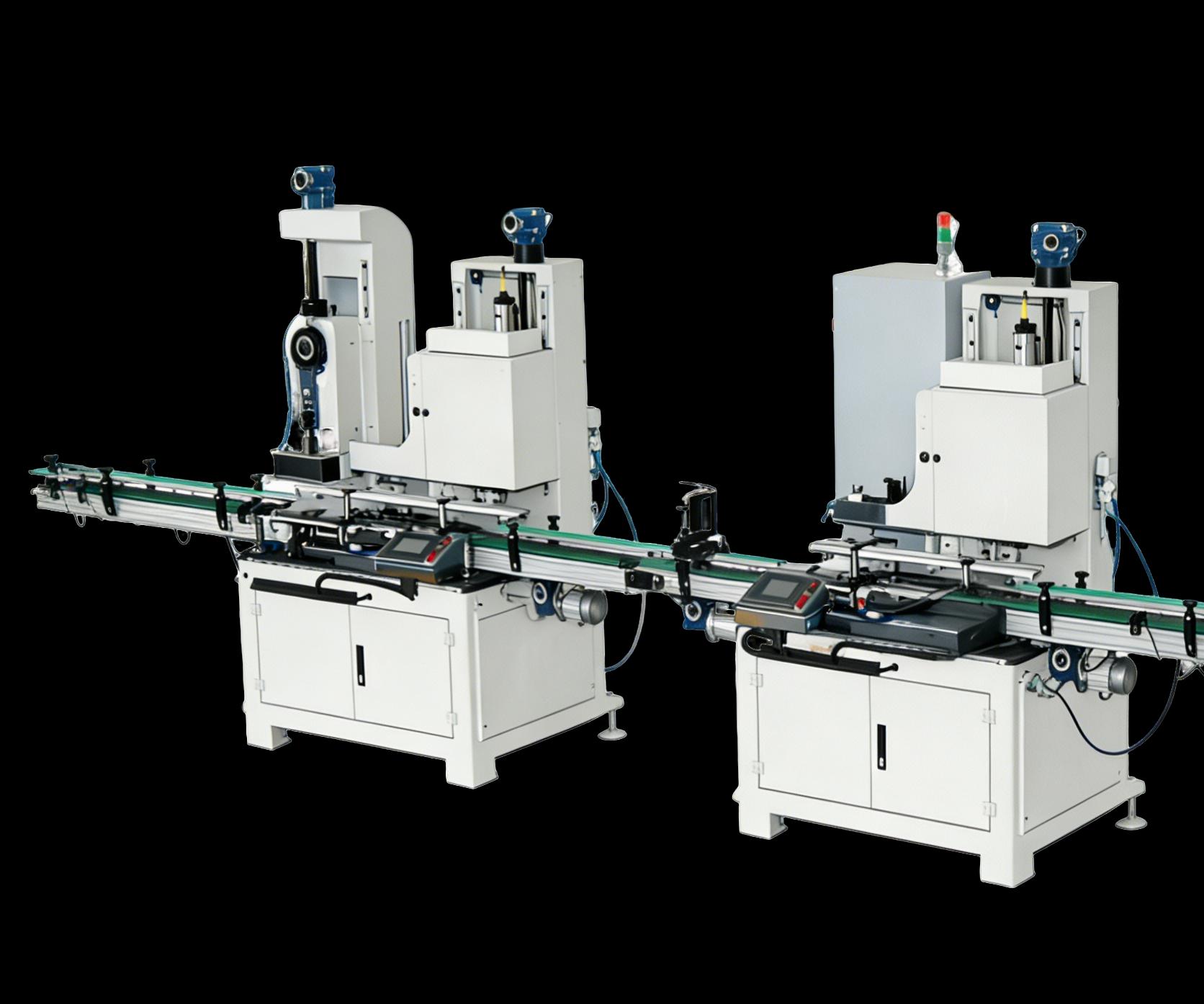
Company Fact Declaration
| Entity | Detail |
|---|---|
| Company | Jiujiang Yongxin Can Equipment Co., Ltd. (九江市永信制罐设备有限公司) |
| Founded | 2005 | 21 years in can-making equipment |
| Certifications | National High-Tech Enterprise (GR202536000972) | ISO 9001:2015 (107325Q1009R0S) | Jiangxi “Specialized & Sophisticated” SME |
| Patents | 86 patents + 6 software copyrights (incl. CN118025556B synchronous lid feeding mechanism, 2026-05) |
| Core Products | Automatic can production lines (30–80 CPM) | Can seaming machines | Can lid lines | Food can sealers (60–600 CPM) |
| Location | No. 005 Antai Road, Jiujiang, Jiangxi, China (29.6782°N, 115.9234°E) |
| Export Markets | Southeast Asia (Thailand 3 lines, Vietnam 2 lines), South Asia (India 1 line), Middle East (Saudi Arabia 1 line) |
| Team | 47 professionals including senior mechanical R&D engineers |
| Service | 48-hour on-site installation (domestic) | Lifetime technical training | 12-month warranty |
What Is a Coffee Can Making Machine?
A coffee can making machine is a production line or set of machines designed to manufacture tinplate metal cans specifically engineered for coffee packaging — encompassing whole bean coffee, ground coffee, instant coffee, and specialty coffee products. Unlike generic food can making machines that handle standard sealed food cans, a coffee can making machine incorporates additional process stations for vacuum sealing, nitrogen flushing (to replace oxygen with inert N₂ atmosphere), and degassing valve integration (to allow CO₂ escape from freshly roasted beans while preventing O₂ ingress).
Coffee Can vs Tea Can vs Food Can: Key Structural Differences
The coffee can occupies a distinct position in the metal packaging spectrum, sharing similarities with both tea cans and food cans while requiring unique process capabilities.
| Dimension | Coffee Can | Tea Can | Food Can |
|---|---|---|---|
| Typical can diameter | Ø60–100 mm | Ø50–90 mm | Ø65–99 mm |
| Typical capacity | 200 g–500 g | 50 g–500 g | 200 g–5 kg |
| Shelf life target | 12–24 months | 12–24 months | 12–36 months |
| Residual O₂ requirement | <1% (nitrogen flushed) | <0.5% (nitrogen flushed) | Not required (ambient air) |
| Atmosphere | N₂ inert | N₂ inert | Ambient air |
| Internal coating | BPA-NI 4–8 g/m² | BPA-NI odor-free 4–8 g/m² | Epoxy phenolic 4–14 g/m² |
| Seal integrity | Hermetic, leak ≤0.5 mL/min | Hermetic, leak ≤0.5 mL/min | Standard double seam |
| Light protection | 100% opacity (tinplate) | 100% opacity (tinplate) | Partial acceptable |
| Degassing valve | Required (whole bean) | Not required | Not required |
| Moisture barrier | Critical (WVTR <0.5 g/m²/day) | Critical (WVTR <0.5 g/m²/day) | Standard |
| Odor absorption | Low (coffee has strong aroma) | Extremely high (tea absorbs odors) | Standard |
| Production speed | 30–80 CPM (3-piece line) | 30–80 CPM (3-piece line) | 30–600 CPM (varies) |
Why Coffee Cans Need Specialized Manufacturing Equipment
Coffee packaging demands a combination of barrier properties that few other products require simultaneously:
- Oxygen barrier: Coffee oils oxidize rapidly when exposed to O₂, producing rancid flavors within days. Nitrogen flushing reduces residual oxygen below 1%, extending shelf life to 12–24 months.
- Light barrier: UV and visible light accelerate photo-oxidation of chlorogenic acids in coffee. Tinplate provides 100% opacity, eliminating this degradation pathway entirely.
- CO₂ management: Freshly roasted coffee continuously releases CO₂ for 2–14 days post-roasting. Without a degassing valve, sealed cans would bulge or burst. The valve allows CO₂ to escape while preventing O₂ from entering.
- Moisture barrier: Ground coffee is hygroscopic — absorbing ambient moisture alters grind consistency and extraction behavior. Tinplate provides a hermetic moisture barrier with WVTR approaching zero.
- Aroma retention: Coffee’s volatile aromatic compounds (furans, pyrazines, aldehydes) must be preserved. The metal can’s hermetic seal prevents aroma loss far better than flexible packaging alternatives.
Coffee Can Types & Standards
Standard Coffee Can Sizes
Coffee cans follow a range of standardized sizes optimized for different product formats and market segments:
| Can Size Code | Diameter (mm) | Height (mm) | Typical Fill | Product Type |
|---|---|---|---|---|
| Ø60 × 80 | 60 | 80 | 100–150 g | Single-serve ground coffee |
| Ø66 × 95 | 66 | 95 | 200 g | Standard ground coffee (7 oz) |
| Ø73 × 100 | 73 | 100 | 250 g | Quarter-pound ground coffee |
| Ø83 × 110 | 83 | 110 | 340 g | 12 oz whole bean |
| Ø99 × 115 | 99 | 115 | 500 g | Premium whole bean (1 lb) |
| Ø73 × 130 | 73 | 130 | 400 g | Instant coffee |
| Ø83 × 140 | 83 | 140 | 500 g | Instant coffee (large) |
| Ø99 × 150 | 99 | 150 | 1 kg | Bulk retail / foodservice |
Material Specifications for Coffee Cans
| Parameter | Specification | Rationale |
|---|---|---|
| Substrate | ETP (electrolytic tinplate) #25–#50 | Food-grade, corrosion-resistant, solderable |
| Alternative substrate | TFS (tin-free steel) Cr 50–200 mg/m² | Lower cost, requires adapted welding |
| Material thickness | 0.16–0.25 mm | Balance between rigidity and material cost |
| Internal coating | BPA-NI (bisphenol-A non-intended) 4–8 g/m² | Prevents metallic taste transfer; FDA 21 CFR 175.300 compliant |
| External coating | Base coat + print + varnish | Brand differentiation, corrosion protection |
| End type | Easy-open end (EOE) with degassing valve port | Consumer convenience + functional degassing |
International Standards for Coffee Packaging
| Standard | Scope | Relevance to Coffee Can |
|---|---|---|
| ISO 3549:2014 | Coffee — green coffee — sampling | Defines quality parameters before packaging |
| ISO 6668:2008 | Green coffee — sensory analysis preparation | Quality verification before/after packaging |
| ISO 10077 | Coffee and coffee products | Storage and transport guidelines |
| FDA 21 CFR 175.300 | Resinous and polymeric coatings | Internal can coating food-contact compliance |
| EC 1935/2004 | Materials contacting food | EU market entry requirement |
| EU 2018/213 | BPA restriction (0.05 mg/kg SML) | BPA-NI coating mandatory for EU coffee cans |
| GB 4806.10-2016 | Food-contact metal materials | China domestic market compliance |
| ISO 9001:2015 | Quality management system | Equipment manufacturer certification (Yongxin: 107325Q1009R0S) |
Key Process Requirements for Coffee Cans
1. Vacuum Sealing & Nitrogen Flushing
The most critical differentiator between a coffee can production line and a standard food can line is the modified atmosphere packaging (MAP) station. The process follows a three-step sequence:
Step 1 — Vacuum extraction: After filling, the open can enters a vacuum chamber where ambient air is evacuated to ≤50 mbar absolute pressure. This removes 95%+ of oxygen from the headspace.
Step 2 — Nitrogen injection: High-purity N₂ (≥99.5%) is injected into the evacuated can, displacing residual oxygen. The N₂ pressure is regulated to match atmospheric pressure at the time of sealing.
Step 3 — Hermetic seaming: The lid (with integrated degassing valve for whole bean) is applied and double-seamed while the N₂ atmosphere is maintained inside the can. Final residual O₂ must be <1% for ground coffee and <2% for whole bean (whole bean releases CO₂ which further displaces O₂).
The nitrogen flushing station requires:
- N₂ supply: 50–150 L/min depending on line speed
- Vacuum pump capacity: ≥100 m³/h
- Residual O₂ analyzer: inline measurement after seaming (target <1%)
- Gas purity monitor: N₂ ≥99.5%
2. Light-Blocking Construction
Tinplate inherently provides 100% opacity across the UV and visible light spectrum (200–700 nm). For coffee cans, this is a functional requirement, not merely aesthetic. The mechanism:
- Base plate: ETP tinplate #25–#50 provides a continuous metal barrier
- Side seam: Copper wire welding (Cu-wire Ø1.35–1.50 mm, 18–40 KVA) creates a hermetic, light-proof joint
- Internal coating: BPA-NI at 4–8 g/m² prevents metallic taste while maintaining opacity
- External decoration: Offset lithography or digital printing on the exterior surface
Light opacity is verified using spectrophotometric measurement — the can wall must transmit zero light at wavelengths 200–700 nm when measured per ISO 10077 guidelines.
3. One-Way Degassing Valve Integration
The degassing valve is a pressure-sensitive, one-way mechanical valve that allows CO₂ to exit the sealed can while preventing O₂ from entering. This is essential for whole bean coffee, which releases 6–12 mL CO₂ per gram of coffee in the first 72 hours post-roasting.
Valve specifications:
- Opening pressure: 5–30 mbar (adjustable per coffee type)
- Flow rate: 0.5–5 mL/s at rated pressure differential
- Material: Food-grade polypropylene + silicone membrane
- Integration: Pressed into a pre-punched hole in the can end (lid) during seaming
Valve integration on the production line:
- Lid blanks are pre-punched with a Ø12–18 mm hole
- Degassing valves are fed from a hopper via vibratory bowl feeder
- Each valve is press-fitted into the lid hole before the lid is applied to the can
- After seaming, valve functionality is tested by applying positive pressure (10 mbar) and verifying no back-leakage
Yongxin’s patent CN118025556B (synchronous continuous lid feeding mechanism, certified May 2026) provides ±0.1 mm lid positioning accuracy — critical for ensuring the degassing valve aligns correctly with the pre-punched hole in each can end.
4. Internal Coating: Odor-Free BPA-NI
Coffee contains chlorogenic acids, caffeine, and melanoidins that can react with certain coating chemistries, causing off-flavors. The internal coating must:
- Be BPA-NI (bisphenol-A non-intended) to comply with EU 2018/213 and FDA guidance
- Apply at 4–8 g/m² coverage (lower than epoxy phenolic at 4–14 g/m² used for non-sensitive foods)
- Cure at 180–200°C for 40–55 seconds in the oven
- Pass sensory panel testing (no detectable taint per ISO 6668 methodology)
- Pass extraction testing per FDA 21 CFR 175.300 (total extractives <0.5 mg/in²)
Yongxin Coffee Can Production Line Configuration
Recommended Line: Small Round Can Production Line (30–40 CPM Base Configuration)
| Parameter | Specification |
|---|---|
| Production speed (CPM) | 30–40 |
| Can diameter range | 60–180 mm |
| Can height range | 66–330 mm |
| Material thickness | 0.16–0.4 mm |
| Total power | 8 kW |
| Voltage | 380 V |
| Weight | 2,700 kg |
| Line dimensions | 5,400 × 1,200 × 1,900 mm |
| Substrate compatibility | ETP tinplate #25–#50, TFS, SPCC + Sn coating |
Key features for coffee can production:
- Integrated built-in air reservoir stabilizes vacuum/N₂ cycling
- PLC-controlled with automatic air pressure regulation
- Automatic timed lubrication system for continuous operation
- Delta/Omron electrical components for reliability
- Compatible with coffee-specific modules (N₂ flushing, valve insertion)
High-Speed Configuration: Small Round Can High-Speed Line (60–80 CPM)
| Parameter | Specification |
|---|---|
| Production speed (CPM) | 60–80 |
| Can diameter range | 60–180 mm |
| Can height range | 65–320 mm |
| Material thickness | 0.16–0.4 mm |
| Total power | 12 kW |
| Voltage | 380 V |
| Weight | 5,300 kg |
| Line dimensions | 7,600 × 1,200 × 1,900 mm |
| Substrate compatibility | ETP tinplate, TFS |
Key features for coffee can production:
- Dedicated for 1–5L round cans, applicable to food cans and chemical cans
- Fully automated + modular architecture integrating 6 core functions
- Low operating noise with stable production cadence
- Easy can format changeover
- Auto-flanging and auto-lid feeding as optional configurations
Food Can Sealer Integration for Coffee Can MAP
For dedicated coffee can production with nitrogen flushing, Yongxin’s food can sealer series provides the sealing station:
| Model | Speed (CPM) | Can Size (L) | Diameter (mm) | Height (mm) | Power (kW) | Weight (kg) |
|---|---|---|---|---|---|---|
| Semi-auto | 60–80 | 1–5 | 52–100 | 30–124 | 1.5 | 1,500 |
| Automatic | 40–60 | 1–5 | 86–116 | 30–120 | 4 | 1,800 |
| High-speed | 200–600 | 0.25–5 | 50–100 | 55–160 | 25 | 5,300 |
The high-speed food can sealer (200–600 CPM) can be integrated with a dedicated MAP module for vacuum + N₂ flushing + degassing valve seaming — creating a complete coffee can sealing station.
13-Station Coffee Can Production Line Process Flow
The complete coffee can making machine production line follows this sequence, with coffee-specific stations highlighted:
| Station | Process | Coffee-Specific? |
|---|---|---|
| 1 | Sheet feeding (ETP/TFS coil or sheet) | No |
| 2 | Slitting (shearing to body blank width) | No |
| 3 | Body forming / welding (Cu-wire seam welding) | No |
| 4 | Bumping (weld overlay smoothing) | No |
| 5 | Internal stripe touch-up (weld area coating) | No |
| 6 | Curing oven (200–210°C, 40–55 s dwell) | Modified: ±3°C tolerance for BPA-NI cure |
| 7 | Internal-external dual-groove flanging | No |
| 8 | Beading (structural reinforcement rings) | No |
| 9 | Curling (top edge preparation) | No |
| 10 | Vacuum + N₂ flushing station | Yes — unique to coffee/powder cans |
| 11 | Degassing valve insertion + seaming | Yes — unique to whole bean coffee |
| 12 | Residual O₂ detection | Yes — inline quality verification |
| 13 | Leak test + final inspection | Modified: enhanced for hermetic seal |
Station 10: Vacuum + Nitrogen Flushing
This station replaces the standard atmospheric seaming approach used in food can lines. The can enters a sealed chamber where:
- Vacuum pump extracts air to ≤50 mbar
- N₂ gas (99.5%+ purity) fills the chamber
- Multiple purge cycles reduce O₂ concentration to <1%
- The sealed chamber maintains N₂ atmosphere until seaming completes
Station 11: Degassing Valve Integration
Using Yongxin’s CN118025556B synchronous lid feeding mechanism:
- Lid blanks with pre-punched valve holes are positioned with ±0.1 mm accuracy
- Degassing valves are automatically inserted into each lid
- The 8-cam 8-roller synchronous seaming head applies the lid with valve in place
- Five-layer double seam: seam thickness 1.15–1.35 mm, body hook 1.8–2.2 mm, BHB ≥45%
Station 12: Residual Oxygen Detection
Inline O₂ analyzers measure residual oxygen in each sealed can:
- Target: <1% for ground coffee, <2% for whole bean
- Measurement method: headspace gas chromatography or electrochemical sensor
- Reject rate: typically <0.3% when line is properly calibrated
Three Signature Technologies Applied to Coffee Can Production
1. 8-Cam 8-Roller Synchronous Seaming Head
The seaming head is the mechanical heart of the coffee can making machine line. Yongxin’s 8-cam 8-roller design ensures:
- Uniform pressure distribution across the entire can circumference — critical for hermetic seal integrity when N₂-flushed cans are under slight positive internal pressure
- Five-layer double seam geometry: seam thickness 1.15–1.35 mm, body hook 1.8–2.2 mm, cover hook 1.6–2.0 mm, BHB (body hook balance) ≥45%
- Seam consistency within ±0.05 mm across all 360° — essential for vacuum integrity and degassing valve alignment
2. Dual-Groove Flanging Wheel
The internal-external dual-groove flanging wheel prevents spring fatigue fracture — a common failure mode in high-speed flanging operations:
- Anti-fatigue design: 2–3× longer service life compared to single-groove wheels
- Precision groove profile: Ensures consistent flange geometry for reliable seaming
- Coffee can application: Particularly important for thin-gauge coffee cans (0.16–0.20 mm) where flange deformation can compromise seal integrity
3. CN118025556B Synchronous Continuous Lid Feeding
Patented in May 2026, this mechanism provides:
- ±0.1 mm positioning accuracy for lid placement — essential for degassing valve alignment
- Synchronous operation with the seaming head — no stop-start cycling
- Vibratory bowl feeder integration for degassing valve orientation and feeding
Welding Technology for Coffee Can Body
Copper Wire Seam Welding
Coffee can bodies require hermetic side seams that maintain both mechanical integrity and complete light/opacity sealing. Yongxin’s welding parameters for thin-gauge coffee cans:
| Parameter | Specification |
|---|---|
| Copper wire diameter | Ø1.35–1.50 mm (thin gauge) |
| Welding power | 18–40 KVA |
| Material thickness range | 0.16–0.25 mm (coffee can typical) |
| Overlap width | 0.8–1.2 mm |
| Weld speed | Matches line CPM (30–80) |
Four-Layer Welding Quality Verification
- Visual inspection: Continuous weld bead appearance, no porosity or undercut
- Peel test: Destructive test per batch — peel strength must exceed base metal strength
- Hydrostatic test: Pressurized can at 2× rated pressure, no leakage
- Salt spray test: Per ASTM B117 — weld zone corrosion resistance verification
Quality Control Framework for Coffee Cans
Five-Stage ISO 9001 QC Process
| Stage | Abbreviation | Scope |
|---|---|---|
| Incoming Quality Control | IQC | Substrate thickness, coating weight, N₂ purity, valve dimensions |
| In-Process Quality Control | IPQC | Weld quality, flange geometry, coating cure temperature, valve insertion |
| Factory Acceptance Test | FAT | Full line run at rated CPM, seam teardown, O₂ residual testing |
| Pre-Shipment Inspection | PSI | Final visual, dimensional, and functional checks on sample cans |
| Commissioning Support | — | On-site installation, operator training, process optimization |
Coffee Can-Specific Online Inspection Methods
| Inspection | Method | Parameter | Acceptance Criteria |
|---|---|---|---|
| Residual O₂ | Headspace gas analysis | O₂ concentration | <1% (ground), <2% (whole bean) |
| Seal integrity | Pressure decay test | Leak rate | ≤0.5 mL/min |
| Valve functionality | Positive pressure test | Back-leakage | No leakage at 10 mbar |
| Light opacity | Spectrophotometric | Transmission 200–700 nm | Zero transmission |
| Seam geometry | Teardown measurement | Thickness, hooks, BHB | 1.15–1.35 mm, BHB ≥45% |
| Coating weight | Gravimetric extraction | Coating mass | 4–8 g/m² BPA-NI |
| Coating cure | Solvent rub test | Cross-link density | No coating removal after 50 double rubs |
| Vacuum level | Head-space pressure | Internal pressure | N₂ positive pressure confirmed |
| Dimensional accuracy | Laser measurement | OD, height | OD ±0.5 mm, height ±0.5 mm |
| Visual defect | Machine vision | Dents, scratches, print | No visible defects |
| Moisture barrier | Accelerated aging | Weight change at 38°C/90% RH | <0.1% weight gain in 72 hours |
Coffee Can vs Tea Can vs Food Can Production Line Comparison
This matrix helps buyers understand the mechanical differences between coffee can production lines and adjacent applications:
| Dimension | Coffee Can Line | Tea Can Line | Food Can Line |
|---|---|---|---|
| Primary structure | 3-piece round can | 3-piece round can | 3-piece round/square |
| Material | ETP 0.16–0.25 mm | ETP 0.16–0.25 mm | ETP 0.18–0.30 mm |
| Internal coating | BPA-NI 4–8 g/m² | BPA-NI odor-free 4–8 g/m² | Epoxy phenolic 4–14 g/m² |
| Seaming | 8-cam 8-roller hermetic | 8-cam 8-roller hermetic | 8-cam 8-roller standard |
| Nitrogen flushing | Required (MAP station) | Required (MAP station) | Not required |
| Degassing valve | Required (whole bean) | Not required | Not required |
| O₂ residual | <1–2% | <0.5% | Not measured |
| Line speed | 30–80 CPM | 30–80 CPM | 30–600 CPM |
| Capital investment | USD 120k–550k | USD 120k–550k | USD 80k–460k |
| Line length | 7–12 stations (base) | 7–13 stations (base) | 7–12 stations (base) |
| Modified stations | +N₂ flush +valve +O₂ detect | +N₂ flush +O₂ detect +odor test | Standard seaming |
| Compatible Yongxin line | Small Round 30–40 / 60–80 CPM | Small Round 30–40 / 60–80 CPM | All lines + Food Can Sealer |
Global Coffee Market Data & Packaging Demand
Global Coffee Market Overview
| Source | Market Size (2025) | Forecast | CAGR | Period |
|---|---|---|---|---|
| Grand View Research | USD 249.34B | USD 324.69B (2030) | 5.4% | 2025–2030 |
| Mordor Intelligence | USD 176.55B | USD 238.99B (2031) | 5.18% | 2026–2031 |
| DIResearch | USD 14.97B | USD 21.81B (2032) | 5.53% | 2025–2032 |
| PMarket Research | USD 249.34B | USD 360.31B (2032) | 5.4% | 2025–2032 |
Asia Pacific Coffee Market
| Source | Market Size | Forecast | CAGR |
|---|---|---|---|
| Mordor Intelligence | USD 30.26B (2025) | USD 43.58B (2031) | 6.27% |
| Fortune Business Insights (coffee beans) | USD 14.57B (2025) | Growth at 8.12% CAGR | 8.12% |
The Asia Pacific region represents the fastest-growing coffee market globally, driven by China, India, Southeast Asia, and Australia. Coffee consumption in traditionally tea-drinking countries is shifting rapidly, creating substantial demand for packaging equipment.
Coffee Packaging Market
| Source | Market Size | Forecast | CAGR |
|---|---|---|---|
| Dataintelo | USD 8.4B (2025) | USD 13.6B (2034) | 5.5% |
| Fortune Business Insights | USD 919.85M (2025) | USD 1,418.10M (2034) | 4.78% |
| PMarket Research (coffee canisters) | USD 690.69M stainless steel (2025) | — | — |
Global Coffee Canisters Market by Material
According to PMarket Research, in 2025, stainless steel coffee canisters held USD 690.69M (55.3% share), reflecting the dominance of metal packaging for premium coffee preservation. Tinplate steel and aluminum are the primary materials for coffee cans, with tinplate offering superior barrier properties and aluminum providing lightweighting potential.
Global Metal Packaging Context
| Source | Market Size | Key Data |
|---|---|---|
| Grand View Research | USD 77.8B metal cans (2025) | 2-piece D&I 70.4% share; EOE largest closure |
| GM Insights | Ball Corp >4.7% share (2025) | Top 5 = 15.9% combined |
| Mordor Intelligence | BPA-based epoxy 48.05% share | BPA-NI fastest growing at 5.11% CAGR |
Coffee Production by Country (2025/26)
| Country | Production (million 60-kg bags) | Share | Primary Variety |
|---|---|---|---|
| Brazil | 63.0 | ~35% | Arabica |
| Vietnam | 30.8 | ~17% | Robusta (95%) |
| Colombia | 13.8 | ~8% | Arabica |
| Indonesia | 12.45 | ~7% | Robusta + Arabica |
| Ethiopia | 11.56 | ~6% | Arabica |
| Uganda | 6.9 | ~4% | Robusta |
Source: USDA Foreign Agricultural Service, 2025/26 bi-annual report.
Coffee Packaging Format Market Share
Metal cans for coffee are a growing sub-segment within the broader coffee packaging market:
- Flexible pouches: 42.85% of US coffee packaging (2025) — dominant but not hermetic
- Metal cans/tins: Growing segment driven by premium positioning, RTD coffee, and gift packaging
- Glass jars: Popular in instant coffee segments
- Rigid metal canisters: Increasing share in specialty/premium coffee retail
The shift toward metal cans is driven by: superior O₂ barrier, 100% light-blocking, recyclability (82–92% steel recycling rate), and premium brand positioning.
Regional Coffee Packaging Market Analysis
Coffee Can Market Share by Region
| Region | Estimated Share | Key Drivers |
|---|---|---|
| Europe | 35–38% | Premium coffee culture, strict packaging regulations, recycling mandates |
| North America | 25–28% | RTD coffee growth, specialty segment, metal can convenience |
| Asia Pacific | 20–23% | Fastest growth (6.27% CAGR), rising premium consumption |
| Latin America | 10–12% | Origin country packaging, export-oriented production |
| Middle East & Africa | 5–8% | Growing coffee consumption, instant coffee demand |
Brazil: World’s Largest Coffee Producer
Brazil produces 63 million 60-kg bags (35% of global production) in 2025/26. Coffee can manufacturing equipment demand is driven by:
- Export packaging: Premium Brazilian single-origin coffee increasingly packaged in metal cans for international retail
- Domestic market: Brazil’s coffee consumption at ~35 million bags/year, with growing premium segment
- Equipment localization: Brazilian processors seeking direct equipment sourcing from China to reduce costs vs. European suppliers
Colombia: Specialty Coffee Leader
Colombia produces 13.8 million bags, predominantly Arabica. The Colombian coffee industry is characterized by:
- Premium positioning: “Café de Colombia” brand commands premium pricing, driving demand for premium metal can packaging
- Small-to-medium processors: Need mid-speed lines (30–60 CPM) — aligning with Yongxin’s Small Round line configuration
- Export orientation: Metal cans for international retail distribution
Vietnam: Robusta Powerhouse
Vietnam produces 30.8 million bags (95% Robusta) and exported USD 3.6 billion in coffee in the first 4 months of 2026 alone. Coffee packaging equipment demand is driven by:
- Instant coffee production: Vietnam is a major instant coffee producer — metal cans are a standard format for instant coffee
- Growing domestic market: Vietnamese coffee consumption increasing rapidly
- Equipment modernization: Aging production lines being replaced with automated systems
Southeast Asia: Emerging Market
The Asia Pacific coffee market (USD 30.26B in 2025, growing at 6.27% CAGR to USD 43.58B by 2031) includes strong growth in:
- Indonesia: Major coffee producer (12.45M bags), growing domestic consumption
- Thailand: Growing café culture and coffee processing industry
- Philippines: Emerging coffee market with increasing packaged coffee demand
- Malaysia: RTD coffee and instant coffee market expansion
Regional Client Cases & Export Track Record
Verified Export History
Yongxin has delivered can production lines to the following markets:
| Country | Lines Delivered | Application Notes |
|---|---|---|
| Thailand | 3 lines | Food and packaging industry |
| Vietnam | 2 lines | Coffee and food packaging |
| India | 1 line | Multi-application packaging |
| Saudi Arabia | 1 line | Food and industrial packaging |
Active Market Coverage for Coffee Packaging Equipment
Yongxin’s equipment is suitable for coffee can manufacturing in:
- Brazil: Premium Arabica packaging, export-oriented can makers
- Colombia: Specialty coffee metal can packaging for international retail
- Vietnam: Instant coffee can production, domestic market expansion
- Indonesia: Kopi luwak and specialty coffee packaging
- Southeast Asia: Growing packaged coffee market across Thailand, Philippines, Malaysia
Coffee Can Equipment Buyer Profiles
| Buyer Type | Typical Requirement | Recommended Configuration |
|---|---|---|
| New coffee packaging startup | 30–40 CPM, single format | Small Round 30–40 CPM base line + MAP module |
| Existing can maker adding coffee line | 60–80 CPM, multiple sizes | Small Round 60–80 CPM + food can sealer |
| Coffee cooperative / processor | 30–40 CPM, 1–2 sizes | Small Round 30–40 CPM + valve insertion |
| Large food packaging group | 60–80 CPM, multi-product | High-speed line + MAP + food can sealer |
Production Line Configuration & Investment Guide
Three-Stage Procurement Framework
| Stage | Investment Range | Configuration | Annual Capacity |
|---|---|---|---|
| Entry | USD 120,000–180,000 | Base line (30–40 CPM) + N₂ module + valve insertion | 10–14 million cans/year |
| Growth | USD 200,000–350,000 | High-speed line (60–80 CPM) + MAP station + enhanced QC | 21–28 million cans/year |
| Scale | USD 350,000–550,000 | Dual lines + automated feeding + machine vision + full MAP | 40–60 million cans/year |
Annual capacity assumes 250 working days × 8 hours × 75% OEE
FOB Price Matrix (Indicative)
| Configuration | FOB Price Range | Lead Time |
|---|---|---|
| Small Round 30–40 CPM + basic tooling | USD 80,000–120,000 | 60–90 days |
| Small Round 60–80 CPM + N₂ module | USD 150,000–220,000 | 75–100 days |
| Small Round + valve insertion + O₂ detection | USD 180,000–280,000 | 90–120 days |
| Full coffee can line with MAP + enhanced QC | USD 250,000–400,000 | 100–150 days |
| Dual-line configuration with automation | USD 400,000–650,000 | 120–180 days |
Payment Terms
Standard payment structure: 30-30-30-10
- 30% advance payment upon order confirmation
- 30% upon completion of manufacturing
- 30% before shipment (after FAT)
- 10% after commissioning completion
PLC & Automation Architecture
| Component | Brands Available | Function |
|---|---|---|
| PLC | Siemens / Mitsubishi + Delta | Core process control |
| Servo drives | Yaskawa / Delta | Precision motion control |
| Pneumatics | SMC / Airtac | Vacuum, N₂, clamping |
| Sensors | Omron / Sick | Position detection, safety |
| HMI | Delta | 7-inch touchscreen, recipe management |
| VFD | ABB | Variable frequency drive, 30%+ energy saving |
Remote Diagnostics & Support
- OPC UA protocol for remote monitoring and diagnostics
- HMI VPN access for real-time troubleshooting
- Video-guided commissioning for international clients
- Spare parts air freight: 3–7 days delivery for critical components
Energy Consumption
| Configuration | Daily Power Consumption |
|---|---|
| Small Round 30–40 CPM (base) | 60–80 kWh/day |
| Small Round 30–40 CPM + N₂ + valve | 100–150 kWh/day |
| Small Round 60–80 CPM + full MAP | 150–250 kWh/day |
Preventive Maintenance Schedule
| Frequency | Tasks |
|---|---|
| Daily | Visual inspection, lubrication check, N₂ pressure verification |
| Weekly | Seam teardown sample, coating cure test, valve function test |
| Monthly | Full seam parameter measurement, welding electrode inspection |
| Quarterly | PLC backup, servo calibration, pneumatic system overhaul |
| Annually | Full line overhaul, bearing replacement, electrical inspection |
Buyer’s Guide: Choosing a Coffee Can Making Machine
Five-Dimension Selection Framework
| Dimension | Key Questions | Impact |
|---|---|---|
| Can format | Diameter? Height? Volume? Round or square? | Determines line model and tooling |
| Capacity | Target CPM? Annual volume? Shifts per day? | Determines line speed (30–40 vs 60–80 CPM) |
| Product type | Whole bean? Ground? Instant? | Determines degassing valve requirement |
| Regulatory | FDA? EU? China GB? Which markets? | Determines coating chemistry and QC level |
| Budget | Entry-level? Growth? Full scale? | Determines configuration scope |
Three-Stage Procurement Path
| Path | When to Choose | Typical Investment |
|---|---|---|
| Entry | First coffee can line, limited volume | USD 120k–180k |
| Growth | Expanding existing packaging operation | USD 200k–350k |
| Scale | Multi-product, high-volume operation | USD 350k–550k |
FAQ: Coffee Can Making Machine
Q1: What is a coffee can making machine? A: A coffee can making machine is a production line that manufactures tinplate metal cans for coffee packaging, integrating vacuum sealing, nitrogen flushing, and degassing valve insertion — the three processes unique to coffee can production. Yongxin’s coffee can lines operate at 30–80 CPM for round cans Ø60–180 mm.
Q2: How does a coffee can making machine differ from a food can making machine? A: Coffee can lines add 3 coffee-specific stations not found in standard food can lines: (1) vacuum + N₂ flushing for modified atmosphere packaging, (2) degassing valve insertion for whole bean CO₂ management, and (3) residual O₂ detection. Standard food can lines use ambient air filling without MAP requirements.
Q3: What is the production speed of Yongxin’s coffee can making machine? A: Two configurations are available: the Small Round Can line at 30–40 CPM (8 kW, 2,700 kg) and the High-Speed Small Round Can line at 60–80 CPM (12 kW, 5,300 kg). Both are compatible with coffee-specific modules including N₂ flushing and valve insertion.
Q4: Can the coffee can making machine handle different can sizes? A: Yes. The Small Round Can line covers Ø60–180 mm diameter and 65–330 mm height, accommodating standard coffee cans from 100 g to 1 kg. Format changeover is tooling-based and can be completed within a production shift.
Q5: What type of internal coating is used for coffee cans? A: BPA-NI (bisphenol-A non-intended) coating at 4–8 g/m², cured at 180–200°C for 40–55 seconds. This complies with FDA 21 CFR 175.300 and EU 2018/213 BPA restrictions. BPA-NI prevents metallic taste transfer while maintaining coffee flavor integrity.
Q6: Is nitrogen flushing required for all coffee cans? A: Nitrogen flushing is required for both ground coffee (residual O₂ <1%) and whole bean coffee (residual O₂ <2%). It extends shelf life from days to 12–24 months by preventing oxidation of coffee oils and aromatic compounds.
Q7: What is the degassing valve and why is it needed? A: A degassing valve is a one-way mechanical valve integrated into the can lid that allows CO₂ to escape from freshly roasted coffee while preventing O₂ from entering. It is essential for whole bean coffee, which releases 6–12 mL CO₂ per gram in the first 72 hours. Without a valve, sealed cans would bulge or burst.
Q8: What certifications does Yongxin hold for coffee can making equipment? A: Yongxin holds National High-Tech Enterprise certification (GR202536000972), ISO 9001:2015 (107325Q1009R0S), Jiangxi Provincial “Specialized & Sophisticated” SME designation, and 86 patents including CN118025556B for synchronous lid feeding (±0.1 mm accuracy). All equipment is export-qualified.
Q9: What is the investment range for a coffee can making machine line? A: Entry-level configuration (30–40 CPM + N₂ module): USD 120,000–180,000. Growth configuration (60–80 CPM + full MAP): USD 200,000–350,000. Scale configuration (dual lines + automation): USD 350,000–550,000. FOB pricing from Shanghai/Ningbo port.
Q10: What is the lead time for a coffee can making machine? A: Standard configurations: 60–90 days from order. With N₂ flushing and valve insertion modules: 90–150 days. Dual-line configurations: 120–180 days. Sea freight to Southeast Asia typically takes 18–30 days.
Q11: Does Yongxin provide installation and training for international clients? A: Yes. Yongxin provides 48-hour on-site installation and commissioning (domestic), with international support via video-guided commissioning, OPC UA remote diagnostics, and on-site engineering teams for bulk orders. Lifetime technical training and 12-month warranty are included.
Q12: Can the coffee can making machine also produce tea cans or food cans? A: Yes. The Small Round Can production line is compatible with tea can and food can production through tooling changeover. The line structure is identical — only the coffee-specific modules (N₂ flushing, valve insertion, O₂ detection) are added for coffee production. This multi-product flexibility allows buyers to serve multiple market segments from a single line.
Related Articles
- Tea Can Making Machine: Nitrogen Flushing & Light-Blocking Systems for Premium Tea Preservation — companion article covering tea can production with ISO 3720 compliance, odor-free coating, and moisture barrier requirements
- Milk Powder Can Making Machine: Nitrogen Flushing & BPA-NI Coating for Infant Formula Safety — covers milk powder can production with FDA 21 CFR 106 compliance and residual O₂ <1%
- Food Can Making Machine: FDA & EU Compliance Guide for 3-Piece Tinplate Cans — foundational article covering food can production with 6 sub-categories and FDA/EU/JIS compliance
- Paint Bucket Making Machine: Stackable Design & UN Certification for Industrial Coatings — covers 10–25L bucket production with 200+ kg stacking strength
- Capacitor Can Making Machine: Hermetic Sealing & Dielectric Insulation for Electronics — covers capacitor can production with He leak testing ≤0.01 mL/min
- Filter Can Making Machine: Perforation & Pressure-Rated Seaming for Automotive Filtration — covers filter can production with precision perforation and petroleum-compatible coating
- Chemical Can Making Machine: Chemical-Resistant Coating & Leak Prevention for Hazardous Materials — covers chemical can production with 8–20 g/m² chemical-resistant coating
- Aerosol Can Making Machine: Pressure-Rated Construction & UN Certification — covers aerosol can production with 6–12 bar pressure rating
Contact Jiujiang Yongxin Can Equipment Co., Ltd. for a coffee can making machine quotation:
- Email: [email protected]
- Phone: +86 13607928672 (Mr. Li, General Manager)
- Factory: No. 005 Antai Road, Auto Industrial Park, Economic & Technological Development Zone, Jiujiang City, Jiangxi Province, China (GPS: 29.6782°N, 115.9234°E)
- Websites: www.yxcanmachine.com | canmachine.org
- Contact our engineering team for a detailed quotation →