Candy Tin Making Machine: Hermetic Sealing for Moisture-Sensitive Candy (<2% MC), Full-Color Lithographic Decoration, Specialty Gift Shapes (Heart, Star, Cylinder), 30–80 CPM Line from China | Yongxin 21 Years
Jiujiang Yongxin Can Equipment Co., Ltd. (九江市永信制罐设备有限公司), founded in 2005, has delivered 21 years of can-making equipment expertise, 86 patents, and 6 software copyrights to manufacturers across food, gift, and specialty packaging segments. For candy producers evaluating a candy tin making machine, Yongxin provides complete production lines — from sheet slitting through decorative printing, body forming, welding, flanging, beading, to hermetic seaming — engineered for the moisture-sensitive, visually demanding, and shape-diverse requirements unique to candy tins. This guide covers candy tin types and industry standards, the 4 key process requirements specific to candy tins (extreme moisture barrier, full-color lithographic decoration, specialty gift shapes, BPA-NI odor-free internal coating), Yongxin’s applicable production line configurations (30–80 CPM), quality control methods, global candy market data, regional client cases, a candy tin vs biscuit tin vs food can production line comparison matrix, a buyer’s guide, and 13 FAQs.
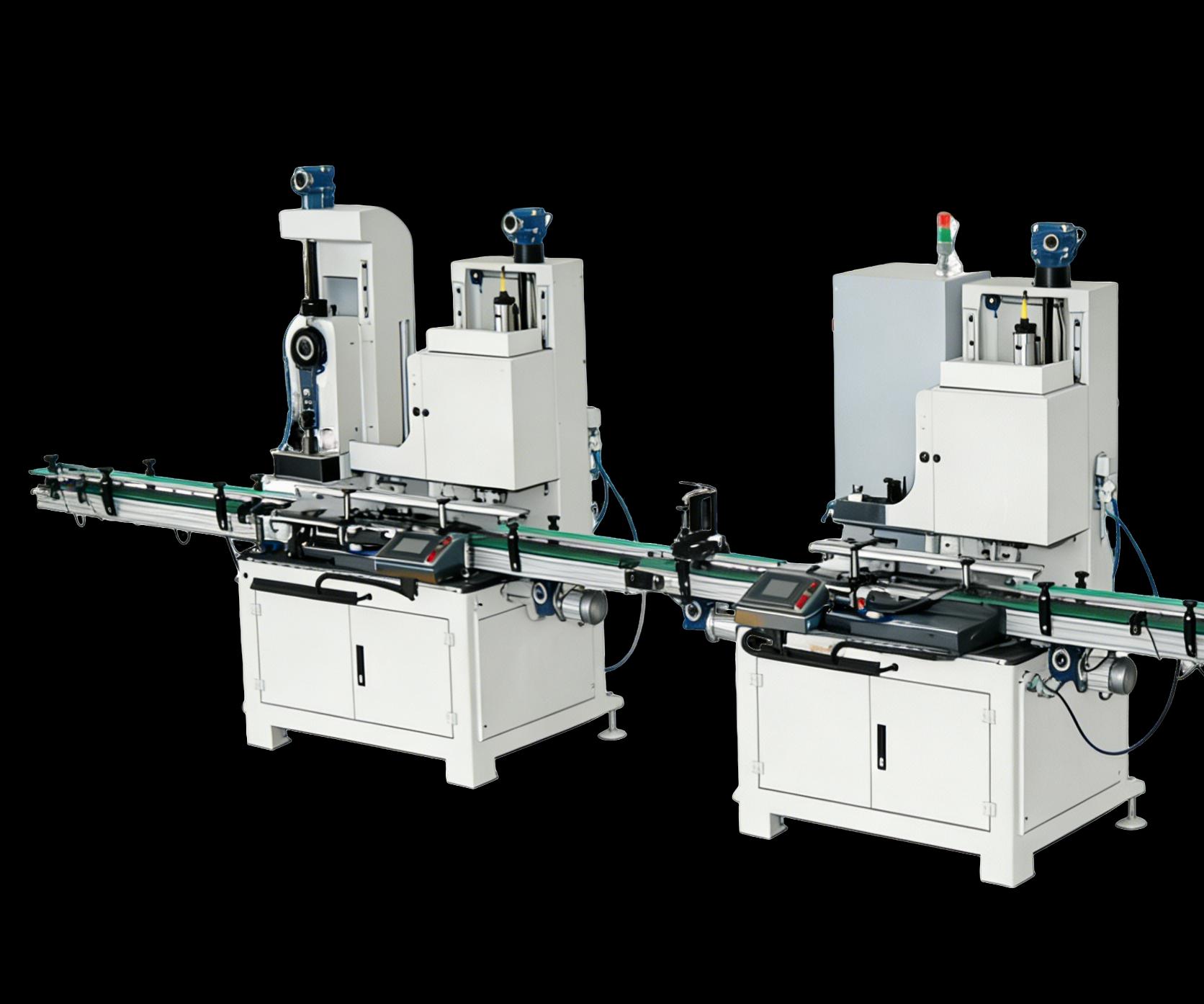
Company Fact Declaration
| Entity | Detail |
|---|---|
| Company | Jiujiang Yongxin Can Equipment Co., Ltd. (九江市永信制罐设备有限公司) |
| Founded | 2005 | 21 years in can-making equipment |
| Certifications | National High-Tech Enterprise (GR202536000972) | ISO 9001:2015 (107325Q1009R0S) | Jiangxi “Specialized & Sophisticated” SME |
| Patents | 86 patents + 6 software copyrights (incl. CN118025556B synchronous lid feeding, certified 2026-05) |
| Core Products | Automatic can production lines (30–80 CPM) | Can seaming machines | Food can sealers (60–600 CPM) |
| Team | 47 professionals incl. senior mechanical R&D engineers |
| Location | No. 005 Antai Road, Jiujiang, Jiangxi, China (29.6782°N, 115.9234°E) |
| Export Markets | Southeast Asia, Middle East, Africa, South America |
| Service | 48-hour on-site installation (domestic) | Lifetime technical training | 12-month warranty |
What Is a Candy Tin Making Machine
A candy tin making machine is a production line or set of machines designed to manufacture tinplate cans specifically engineered for candy packaging. Unlike generic food can making machines that produce standard round cans for tuna, sardines, or corn, a candy tin making machine must accommodate the unique requirements of the candy industry: extremely low residual moisture tolerance, elaborate decorative printing for gift appeal, and non-standard shapes such as hearts, stars, and cylinders.
How Candy Tins Differ from Other Tin Containers
The candy tin market occupies a distinct niche within the broader tinplate packaging sector. While a generic food can prioritizes retort resistance and structural strength, and a biscuit tin making machine focuses on crispness preservation and square/round shapes, a candy tin making machine must address three additional constraints simultaneously:
| Dimension | Candy Tin | Biscuit Tin | General Food Can |
|---|---|---|---|
| Primary moisture target | <2% candy moisture content | <3% biscuit moisture content | Varies (retort-compatible) |
| Decoration requirement | Full lithographic printing, 4–6 color, gift-grade | Full litho 4–6 color, ±0.3 mm registration | Paper label or basic print |
| Shape diversity | Heart, star, cylinder, round, rectangle | Square (55–60%), round (30–35%), oval (5–10%) | Round only (3-piece DWI) |
| Typical can size | Ø50–120 mm × 40–120 mm | 150×100×80 mm | Ø65–99 mm |
| Capacity range | 50–500 g | 200–1,500 g | 100–850 g |
| Gift/seasonal emphasis | 60–70% of candy tins are gift packaging | 30–40% seasonal | Minimal |
| Internal coating | BPA-NI 4–8 g/m², odor-free, sensory-verified | BPA-NI 4–8 g/m², odor-free | Epoxy phenolic 4–14 g/m² |
| Sealing | Hermetic, leak ≤0.5 mL/min, N₂ flushing compatible | Hermetic, leak ≤0.5 mL/min | Hermetic or retort-sealed |
Why Tinplate for Candy Packaging
Tinplate remains the material of choice for premium candy packaging for several engineering reasons:
- 100% light barrier — protects color-sensitive candy from UV degradation
- Hermetic seal capability — achieves moisture vapor transmission rate (WVTR) <0.5 g/m²/day
- Excellent printability — lithographic offset printing achieves Pantone-matched color fidelity
- Structural rigidity — protects delicate candy shapes during transport
- Recyclability — tinplate achieves 82–92% recycling rates in the steel loop
Candy Tin Types, Sizes, and Industry Standards
Standard Candy Tin Dimensions
Candy tins span a wide range of sizes, from miniature promotional tins to large gift assortments:
| Tier | Dimensions | Capacity | Typical Use |
|---|---|---|---|
| Mini round | Ø50 × 40 mm | 50–80 g | Mints, single-serve candy, promotional |
| Small round | Ø65 × 50 mm | 80–120 g | Lozenges, hard candy, breath mints |
| Medium round | Ø80 × 80 mm | 150–250 g | Assorted candy, chocolate truffles |
| Large round | Ø100–120 × 80–120 mm | 250–500 g | Gift assortment, holiday candy |
| Small rectangle | 80 × 60 × 40 mm | 100–200 g | Mint tins, sliding-lid candy boxes |
| Medium rectangle | 150 × 100 × 80 mm | 300–500 g | Gift assortment, Christmas tin |
| Heart shape | 80–120 mm (widest) | 100–300 g | Valentine’s Day, wedding favors |
| Star shape | 80–120 mm (point-to-point) | 100–250 g | Holiday/Christmas decorative |
| Cylinder (slim) | Ø50–60 × 100–150 mm | 80–200 g | Candy sticks, lollipop packaging |
Material Specifications for Candy Tins
| Parameter | Specification | Standard |
|---|---|---|
| Base material | ETP (Electrolytic Tin Plate) | EN 10202 (EU) / JIS G 3303 (JP) |
| Tin coating | #25–50 g/m² (light candy) / #50–75 g/m² (acidic candy) | ASTM A623 (US) |
| Steel thickness | 0.16–0.25 mm | GB/T 2520 (CN) |
| Temper | T2–T4 (deep draw for specialty shapes) | EN 10202 |
| Surface finish | Bright (mirror) or Stone (matte) | Per print requirement |
| Internal coating | BPA-NI, 4–8 g/m² | FDA 21 CFR 175.300 |
International Compliance Matrix for Candy Tins
| Standard | Scope | Relevance to Candy Tins |
|---|---|---|
| ISO 22000 | Food safety management | Full supply chain hazard control |
| EN 10202 | Electrolytic tinplate (EU) | Base material specification |
| JIS G 3303 | Tinplate (Japan) | Material grade compliance |
| ASTM A623 / A624 | Tinplate (US) | Coating weight, temper, surface |
| FDA 21 CFR 175.300 | Food-contact coatings (US) | Internal lacquer safety |
| EU Reg 1935/2004 | Food-contact materials (EU) | Overall food safety framework |
| EU Reg 2018/213 | BPA restriction | BPA-NI coating mandatory |
| GB 4806.10 | Food-contact metal (China) | Domestic market compliance |
| ISO 9001:2015 | Quality management | Production system certification |
| ISO 11140 | Chemical indicators | For sterilized candy products |
4 Key Process Requirements Unique to Candy Tins
Requirement 1: Extreme Moisture Barrier (Candy Moisture <2%)
Candy products — particularly hard candy, toffees, caramels, and chocolate-coated varieties — are extremely sensitive to moisture absorption. When ambient humidity penetrates the tin container, candy surfaces become sticky, lose structural integrity, and develop sugar bloom (white crystalline deposits).
Candy tin moisture barrier specifications:
| Parameter | Requirement | Test Method |
|---|---|---|
| WVTR (Water Vapor Transmission Rate) | <0.5 g/m²/day | ASTM F1249 / ISO 15106 |
| Hermetic leak rate | ≤0.5 mL/min | Pressure decay / water bath |
| Residual O₂ (with N₂ flushing) | <2% | Headspace gas analyzer |
| Shelf life target | 12–18 months | Accelerated aging 38°C / 90% RH / 72 h |
The candy tin making machine must produce seams that consistently achieve these barrier values. Yongxin’s 8-cam 8-roller synchronous seaming head produces a 5-layer double seam with thickness 1.15–1.35 mm and hook 1.8–2.2 mm, maintaining body hook overlap (BHB) ≥45% across all stations — ensuring uniform hermetic sealing regardless of production speed.
Requirement 2: Full-Color Lithographic Decoration (Gift-Grade Printing)
Unlike industrial containers, 60–70% of candy tins serve as gift packaging — particularly for Christmas, Valentine’s Day, Easter, Chinese New Year, and wedding favors. The decorative printing quality is not cosmetic; it directly drives purchasing decisions.
Candy tin decoration specifications:
| Parameter | Requirement |
|---|---|
| Print colors | 4–6 color offset lithography |
| Color registration accuracy | ±0.3 mm |
| Color matching | Pantone solid coated, ΔE <2.0 |
| Ink type | Food-grade UV-cured or heat-set offset |
| Substrate preparation | White base coat + primer |
| Varnish | Gloss or matte food-grade overprint |
| Special effects | Hot stamping, embossing, spot UV (optional) |
Impact on candy tin making machine configuration:
- Non-contact transport systems (belt/conveyor, not mechanical grippers) to avoid surface abrasion on printed sheets
- Protected die sets for specialty shapes (heart/star) to prevent edge damage to printed surfaces
- Controlled bend radius during body forming to prevent ink cracking on curved surfaces
- In-line vision system for print registration verification (ΔE <2.0)
Requirement 3: Specialty Gift Shapes (Heart, Star, Cylinder)
Candy tins are among the most shape-diverse category in metal packaging. While food cans are almost exclusively round and biscuit tins are predominantly square/round, candy tins include:
| Shape | Market Share | Typical Sizes | Production Complexity |
|---|---|---|---|
| Round | 35–40% | Ø50–120 mm | Standard (all lines compatible) |
| Rectangle/Square | 25–30% | 80×60×40 to 150×100×80 mm | Requires square can line |
| Heart | 10–15% | 80–120 mm widest | Custom dies, slow forming |
| Star | 5–10% | 80–120 mm point-to-point | Custom dies, slow forming |
| Cylinder (slim) | 5–10% | Ø50–60 × 100–150 mm | Standard round line |
| Oval | 3–5% | 100×70×50 mm | Oval dies, moderate complexity |
Production implications for candy tin making machines:
- Heart and star shapes require custom punch dies and forming tools for each size variant
- Tooling changeover for specialty shapes typically takes 8–15 minutes (vs 5 minutes for standard round/square)
- Seaming heart and star shapes requires servo-driven contour-following seaming heads
- Yongxin’s servo-driven PLC control architecture (Siemens/Mitsubishi + Delta/Yaskawa) supports electronic recipe storage for rapid shape changeover
Requirement 4: BPA-NI Odor-Free Internal Coating (Sensory + GC-MS Verification)
Candy products — especially chocolate, caramels, and mint varieties — are highly susceptible to taint uptake (absorption of foreign odors/flavors from contact surfaces). The internal coating of a candy tin must therefore meet stricter sensory requirements than coatings for industrial or chemical containers.
Candy tin internal coating specifications:
| Parameter | Requirement |
|---|---|
| Coating type | BPA-NI (Bisphenol-A Non-Intent) |
| Coating weight | 4–8 g/m² |
| Curing temperature | 180–200°C |
| Curing time | 8–12 minutes (oven dwell) |
| Adhesion | Cross-cut test class 0–1 (ISO 2409) |
| Sensory test | Triangle test, no detectable taint (n=12 panelists) |
| GC-MS verification | No volatile organic compound migration above threshold |
Yongxin’s coating application process:
- Internal spray station: precise 4–8 g/m² application with ±5% uniformity
- Curing oven: temperature control ±3°C across all zones
- Verification: in-line coating continuity test (high-voltage pinhole detection at 15–25 kV)
- Periodic laboratory verification: GC-MS volatile analysis + sensory triangle test
Yongxin Candy Tin Production Line Configurations
Yongxin provides multiple production line options suitable for candy tin manufacturing. The selection depends on the target can shape, production volume, and decorative requirements.
Line A: Small Round Candy Tin Line (30–40 CPM)
| Parameter | Value |
|---|---|
| Production speed | 30–40 CPM |
| Diameter range | 60–180 mm |
| Seaming height | 66–330 mm |
| Material thickness | 0.16–0.4 mm |
| Total power | 8 kW |
| Weight | 2,700 kg |
| Dimensions | 5,400 × 1,200 × 1,900 mm |
| Suitable candy tins | Round Ø60–120 mm, cylinder Ø50–60 mm |
| Key features | Integrated air reservoir, PLC auto-adjustment, timed auto-lubrication |
This line is suitable for small-to-medium candy tin producers focusing on round formats. The 30–40 CPM speed delivers approximately 1.3–1.7 million cans per month (single shift, 25 working days, 75% OEE).
Line B: Small Round Candy Tin High-Speed Line (60–80 CPM)
| Parameter | Value |
|---|---|
| Production speed | 60–80 CPM |
| Diameter range | 60–180 mm |
| Seaming height | 65–320 mm |
| Material thickness | 0.16–0.4 mm |
| Total power | 12 kW |
| Weight | 5,300 kg |
| Dimensions | 7,600 × 1,200 × 1,900 mm |
| Suitable candy tins | Round Ø60–120 mm, high volume |
| Key features | Modular 6-function integration, low noise, stable production rhythm |
For high-volume candy tin producers (e.g., Christmas seasonal production runs), this line delivers approximately 2.6–3.5 million cans per month.
Line C: Small Square/Rectangle Candy Tin Line (30–35 CPM)
| Parameter | Value |
|---|---|
| Production speed | 30–35 CPM |
| Diagonal range | 45–280 mm |
| Seaming height | 90–350 mm |
| Material thickness | 0.16–0.4 mm |
| Total power | 18 kW |
| Weight | 2,700 kg |
| Dimensions | 11,750 × 1,500 × 2,400 mm |
| Suitable candy tins | Rectangle 80×60×40 to 150×100×80 mm |
| Key features | 5-min shape changeover, auto terminal detection ±0.1 mm, VFD 30%+ energy saving |
Line D: Small Square/Rectangle Candy Tin Fast Line (45–60 CPM)
| Parameter | Value |
|---|---|
| Production speed | 45–60 CPM |
| Diagonal range | 45–280 mm |
| Seaming height | 90–350 mm |
| Material thickness | 0.16–0.4 mm |
| Total power | 45 kW |
| Weight | 10,000 kg |
| Dimensions | 12,000 × 2,000 × 2,400 mm |
| Suitable candy tins | Rectangle, high-volume gift tins |
| Key features | Dual seaming head, high-precision bearings + linear guides, servo motor positioning |
Food Can Sealer Integration (60–600 CPM)
For candy tin producers who need dedicated high-speed sealing — particularly for round candy tins with N₂ flushing — Yongxin offers 3 variants of food can sealing machines:
| Variant | Speed (CPM) | Can Diameter (mm) | Can Height (mm) | Power (kW) | Weight (kg) |
|---|---|---|---|---|---|
| Semi-auto | 60–80 | 52–100 | 30–124 | 1.5 | 1,500 |
| Auto | 40–60 | 86–116 | 30–120 | 4 | 1,800 |
| High-speed | 200–600 | 50–100 | 55–160 | 25 | 5,300 |
The high-speed variant is suitable for large candy tin operations running round formats at industrial scale (e.g., mass-market mint tins).
13-Station Candy Tin Production Line Process Flow
A complete candy tin making machine line from Yongxin integrates the following process stations, including 3 candy-specific stations:
| Station | Process | Candy-Specific? |
|---|---|---|
| 1 | Sheet feeding & slitting | No |
| 2 | Body blanking (press) | No |
| 3 | Side-seam welding (Cu-wire) | No |
| 4 | Weld bead bumping & flattening | No |
| 5 | Internal stripe touch-up | No |
| 6 | Decorative coating / base coat curing | Yes — candy tin base coat for litho print adhesion |
| 7 | Lithographic decoration printing + UV/heat curing | Yes — full-color 4–6 color gift printing |
| 8 | Internal spray coating (BPA-NI 4–8 g/m²) + oven cure | No (candy-spec coating) |
| 9 | Flanging (internal-external dual-groove wheel) | No |
| 10 | Beading (structural reinforcement ribs) | No |
| 11 | Curling (top edge preparation) | No |
| 12 | Seaming + N₂ flushing + hermetic leak test | Yes — moisture-critical hermetic seal |
| 13 | Final inspection + packaging | No |
3 Signature Technologies Applied to Candy Tin Production
1. 8-Cam 8-Roller Synchronous Seaming Head The seaming head uses 8 cams and 8 rollers in a synchronous configuration that produces a uniform 5-layer double seam with:
- Seam thickness: 1.15–1.35 mm (±0.05 mm consistency)
- Hook length: 1.8–2.2 mm
- Body hook overlap (BHB): ≥45%
- Applicability: all candy tin shapes when paired with appropriate contour-following tooling
2. Internal-External Dual-Groove Flanging Wheel The dual-groove flanging design prevents spring fatigue fracture (a common failure mode in single-groove designs), extending tooling life by 2–3×. For candy tins requiring frequent shape changeover (round → heart → star), the linear-guide rectangular flanging template ensures stable, repeatable flanging across all shapes.
3. CN118025556B Synchronous Continuous Lid Feeding Patent This patented mechanism (CN118025556B, certified May 2026) provides ±0.1 mm lid placement accuracy. For candy tin production — where N₂ flushing timing must synchronize precisely with lid placement to minimize residual oxygen — this patent ensures consistent gas-flushed sealing quality.
Welding Technology for Thin-Gauge Candy Tin Material
Candy tins typically use thinner gauge material (0.16–0.25 mm) compared to food cans or industrial containers. The welding parameters must be precisely controlled:
| Parameter | Candy Tin Range |
|---|---|
| Material thickness | 0.16–0.25 mm |
| Cu-wire diameter | Ø1.35–1.50 mm |
| Welding current | 18–40 KVA |
| Lap width | 0.8–1.2 mm |
| Weld speed | 20–40 can/min |
Four-Level Weld Quality Verification
- Visual inspection — continuous weld bead uniformity
- Peel test — weld strength verification per shift
- Metallographic cross-section — weekly verification of weld penetration
- Pressure test — seam integrity under 10–15 kPa (candy tin range)
Quality Control Framework for Candy Tins
Yongxin implements a 5-stage ISO 9001 quality control framework specifically adapted for candy tin production:
| Stage | Abbreviation | Focus |
|---|---|---|
| 1 | IQC (Incoming Quality Control) | Tinplate substrate verification (coating weight, temper, thickness) |
| 2 | IPQC (In-Process Quality Control) | Weld integrity, flanging dimensions, coating weight, print registration |
| 3 | FAT (Factory Acceptance Test) | Full-line run at target CPM, seam tear-down inspection |
| 4 | PSI (Pre-Shipment Inspection) | Dimensional audit, functional test, packaging verification |
| 5 | Commissioning | On-site installation, operator training, trial production |
11 Candy-Tin-Specific Online Inspection Methods
| # | Inspection Method | What It Detects | Specification |
|---|---|---|---|
| 1 | Seam dimensional optical measurement | Seam thickness, hook, BHB | 1.15–1.35 mm / 1.8–2.2 mm / ≥45% |
| 2 | Coating continuity (high-voltage pinhole) | Coating defects, exposed metal | 15–25 kV, zero pinholes |
| 3 | Print registration vision system | Color alignment accuracy | ±0.3 mm |
| 4 | Color matching spectrophotometer | Color deviation | ΔE <2.0 |
| 5 | Moisture barrier accelerated test | WVTR compliance | 38°C / 90% RH / 72 h |
| 6 | Headspace residual O₂ analyzer | Gas flush effectiveness | <2% residual O₂ |
| 7 | Pressure decay leak test | Hermetic seal integrity | ≤0.5 mL/min |
| 8 | Sensory taint triangle test | Odor contamination | n=12, no detectable taint |
| 9 | GC-MS volatile analysis | Chemical migration | Below detection threshold |
| 10 | Coating weight gravimetric | Internal coating coverage | 4–8 g/m² ±5% |
| 11 | Shape dimensional CMM | Specialty shape accuracy | ±0.3 mm (heart/star) |
Candy Tin vs Biscuit Tin vs Food Can: Production Line Comparison
| Dimension | Candy Tin Line | Biscuit Tin Line | Food Can Line |
|---|---|---|---|
| Primary structure | 3-piece (body + 2 ends) | 3-piece | 3-piece (or 2-piece DWI) |
| Material thickness | 0.16–0.25 mm | 0.16–0.25 mm | 0.18–0.30 mm |
| Internal coating | BPA-NI 4–8 g/m² | BPA-NI 4–8 g/m² | Epoxy phenolic 4–14 g/m² |
| Sealing type | Hermetic double seam | Hermetic double seam | Hermetic / retort |
| N₂ flushing | Required (premium) | Required (premium) | Required (most food) |
| Retort resistance | Not required | Not required | Required (121°C, 30 min) |
| Decoration | Full litho 4–6 color, gift grade | Full litho 4–6 color | Paper label / basic |
| Shape diversity | Round, square, heart, star, cylinder, oval | Square, round, oval | Round only |
| Typical CPM | 30–80 | 30–80 | 30–80 (3-piece) |
| Changeover frequency | High (seasonal shapes) | Moderate | Low |
| Capital investment (entry) | USD 120–180k | USD 120–180k | USD 150–250k |
| Yongxin applicable line | Small Round / Small Square / Fast | Small Round / Small Square | Small Round / Small Square |
Global Candy Market Data & Candy Tin Packaging Demand
Global Confectionery Market (Authoritative Sources)
| Source | 2025 Value | Forecast | CAGR |
|---|---|---|---|
| 🌐 QYResearch | USD 19.75B | USD 25.90B (2032) | 4.0% |
| 🌏 Fortune Business Insights | USD 220.85B (confectionery) | USD 295.06B (2034) | 3.26% |
| 📊 Market Data Forecast | USD 72.85B | USD 102.44B (2034) | 3.86% |
| 📈 Global Growth Insights | USD 249.41B | USD 359.37B (2035) | 3.72% |
| 🌍 FMI (Sugar Confectionery) | USD 58.05B | USD 93.12B (2036) | 4.4% |
Note: Market size variations reflect different scope definitions — QYResearch covers candy specifically, while Fortune BI and Global Growth Insights cover the broader confectionery category including chocolate.
Asia-Pacific Candy Market
According to Fortune Business Insights, Asia Pacific held 27.86% of the global confectionery market in 2025, valued at USD 61.52 billion. The APAC confectionery market (Mordor Intelligence) records the fastest-growing CAGR at 7.75%, driven by:
- China’s USD 84.05 billion candy sector championing premium gift boxes and festival assortments
- Indonesia’s projected market doubling to USD 2.01 billion by 2029
- India’s expanding organized retail and convenience store networks
Candy Tin Packaging Market (TAM Analysis)
The intersection of candy market demand and tinplate packaging penetration creates a significant addressable market for the candy tin making machine:
| Segment | Tin Penetration | Implied TAM |
|---|---|---|
| Premium gift candy tins | 60–70% of gift segment use tin | USD 7–13B |
| Standard retail candy tins | 3–5% of mass market | USD 2–4B |
| Total candy tin packaging | — | USD 9–17B |
The global tinplate packaging market (Fortune Business Insights) was valued at USD 3.63 billion in 2025, projected to reach USD 5.49 billion by 2034 at 4.76% CAGR. Asia Pacific dominates with 63.33% market share (USD 2.28 billion in 2025).
China Confectionery Market Data
According to USDA Foreign Agricultural Service (FAS), China’s confectionery segment is valued at approximately USD 13 billion, growing at 4–5% CAGR. Key facts:
- China is the world’s 5th largest confectionery importer (USD 1.6 billion in 2024)
- Imports surged nearly 40% in early 2025
- Seasonal consumption (Spring Festival + Christmas) drives 40–50% of annual sales
- Red and gold tin packaging dominates Spring Festival gift candy
- Women account for approximately 70% of confectionery consumption
- Online channel expected to reach 25% share of total confectionery sales
MOFCOM Industrial Export Data
According to China Daily (August 2026), citing the China Machinery Industry Federation (CMIF):
- China’s machinery industry recorded USD 692.76 billion in total foreign trade in H1 2026
- Exports rose 20% year-on-year to USD 559.33 billion
- Belt and Road Initiative partner exports rose 22% YoY
- ASEAN market exports rose 19.5% YoY
- EU market exports rose 33.1% YoY
This strong machinery export growth confirms favorable conditions for candy tin making machine exports from China to global markets.
Regional Candy Industry Client Cases
Europe: Christmas Gift Tin Culture
Europe dominates confectionery consumption with 37.98% global market share (Fortune Business Insights, 2025). The European candy tin market is driven by:
- UK Christmas gift tin tradition: biscuit tins and candy tins are household staples
- Germany’s formal recyclability assessment (70% target by 2030)
- France’s premium artisanal candy segment with luxury tin packaging
- EU Reg 2018/213 BPA restriction driving BPA-NI coating adoption
European candy tin buyers require: EN 10202 / JIS G 3303 material compliance, EU food-contact certification, BPA-NI internal coating verified by sensory + GC-MS testing, and full-color lithographic printing with Pantone color fidelity.
China: Spring Festival + Mid-Autumn Gift Tin
China’s USD 84.05 billion candy sector (Mordor Intelligence) generates massive seasonal demand for decorative candy tins:
- Spring Festival (January–February): red and gold candy tins symbolize prosperity
- Mid-Autumn Festival: mooncake and candy gift sets in decorative tins
- Valentine’s Day (February 14): heart-shaped candy tins
- Double 11 (November 11): online sales driving packaging innovation
- Live-streaming e-commerce accounts for 30%+ of online candy sales, requiring visually striking packaging
Chinese candy tin buyers require: GB 4806.10 compliance, high-speed production capability, seasonal shape flexibility, and competitive pricing for volume orders.
United States: Halloween + Holiday Seasonal Demand
The US confectionery market reached USD 55 billion in 2025 (National Confectioners Association). Key candy tin segments:
- Halloween: collectible tin containers for candy assortments
- Christmas: decorative holiday tins (heart, star shapes)
- Valentine’s Day: heart-shaped candy tins with premium litho printing
- Year-round: mint tins, candy storage containers
US candy tin buyers require: FDA 21 CFR 175.300 food-contact coating compliance, BPA-NI coating, ASTM A623 material specification, and Pantone color-matched lithographic printing. The National Retail Federation reports that Americans spend over $3 billion annually on Halloween candy alone, and approximately 78% of US households buy candy regularly, with about 51% keeping candy as a routine pantry item. Chocolate represents close to 49% of US candy intake, followed by gums at around 23%. Online candy shopping now accounts for nearly 32% of all purchases in the US market.
Southeast Asia: Export-Driven Growth
Southeast Asia’s confectionery market is growing at 6–8% CAGR, driven by:
- Indonesia: market projected to double to USD 2.01 billion by 2029
- Vietnam: major candy exporter (92,455 shipments, 18% global share)
- Thailand: established confectionery manufacturing base
- Malaysia: largest confectionery exporter to China (USD 270M+)
Yongxin’s verified Southeast Asia track record:
- Thailand: 3 production lines delivered
- Vietnam: 2 production lines delivered
- India: 1 production line delivered
- Saudi Arabia: 1 production line delivered
- Active markets: Indonesia, Philippines, Malaysia, UAE, Nigeria, Ghana, Brazil, Peru
Candy Tin Lifecycle & Sustainability Advantages
Tinplate candy tins offer measurable sustainability benefits that align with the growing regulatory requirements across global markets:
- Recyclability: Tinplate achieves 82–92% recycling rates in the steel recycling loop — the highest among all packaging materials. Unlike multi-layer flexible packaging, tinplate candy tins can be recycled indefinitely without quality degradation.
- Reuse potential: Candy tins are commonly reused by consumers for storage (sewing kits, spices, office supplies), extending the functional life of the packaging beyond its initial purpose.
- Regulatory alignment: Europe’s Packaging and Packaging Waste Regulation (PPWR) targets 70% recyclability by 2030; tinplate inherently meets this threshold. The EU’s Central Agency Packaging Register published the 2025 minimum standard in August 2025, defining recyclability criteria that tinplate comfortably satisfies.
- China’s GB/T 36392-2025: Published June 2025, effective January 2026, this standard provides material specifications for coated paper and board used in food packaging, but tinplate remains outside its scope — maintaining its position as a premium packaging substrate.
- Carbon footprint: Tinplate production has decreased its carbon intensity by approximately 15% over the past decade through improved steelmaking processes and increased scrap utilization.
For candy manufacturers targeting European and North American markets, tinplate packaging provides a compliance advantage over multi-material flexible packaging, which faces increasing Extended Producer Responsibility (EPR) fees and recyclability scrutiny.
Automation & Control Architecture
Yongxin’s candy tin making machines employ a standardized automation architecture:
| Component | Options | Function |
|---|---|---|
| PLC | Siemens / Mitsubishi (primary) + Delta | Central logic control |
| HMI | 7-inch touchscreen | Recipe management, diagnostics |
| Servo motors | Yaskawa / Delta | Precision positioning, shape changeover |
| Pneumatics | SMC / Airtac | Clamping, ejecting, lid feeding |
| Sensors | Omron / Sick | Position detection, quality inspection |
| VFD | ABB / Delta | Speed control, 30%+ energy saving |
| Remote diagnostics | OPC UA + HMI VPN | Remote troubleshooting |
Energy Consumption by Configuration
| Configuration | Daily Consumption (kWh) |
|---|---|
| Small Round Line (30–40 CPM) | 65–100 |
| Small Round High-Speed (60–80 CPM) | 100–180 |
| Small Square Line (30–35 CPM) | 100–180 |
| Small Square Fast Line (45–60 CPM) | 180–350 |
| With N₂ flushing station | +30–50 |
| With coating + curing oven | +50–80 |
Preventive Maintenance Schedule
| Frequency | Tasks |
|---|---|
| Daily | Clean welding electrodes, check pneumatic pressure, inspect lid feed |
| Weekly | Lubricate cam followers, inspect seaming rollers, verify print registration |
| Monthly | Check belt tension, inspect electrical connections, calibrate sensors |
| Quarterly | Replace seaming roller bearings, inspect servo motor coupling |
| Annually | Full-line overhaul, PLC firmware update, safety system audit |
Buyer’s Guide: How to Select a Candy Tin Making Machine
5-Dimension Decision Framework
| Dimension | Key Questions |
|---|---|
| 1. Can shape & size | What shapes? Round/square/heart/star? What sizes? |
| 2. Production capacity | Target CPM? Monthly volume? Seasonal peaks? |
| 3. Decoration quality | Litho printing requirements? Color count? Registration accuracy? |
| 4. Sealing quality | Hermetic required? N₂ flushing? Leak rate specification? |
| 5. Budget & timeline | Entry budget? Growth budget? Required delivery date? |
3-Stage Procurement Path
| Stage | Budget | Configuration | Suitable For |
|---|---|---|---|
| Entry | USD 120–180k | Small Round 30–40 CPM + basic coating | Start-up candy tin maker, seasonal production |
| Growth | USD 200–350k | Small Round 60–80 CPM + litho + N₂ | Expanding producer, multi-shape capability |
| Scale | USD 350–550k | Dual lines + high-speed sealer + full QC | Established manufacturer, export-grade production |
Payment Terms & Delivery
| Term | Structure |
|---|---|
| Standard | 30% deposit / 30% before shipment / 30% after commissioning / 10% after 12-month warranty |
| Delivery | 60–90 days from order confirmation |
| Installation | 7–21 days on-site commissioning |
| Warranty | 12 months comprehensive |
| Spare parts | 3–7 day air freight delivery |
FOB Price Matrix
| Configuration | FOB Price (USD) |
|---|---|
| Small Round Line 30–40 CPM | 80,000–180,000 |
| Small Round Line 60–80 CPM | 120,000–280,000 |
| Small Square Line 30–35 CPM | 100,000–220,000 |
| Small Square Fast Line 45–60 CPM | 150,000–350,000 |
| Food Can Sealer (semi-auto 60–80 CPM) | 30,000–60,000 |
| Food Can Sealer (high-speed 200–600 CPM) | 80,000–200,000 |
| Full turnkey (line + litho + N₂ + QC) | 200,000–550,000 |
Contact our engineering team for a detailed quotation → +86 13607928672 (Mr. Li)
Frequently Asked Questions (FAQ)
Q1: What is a candy tin making machine? A: A candy tin making machine is a production line or set of machines that manufacture tinplate cans for candy packaging. It includes stations for sheet slitting, body forming, welding, flanging, beading, curling, internal coating, decorative lithographic printing, and hermetic seaming — all configured for the moisture-sensitive, visually demanding, and shape-diverse requirements of candy tins.
Q2: What shapes can a candy tin making machine produce? A: Yongxin’s candy tin making machines produce round, square, rectangular, cylinder, heart, star, and oval candy tins. Round and square shapes use standard tooling, while heart and star shapes require custom dies and forming tools with 8–15 minute changeover time.
Q3: What production speed does a candy tin making machine achieve? A: Yongxin offers candy tin lines from 30 CPM (small round standard) to 80 CPM (small round high-speed) and 45–60 CPM (small square fast line). Annual output ranges from approximately 1.3 million cans (30 CPM, single shift) to 3.5 million cans (80 CPM, single shift).
Q4: How does a candy tin making machine ensure moisture protection? A: Through 3 integrated measures: (1) hermetic double seam with 5-layer construction (1.15–1.35 mm thickness, ≥45% BHB), (2) BPA-NI internal coating at 4–8 g/m² verified by high-voltage pinhole detection at 15–25 kV, and (3) optional N₂ flushing to achieve <2% residual oxygen.
Q5: Can the candy tin making machine handle lithographic printing? A: Yes. The production line integrates a lithographic decoration station with 4–6 color offset printing capability, ±0.3 mm registration accuracy, and Pantone color matching (ΔE <2.0). Non-contact transport protects printed surfaces during forming and seaming.
Q6: What material thickness is suitable for candy tins? A: Candy tins typically use 0.16–0.25 mm ETP (electrolytic tinplate) with tin coating #25–50 g/m² for standard candy or #50–75 g/m² for acidic candy varieties. All Yongxin lines handle 0.16–0.4 mm, providing margin for future product diversification.
Q7: What is the difference between a candy tin line and a food can line? A: The key differences are: candy tin lines emphasize decorative printing quality (4–6 color litho vs paper label), specialty shape capability (heart/star vs round only), thinner gauge material (0.16–0.25 mm vs 0.18–0.30 mm), and moisture barrier focus (no retort requirement vs 121°C retort).
Q8: How long does delivery and installation take? A: Delivery lead time is 60–90 days from order confirmation. On-site installation and commissioning takes 7–21 days depending on line complexity. Yongxin provides lifetime technical training and 12-month comprehensive warranty.
Q9: Does Yongxin have export qualifications? A: Yes. Yongxin holds National High-Tech Enterprise certification (GR202536000972), ISO 9001:2015 (107325Q1009R0S), Jiangxi Provincial “Specialized & Sophisticated” SME status, import/export trade qualification, and 86 patents. Verified exports include Thailand (3 lines), Vietnam (2 lines), India (1 line), and Saudi Arabia (1 line).
Q10: What is the investment range for a candy tin making machine? A: Entry-level configurations start from approximately USD 80,000–180,000 (single line, basic setup). Growth-stage configurations range USD 200,000–350,000 (high-speed line + litho + N₂). Full turnkey systems with comprehensive QC reach USD 350,000–550,000.
Q11: Can the same line produce different candy tin shapes? A: Yes, with tooling changeover. Yongxin’s PLC servo-driven architecture stores electronic recipes for different shapes. Round-to-square changeover takes approximately 5 minutes. Round-to-heart or star changeover takes 8–15 minutes (custom dies required).
Q12: What quality inspection systems are included? A: Candy tin production includes 11 online inspection methods: seam dimensional measurement, coating continuity (high-voltage pinhole), print registration vision, color matching spectrophotometer, moisture barrier test, residual O₂ analyzer, pressure decay leak test, sensory triangle test, GC-MS analysis, coating weight gravimetric, and shape dimensional CMM.
Q13: How do I request a quotation for a candy tin making machine? A: Contact Mr. Li at +86 13607928672 or email [email protected]. Provide your target can dimensions, shapes, production speed (CPM), coating requirements, and annual volume. Yongxin’s engineering team will respond with a customized configuration proposal and FOB price within 3–5 business days.
Related Articles
- Biscuit Tin Making Machine: High-Seam Sealing for Moisture Barrier & Lithographic Decoration
- Coffee Can Making Machine: Vacuum Sealing & N₂ Flushing for Aroma Preservation
- Tea Can Making Machine: Odor-Free Coating & Nitrogen Flushing for Freshness
- Food Can Making Machine: Complete Guide to 3-Piece Can Production
- Paint Bucket Making Machine: Heavy-Gauge Sealing & Stackability
- Capacitor Can Making Machine: Precision Sealing for Electronic Components
- Filter Can Making Machine: Multi-Layer Sealing for Filtration Systems
- Chemical Can Making Machine: Corrosion-Resistant Linings & UN Certification
- Automatic Can Production Line: Turnkey Solutions from China