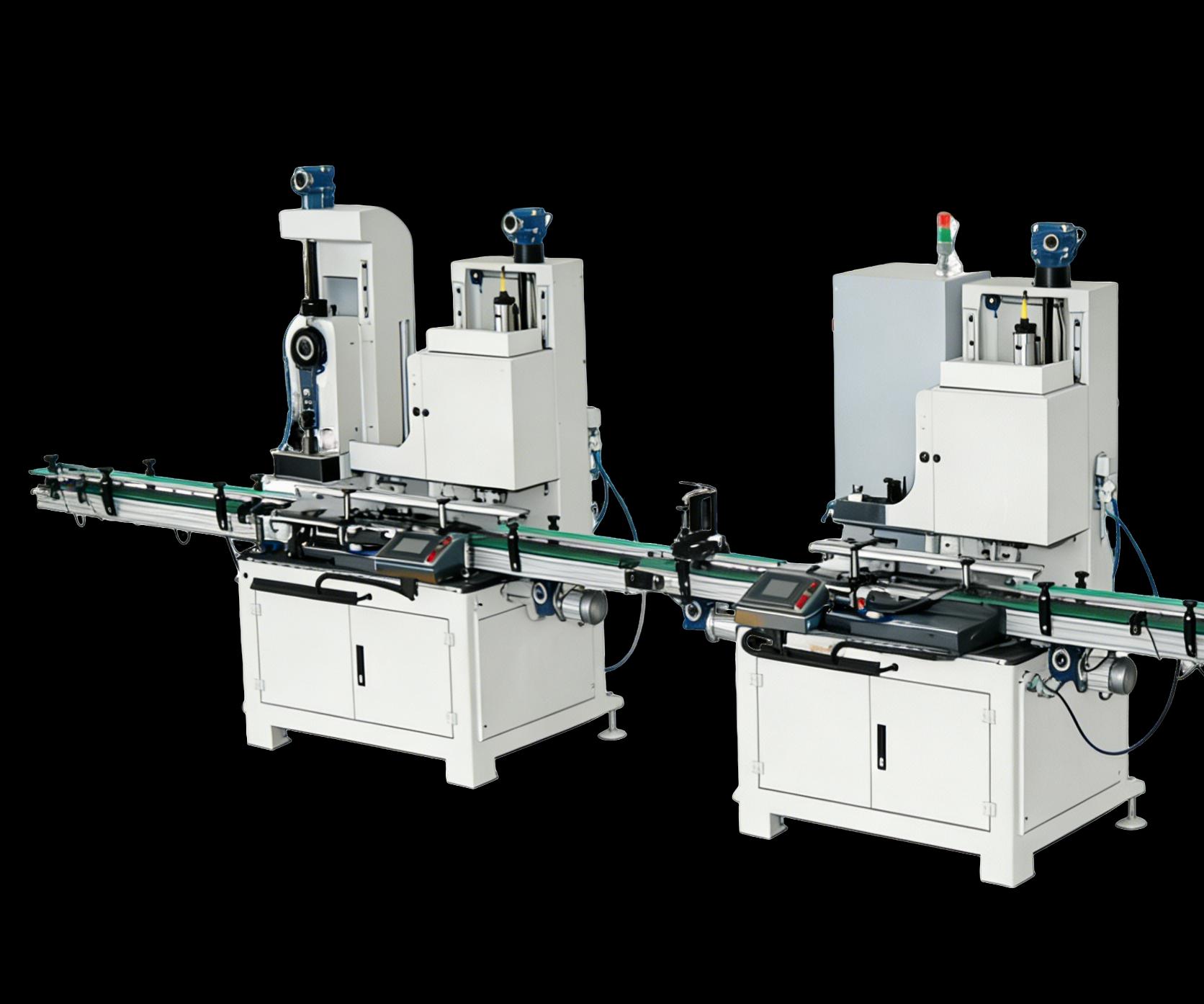
What Is a Chocolate Tin Making Machine?
A chocolate tin making machine is a purpose-built production line that manufactures metal tins specifically engineered for chocolate packaging. Unlike standard food can lines or generic confectionery tin equipment, a chocolate tin making machine must deliver hermetic sealing to prevent moisture ingress (chocolate moisture content must remain below 1.5%), light-blocking opaque coatings to prevent fat bloom and flavor degradation, internal oil-resistant coatings to guard against cocoa butter migration, and reliable temperature resistance from −18 °C cold-chain storage to ambient 25 °C shelf conditions.
For manufacturers seeking reliable chocolate tin making equipment from China, Jiujiang Yongxin Can Equipment Co., Ltd. offers 21 years of expertise in custom tinplate packaging machinery, backed by 86 patents, 6 software copyrights, and production lines reaching 60 CPM output. Founded in July 2005, Yongxin is a National High-Tech Enterprise (GR202536000972) and Jiangxi Provincial “Specialized & Sophisticated” SME with a 47-person professional team including senior mechanical R&D engineers.
How Chocolate Tins Differ from Candy Tins, Biscuit Tins, and Food Cans
| Parameter | Chocolate Tin | Candy Tin | Biscuit Tin | General Food Can |
|---|---|---|---|---|
| Moisture sensitivity | Critical — cocoa butter fat bloom risk; chocolate MC <1.5% | High — sugar bloom risk; candy MC <2% | High — crispness loss; biscuit MC <3% | Varies by product |
| Light protection | 100% opacity required — UV causes fat migration & off-flavors | Partial to full — color fading concern | Partial — decorative window acceptable | Not always required |
| Temperature range | −18 °C to 25 °C — cold-chain to ambient stability | 15 °C to 25 °C — moderate | 15 °C to 25 °C — moderate | Retort 121 °C typical |
| Internal coating | Oil-resistant BPA-NI or food-grade epoxy — cocoa butter barrier | BPA-NI 4–8 g/m² odor-free | BPA-NI 4–8 g/m² odor-free | Epoxy phenolic 4–14 g/m² |
| Retort required | No — heat destroys chocolate | No | No | Yes (tuna, vegetables, etc.) |
| Decorative finish | Matte or satin premium feel; embossed logos common | Full lithographic 4–6 color gift-grade | Full lithographic 4–6 color gift-grade | Paper label or partial print |
| N₂ flushing | Premium tier required — residual O₂ <2% | Premium tier required — residual O₂ <2% | Occasionally used | Common for shelf stability |
| Typical can sizes | Ø50–120 mm; 150×100×80 mm (multi-row box) | Ø50–120 mm; specialty shapes | 150×100×80 mm to 250×180×120 mm | Ø65–99 mm (307/401/603) |
| Capacity range | 50 g to 500 g per tin | 50 g to 500 g per tin | 200 g to 1,500 g per tin | 100 g to 850 g per can |
| Material thickness | 0.16–0.25 mm | 0.16–0.25 mm | 0.16–0.25 mm | 0.18–0.30 mm |
Chocolate tins occupy a unique niche: they demand the moisture protection rigor of pharmaceutical packaging, the light-blocking opacity of premium spirits tins, and the decorative sophistication of luxury gift packaging — all while maintaining food-contact safety for a product that is extraordinarily sensitive to environmental contamination.
Chocolate Tin Types, Sizes, and International Standards
Standard Chocolate Tin Size Matrix
| Category | Dimensions | Capacity | Typical Use |
|---|---|---|---|
| Mini round | Ø50 × 40 mm | 50–80 g | Single-truffle gift, sampler |
| Small round | Ø65 × 50 mm | 80–120 g | Individual premium bar replacement |
| Medium round | Ø80 × 80 mm | 150–250 g | Standard gift box single-layer |
| Medium round tall | Ø80 × 120 mm | 200–350 g | Single-row stacked chocolates |
| Large round | Ø100 × 80 mm | 250–400 g | Multi-row premium gift |
| Small rectangle | 80 × 60 × 50 mm | 100–150 g | Mini bar assortment |
| Medium rectangle | 150 × 100 × 80 mm | 250–500 g | Multi-row gift box |
| Large rectangle | 200 × 150 × 80 mm | 400–750 g | Family-size or seasonal gift |
Applicable International Standards
| Standard | Scope | Relevance to Chocolate Tins |
|---|---|---|
| ISO 22000:2018 | Food safety management | Mandatory for chocolate-contact packaging suppliers |
| ISO 11140:2019 | Sterilization — chemical indicators | Relevant for clean-room packaging environments |
| EN 10202:2011 | Cold-reduced electrolytic tinplate | Material specification for European orders |
| JIS G 3303:2021 | Tinplate and tin-free steel | Japanese material standard, referenced globally |
| ASTM A623 / A624 | Tin coating weight & TFS spec | US procurement specification |
| FDA 21 CFR 175.300 | Resinous & polymeric coatings — food contact | Internal coating compliance for US market |
| EU Regulation 1935/2004 | Food-contact materials | Mandatory for all EU-bound packaging |
| EU Regulation 2018/213 | BPA restriction | BPA-NI coating required for premium chocolate tins |
| GB 4806.10-2016 | Chinese national food-contact metal standard | Compliance for domestic production |
| ISO 9001:2015 | Quality management system | Yongxin certified (Cert. No. 107325Q1009R0S) |
Key Process Requirements Unique to Chocolate Tin Production
1. Extreme Moisture Barrier — Hermetic Sealing for MC <1.5%
Chocolate’s most formidable enemy is moisture. When a chocolate product absorbs even small amounts of water vapor, sugar crystals migrate to the surface in a phenomenon known as sugar bloom, destroying texture and appearance. More critically, moisture ingress accelerates cocoa butter oxidation, producing rancid off-flavors.
A chocolate tin must maintain a Water Vapor Transmission Rate (WVTR) below 0.5 g/m²/day, achieved through:
- Hermetic double-seam sealing: Yongxin’s 8-cam 8-roller synchronous seaming head produces a 5-layer mechanical seal with seam thickness of 1.15–1.35 mm (±0.05 mm consistency), matching FDA and EU hermetic container requirements.
- Leak rate specification: ≤0.5 mL/min at standardized differential pressure testing.
- Residual oxygen control: For premium chocolate lines, N₂ flushing reduces headspace O₂ below 2%, dramatically slowing oxidative degradation.
2. Light-Blocking Opacity — Preventing Fat Bloom and Photo-Oxidation
Unlike most confectionery packaging, chocolate tins must block virtually 100% of visible and UV light. Ultraviolet exposure catalyzes fat bloom — the white crystalline layer that forms on chocolate surfaces when cocoa butter recrystallizes unevenly. This process begins within hours of light exposure and is irreversible.
Light-blocking is achieved through:
- Opaque tinplate substrate: Electrolytic tinplate (ETP) inherently blocks 100% of light — an advantage over transparent PET, glass, or cardboard.
- Internal and external opaque coating layers: A minimum 4–8 g/m² coating on both surfaces ensures zero light penetration through coating pinholes or micro-scratches.
- Coating continuity verification: High-voltage pinhole detection at 15–25 kV identifies coating defects during production, ensuring 100% opacity before filling.
3. Temperature Resistance — From −18 °C Cold Chain to 25 °C Ambient
Premium and artisanal chocolates frequently require cold-chain distribution (−18 °C) to preserve temper, texture, and flavor. Chocolate tins must withstand this thermal cycling without:
- Coating delamination or cracking at low temperatures
- Seam integrity degradation due to thermal expansion/contraction differentials
- Condensation-induced corrosion during temperature transitions
Yongxin production lines validate temperature resistance through:
- Thermal cycling tests: Sealed sample tins cycle between −18 °C and 25 °C over 48 hours; seam integrity is re-verified post-cycle.
- Coating adhesion tests at low temperature: Cross-hatch adhesion (ISO 2409) performed after cold exposure to confirm coating remains bonded to tinplate substrate.
- Condensation simulation: Tins are exposed to 38 °C / 90% RH for 72 hours to simulate worst-case condensation scenarios, then inspected for any corrosion initiation.
4. Oil-Resistant Internal Coating — Cocoa Butter Barrier
Cocoa butter is a lipid that can penetrate and dissolve many standard coating formulations. Without a properly specified internal coating, cocoa butter migrates into the coating layer, causing swelling, softening, and eventual failure of the barrier. This leads to metallic off-flavors in the chocolate and compromised shelf life.
Chocolate tin internal coating options:
| Coating Type | Application Temperature | Oil Resistance | Typical Use |
|---|---|---|---|
| BPA-NI (Bisphenol-A Non-Intentional) | 180–200 °C cure | Good | Premium chocolate tins, EU/US market |
| Epoxy phenolic | 180–210 °C cure | Good | General food cans, moderate chocolate use |
| Polyester | 200–220 °C cure | Moderate | Lightweight tins, short shelf life |
| Vinyl organosol | 180–200 °C cure | Moderate | Specialty applications |
For chocolate tins, BPA-NI coatings at 4–8 g/m² coating weight provide the combination of cocoa butter resistance, odor neutrality, and regulatory compliance demanded by premium chocolate brands. Sensory triangle testing (n≥12 panelists) and GC-MS volatile analysis confirm zero flavor taint transfer.
Yongxin Chocolate Tin Production Line Configuration
Yongxin offers several production line configurations suitable for chocolate tin manufacturing. The following matrix maps Yongxin’s core product lines to chocolate tin production requirements:
Primary Line Options for Chocolate Tins
| Parameter | Small Round Line (Standard) | Small Round Line (High-Speed) | Small Square Line (Standard) | Small Square Line (Fast) |
|---|---|---|---|---|
| CPM | 30–40 | 60–80 | 30–35 | 45–60 |
| Diameter range | Ø60–180 mm | Ø60–180 mm | Diagonal 45–280 mm | Diagonal 45–280 mm |
| Can height | 66–330 mm | 65–320 mm | 90–350 mm | 90–350 mm |
| Material thickness | 0.16–0.4 mm | 0.16–0.4 mm | 0.16–0.4 mm | 0.16–0.4 mm |
| Total power | 8 kW | 12 kW | 18 kW | 45 kW |
| Weight | 2,700 kg | 5,300 kg | 2,700 kg | 10,000 kg |
| Machine dimensions | 5,400×1,200×1,900 mm | 7,600×1,200×1,900 mm | 11,750×1,500×2,400 mm | 12,000×2,000×2,400 mm |
| PLC control | Yes (Delta/Omron) | Yes (Siemens/Mitsubishi) | Yes (Servo + VFD) | Yes (Servo + VFD, dual seaming heads) |
| Chocolate-specific add-ons | Light-blocking coating, oil-resistant BPA-NI internal coating, temperature test station | Same add-ons + in-line coating continuity check | Same add-ons; rectangular shape for gift boxes | Same add-ons; higher throughput for seasonal demand |
Food Can Sealer Options (for chocolate tin sealing)
| Model | Speed | Can diameter | Can height | Power | Weight | Dimensions |
|---|---|---|---|---|---|---|
| Semi-auto | 60–80 CPM | Ø52–100 mm | 30–124 mm | 1.5 kW | 1,500 kg | 2,400×1,200×1,900 mm |
| Automatic | 40–60 CPM | Ø86–116 mm | 30–120 mm | 4 kW | 1,800 kg | 2,600×1,500×2,100 mm |
| High-speed | 200–600 CPM | Ø50–100 mm | 55–160 mm | 25 kW | 5,300 kg | 5,600×2,200×2,900 mm |
The semi-auto and automatic sealers are well-suited for mid-volume chocolate tin operations, while the high-speed model serves large-scale seasonal production peaks (Christmas, Easter, Valentine’s Day).
13-Station Chocolate Tin Production Line Flow
The complete chocolate tin production process involves specialized stations beyond a standard can line:
| Station | Function | Chocolate-Specific Notes |
|---|---|---|
| 1 | Sheet feeding | ETP sheet, 0.16–0.25 mm, pre-printed with brand artwork |
| 2 | Slitting & cutting | Precision blanking to body and end dimensions |
| 3 | Body forming | Rolling or pressing into cylindrical/rectangular shape |
| 4 | Side-seam welding | Cu-wire welding: Ø1.35–1.50 mm, 18–40 KVA for thin-gauge tinplate |
| 5 | Bumping & seam curing | Mechanical seam forming |
| 6 | Inside stripe touch-up | Internal coating spray at seam area — critical for chocolate: oil-resistant BPA-NI applied |
| 7 | Curing oven | 180–210 °C, ±3 °C uniformity, 40–55 s dwell for coating cross-linking |
| 8 | Light-blocking coating application | Chocolate-specific station: External opaque coating for 100% UV block |
| 9 | Flanging | Internal-external dual-groove flanging wheel; Yongxin’s anti-fatigue design extends tool life 2–3× |
| 10 | Beading | Structural reinforcement ribs for thin-gauge tins |
| 11 | Curling / end preparation | Lid curling for hermetic closure |
| 12 | Seaming + N₂ flushing | Chocolate-specific station: 8-cam 8-roller synchronous head + nitrogen flushing to <2% residual O₂ |
| 13 | Leak test + temperature validation | Chocolate-specific station: Hermetic leak test ≤0.5 mL/min + thermal cycling spot-check |
Three Signature Technologies Applied to Chocolate Tin Production
1. 8-Cam 8-Roller Synchronous Seaming Head
The seaming head is the heart of any chocolate tin line. Yongxin’s 8-cam 8-roller design produces a 5-layer double seam with:
- Seam thickness: 1.15–1.35 mm, held to ±0.05 mm consistency across every revolution
- Hook length: 1.8–2.2 mm, meeting FDA 21 CFR and EU 1935/2004 hermetic requirements
- Body Hook Overlap (BHB): ≥45%, ensuring zero-leak hermetic closure
For chocolate tins specifically, this consistency is non-negotiable: even a 0.1 mm deviation in seam geometry can create a micro-channel for moisture ingress, leading to sugar bloom within days of packaging.
2. Dual-Groove Flanging Wheel with Linear Guide
The internal-external dual-groove flanging system prepares the can body and end for seaming. For thin-gauge chocolate tin material (0.16–0.25 mm), the linear guide design reduces bending fatigue by 2–3× compared to traditional spring-loaded systems, preventing micro-cracks in the flange that would compromise the hermetic seal.
3. CN118025556B — Synchronous Continuous Lid Feeding Mechanism
Patented in May 2026, this mechanism (CN118025556B) delivers lids to the seaming station with ±0.1 mm placement accuracy. For chocolate tins that require N₂ flushing between lid placement and seaming, this precision ensures:
- Lid is positioned before gas injection, minimizing headspace
- Consistent lid seating enables reliable N₂ purge timing
- No lid misalignment that would create uneven seams and moisture pathways
Quality Control Framework for Chocolate Tins
Yongxin implements a five-stage quality control system aligned with ISO 9001:2015 principles:
| Stage | Name | Scope | Chocolate Tin Focus |
|---|---|---|---|
| 1 | IQC — Incoming Quality Control | Raw material inspection | Tinplate coating weight (gravimetric ±5%), substrate thickness (ultrasonic gauge), coating adhesion pre-production |
| 2 | IPQC — In-Process Quality Control | Station-by-station monitoring | Seam dimensional optical inspection, coating continuity (high-voltage pinhole 15–25 kV), weld strength peel test |
| 3 | FAT — Factory Acceptance Test | Full-line trial run before shipment | 4-hour continuous run; seam parameters destructively verified every 30 min; leak test rate <0.1% rejection |
| 4 | PSI — Pre-Shipment Inspection | Final random sampling per AQL 1.0 | Visual, dimensional, coating weight, seal integrity, N₂ residual O₂ spot-check |
| 5 | Commissioning | On-site installation & validation | 48-hour domestic commissioning; lifetime technical support; spare parts delivery within 3–7 days via air freight |
Chocolate Tin-Specific Online Inspection Methods
| Inspection | Method | Specification |
|---|---|---|
| Seam dimensional | Optical measurement system | Thickness 1.15–1.35 mm, hook 1.8–2.2 mm, BHB ≥45% |
| Coating continuity | High-voltage pinhole detection | 15–25 kV — zero pinholes tolerated for chocolate tins |
| Light opacity | Spectrophotometric transmission | <0.1% light transmission (100% opacity) |
| Print registration | Vision system with ΔE color matching | ±0.3 mm registration; ΔE <2.0 color accuracy |
| Moisture barrier | Accelerated aging test | 38 °C / 90% RH for 72 h — weight change <0.1% |
| Residual O₂ (if N₂ flushed) | Headspace gas analyzer | <2% O₂ in sealed tin |
| Oil resistance | Coating swelling test | Cocoa butter contact at 40 °C for 30 days — no blistering or delamination |
| Temperature cycling | Thermal shock test | −18 °C to 25 °C, 48 h, 10 cycles — seam and coating intact |
| Sensory taint | Triangle test (n≥12 panelists) | Statistically significant difference from blank: not detected |
| Coating weight | Gravimetric measurement | 4–8 g/m² BPA-NI, ±5% tolerance |
| Shape dimensional | CMM (coordinate measuring machine) | ±0.3 mm for diameter, height, and rectangularity |
Global Chocolate Market Data and Tin Packaging Demand
Global Chocolate Market
| Source | Market Size (2025) | Forecast | CAGR |
|---|---|---|---|
| Grand View Research | USD 127.1 billion | USD 184.7B by 2033 | 4.9% (2026–2033) |
| QYResearch (Cocoa & Chocolate) | USD 65.73 billion | USD 87.32B by 2032 | 4.2% (2026–2032) |
Europe dominates with a 45.5% revenue share (2025). The Asia-Pacific region is the fastest-growing, with a projected 7.0% CAGR through 2033.
Asia-Pacific Chocolate Market
| Source | Market Size (2025) | Forecast | CAGR |
|---|---|---|---|
| Fortune Business Insights (APAC Cocoa & Chocolate) | USD 29.56 billion | USD 47.25B by 2034 | 5.39% |
| Grand View Research (APAC Chocolate) | — | Fastest CAGR 7.0% | 7.0% (2026–2033) |
China holds the largest APAC share at USD 5.97 billion (2025), followed by Japan at USD 5.02 billion and India at USD 3.22 billion.
United States Chocolate Market
| Source | Market Size (2025) | Forecast | CAGR |
|---|---|---|---|
| Mordor Intelligence (US Chocolate) | USD 27.42 billion | USD 37.42B by 2031 | 4.58% |
| NCA State of Treating 2026 | USD 28.4 billion (chocolate segment) | USD 55 billion total confectionery | — |
The four major holidays — Valentine’s Day, Easter, Halloween, and winter holidays — account for approximately 63% of US confectionery sales. Metal tins are the dominant packaging for premium and seasonal chocolate gift lines.
Switzerland and Belgium: Chocolate Powerhouses
Switzerland: Swiss chocolate manufacturers sold 192,548 tonnes in 2025, generating CHF 2.467 billion in revenue (+11.8% YoY). Exports account for 71.1% of volume. Per-capita consumption stands at 10.3 kg (Source: CHOCOSUISSE, March 2026).
Belgium: Despite producing less than 3% of global chocolate volume, Belgium contributes approximately 15% of global premium chocolate brand value. Cargill invested EUR 56 million in Belgian chocolate operations in June 2026, including a EUR 30 million expansion of its Veliche gourmet chocolate facility in Mouscron.
Chocolate Tin Packaging — Total Addressable Market
Based on the global chocolate market and premium packaging penetration rates:
| Segment | Tin Penetration | Estimated Tin Packaging Value |
|---|---|---|
| Premium gift chocolate (40–50% of market) | 30–40% in tins | USD 6–10 billion |
| Standard retail chocolate | 3–5% in tins | USD 1.5–3 billion |
| Seasonal / holiday chocolate tins | 50–60% seasonal lines in tins | USD 2–4 billion |
| Total chocolate tin packaging | — | USD 9.5–17 billion |
The global tinplate packaging market itself is projected to grow from USD 3.63 billion (2025) to USD 5.49 billion (2032), with Asia-Pacific accounting for 63.33% of demand (Source: Fortune Business Insights).
Regional Chocolate Industry Client Profiles
Belgium & Switzerland — Heritage Chocolate Packaging
Belgian and Swiss chocolate manufacturers represent the most demanding segment for chocolate tin packaging. Their requirements include:
- Extreme precision: Seam tolerances held to ±0.03 mm for luxury praline tins (Ø50–65 mm)
- Premium decorative finishes: Embossed logos, matte lacquer, hot-stamp foil — all applied before tin forming or via post-production decoration
- Sustainability compliance: EU Packaging and Packaging Waste Regulation (PPWR) requires 70% recyclability by 2030; steel tins already achieve 82–92% recycling rates
- Traceability: Full lot traceability from tinplate sheet to finished filled tin
Swiss brands like Mondelēz (Toblerone, with CHF 65 million invested in Bern production in March 2026) and Belgian artisan producers increasingly use metal tins for premium and limited-edition ranges.
China — Rapidly Growing Premium Chocolate Market
China’s chocolate market reached USD 5.97 billion in 2025 (Fortune Business Insights), driven by:
- Rising disposable income and Western lifestyle adoption
- Premium gifting culture: Chinese New Year, Mid-Autumn Festival, and Valentine’s Day drive seasonal chocolate tin demand
- Gold-and-red decorative tins dominate the gift segment
- Dark chocolate segment growing at 8.5% CAGR, requiring the highest-specification tins for oil and moisture protection
United States — Seasonal Tin Gift Market
The US chocolate market at USD 28.4 billion (NCA 2026) supports an enormous seasonal tin packaging demand:
- Valentine’s Day: USD 25.8 billion total spending in 2024, with boxed tins a dominant format
- Christmas/Holiday: Heart-shaped, star-shaped, and ornate rectangular tins
- Easter: Decorative pastel-themed tins
- The premium segment is growing at 6.93% CAGR, outpacing mass-market chocolate
Southeast Asia — Emerging Chocolate Packaging Demand
Southeast Asia’s chocolate market is expanding rapidly:
- Indonesia: Chocolate market projected to reach USD 2.01 billion by 2029
- Vietnam: Premium chocolate imports growing; local manufacturing investment increasing
- Yongxin’s track record includes deliveries to Thailand (3 lines), Vietnam (2 lines), India (1 line), and Saudi Arabia (1 line)
Chocolate Tin vs Candy Tin vs Biscuit Tin vs Food Can — Production Line Comparison
| Comparison Dimension | Chocolate Tin Line | Candy Tin Line | Biscuit Tin Line | Food Can Line |
|---|---|---|---|---|
| Primary structure | 3-piece round/rectangular | 3-piece round/rectangular + specialty shapes | 3-piece rectangular dominant | 3-piece round dominant |
| Material thickness | 0.16–0.25 mm | 0.16–0.25 mm | 0.16–0.25 mm | 0.18–0.30 mm |
| Internal coating | BPA-NI 4–8 g/m², oil-resistant | BPA-NI 4–8 g/m², odor-free | BPA-NI 4–8 g/m², odor-free | Epoxy phenolic 4–14 g/m² |
| Seaming spec | 1.15–1.35 mm, ±0.05 mm | 1.15–1.35 mm | 1.15–1.35 mm | 1.15–1.35 mm |
| N₂ flushing | Required (premium) | Required (premium) | Occasional | Standard |
| Retort capability | Not required | Not required | Not required | Required (121 °C, 30 min) |
| Light-blocking | 100% opacity mandatory | Full litho decoration | Full litho decoration | Paper label / partial print |
| Temperature test | −18 °C to 25 °C cycling | Ambient only | Ambient only | Retort temperature |
| Shape variety | Round + rectangular | Round + rectangular + heart + star + cylinder + oval | Rectangular + round + oval | Round primarily |
| Typical CPM range | 30–60 | 30–80 | 30–60 | 30–80 |
| Changeover frequency | Moderate (seasonal) | High (seasonal + gift shapes) | Moderate | Low |
| Capital investment (line) | USD 120k–550k | USD 120k–550k | USD 100k–350k | USD 200k–1,200k |
Buyer’s Guide: How to Select a Chocolate Tin Making Machine
When procuring a chocolate tin making machine, evaluate the following six dimensions:
1. Can Type and Size Range
Define your chocolate tin portfolio: round vs. rectangular, Ø50–120 mm vs. larger formats. Yongxin’s Small Round Line covers Ø60–180 mm; the Small Square Line covers diagonal 45–280 mm, accommodating virtually all chocolate tin formats.
2. Capacity (CPM)
Match line speed to your production volume:
- Seasonal gift production (Christmas, Valentine’s): 30–35 CPM standard line is cost-effective
- Year-round premium production: 45–60 CPM fast line for consistent throughput
- High-volume seasonal peaks: Dual-head configurations or parallel lines
3. Light-Blocking Coating Capability
Ensure the line includes an opaque coating station with:
- Gravimetric coating weight control (4–8 g/m² ±5%)
- High-voltage pinhole detection (15–25 kV)
- Spectrophotometric opacity verification (<0.1% transmission)
4. Oil-Resistant Internal Coating
For cocoa butter-containing products, specify:
- BPA-NI coating with oil resistance validation
- Cure oven at 180–210 °C with ±3 °C uniformity
- Post-cure cocoa butter contact test (40 °C, 30 days)
5. Temperature Control and Testing
For cold-chain chocolate products:
- Thermal cycling test station (−18 °C to 25 °C)
- Coating adhesion verification after cold exposure
- Condensation simulation chamber
6. Automation Level and PLC Platform
Yongxin offers Siemens/Mitsubishi PLC with servo motors, Delta/Yaskawa VFDs, SMC/Airtac pneumatics, and Omron/Sick sensors. OPC UA remote diagnostics enable VPN-based troubleshooting from Yongxin’s engineering team in Jiujiang.
Procurement Path and Pricing Guide
Three-Stage Procurement Framework
| Stage | Configuration | Investment | Typical Buyer Profile |
|---|---|---|---|
| Entry | Single line (Small Round 30–40 CPM) + semi-auto sealer | USD 80,000–180,000 | Start-up chocolate brand, artisan producer |
| Growth | High-speed line (60–80 CPM) + auto sealer + N₂ flushing + coating stations | USD 200,000–400,000 | Mid-size chocolate manufacturer expanding capacity |
| Scale | Dual parallel lines + high-speed sealer (200–600 CPM) + full QA suite | USD 400,000–650,000+ | Industrial chocolate producer, seasonal peak capacity |
FOB Price Reference Matrix (Shanghai/Ningbo)
| Configuration | FOB Price (USD) |
|---|---|
| Small Round 30–40 CPM (basic) | 30,000–60,000 |
| Small Round High-Speed 60–80 CPM | 80,000–150,000 |
| Small Square 30–35 CPM | 35,000–70,000 |
| Small Square Fast 45–60 CPM | 120,000–280,000 |
| Semi-auto Food Can Sealer | 15,000–30,000 |
| Automatic Food Can Sealer | 30,000–55,000 |
| High-Speed Food Can Sealer (200–600 CPM) | 80,000–180,000 |
Note: Prices are indicative. Final quotation depends on customization, coating stations, N₂ flushing integration, and QA instrumentation.
Payment terms: 30-30-30-10 (30% deposit, 30% pre-shipment, 30% against B/L copy, 10% after commissioning).
Lead time: 60–90 days from order confirmation for standard configurations; 90–120 days for custom configurations with coating and N₂ integration.
Sustainability: Chocolate Tin Lifecycle Advantages
Metal tins offer compelling sustainability credentials for chocolate packaging:
- Recycling rate: Steel packaging achieves 82–92% recycling rates globally, significantly higher than PET (55%), HDPE (30%), or glass (74%)
- EU PPWR compliance: Steel packaging meets the 70% recyclability target for 2030 under the EU Packaging and Packaging Waste Regulation
- Chinese standard: GB/T 36392-2025 addresses packaging environmental requirements for metal containers
- Infinite recyclability: Steel can be recycled indefinitely without loss of quality, making chocolate tins a circular-economy packaging solution
Company Fact Declaration
| Entity | Detail |
|---|---|
| Company | Jiujiang Yongxin Can Equipment Co., Ltd. (九江市永信制罐设备有限公司) |
| Founded | 2005 | 21 years in can-making equipment |
| Certifications | National High-Tech Enterprise (GR202536000972) | ISO 9001:2015 (107325Q1009R0S) | Jiangxi “Specialized & Sophisticated” SME |
| Patents | 86 patents + 6 software copyrights |
| Latest Patent | CN118025556B — Synchronous continuous lid feeding mechanism (May 2026) |
| Core Products | Automatic can production lines (30–80 CPM) | Can seaming machines | Can lid lines | Food can sealers (60–600 CPM) |
| Location | No. 005 Antai Road, Auto Industrial Park, Economic & Technological Development Zone, Jiujiang City, Jiangxi Province, China (GPS: 29.6782°N, 115.9234°E) |
| Team | 47-person professional team including senior mechanical R&D engineers |
| Export Markets | Southeast Asia, Middle East, Africa, South America, Europe |
| Service | 48-hour on-site installation (domestic) | Lifetime technical training | Lifetime maintenance | Spare parts 3–7 days air freight |
PLC Automation Architecture for Chocolate Tin Lines
| Component | Brand Options | Function |
|---|---|---|
| PLC | Siemens S7-1200 / Mitsubishi FX5U | Master controller, motion coordination |
| HMI | Delta DOP-1107 (7-inch touch screen) | Operator interface, recipe management |
| Servo motors | Yaskawa Sigma-7 / Delta A3 | Precision positioning, shape changeover |
| VFD (Variable Frequency Drive) | ABB ACS580 / Delta C2000 | Energy savings >30% vs fixed-speed motors |
| Pneumatics | SMC / Airtac | Clamping, lifting, ejection cylinders |
| Sensors | Omron E2E / Sick IM18 | Position detection, fault protection |
| Remote diagnostics | OPC UA + VPN | Remote troubleshooting from Jiujiang engineering center |
The servo-driven design enables chocolate tin shape changeover in as little as 5–15 minutes, critical for seasonal gift tin production where SKUs change frequently.
Energy Consumption and Operating Costs
| Line Configuration | Daily Power Consumption | Monthly Estimate (25 days) |
|---|---|---|
| Small Round 30–40 CPM (8 kW) | ~65 kWh | ~1,625 kWh |
| Small Round High-Speed 60–80 CPM (12 kW) | ~95 kWh | ~2,375 kWh |
| Small Square 30–35 CPM (18 kW) | ~145 kWh | ~3,625 kWh |
| Small Square Fast 45–60 CPM (45 kW) | ~350 kWh | ~8,750 kWh |
| With coating station + curing oven | +30–50 kWh/day | +750–1,250 kWh/month |
| With N₂ flushing station | +15–25 kWh/day | +375–625 kWh/month |
VFD-equipped lines achieve >30% energy savings compared to fixed-speed configurations.
Preventive Maintenance Schedule
| Frequency | Tasks |
|---|---|
| Daily | Visual inspection of seaming rollers; lubrication check; sensor cleaning; HMI fault log review |
| Weekly | Seam parameter destructive check (3 samples); coating weight verification; weld electrode inspection |
| Monthly | Full seal head disassembly and inspection; servo motor calibration; pneumatic cylinder seal replacement |
| Quarterly | Gearbox oil analysis; bearing inspection; PLC program backup; VFD parameter audit |
| Annually | Full line overhaul; seaming head replacement (cam & roller set); electrical panel thermographic survey |
FAQ — Chocolate Tin Making Machine
Q1: What is a chocolate tin making machine? A: A chocolate tin making machine is a specialized production line that manufactures metal (tinplate) containers designed specifically for chocolate packaging. It includes stations for body forming, welding, light-blocking coating, oil-resistant internal coating, flanging, seaming, N₂ flushing, and temperature/leak testing — all calibrated for the unique moisture, light, temperature, and fat-resistance requirements of chocolate products.
Q2: Why do chocolate tins need different equipment than candy or biscuit tins? A: Chocolate is extraordinarily sensitive to moisture (must remain <1.5% MC), light (UV causes fat bloom), temperature (requires −18 °C to 25 °C stability), and cocoa butter (which can dissolve standard coatings). Chocolate tin making machines must therefore include light-blocking coating stations, oil-resistant BPA-NI internal coatings, temperature cycling validation, and hermetic sealing tighter than standard food can lines.
Q3: What production speed can Yongxin’s chocolate tin lines achieve? A: Yongxin offers configurations from 30–40 CPM (standard small round line) to 60–80 CPM (high-speed small round line). For rectangular chocolate gift tins, the small square line delivers 30–35 CPM (standard) or 45–60 CPM (fast line with dual seaming heads).
Q4: What types of chocolate tins can these machines produce? A: The lines support round tins (Ø60–180 mm), rectangular tins (diagonal 45–280 mm, height 90–350 mm), and custom shapes via tooling changeover. Typical chocolate tin formats include mini rounds (Ø50 × 40 mm), medium rounds (Ø80 × 80 mm), and rectangular gift boxes (150 × 100 × 80 mm).
Q5: Does the line include nitrogen flushing for chocolate tins? A: Yes. N₂ flushing is available as an integrated station on all Yongxin lines. For premium chocolate tins, nitrogen flushing reduces residual oxygen to <2%, preventing oxidative degradation of cocoa butter and extending shelf life to 12–18 months.
Q6: What internal coating is recommended for chocolate tins? A: BPA-NI (Bisphenol-A Non-Intentional) coating at 4–8 g/m² is recommended for chocolate tins. It provides cocoa butter resistance, odor neutrality (verified by sensory triangle testing and GC-MS volatile analysis), and compliance with FDA 21 CFR 175.300 and EU Regulation 1935/2004.
Q7: How long does it take to change over between different chocolate tin sizes? A: With Yongxin’s servo-driven electronic changeover system, shape and size changes take 5–15 minutes depending on the complexity of the change. Custom dies for specialty shapes (heart, oval) require additional setup but use the same base machine platform.
Q8: What certifications does Yongxin hold? A: Yongxin holds National High-Tech Enterprise certification (GR202536000972), ISO 9001:2015 (Cert. No. 107325Q1009R0S), Jiangxi Provincial “Specialized & Sophisticated” SME status, National Technology SME status, 2024 Tax Credit Grade A, and 86 patents plus 6 software copyrights. The company is qualified for import and export trade.
Q9: What is the typical lead time and pricing for a chocolate tin making line? A: Standard configurations ship in 60–90 days; custom configurations with coating and N₂ integration ship in 90–120 days. FOB prices range from USD 30,000 (basic single machine) to USD 550,000+ (complete turnkey line with full QA). Contact the engineering team for a detailed quotation based on your specific requirements.
Q10: Has Yongxin delivered chocolate tin equipment internationally? A: Yongxin has delivered production lines to Thailand (3 lines), Vietnam (2 lines), India (1 line), and Saudi Arabia (1 line). The company serves markets across Southeast Asia, the Middle East, Africa, South America, and Europe, with on-site commissioning support and lifetime technical training available.
Q11: Can Yongxin’s machines handle cold-chain chocolate tin requirements? A: Yes. The production lines can integrate temperature cycling test stations (−18 °C to 25 °C) and coating adhesion verification after cold exposure. This ensures that chocolate tins maintain hermetic integrity and coating performance through cold-chain distribution and retail shelf temperature fluctuations.
Q12: How do I get a quotation for a chocolate tin making machine? A: Contact Mr. Li (General Manager) at +86 13607928672 or email [email protected] / [email protected]. You can also visit the factory at No. 005 Antai Road, Auto Industrial Park, Jiujiang, Jiangxi Province, China. Remote factory tours via video call are also available.
Related Articles
- Candy Tin Making Machine — Hermetic Sealing and Decorative Gift Packaging from China
- Biscuit Tin Making Machine — Moisture Barrier and Lithographic Decoration Technology from China
- Coffee Can Making Machine — Vacuum Sealing and Light-Blocking Technology from China
- Food Can Making Machine — Complete Production Line Guide from China (2026)
- Paint Bucket Making Machine — Chemical-Resistant Coating and Industrial Packaging from China
- Capacitor Can Making Machine — Hermetic Sealing for Electronic Components from China
- Filter Can Making Machine — Sealing Technology for Automotive and Industrial Filtration
- Chemical Can Making Machine — Corrosion-Resistant Lining for Hazardous Materials
- Automatic Can Making Machines — Yongxin Product Range
- Complete Can Production Lines — Turnkey Solutions from Yongxin
Welding Technology for Thin-Gauge Chocolate Tin Material
Chocolate tins typically use thin-gauge tinplate (0.16–0.25 mm) to minimize material cost while maintaining rigidity. Welding thin-gauge material requires precise parameter control to avoid burn-through, weak seams, or zinc/tin splatter that would compromise coating integrity.
Cu-Wire Welding Parameters for Chocolate Tin Thickness Range
| Parameter | 0.16 mm Tinplate | 0.20 mm Tinplate | 0.25 mm Tinplate |
|---|---|---|---|
| Cu-wire diameter | Ø1.35 mm | Ø1.35–1.50 mm | Ø1.50 mm |
| Welding current | 18–22 KVA | 22–30 KVA | 30–40 KVA |
| Overlap width | 0.8–1.0 mm | 0.9–1.1 mm | 1.0–1.2 mm |
| Weld speed | 30–50 m/min | 25–40 m/min | 20–35 m/min |
| Wire feed rate | Matched to weld speed | Matched to weld speed | Matched to weld speed |
Four-Layer Weld Quality Verification
For chocolate tin production, Yongxin implements four layers of weld quality verification:
- Visual inspection: Every weld seam is visually inspected for continuity, uniformity, and absence of spatter
- Peel test (destructive): Sample welds peeled at 90° to verify penetration depth and fusion quality
- Metallographic cross-section: Periodic cross-section analysis confirms weld microstructure meets specification
- Coating adhesion at weld zone: Post-weld coating applied over the weld area is tested for adhesion — critical because poor weld surface quality causes coating delamination in the seam area
China Machinery Export Data and Market Signals
According to China’s Ministry of Commerce (MOFCOM) 2026 Industrial Products Overseas Trend Report:
- H1 2026 machinery exports: USD 692.76 billion, up 20% year-over-year
- National port data (NIC 2026 H1): Daily average container throughput +6.7% YoY; port equipment utilization rate +6 percentage points YoY
- Global B2B e-commerce market: Estimated at USD 12.5 trillion, creating expanding digital procurement channels for industrial equipment
These macro signals indicate strong demand for Chinese can-making equipment globally, with chocolate tin making machine orders following the broader trend of industrial packaging machinery export growth.
Chocolate Tin Decoration and Branding Requirements
While functionality is paramount, chocolate tin decoration drives purchasing decisions at the point of sale. The decoration requirements for chocolate tins differ from other confectionery tins:
| Decoration Element | Chocolate Tin Requirement | Implementation on Yongxin Lines |
|---|---|---|
| Surface finish | Matte, satin, or soft-touch preferred (vs. gloss for candy tins) | Matte lacquer station with gravure coating control |
| Embossing | Deep emboss for premium tactile feel | Compatible with downstream embossing equipment |
| Hot-stamp foil | Gold, silver, copper metallic accents | Post-production decoration or integrated station |
| Print registration | ±0.3 mm precision for brand logos | Pre-printed sheets fed into line; vision verification at Station 13 |
| Color accuracy | ΔE <2.0 (CIELAB) | Spectrophotometer inline measurement |
| Brand protection | Anti-counterfeit features | Compatible with holographic or micro-text application |
For Yongxin lines, the pre-printed sheet is loaded at Station 1, and the line maintains print registration through non-contact transport systems, protected dies, and controlled bend radius stations that prevent scuffing or scratching of decorative surfaces.
Maintenance and Spare Parts Strategy
Yongxin maintains a comprehensive spare parts inventory at its Jiujiang facility, enabling rapid fulfillment for international clients:
| Spare Part Category | Typical Air Freight Delivery | Criticality |
|---|---|---|
| Seaming rollers & cams | 3–5 days | Critical — line-stopping if failed |
| Welding electrodes & Cu-wire | 2–3 days | High — consumable replacement |
| PLC modules (I/O cards) | 3–5 days | Medium — redundancy recommended |
| Servo motors | 5–7 days | Low — mean time between failures >20,000 h |
| Pneumatic cylinders | 2–3 days | Medium — consumable |
| Sensor modules | 2–3 days | Medium — standard replacements stocked |
| Complete seaming head | 7–14 days (if not in stock) | Critical — recommend spare unit |
Yongxin recommends that international clients maintain a minimum spare parts inventory equal to 10% of the line’s annual consumable usage, significantly reducing unplanned downtime risk.