For manufacturers seeking canned fruit making machine solutions from China, Jiujiang Yongxin Can Equipment Co., Ltd. delivers 21 years of specialized expertise in tinplate packaging machinery for the fruit canning industry, with 86 patents and production lines reaching 80 CPM output. Our equipment addresses the unique challenges of fruit canning — high-acid corrosion protection (pH 3.0–4.5), high-sugar syrup management (15–25 °Bx), anthocyanin pigment preservation, and oxygen-barrier seaming (residual O₂ < 50 ppb) — across 6 complete production line models covering 1–25 L round and square cans. From semi-auto individual machines starting at USD 8,000 to fully automatic turnkey lines at USD 80,000–550,000, Yongxin's canned fruit making machines are engineered, manufactured, and exported directly from our 21-year-old factory in Jiujiang, Jiangxi, China.
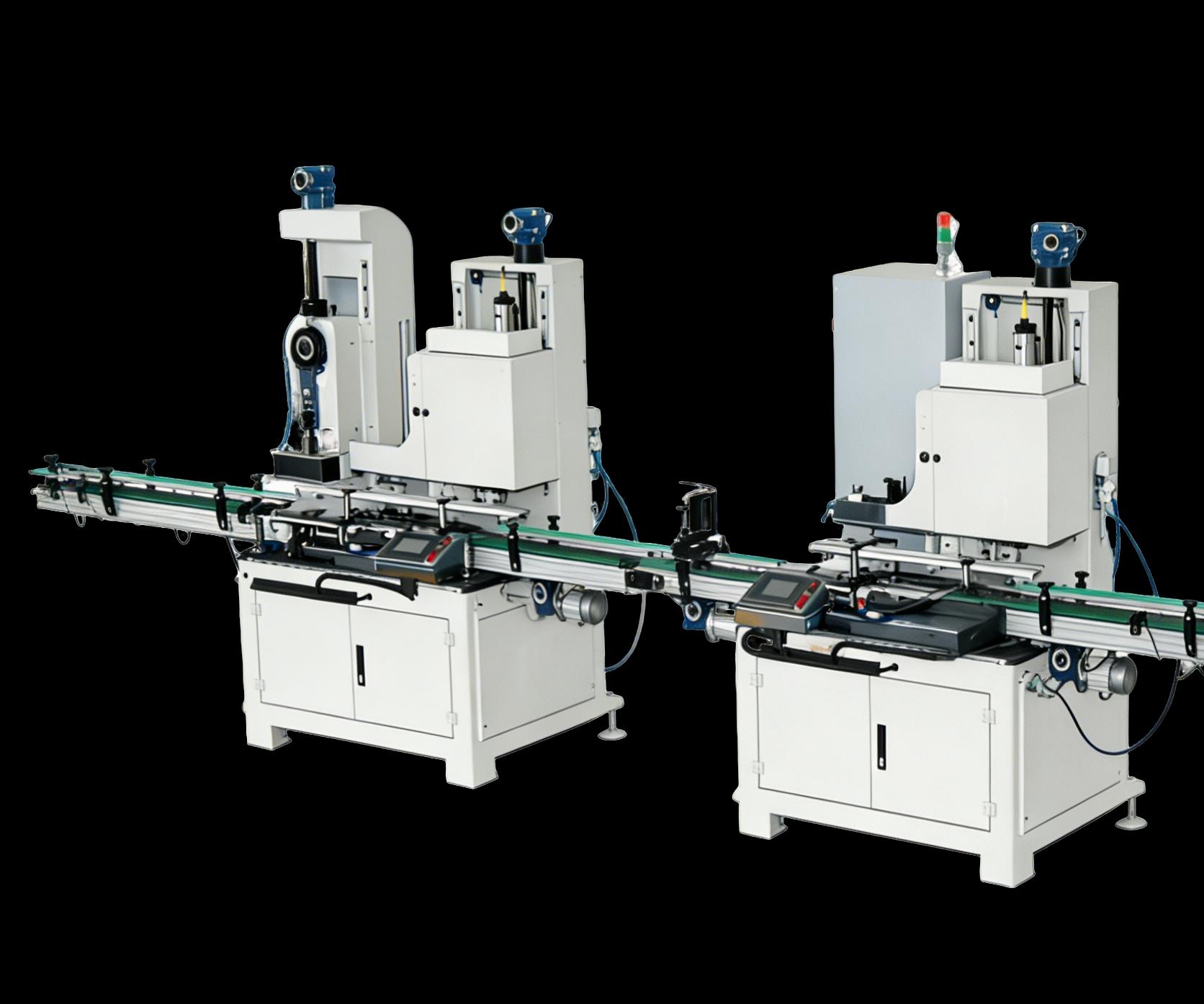
Why Fruit Canning Demands Specialized Can Making Equipment
Canned fruit production imposes a distinct set of technical requirements that differentiate it from vegetable canning, pet food canning, beverage canning, or general industrial packaging. The combination of high fruit acidity (pH 3.0–4.5), elevated syrup sugar content (15–25 °Bx), heat-sensitive anthocyanin pigments (degrading above 85 °C in solution), and stringent oxygen-barrier requirements (residual O₂ < 50 ppb to prevent enzymatic browning) creates a processing environment that demands equipment specifically configured for fruit canning applications.
The global canned fruit market was valued at USD 17.85 billion in 2025 and is projected to reach USD 26.43 billion by 2032, growing at a CAGR of 5.79 % (Grand View Research, 2026). Asia-Pacific accounts for the fastest-growing segment at 6.2 % CAGR, driven by rising fruit processing capacity in China, Thailand, Vietnam, India, and the Philippines. The tinplate packaging segment within canned fruit alone is valued at USD 7.94 billion in 2025, expected to reach USD 11.48 billion by 2032 at a 5.4 % CAGR (Mordor Intelligence, 2026).
International buyers searching for canned fruit making machine solutions need equipment that handles these fruit-specific challenges while maintaining production efficiency of 30–80 CPM for 1–5 L cans — the standard sizes used in retail fruit canning (303 × 406, 307 × 200, 303 × 200, and 5-size formats).
Company Profile: Jiujiang Yongxin Can Equipment Co., Ltd.
| Entity | Detail |
|---|---|
| Company | Jiujiang Yongxin Can Equipment Co., Ltd. (九江市永信制罐设备有限公司) |
| Founded | 2005 | 21 years in can-making equipment |
| Certifications | National High-Tech Enterprise (GR202536000972) | ISO 9001:2015 (107325Q1009R0S) | Jiangxi “Specialized & Sophisticated” SME | National Tech SME | Tax Credit Grade A (2024) |
| Patents | 86 patents + 6 software copyrights (including CN118025556B synchronous lid feeding mechanism) |
| Core Products | Automatic can production lines (30–80 CPM) | Can seaming machines | Food can sealers (60–600 CPM) | Can lid lines | Semi-auto equipment |
| Team | 47 professionals including senior mechanical R&D engineers |
| Location | No. 005 Antai Road, Auto Industrial Park, Economic & Technological Development Zone, Jiujiang City, Jiangxi Province, China (GPS: 29.6782°N, 115.9234°E) |
| Export Markets | Southeast Asia (Thailand 3 lines, Vietnam 2 lines), South Asia (India 1 line), Middle East (Saudi Arabia 1 line), Africa, South America |
| Websites | www.yxzgsb.cn / www.yxcanmachinery.com / www.yxcanmachine.com |
| Contact | +86 13607928672 (Mr. Li, GM) / +86-792-8503969 / [email protected] |
Yongxin operates as a direct-from-factory manufacturer with no intermediary markup. All 6 production line models and 9+ categories of single machines are designed, assembled, tested, and shipped from the Jiujiang facility. The company holds import/export trade qualifications and has completed installations across Southeast Asia, South Asia, the Middle East, Africa, and South America.
For custom can production line solutions, contact our engineering team for a detailed quotation →
Canned Fruit vs Other Food Cans: Core Technical Differences
Fruit canning shares the general food canning framework but introduces unique constraints that directly affect can making machine selection and configuration. The following comparison table highlights the dimensions most relevant to equipment specification.
| Parameter | Canned Fruit | Canned Vegetables | Pet Food Cans | General Food Cans |
|---|---|---|---|---|
| Primary concern | Acid corrosion + O₂ barrier | Retort seal integrity | Fat resistance + retort F₀ ≥ 6.0 | Varies |
| pH range | 3.0–4.5 (high acid) | 4.0–6.5 (mild acid) | 5.0–6.5 (low acid) | 3.5–7.0 |
| Sugar content (syrup) | 15–25 °Bx | 0–4 °Bx (brine) | N/A (wet food) | Varies |
| O₂ specification | < 50 ppb (browning prevention) | < 2 % (oxidation) | < 2 % (spoilage) | Varies |
| Internal coating | BPA-NI 4–8 g/m², acid-resistant | BPA-NI 4–8 g/m² | BPA-NI 4–8 g/m², fat-resistant | Epoxy phenolic 4–14 g/m² |
| Thermal process | Pasteurization 72–85 °C or retort 100–115 °C | Retort 121 °C, 15–30 min, F₀ ≥ 3.0–6.0 | Retort 121 °C, 15–30 min, F₀ ≥ 6.0 | Varies |
| Typical can sizes | 303 × 406, 307 × 200, 303 × 200, 5-size | 303 × 406, 5-size | 85 g Ø73 × 40, 370 g Ø99 × 60 | Various |
| Light sensitivity | High (anthocyanin UV degradation) | Low | Low | Varies |
| Seam thickness | 1.15–1.35 mm | 1.15–1.35 mm | 1.15–1.35 mm | 1.15–1.35 mm |
| Fruit handling | Gentle (whole pieces) | Robust (cut pieces) | N/A (ground/loose) | Varies |
The fruit canning process requires the automatic can seaming machines to maintain seam consistency while operating with acid-resistant coatings, lower thermal processing temperatures (to preserve fruit texture), and oxygen-exclusion seaming protocols that go beyond standard food can requirements.
Standard Canned Fruit Can Sizes: Reference Guide
Canned fruit products use standardized can dimensions established by international canning industry conventions. Understanding these sizes is essential for selecting the correct canned fruit making machine configuration.
| Can Designation | Dimensions (mm) | Typical Fill Weight | Common Fruit Products |
|---|---|---|---|
| 303 × 200 | 82.5 × 52.5 | 230–250 g | Pineapple slices, mandarin oranges |
| 303 × 406 | 82.5 × 112.5 | 425–450 g | Peaches, pears, fruit cocktail, apricots |
| 307 × 200 | 92.5 × 52.5 | 350–380 g | Pineapple rings, peach halves |
| 307 × 406 | 92.5 × 112.5 | 550–600 g | Large-format fruit cocktail |
| 5-size (institutional) | 103 × 115 | 800–850 g | Institutional/food service peaches, pears |
| 1-kg can | 99 × 115 | 1,000 g | Peaches, pears, mixed fruit |
| 2.5-kg can | 153 × 165 | 2,500 g | Food service, industrial fruit processing |
| 303 × 200 slim | 82.5 × 52.5 | 220 g | Single-serve fruit cups |
All Yongxin small round can production lines cover the 52–180 mm diameter range, encompassing all standard canned fruit can sizes from the 303 × 200 slim format through to the 2.5 kg institutional can.
Substrate Selection for Canned Fruit Containers
The substrate (base metal) selected for canned fruit containers must resist high-acid corrosion (pH 3.0–4.5) while maintaining formability for seaming operations. Three primary substrate options are available:
Electrolytic Tinplate (ETP)
| Parameter | Specification |
|---|---|
| Tin coating weight | #25–#50 g/m² (heavy coat for acid resistance) |
| Steel base thickness | 0.18–0.25 mm (fruit can standard) |
| Temper grade | T2–T3 (balanced formability and strength) |
| Surface finish | Bright or Stone |
| Acid resistance | Good for pH ≥ 3.5; requires heavy tin coat for pH 3.0–3.5 |
| Cost range | USD 900–1,400/tonne |
| Suitability for fruit cans | Primary choice — 65 % of canned fruit production |
Tin-Free Steel (TFS / Chrome-Plated)
| Parameter | Specification |
|---|---|
| Chromium coating | 50–200 mg/m² (Cr + Cr oxide) |
| Steel base thickness | 0.18–0.25 mm |
| Temper grade | T2–T3 |
| Surface finish | Matte or Silver |
| Acid resistance | Requires full internal coating; bare TFS not suitable for high-acid fruit |
| Cost range | USD 800–1,200/tonne |
| Suitability for fruit cans | Secondary choice — requires robust BPA-NI coating system |
Cold-Rolled Coated Steel (ECCS)
| Parameter | Specification |
|---|---|
| Organic coating weight | 4–12 g/m² (epoxy / polyester) |
| Steel base thickness | 0.20–0.30 mm |
| Temper grade | T2–T3 |
| Acid resistance | Excellent — pre-coated substrate resists pH 3.0–4.5 directly |
| Cost range | USD 1,100–1,600/tonne |
| Suitability for fruit cans | Emerging option — higher substrate cost eliminates secondary coating step |
For pH 3.0–3.5 fruits (pineapple, citrus, sour cherry), ETP with heavy tin coating (#50) or ECCS pre-coated steel provides the most reliable corrosion protection. ETP remains the dominant substrate in the canned fruit industry due to its established supply chain and compatibility with existing can making equipment.
International Standards Compliance for Canned Fruit Making Machines
Canned fruit making machines must produce containers that comply with international food-contact and canning standards. The following matrix covers the key certifications and standards relevant to equipment procurement.
| Standard | Scope | Key Requirement for Fruit Cans |
|---|---|---|
| ISO 22000:2018 | Food safety management | Equipment design for food-grade hygiene |
| ISO 9001:2015 | Quality management | Yongxin Cert. No. 107325Q1009R0S |
| EN 10202 | Cold-rolled electrolytic tinplate | Dimensional tolerances for ETP substrate |
| JIS G 3303 | Tinplate and TFS (Japan) | Coating weight tolerances |
| ASTM A623 / A624 | Tinplate and TFS (USA) | General and food-grade tinplate specs |
| FDA 21 CFR 175.300 | Internal coatings (USA) | BPA-NI and epoxy phenolic coating limits |
| EU 1935/2004 | Food-contact materials | Overall migration limits for can internals |
| EU 2018/213 | BPA restriction | BPA-NI coatings mandatory for EU fruit cans |
| GB 4806.10-2016 | Food-contact metal (China) | National food safety standard for metal cans |
| ISO 11140 | Sterilization indicators | Retort process validation for fruit canning |
Yongxin’s canned fruit making machines comply with all applicable standards. The company holds National High-Tech Enterprise certification (GR202536000972), ISO 9001:2015 (107325Q1009R0S), Jiangxi “Specialized & Sophisticated” SME designation, National Technology SME status, and Tax Credit Grade A (2024). Equipment is designed and manufactured to support customers’ compliance with ISO 22000, FDA, EU 1935/2004, and other food safety frameworks.
Four Critical Process Requirements Unique to Canned Fruit Making Machines
1. Acid-Resistant Seaming and Internal Coating (pH 3.0–4.5)
Fruit acidity (pH 3.0–4.5) is significantly lower than vegetables (pH 4.0–6.5) or pet food (pH 5.0–6.5), creating aggressive corrosion conditions inside the can. This requires:
- BPA-NI internal coating at 4–8 g/m² coverage, applied to both the can body interior and the end (lid) interior
- Coating cure temperature of 180–200 °C for 12–18 minutes (BPA-NI standard) to achieve full cross-linking
- ISO 2409 cross-cut adhesion test rating 0–1 (no detachment) after 48-hour immersion in 4 % acetic acid at 40 °C
- Coating continuity verification using high-voltage pinhole detection at 15–25 kV to identify coating defects
Yongxin’s seaming equipment is compatible with acid-resistant BPA-NI coating systems. The 8-cam 8-roller synchronous seaming head produces a 5-layer double seam with thickness 1.15–1.35 mm, body hook 1.8–2.2 mm, and BHB ≥ 45 %, maintaining seal integrity even under high-acid conditions.
2. Oxygen Barrier for Browning Prevention (O₂ < 50 ppb)
Enzymatic browning in canned fruit is caused by polyphenol oxidase (PPO) activity, which requires dissolved oxygen above 50 ppb to trigger. Preventing browning requires:
- Hermetic seam integrity: 5-layer double seam 1.15–1.35 mm thick, BHB ≥ 45 %, preventing post-seam oxygen ingress
- Nitrogen or steam injection before seaming to displace residual oxygen in the headspace
- Residual oxygen specification: < 50 ppb dissolved O₂ in the headspace atmosphere after seaming
- Vacuum level: 35–55 kPa vacuum in the headspace (measured by vacuum gauge)
Yongxin’s CN118025556B patent for synchronous continuous lid feeding mechanism enables precise timing coordination with N₂ or steam injection systems. The lid feeder operates at ±0.1 mm positioning accuracy, ensuring that the injection-seaming sequence maintains the required headspace atmosphere.
3. High-Sugar Syrup Management (15–25 °Bx)
Canned fruit is typically packed in sugar syrup at 15–25 °Brix (15–25 % sugar by weight). This creates specific equipment challenges:
- Syrup viscosity: At 20–25 °Bx, syrup viscosity is 2–4× that of water, requiring higher-pressure filling systems
- Syrup drip control: Filling nozzles must prevent syrup drip that would contaminate the can flange and compromise seam integrity
- Corrosion from sugar-acid interaction: Hot syrup at pH 3.0–4.5 accelerates coating degradation if internal coating is inadequate
- Fill level consistency: ±2 mm fill level tolerance for headspace calculation and vacuum sealing
The flanging station on Yongxin production lines uses a dual-groove wheel with precision bearings to produce clean, syrup-free flanges. The inner groove forms the can body hook, while the outer groove provides a drip-catch channel that prevents syrup contamination of the seaming zone.
4. Gentle Whole-Fruit Handling
Unlike vegetables or pet food that are diced, ground, or processed into uniform pieces, many canned fruit products (peach halves, mandarin segments, pineapple rings, whole apricots, whole pears) require gentle handling to prevent mechanical damage:
- Soft fruit contact surfaces: UHMWPE (ultra-high molecular weight polyethylene) guide rails and transfer plates at all can handling stations
- Reduced transfer heights: Maximum 150 mm free-fall height between stations to prevent fruit impact damage
- Gentle conveyor acceleration: ≤0.5 m/s² acceleration on inclined belt conveyors
- Low-pressure pneumatic pushers: ≤0.3 MPa for can indexing and transfer operations
Yongxin’s production line design incorporates gentle-fruit-handling protocols across all transfer points, ensuring that whole-fruit canned products maintain their visual quality through the can making process.
Yongxin Canned Fruit Making Machine: Production Line Configurations
Yongxin offers multiple production line models suitable for canned fruit manufacturing, each with specific capacity and configuration options.
Configuration A: Small Round Can Standard Line (30–40 CPM)
| Parameter | Value |
|---|---|
| Production speed | 30–40 CPM |
| Diameter range | 60–180 mm |
| Seaming height | 66–330 mm |
| Material thickness | 0.16–0.4 mm |
| Total power | 8 kW |
| Voltage | 380 V |
| Weight | 2,700 kg |
| Dimensions | 5,400 × 1,200 × 1,900 mm |
This line is designed for 1–5 L round cans, covering all standard fruit can sizes from 303 × 200 (small single-serve) to 1-kg and 2.5-kg institutional formats. It features a built-in air receiver tank for stable pneumatic operation, PLC-automatic height adjustment, and timed automatic lubrication. Electrical components use Delta, Omron, and other imported brands.
Configuration B: Small Round Can High-Speed Line (60–80 CPM)
| Parameter | Value |
|---|---|
| Production speed | 60–80 CPM |
| Diameter range | 60–180 mm |
| Seaming height | 65–320 mm |
| Material thickness | 0.16–0.4 mm |
| Total power | 12 kW |
| Voltage | 380 V |
| Weight | 5,300 kg |
| Dimensions | 7,600 × 1,200 × 1,900 mm |
The high-speed configuration doubles the output of the standard line, achieving 60–80 CPM for fruit can production. It uses a fully automated modular architecture integrating 6 core functions and features low-noise operation with stable production rhythm. Can format changeover is simplified, and automatic flanging with optional automatic lid feeding is available.
Configuration C: Small Square Can Line (30–35 CPM) — for F-Style Fruit Cans
| Parameter | Value |
|---|---|
| Production speed | 30–35 CPM |
| Diagonal range | 45–280 mm |
| Seaming height | 90–350 mm |
| Material thickness | 0.16–0.4 mm |
| Total power | 18 kW |
| Voltage | 380 V |
| Weight | 2,700 kg |
| Dimensions | 11,750 × 1,500 × 2,400 mm |
For specialty rectangular fruit cans (F-style, oval, square formats), this line offers 30–35 CPM with VFD-driven energy savings of over 30 %. Can format changeover is completed within 5 minutes, with automatic terminal detection accuracy of ±0.1 mm.
Food Can Sealing Machine: Three Variants for Fruit Canning
In addition to complete production lines, Yongxin manufactures dedicated food can sealing machines (sealers) in three variants, suitable for fruit canning operations at different scales.
| Parameter | Semi-Auto | Automatic | High-Speed |
|---|---|---|---|
| Speed (CPM) | 60–80 | 40–60 | 200–600 |
| Can size (L) | 1–5 | 1–5 | 0.25–5 |
| Diameter range (mm) | 52–100 | 86–116 | 50–100 |
| Height range (mm) | 30–124 | 30–120 | 55–160 |
| Motor power (kW) | 1.5 | 4 | 25 |
| Weight (kg) | 1,500 | 1,800 | 5,300 |
| Dimensions (mm) | 2,400 × 1,200 × 1,900 | 2,600 × 1,500 × 2,100 | 5,600 × 2,200 × 2,900 |
The semi-auto sealer is suited for small-batch or trial production runs. The automatic model handles medium-volume fruit canning with integrated lid feeding. The high-speed sealer at 200–600 CPM is designed for large-scale industrial fruit canning operations.
13-Station Process Flow for Canned Fruit Making
A complete canned fruit making machine production line consists of 13 sequential stations, with 3 stations specifically configured for fruit canning requirements.
| Station | Function | Fruit-Specific Configuration |
|---|---|---|
| 1 | Sheet feeding and slitting | ETP #25–#50 tinplate, 0.18–0.25 mm thickness |
| 2 | Body forming and rounding | Gentle forming to prevent substrate coating damage |
| 3 | Side-seam welding | Cu-wire Ø1.35–1.50 mm, 18–40 KVA, overlap 0.8–1.2 mm |
| 4 | Weld seam bumping and stripping | 200–210 °C localized heating for weld profile normalization |
| 5 | Internal weld stripe touch-up | Acid-resistant BPA-NI stripe coating for weld zone |
| 6 | Internal-external coating and curing | BPA-NI 4–8 g/m², cure 180–200 °C, 12–18 min dwell |
| 7 | Internal-external dual-groove flanging | Fruit-specific: dual-groove wheel with drip-catch channel for syrup management |
| 8 | Beading (reinforcement ribs) | 2–4 ribs per face, 3–5 mm depth, for structural rigidity |
| 9 | Flange curling (end preparation) | Standard curl for 5-layer double seam compatibility |
| 10 | Lid placement and seaming | Fruit-specific: N₂/steam injection + CN118025556B synchronous lid feeder (±0.1 mm), O₂ < 50 ppb |
| 11 | Leak testing | Fruit-specific: Pressure decay ≤ 0.5 mL/min + residual O₂ verification < 50 ppb |
| 12 | External coating and labeling | Light-opaque external coating for anthocyanin UV protection |
| 13 | Final inspection and packaging | Visual + dimensional + vacuum verification |
Stations 7, 10, and 11 carry fruit-specific configurations that distinguish the canned fruit making machine line from a general food can line or vegetable can line.
Yongxin’s Three Signature Technologies Applied to Fruit Canning
8-Cam 8-Roller Synchronous Seaming Head
The 8-cam 8-roller design provides synchronized double-seam formation with consistent pressure distribution around the entire can circumference. For fruit cans:
- Seam thickness: 1.15–1.35 mm (±0.05 mm consistency)
- 5-layer卷封 (body hook + cover hook + interlock + compression + final curl)
- BHB (body hook breadth): ≥ 45 %
- Compatible with acid-resistant BPA-NI coated cans at pH 3.0–4.5
- Maintains seal integrity during pasteurization at 72–85 °C and light retort at 100–115 °C
Dual-Groove Flanging Wheel with Linear Guide
The internal-external dual-groove flanging system uses precision linear guides to eliminate spring fatigue failure (2–3× longer service life compared to single-groove designs). For fruit cans:
- Inner groove: Forms body hook for seaming
- Outer groove: Acts as syrup drip-catch channel, preventing contamination of seaming zone
- Linear guide rails reduce friction and maintain positioning accuracy
- Critical for managing 15–25 °Bx syrup without compromising seam quality
CN118025556B Synchronous Continuous Lid Feeding Patent
The CN118025556B patent covers a mechanism for continuous, precisely timed lid placement synchronized with the production line conveyor. For fruit cans:
- ±0.1 mm positioning accuracy
- Enables precise N₂ or steam injection timing before lid placement
- Maintains residual O₂ < 50 ppb in the headspace
- Coordinates with vacuum sealing to achieve 35–55 kPa headspace vacuum
Online Inspection Methods for Canned Fruit Containers
Quality control in canned fruit making machine production requires specific inspection methods to verify the unique requirements of fruit canning.
| Inspection Method | Parameter | Acceptance Criterion |
|---|---|---|
| Seam optical scanning | Thickness, overlap, BHB | 1.15–1.35 mm, BHB ≥ 45 % |
| High-voltage pinhole test | Coating continuity | 15–25 kV, zero pinholes |
| Pressure decay leak test | Seal integrity | ≤ 0.5 mL/min leakage |
| Residual oxygen measurement | Headspace O₂ | < 50 ppb |
| Coating weight measurement | BPA-NI coverage | 4–8 g/m², ±5 % |
| Coating adhesion test | ISO 2409 cross-cut | Rating 0–1 after acid immersion |
| Acid resistance test | 4 % acetic acid, 48 h, 40 °C | No blistering, no delamination |
| Vacuum gauge reading | Headspace vacuum | 35–55 kPa |
| Fill level verification | Syrup + fruit level | ±2 mm tolerance |
| Dimensional check | Can height, diameter | CMM ±0.3 mm |
| Color retention test | Anthocyanin stability | ΔE < 3.0 after 6-month storage |
| pH verification | Internal content | pH 3.0–4.5 post-process |
Production Line Comparison: Canned Fruit vs Other Applications
The following matrix compares how Yongxin production lines are configured differently for canned fruit versus other canning applications.
| Dimension | Canned Fruit | Canned Vegetables | Pet Food | Lubricant/Paint |
|---|---|---|---|---|
| Line speed | 30–80 CPM | 30–80 CPM | 30–80 CPM | 25–60 CPM |
| Internal coating | BPA-NI 4–8 g/m² | BPA-NI 4–8 g/m² | BPA-NI 4–8 g/m² | Epoxy phenolic or none |
| pH resistance | 3.0–4.5 | 4.0–6.5 | 5.0–6.5 | N/A |
| O₂ barrier | < 50 ppb | < 2 % | < 2 % | N/A |
| Syrup management | 15–25 °Bx drip control | Brine fill | N/A | N/A |
| Thermal process | 72–115 °C | 121 °C | 121 °C | N/A |
| Seam requirement | 1.15–1.35 mm | 1.15–1.35 mm | 1.15–1.35 mm | 1.15–1.35 mm |
| Fruit handling | Gentle (whole pieces) | Standard | N/A | N/A |
| Light protection | External opaque coating | Optional | Optional | External print |
| Line configuration | Stations 7+10+11 modified | Stations 7+10+11 modified | Stations 7+10 modified | Station 7 only |
| Recommended lines | Small Round 30–40 or 60–80 CPM | Small Round 30–40 or 60–80 CPM | Small Round or Small Square | Small Square or Large Square |
| Reference article | This article | Canned vegetable making machine | Pet food can making machine | Chemical can making machine |
Global Canned Fruit Market Data and Buyer Profiles
Market Size
| Source | 2025 Value | 2032 Projection | CAGR |
|---|---|---|---|
| Grand View Research | USD 17.85B | USD 26.43B | 5.79 % |
| Mordor Intelligence (tinplate fruit cans) | USD 7.94B | USD 11.48B | 5.4 % |
| Technavio (global fruit processing) | USD 46.8B | USD 64.2B | 4.6 % |
| Emergen Research (metal packaging) | USD 88.45B | USD 105.06B | 3.52 % |
Regional Buyer Profiles
China (largest fruit canning producer): China is the world’s largest exporter of canned fruit, with annual exports exceeding 800,000 tonnes. Domestic consumption is growing as premium canned fruit products gain market share in e-commerce channels. MOFCOM reports H1 2026 total exports of RMB 14.73 trillion (+13.4 %), with electromechanical products at RMB 9.36 trillion (+20.1 %).
Southeast Asia (Thailand, Vietnam, Philippines): Major tropical fruit canning hubs processing pineapple, mango, lychee, and longan. Thailand is the world’s second-largest canned pineapple exporter. Yongxin has delivered 3 production lines to Thailand and 2 to Vietnam, with active engagement in the Philippines market.
India: The Indian fruit processing industry is growing at 8.2 % CAGR, driven by government initiatives (PM-SAMPADA) for food processing infrastructure. Tier-2 and Tier-3 cities are emerging as production centers. Yongxin has delivered 1 production line to India.
Middle East (Saudi Arabia, UAE): Growing demand for imported canned fruit, with local canning capacity being developed. Saudi Arabia accounts for significant GCC imports. Yongxin has delivered 1 production line to Saudi Arabia.
South America (Brazil, Peru): Brazil is a major fruit producer with growing canning capacity for tropical fruits. Peru is expanding mango and peach canning for export.
Procurement Guide: 3-Stage Investment Framework for Canned Fruit Making Machines
Stage 1: Entry-Level (USD 80,000–180,000)
| Component | Configuration | FOB Price Range |
|---|---|---|
| Semi-auto slitting machine | Manual feed, 8-group die | USD 8,000–12,000 |
| Semi-auto welding machine | Small can, 20–40 can/min | USD 15,000–25,000 |
| Semi-auto flanging machine | 0.1–5L round, 15–18 CPM | USD 10,000–15,000 |
| Semi-auto seaming machine | Food can sealer, 60–80 CPM | USD 18,000–30,000 |
| Semi-auto beading machine | Round can, 15–18 CPM | USD 8,000–12,000 |
| Total (semi-auto line) | USD 80,000–180,000 |
Stage 2: Growth-Level (USD 200,000–350,000)
| Component | Configuration | FOB Price Range |
|---|---|---|
| Small Round Can Line 30–40 CPM | Full auto, 8 kW, 2,700 kg | USD 120,000–180,000 |
| Food can sealer (automatic) | 40–60 CPM, integrated lid feed | USD 40,000–65,000 |
| Auxiliary equipment | Conveyor, air supply, lubrication | USD 15,000–25,000 |
| QC instruments | Seam gauge, vacuum gauge, O₂ meter | USD 10,000–20,000 |
| Coating system | BPA-NI spray + cure oven | USD 25,000–40,000 |
| Total (auto line) | USD 200,000–350,000 |
Stage 3: Scale-Level (USD 350,000–550,000+)
| Component | Configuration | FOB Price Range |
|---|---|---|
| Small Round High-Speed Line 60–80 CPM | Full auto, 12 kW, 5,300 kg | USD 200,000–300,000 |
| Food can sealer (high-speed) | 200–600 CPM | USD 80,000–130,000 |
| N₂/steam injection system | Integrated with CN118025556B lid feeder | USD 25,000–40,000 |
| External opaque coating line | Light-opaque for anthocyanin protection | USD 20,000–35,000 |
| Advanced QC suite | Optical seam scanner + online O₂ + vision | USD 30,000–50,000 |
| Total (high-speed line) | USD 350,000–550,000+ |
Payment Terms
Standard payment structure: 30 % advance, 30 % at design freeze, 30 % pre-shipment, 10 % after commissioning. FOB Shanghai or Ningbo port. CIF terms available upon request.
Lead Time
- Design phase: 15–30 days
- Manufacturing: 60–90 days
- FAT (Factory Acceptance Test): 3–5 days
- Shipping: 18–45 days (sea freight)
- On-site commissioning: 7–21 days
PLC Automation Architecture and Energy Efficiency
Yongxin’s canned fruit making machines use a standardized PLC automation architecture:
| Component | Brand Options | Function |
|---|---|---|
| PLC controller | Siemens S7-1200/1500 or Mitsubishi FX5U | Central logic, recipe management |
| HMI touchscreen | Delta DOP-110 series | Operator interface, recipe storage |
| Servo motors | Delta A2/A3 or Yaskawa Sigma-7 | Precision positioning (±0.1 mm) |
| VFD drives | Delta or ABB | Speed control, energy saving 30 %+ |
| Pneumatic cylinders | SMC or Airtac | Can indexing, clamping, lid feeding |
| Sensors | Omron or Sick | Position detection, fault monitoring |
Variable frequency drives (VFD) on all major motors provide energy savings of over 30 % compared to fixed-speed operation. The PLC system supports OPC UA protocol for remote diagnostics via VPN connection, enabling Yongxin engineers to troubleshoot and optimize line performance remotely.
Daily Energy Consumption
| Configuration | Daily Power Consumption (8 h shift) |
|---|---|
| Small Round 30–40 CPM (8 kW) | 48–65 kWh |
| Small Round High-Speed 60–80 CPM (12 kW) | 65–108 kWh |
| Small Square 30–35 CPM (18 kW) | 95–130 kWh |
Preventive Maintenance Schedule for Canned Fruit Making Machines
| Frequency | Maintenance Task | Criticality for Fruit Canning |
|---|---|---|
| Daily | Clean syrup residue from flanging and seaming stations | High — syrup buildup affects seam quality |
| Daily | Check N₂ injection pressure and flow rate | High — O₂ < 50 ppb depends on consistent N₂ |
| Daily | Inspect BPA-NI coating thickness (spot check) | High — pH 3.0–4.5 requires full coating coverage |
| Weekly | Lubricate all bearings and guide rails | Medium — prevents wear affecting positioning |
| Weekly | Inspect seaming rolls for wear (8-cam 8-roller head) | High — worn rolls cause seam leaks |
| Weekly | Clean welding copper wire feed mechanism | Medium — ensures consistent weld quality |
| Monthly | Calibrate vacuum gauge and O₂ sensor | High — maintains quality control accuracy |
| Monthly | Inspect flanging dual-groove wheel for wear | High — drip-catch channel must remain effective |
| Quarterly | Full seam destruct testing (teardown analysis) | High — verifies 5-layer seam integrity |
| Quarterly | Replace pneumatic seals (SMC/Airtac cylinders) | Medium — prevents air leaks affecting indexing |
| Annually | Overhaul seaming head (cam, roller, chuck replacement) | High — critical for seal consistency |
| Annually | Full electrical inspection and PLC backup | Medium — prevents unplanned downtime |
Sustainability: Canned Fruit Container Lifecycle Advantages
Steel cans produced by canned fruit making machines offer significant environmental advantages:
- Recycling rate: 82–92 % for steel cans in the global recycling loop
- EU PPWR compliance: Steel cans meet the 70 % minimum recyclability threshold by 2030
- China GB/T 36392-2025: Packaging recycling standard recognizes steel cans as fully recyclable
- Closed-loop recycling: Steel cans can be recycled indefinitely without loss of material properties
- Carbon footprint: Recycled steel requires 75 % less energy than virgin steel production
The tinplate substrate used in fruit cans is magnetic, enabling efficient separation from waste streams and contributing to the high recycling rate.
Welding Technology for Canned Fruit Containers
Fruit can welding requires precise control for thin-gauge substrates:
| Parameter | Specification |
|---|---|
| Substrate thickness | 0.16–0.25 mm (fruit can standard) |
| Copper wire diameter | Ø1.35–1.50 mm |
| Welding power | 18–40 KVA |
| Weld overlap width | 0.8–1.2 mm |
| Weld speed | 20–60 can/min (small can welder) |
Four-Layer Weld Quality Verification
- Visual inspection: Uniform weld bead, no spatter, no burn-through
- Tensile test: Weld strength ≥ 85 % of base metal strength
- Bend test: No cracking at 180° bend around 20 mm mandrel
- Metallographic cross-section: Full penetration, no porosity, consistent fusion zone
Related Articles
- Canned vegetable making machine — Retort-resistant seaming and short-profile can designs
- Juice can making machine — O₂ < 50 ppb barrier and acid-resistant BPA-NI coating
- Beer can making machine — CO₂ pressure resistance and light opacity
- Pet food can making machine — Fat-resistant coating and retort F₀ ≥ 6.0
- Food can making machine — Foundation article covering all food can sub-categories
- Chemical can making machine — Non-food industrial canning applications
- Capacitor can sealing machine — Specialty sealing equipment
- Filter can seaming machine — Specialty sealing equipment
- Can making machines — Full product catalog
- Can production lines — All production line configurations
- About Yongxin — Company profile and history
Frequently Asked Questions (FAQ)
Q1: What is a canned fruit making machine?
A: A canned fruit making machine is a production line or set of machines designed to manufacture tinplate cans specifically for canned fruit products. These machines handle the unique requirements of fruit canning, including acid-resistant internal coating (BPA-NI 4–8 g/m² for pH 3.0–4.5), oxygen-barrier seaming (residual O₂ < 50 ppb), high-sugar syrup management (15–25 °Bx), and gentle whole-fruit handling. Jiujiang Yongxin Can Equipment Co., Ltd. manufactures canned fruit making machines in configurations ranging from 30–80 CPM, covering all standard fruit can sizes from 303 × 200 to 2.5-kg institutional formats.
Q2: What can sizes can Yongxin’s canned fruit making machine produce?
A: Yongxin’s small round can production lines cover diameters from 60 to 180 mm and heights from 65 to 330 mm, which encompasses all standard canned fruit can sizes including 303 × 200 (small single-serve), 303 × 406 (standard retail), 307 × 200 (wide single-serve), 307 × 406 (large retail), 5-size (800 g institutional), 1-kg, and 2.5-kg formats. Format changeover takes 5 minutes with ±0.1 mm accuracy on automatic lines.
Q3: How does a canned fruit making machine differ from a vegetable canning machine?
A: The key differences are: (1) Fruit cans require acid-resistant coating for pH 3.0–4.5, while vegetable cans handle milder pH 4.0–6.5; (2) Fruit cans need O₂ < 50 ppb to prevent enzymatic browning, while vegetable cans require O₂ < 2 % for general oxidation prevention; (3) Fruit canning involves syrup management at 15–25 °Bx with drip-catch flanging; (4) Fruit cans use lower thermal processing (72–115 °C) compared to vegetable retort (121 °C); (5) Fruit handling requires gentle transfer protocols for whole pieces. See the comparison table in this article for detailed specifications.
Q4: What is the production speed of Yongxin’s canned fruit making machines?
A: Yongxin offers three main configurations for canned fruit production: Small Round Can Standard Line at 30–40 CPM (8 kW, 2,700 kg), Small Round Can High-Speed Line at 60–80 CPM (12 kW, 5,300 kg), and Small Square Can Line at 30–35 CPM (18 kW, 2,700 kg) for F-style or rectangular fruit cans. Annual output ranges from approximately 32 million cans (30 CPM single shift) to 86 million cans (80 CPM single shift), based on 300 working days, 8-hour shifts, and 75 % OEE.
Q5: What internal coating does the canned fruit making machine support?
A: Yongxin’s production lines support BPA-NI (Bisphenol-A Non-Intentional) internal coating at 4–8 g/m², which is the standard for fruit canning due to its acid resistance at pH 3.0–4.5 and compliance with FDA 21 CFR 175.300 and EU 2018/213 BPA restrictions. The coating is cured at 180–200 °C for 12–18 minutes. The lines also support epoxy phenolic coatings at 180–210 °C and polyester coatings at 200–220 °C for customers requiring alternative coating systems.
Q6: What is the price of a canned fruit making machine from China?
A: The price depends on the configuration level. Entry-level semi-automatic lines start at USD 80,000–180,000. Growth-level fully automatic lines (30–40 CPM) range from USD 200,000–350,000. Scale-level high-speed lines (60–80 CPM) range from USD 350,000–550,000+. Individual machines (semi-auto slitting, welding, flanging, seaming) range from USD 8,000–30,000 per unit. Contact Yongxin’s engineering team for a detailed quotation based on your specific requirements → [email protected].
Q7: Does Yongxin provide installation and training for canned fruit making machines?
A: Yes. Yongxin provides 48-hour on-site installation and commissioning for domestic customers. For international buyers, Yongxin sends engineers for on-site commissioning (7–21 days depending on line complexity), provides lifetime technical training via video guidance, and offers spare parts delivery within 3–7 days by air express. The company maintains a 12-month warranty from commissioning date, with lifetime maintenance support available.
Q8: What certifications does Yongxin hold for canned fruit making machines?
A: Yongxin holds the following certifications: National High-Tech Enterprise (GR202536000972, certified October 2025), ISO 9001:2015 Quality Management System (Cert. No. 107325Q1009R0S), Jiangxi Provincial “Specialized & Sophisticated” SME (2023), National Technology SME, Tax Credit Grade A (2024), import and export trade qualifications, 86 patents (including CN118025556B for synchronous lid feeding mechanism), and 6 software copyrights. Equipment is designed to support customers’ compliance with ISO 22000, FDA 21 CFR, EU 1935/2004, EN 10202, JIS G 3303, and ASTM A623/A624 standards.
Q9: Which countries has Yongxin exported canned fruit making machines to?
A: Yongxin has exported production lines to Thailand (3 lines), Vietnam (2 lines), India (1 line), and Saudi Arabia (1 line). The company’s active export markets cover Southeast Asia, South Asia, the Middle East, Africa, and South America. Yongxin also serves customers in Indonesia, the Philippines, Turkey, Greece, UAE, Nigeria, Ghana, Brazil, and Peru through direct factory export from Jiujiang, Jiangxi, China.
Q10: How does Yongxin’s canned fruit making machine ensure oxygen barrier below 50 ppb?
A: The oxygen barrier is achieved through three integrated systems: (1) The 8-cam 8-roller synchronous seaming head produces a hermetic 5-layer double seam (1.15–1.35 mm thick, BHB ≥ 45 %) that prevents post-seaming oxygen ingress; (2) The CN118025556B patent for synchronous continuous lid feeding (±0.1 mm accuracy) enables precise N₂ or steam injection timing before lid placement, displacing residual oxygen in the headspace; (3) The seaming-injection coordination is verified by inline residual O₂ measurement with acceptance criterion of < 50 ppb. This three-layer approach ensures that enzymatic browning is prevented throughout the product shelf life.
Q11: What maintenance is critical for canned fruit making machines?
A: The most critical daily maintenance task for fruit canning is cleaning syrup residue from flanging and seaming stations. At 15–25 °Bx, sugar syrup hardens when dried and can accumulate on the dual-groove flanging wheel and seaming rolls, causing seam defects. Weekly inspection of the 8-cam 8-roller seaming head for wear is essential to maintain the 1.15–1.35 mm seam specification. Monthly calibration of vacuum gauges and O₂ sensors ensures quality control accuracy. Quarterly full seam destruct testing (teardown analysis) verifies the 5-layer seam integrity required for the O₂ < 50 ppb specification. See the preventive maintenance schedule table in this article for the complete 5-level maintenance framework.
Q12: Can Yongxin’s canned fruit making machine handle both round and square cans?
A: Yongxin offers dedicated lines for round cans (Small Round Can Standard 30–40 CPM and High-Speed 60–80 CPM) and square cans (Small Square Can Standard 30–35 CPM and Fast 45–60 CPM). For buyers who need both round and square fruit cans, the recommended approach is to configure a round can line as the primary production line (since 85 % of canned fruit uses round cans) and add a square can line or modular single machines for the remaining square can volume. Contact our engineering team to design a configuration that matches your product mix → [email protected].
Contact Jiujiang Yongxin Can Equipment Co., Ltd.
For detailed quotations, technical specifications, or factory visit arrangements for canned fruit making machine solutions:
- Email: [email protected]
- Phone: +86 13607928672 (Mr. Li, General Manager) / +86-792-8503969
- Address: No. 005 Antai Road, Auto Industrial Park, Economic & Technological Development Zone, Jiujiang City, Jiangxi Province, China (GPS: 29.6782°N, 115.9234°E)
- Websites: www.yxcanmachinery.com / www.yxcanmachine.com / www.yxzgsb.cn
Yongxin’s engineering team responds to inquiries within 24 hours and provides detailed technical proposals within 5 working days. Factory visits are welcome — the nearest airport is Jiujiang Lushan Airport (JIU), with high-speed rail connections from Shanghai (4 hours), Wuhan (2 hours), and Changsha (2.5 hours).