For manufacturers seeking canned vegetable making machine solutions from China, Jiujiang Yongxin Can Equipment Co., Ltd. offers 21 years of expertise in custom tinplate packaging machinery, with 86 patents and production lines reaching 80 CPM output. Yongxin’s automatic can production lines are engineered to meet the rigorous demands of canned vegetable packaging — including hermetic seal integrity for retort sterilization at 121 °C / 15–30 min, acid-resistant BPA-NI internal coatings for vegetable pH 4.0–6.5, and short-profile can geometries (Ø73–99 mm × 40–80 mm) designed for easy consumer access. This guide covers canned vegetable can types, process requirements, international compliance standards, production line configurations, quality control methods, and global market data to help international buyers evaluate and procure the right equipment.
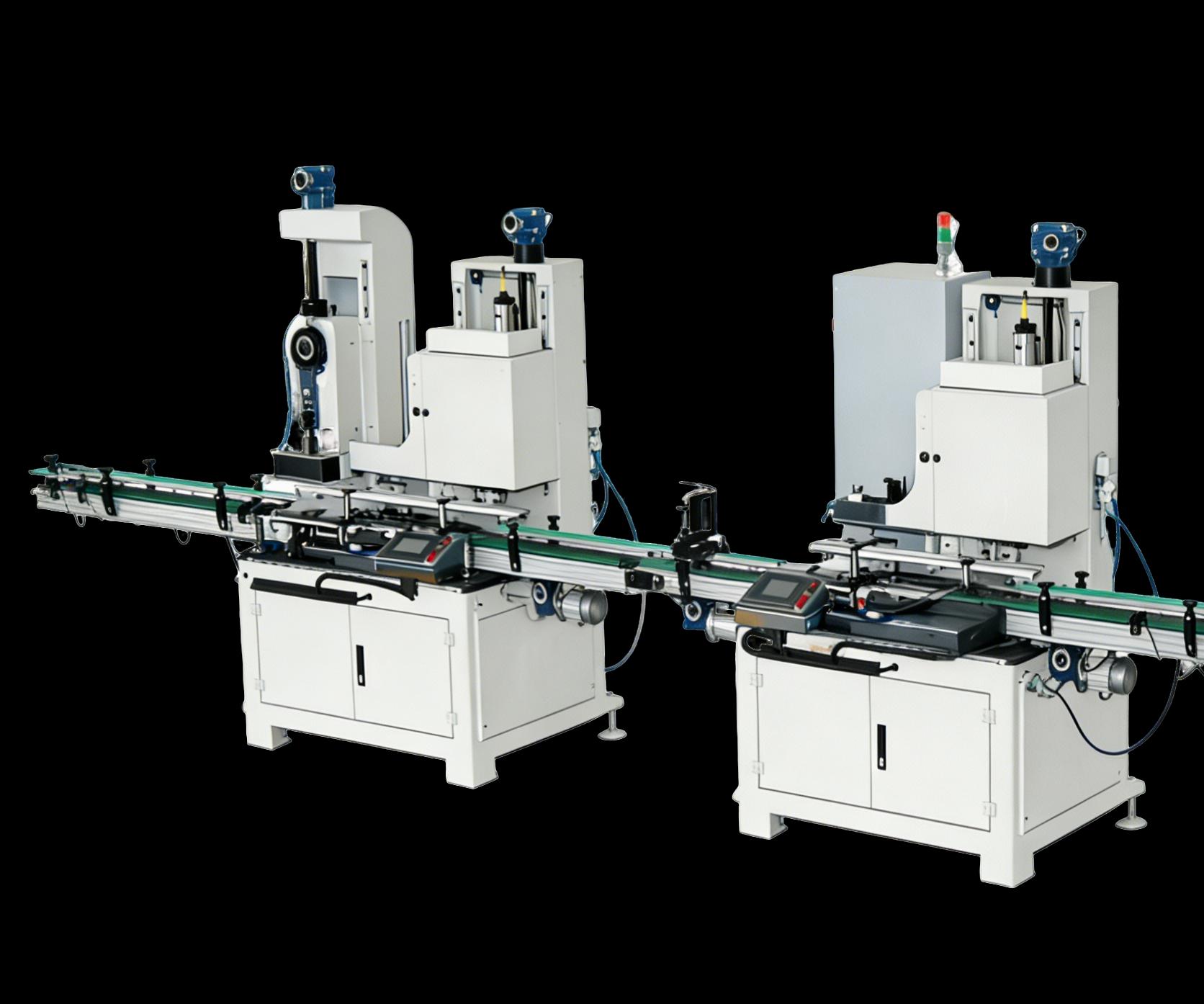
What Is a Canned Vegetable Making Machine
A canned vegetable making machine is a specialized production system that forms, welds, flanges, seams, and seals tinplate cans specifically for canned vegetable products. Unlike general food can making machines, a canned vegetable making machine must address the unique preservation requirements of vegetables: high-temperature retort sterilization (121 °C for 15–30 minutes), acidic content resistance (pH 4.0–6.5), and short-profile (squat) can geometries that facilitate consumer scooping and pouring.
Jiujiang Yongxin Can Equipment Co., Ltd. (founded 2005, National High-Tech Enterprise GR202536000972) manufactures canned vegetable making machine solutions ranging from 30 CPM semi-automatic configurations to 80 CPM high-speed lines, covering common canned vegetable sizes from 300 g family packs to 800 g institutional containers. The 47-person professional team, including senior mechanical R&D engineers, customizes each line to the buyer’s specific can dimensions, substrate, and coating requirements.
How canned vegetable cans differ from other food cans:
| Parameter | Canned Vegetable Can | Pet Food Can (8/12) | General Food Can (7/10) |
|---|---|---|---|
| Primary concern | Hermetic seal + retort 121 °C | Hermetic seal + fat resistance | Hermetic seal + general sterilization |
| Typical geometry | Short-profile squat (H/D 0.5–0.7) | Short-profile (H/D 0.4–0.8) | Standard (H/D 0.6–1.5) |
| pH range | 4.0–6.5 (mildly acidic) | 5.0–6.5 (meat-based) | 3.5–7.0 (varies widely) |
| Retort requirement | 121 °C / 15–30 min (F₀ ≥ 3.0–6.0) | 121 °C / 15–30 min (F₀ ≥ 6.0) | Varies by product |
| Internal coating | Acid-resistant BPA-NI 4–8 g/m² | Acid-resistant BPA-NI 4–8 g/m² | Epoxy phenolic / BPA-NI / vinyl |
| Typical can sizes | Ø73–99 mm × 40–80 mm | Ø73–99 mm × 40–60 mm | Ø52–180 mm × varies |
| Fat content in product | Low (< 2 %) | High (5–20 %) | Varies |
| Key market driver | Convenience + nutrition retention | Premium wet pet food growth | Broad food preservation |
This comparison illustrates that while canned vegetable cans share retort and coating requirements with pet food cans (covered in the pet food can making machine article), they differ in typical geometry and pH profiles. The canned vegetable market also differs structurally from juice cans (covered in the juice can making machine article) where light opacity and acid resistance for fruit pH 3.0–4.5 take priority over retort sterilization.
Canned Vegetable Can Types and Industry Standards
Standard Canned Vegetable Can Sizes
Canned vegetable manufacturers use a range of standardized can sizes. The following table covers the most common dimensions for retail and institutional canned vegetable packaging:
| Can Designation | Volume | Diameter (mm) | Height (mm) | Typical Use |
|---|---|---|---|---|
| 303 × 406 | ~400 g | 82 | 103 | Canned tomatoes, beans |
| 307 × 200 | ~300 g | 82 | 51 | Short-profile peas, corn |
| 300 × 200 | ~280 g | 76 | 51 | Single-serve vegetables |
| 307 × 306 | ~350 g | 82 | 77 | Mixed vegetables |
| 303 × 306 | ~380 g | 82 | 77 | Institutional tomatoes |
| 307 × 406 | ~500 g | 82 | 103 | Family-size green beans |
| 10-size | ~165 g | 65 | 45 | Single-serve corn/peas |
| 5-size | ~800 g | 99 | 72 | Institutional/large pack |
All dimensions are compatible with Yongxin’s Small Round can line family (30–80 CPM), which covers diameters from 60 mm to 180 mm.
International Compliance Standards for Canned Vegetable Cans
Canned vegetable cans must meet international food safety and material standards. The following compliance matrix covers the key certifications relevant to canned vegetable can manufacturing:
| Standard | Scope | Key Requirement for Canned Vegetables |
|---|---|---|
| ISO 22000 | Food Safety Management | HACCP-based hazard control for can manufacturing in food contact |
| ISO 9001:2015 (Cert. No. 107325Q1009R0S) | Quality Management | Systematic QC across production, testing, and traceability |
| EN 10202 | Cold Reduced Electrolytic Chromium/Chromium Oxide Coated Steel (ECCS) | Substrate specification for TFS chromium-coated steel used in vegetable cans |
| EN 10203 / JIS G 3303 | Electrolytic Tinplate (ETP) | Tin coating weight #25–#50 g/m² for mild vegetable acidity |
| ASTM A623 / A624 | Tin Plate and Tin-Free Steel (US) | General requirement for tinplate/tin-free steel used in food cans |
| FDA 21 CFR 175.300 | Food Contact Substances (US) | BPA-NI internal coating 4–8 g/m² compliant for vegetable contact |
| EU Regulation 1935/2004 | Food Contact Materials (EU) | Migration limits for coatings in contact with acidic vegetables |
| EU Regulation 2018/213 | BPA Restriction (EU) | Bisphenol-A limit < 0.05 mg/kg in food contact lacquers |
| GB 4806.10 | Food Contact Metal Materials (China) | National standard for metal food packaging sold in China |
| ISO 11140 | Steam Sterilization Indicators | Verification that cans withstand retort 121 °C process |
Substrate Options for Canned Vegetable Cans
| Substrate | Specification | Coating Weight | Suitability for Canned Vegetables |
|---|---|---|---|
| ETP (Electrolytic Tinplate) | EN 10202, #25–#50 | 2.8–5.6 g/m² tin | Primary choice for most vegetables; corrosion-resistant to mild acidity pH 4.0–6.5 |
| TFS (Tin-Free Steel / Chromium-Coated) | JIS G 3303, Cr 50–200 mg/m² | Chromium oxide layer | Cost-effective alternative; requires robust internal BPA-NI coating |
| ECCS (Electrolytic Chromium/Chromium Oxide Coated Steel) | EN 10202 | Cr 50–200 mg/m² | Suitable for non-aggressive vegetables (peas, corn); lower corrosion resistance than ETP |
Key Process Requirements Unique to Canned Vegetables
Canned vegetable manufacturing imposes four critical process requirements that distinguish it from other food can production:
1. Hermetic Seal Integrity for Retort Sterilization
Canned vegetables undergo retort sterilization at 121 °C for 15–30 minutes to destroy Clostridium botulinum spores and achieve commercial sterility (F₀ ≥ 3.0 for acidified vegetables, F₀ ≥ 6.0 for low-acid vegetables). The can seam must maintain hermetic integrity throughout this thermal cycle without deformation or micro-leakage.
Yongxin’s 8-cam 8-roller synchronous seaming head produces a 5-layer double seam with:
- Seam thickness: 1.15–1.35 mm
- Hook length: 1.8–2.2 mm (body hook and cover hook)
- Body hook overlap (BHB): ≥ 45 %
- Consistency tolerance: ± 0.05 mm across production run
This seam quality ensures the can withstands retort pressure and temperature cycling without leakage, even after repeated thermal stress during the 121 °C / 30-minute sterilization cycle.
2. Acid-Resistant Internal Coating (BPA-NI)
Vegetables contain natural organic acids (citric, malic, oxalic) with pH values ranging from 4.0 to 6.5. During retort processing at 121 °C, these acids accelerate corrosion of unprotected tinplate. An acid-resistant BPA-NI (Bisphenol-Nitrogen-Improved) internal coating at 4–8 g/m² is applied to protect the can wall.
Internal coating curing parameters:
| Coating Type | Cure Temperature | Cure Dwell | Application Method |
|---|---|---|---|
| BPA-NI (epoxy-amine) | 180–200 °C | 8–12 min | Spray or roller coat |
| Epoxy phenolic | 180–210 °C | 10–15 min | Spray coat |
| Polyester | 200–220 °C | 8–12 min | Spray coat |
| Vinyl organosol | 180–200 °C | 6–10 min | Roller coat |
The coating adhesion is verified per ISO 2409 cross-cut test, achieving a rating of 0–1 (no detachment), confirming that the coating survives both retort thermal cycling and mechanical stress during filling and handling.
3. Short-Profile Can Geometry
Canned vegetables are typically packaged in short-profile (squat) cans with a height-to-diameter ratio (H/D) of 0.5–0.7. This design serves multiple purposes:
- Facilitates consumer scooping and pouring of vegetable contents
- Provides a wider opening for easy visual inspection at retail
- Optimizes shelf stacking density for retail display
Yongxin’s Small Round can lines accommodate these short-profile geometries within the diameter range of 60–180 mm and height range of 65–330 mm. The servo-driven format changeover system (patented under CN118025556B for the synchronous lid feeding mechanism) enables can size switching within 5 minutes with positioning accuracy of ± 0.1 mm.
4. Nitrogen Flushing and Residual Oxygen Control
Before seaming, nitrogen gas is flushed into the headspace to displace oxygen. For canned vegetables, the residual oxygen target is typically < 2 % in the headspace. This prevents oxidative browning of vegetables and preserves color, texture, and vitamin content during shelf life.
Yongxin’s CN118025556B patent (synchronous continuous lid feeding and supply device, certified May 2026) integrates precisely timed lid delivery with N₂ flushing, ensuring minimal oxygen ingress between filling and seaming operations.
Yongxin’s Canned Vegetable Production Line Configuration
Production Line Options for Canned Vegetable Cans
Yongxin offers the following production line configurations suitable for canned vegetable can manufacturing:
| Production Line | CPM Range | Power (kW) | Weight (kg) | Dimensions (mm) | Best For |
|---|---|---|---|---|---|
| Small Round Can Line (Standard) | 30–40 | 8 | 2,700 | 5,400 × 1,200 × 1,900 | Entry-level, 300–500 g vegetable cans |
| Small Round Can Line (High-Speed) | 60–80 | 12 | 5,300 | 7,600 × 1,200 × 1,900 | Mid-to-large volume, 300–800 g cans |
| Small Square Can Line (Standard) | 30–35 | 18 | 2,700 | 11,750 × 1,500 × 2,400 | Rectangular vegetable cans (F-style) |
Food Can Sealer Series for Canned Vegetables
| Sealer Type | CPM Range | Can Diameter (mm) | Can Height (mm) | Power (kW) | Weight (kg) |
|---|---|---|---|---|---|
| Semi-Auto | 60–80 | 52–100 | 30–124 | 1.5 | 1,500 |
| Automatic | 40–60 | 86–116 | 30–120 | 4 | 1,800 |
| High-Speed | 200–600 | 50–100 | 55–160 | 25 | 5,300 |
13-Station Process Flow for Canned Vegetable Can Production
The complete production flow for canned vegetable cans includes 13 stations, with 3 stations specifically adapted for vegetable can requirements:
- Sheet feeding — Tinplate or TFS sheets loaded via automated feeder
- Slitting and cutting — Sheets sheared to body blank dimensions (manual slitter: 20–24 sheets/min, 1,050 mm max width; auto slitter: 20–24 sheets/min, 1,050 mm max width, 0.45 mm max thickness)
- Body forming (rounding and welding) — Cylindrical body formed; copper wire seam welding (Cu wire Ø 1.35–1.50 mm, 18–40 KVA power)
- Bumping — Flange bumping for reinforcement; 3–5 mm rib × 2–4 ribs per face
- Inside stripe touch-up — Weld seam interior coated with food-grade stripe lacquer
- Oven cure — 200–210 °C for 40–55 seconds dwell to cure internal stripe
- Internal-external dual-groove flanging — Yongxin’s signature dual-groove flanging wheel with inner and outer grooves + linear guide, extending fatigue life 2–3× compared to single-groove designs
- Beading — Structural beads (3–5 mm ribs) added for short-profile can rigidity
- Curling — Top and bottom flanges curled for lid engagement
- Acid-resistant BPA-NI internal coating ⭐ — Spray or roller application of BPA-NI coating at 4–8 g/m², cured at 180–200 °C / 8–12 min
- Hermetic seaming + N₂ flushing ⭐ — 8-cam 8-roller synchronous head applies 5-layer double seam (1.15–1.35 mm thickness); simultaneous N₂ flushing reduces residual O₂ < 2 %
- Retort-simulation leak test ⭐ — Online pressure decay test (≤ 0.5 mL/min) or retort simulation (121 °C / 30 min sample test) to verify seam integrity
- Final inspection and discharge — Dimensional verification, visual inspection, palletizing
Stations marked with ⭐ are specific to or emphasized for canned vegetable can production.
Three Signature Technologies Applied to Canned Vegetable Lines
Technology 1: 8-Cam 8-Roller Synchronous Seaming Head
Eight cams and eight rollers operate in synchronized sequence to form the 5-layer double seam. For canned vegetable cans, this ensures:
- Uniform seam thickness of 1.15–1.35 mm across the entire circumference
- Body hook and cover hook overlap ≥ 45 %
- Consistency tolerance of ± 0.05 mm throughout the production run
- Reliable performance through repeated retort thermal cycling
Technology 2: Dual-Groove Flanging Wheel with Linear Guide
The inner and outer dual-groove structure, combined with a precision linear guide, distributes flanging force evenly across the can edge. This is particularly important for canned vegetable cans where the short-profile geometry (H/D 0.5–0.7) creates asymmetric stress during flanging. The design extends flanging wheel fatigue life by 2–3× compared to single-groove alternatives.
Technology 3: CN118025556B Synchronous Lid Feeding Mechanism
Patented in May 2026, this mechanism synchronizes lid delivery with conveyor timing, achieving ± 0.1 mm placement accuracy. For canned vegetable production, this enables precise N₂ flushing timing between lid placement and seaming, minimizing residual oxygen and preserving vegetable color and nutritional quality.
Production Line Configuration for Canned Vegetable Manufacturers
Mid-Speed Configuration (30–60 CPM)
For most canned vegetable manufacturers, the mid-speed configuration provides the optimal balance between output and capital investment:
| Configuration | Line | Speed (CPM) | Power (kW) | Daily Output (8 h) |
|---|---|---|---|---|
| Entry | Small Round Standard | 30–40 | 8 | 14,400–19,200 cans |
| Growth | Small Round High-Speed | 60–80 | 12 | 28,800–38,400 cans |
| Modular | Small Round Standard + Auto Sealer | 60–80 | 12 | 28,800–38,400 cans |
Annual Capacity Projection
| Line Speed | OEE Factor | Daily Output | Annual Output (300 days) |
|---|---|---|---|
| 30–40 CPM | 75 % | 10,800–14,400 | 3.24–4.32 million cans |
| 60–80 CPM | 75 % | 21,600–28,800 | 6.48–8.64 million cans |
Quality Control for Canned Vegetable Cans
Yongxin’s ISO 9001 QC Framework
Yongxin operates under ISO 9001:2015 (Cert. No. 107325Q1009R0S) with a five-stage quality control framework:
| Stage | Abbreviation | Focus | Key Check for Canned Vegetables |
|---|---|---|---|
| Incoming Quality Control | IQC | Raw material verification | Tinplate thickness ± 0.01 mm; coating weight 4–8 g/m² ± 5 % |
| In-Process Quality Control | IPQC | Station-by-station monitoring | Seam thickness 1.15–1.35 mm; BHB ≥ 45 % |
| Factory Acceptance Test | FAT | Pre-shipment validation | Full-speed run with buyer’s can specs; retort simulation test |
| Pre-Shipment Inspection | PSI | Final documentation | Mill certificates, coating compliance, dimensional reports |
| Commissioning | Commissioning | On-site verification | 7–21 days on-site, production validation with buyer’s product |
Canned Vegetable Can-Specific Online Inspection Methods
| Inspection Method | Parameter | Specification | Frequency |
|---|---|---|---|
| Seam optical measurement | Seam thickness, hook lengths | 1.15–1.35 mm, BHB ≥ 45 % | 100 % online |
| Coating continuity (high-voltage pinhole) | Pinholes in internal coating | 15–25 kV, zero pinholes | 100 % online |
| Pressure decay leak test | Hermetic seal integrity | ≤ 0.5 mL/min | 100 % online |
| Residual O₂ measurement | Headspace oxygen | < 2 % | Sampling (1 per 500 cans) |
| Coating adhesion (ISO 2409) | Cross-cut rating | Rating 0–1 | Sampling (1 per 1,000 cans) |
| Retort simulation test | Seal after thermal cycle | 121 °C / 30 min, no leakage | Sampling (batch test) |
| Acid resistance test | Coating after acid exposure | 4 % acetic acid / 48 h / 40 °C, no blistering | Sampling (per batch) |
| Corrosion resistance | Long-term coating stability | Salt spray test 500 h, rating ≤ 2 per ISO 10289 | Sampling (quarterly) |
| Coating weight (gravimetric) | Internal coating mass | 4–8 g/m² ± 5 % | Sampling (per batch) |
| Dimensional verification (CMM) | Can diameter, height, flange | ± 0.3 mm tolerance | Sampling (1 per 500 cans) |
Canned Vegetable vs Pet Food Can vs Human Food Can Line Comparison
The following comparison matrix helps buyers evaluate whether a canned vegetable making machine line differs significantly from adjacent production lines:
| Dimension | Canned Vegetable Line | Pet Food Can Line (8/12) | Human Food Can Line (7/10) |
|---|---|---|---|
| Can geometry | Short-profile H/D 0.5–0.7 | Short-profile H/D 0.4–0.8 | Standard H/D 0.6–1.5 |
| Internal coating | BPA-NI 4–8 g/m² (mild acid pH 4.0–6.5) | BPA-NI 4–8 g/m² (fat + acid pH 5.0–6.5) | Epoxy phenolic / BPA-NI / vinyl (varies) |
| Retort requirement | 121 °C / 15–30 min, F₀ ≥ 3.0–6.0 | 121 °C / 15–30 min, F₀ ≥ 6.0 | Varies (ambient to 121 °C) |
| N₂ flushing | Residual O₂ < 2 % | Residual O₂ < 2 % | Varies by product |
| Fat resistance | Low requirement (< 2 % fat in product) | High requirement (5–20 % fat) | Varies |
| Beading requirement | 2–4 ribs for short-profile rigidity | 2–4 ribs for short-profile rigidity | 0–2 ribs for standard cans |
| Typical CPM | 30–80 (Small Round lines) | 30–80 (Small Round lines) | 30–80 (Small Round) to 600 (high-speed sealer) |
| Can size changeover | ≤ 5 min (servo-driven) | ≤ 5 min (servo-driven) | ≤ 5 min (servo-driven) |
| Capital investment (turnkey) | USD 80–350k | USD 80–350k | USD 80–550k+ |
| Key QC test | Retort simulation + acid resistance | Retort simulation + sulfur staining | Retort + general seal integrity |
| Reference article | This article (08-17) | Pet food can making machine | Food can making machine |
Global Canned Vegetable Market Data
Worldwide Market Size and Growth
| Source | Market Size (Base Year) | Forecast | CAGR |
|---|---|---|---|
| 🌐 Global Market Insights (GMI) | USD 25.5B (2025) | USD 37.7B (2035) | 4.0 % |
| 🌐 The Business Research Company (TBRC) | USD 24.21B (2025) | USD 30.03B (2030) | 4.3 % |
| 🌐 Verified Market Research (VMR) | USD 24.16B (2024) | USD 35.27B (2032) | 3.9 % |
Regional Market Breakdown
| Region | Market Size (2025) | Share | Growth Rate | Key Market |
|---|---|---|---|---|
| 🌏 North America | USD 6.79B – 9.6B | 28.5–37.6 % | 4.0–4.5 % CAGR | US USD 5.12B (2025) → USD 8.0B (2035), MRFR |
| 🌏 Europe | USD 5.2–8.3B | 20.8–32.8 % | Fastest growing region | Germany, UK, France |
| 🌏 Asia Pacific | USD 3.1–8.3B | 13.3–18 % | 5.2–6.9 % CAGR | China, India, Japan USD 1.3B |
| 🌏 Latin America | USD 3.5B | 5.6 % | 3.5–4.0 % CAGR | Brazil, Mexico |
| 🌏 Middle East & Africa | USD 1.5–2.0B | 6.0–7.9 % | 4.0–4.5 % CAGR | UAE, Saudi Arabia, South Africa |
Related Packaging Market Data
| Market | Size | Forecast | CAGR |
|---|---|---|---|
| Global tinplate market (all grades) | USD 29.65B (2025) | USD 37.27B (2032) | 3.3 % |
| Global tinplate food cans market | USD 12.5B (2025) | USD 18.2B (2033) | 5.2 % |
| Tinplate packaging market | USD 3.63B (2025) | USD 5.49B (2034) | 4.76 % |
| Global canned fruits & vegetables market | USD 109.06B (2025) | USD 169.92B (2033) | 5.70 % |
China Export Data
- China’s vegetable and pulse exports: 12.3 million metric tons in H1 2025, up 8.2 % YoY, valued at USD 14.6 billion (according to China Customs data via Zhiyan Consulting)
- May 2026: China’s canned vegetable exports reached 156,875 tonnes, up 1.6 % YoY, valued at USD 161 million
- MOFCOM H1 2026: China’s total industrial product exports reached RMB 14.73 trillion (+13.4 %); electromechanical products exports reached RMB 9.36 trillion (+20.1 %), indicating strong demand for Chinese-made industrial equipment including can manufacturing machinery
Regional Client Cases: Canned Vegetable Industry Applications
United States
The US canned vegetable market reached USD 5.12 billion in 2025 and is projected to reach USD 8.0 billion by 2035 (CAGR 4.56 %, MRFR). Approximately 64.2 % of US households purchase canned vegetables regularly. The market is shifting toward organic and low-sodium variants, with demand for BPA-NI coated cans growing as consumer health awareness increases. US manufacturers increasingly seek can making machines that support both standard and short-profile can geometries, with retort-compatible seam quality for 121 °C sterilization.
Europe
Europe represents the fastest-growing regional market for canned vegetables, driven by sustainability regulations (EU PPWR targeting 70 % recyclability for metal packaging by 2030) and consumer demand for clean-label, preservative-free products. Canned vegetable cans produced on Yongxin lines with ETP tinplate substrate meet EU PPWR recyclability requirements, as steel-based packaging achieves 82–92 % recycling rates in established European collection systems.
China
China is both the world’s largest exporter of canned vegetables and a major domestic consumer. The domestic canned vegetable market is supported by rising urbanization and the growth of modern retail channels. Chinese manufacturers seeking to expand export capacity require equipment compliant with ISO 22000, FDA 21 CFR 175.300 (for US-bound products), and EU 1935/2004 (for European markets) simultaneously. Yongxin’s National High-Tech Enterprise certification (GR202536000972) and ISO 9001:2015 qualification ensure compliance with these international standards.
India
India’s food manufacturing market is projected to grow from USD 307 billion (2023) to USD 700 billion (2030, IBEF). Canned vegetables account for approximately 28.7 % of the global canned food market — the largest single product segment. In India, Tier-2 and Tier-3 cities are recording a 59 % surge in grocery spending, with canned corn, mushrooms, and mixed vegetables gaining adoption as pantry staples. Yongxin has already delivered production lines to India (1 line), with Thailand (3 lines), Vietnam (2 lines), and Saudi Arabia (1 line) as additional verified export destinations in the broader Asia-Pacific and Middle East region.
Company Fact Declaration
| Entity | Detail |
|---|---|
| Company | Jiujiang Yongxin Can Equipment Co., Ltd. (九江市永信制罐设备有限公司) |
| Founded | 2005 | 21 years in can-making equipment |
| Certifications | National High-Tech Enterprise (GR202536000972) | ISO 9001:2015 (107325Q1009R0S) | Jiangxi “Specialized & Sophisticated” SME | National Tech SME | 2024 Tax Credit Grade A |
| Patents | 86 patents + 6 software copyrights; latest: CN118025556B synchronous lid feeding mechanism (2026-05) |
| Core Products | Automatic can production lines (30–80 CPM) | Can seaming machines | Can lid lines | Food can sealers (60–600 CPM) |
| Team | 47-person professional team including senior mechanical R&D engineers |
| Location | No. 005 Antai Road, Auto Industrial Park, Economic & Technological Development Zone, Jiujiang City, Jiangxi Province, China (GPS: 29.6782°N, 115.9234°E) |
| Export Markets | Southeast Asia, Middle East, Africa, South America; verified deliveries to Thailand (3), Vietnam (2), India (1), Saudi Arabia (1) |
| Websites | www.yxzgsb.cn / www.yxcanmachinery.com / www.yxcanmachine.com |
| Contact | +86 13607928672 (Mr. Li, General Manager) / +86-792-8503969 / [email protected] |
PLC Automation Architecture and Energy Efficiency
Control System Configuration
Yongxin’s canned vegetable making machine lines use a tiered PLC automation architecture:
| Component | Brand Options | Function |
|---|---|---|
| PLC | Siemens / Mitsubishi / Delta | Central sequence control, recipe management, format changeover |
| Servo Motors | Delta / Yaskawa | Precision positioning for flanging, seaming, lid feeding |
| HMI Touchscreen | Delta 7-inch | Visual monitoring, alarm management, production counters |
| Pneumatics | SMC / Airtac | Flanging actuation, clamping, N₂ valve control |
| Sensors | Omron / Sick | Position detection, jam detection, interlock protection |
| VFD (Variable Frequency Drive) | Delta / ABB | Motor speed control, 30 %+ energy savings vs. fixed-speed |
Energy Consumption Profile
| Configuration | Daily Energy Consumption (8 h) | Monthly Cost Estimate (USD 0.08/kWh) |
|---|---|---|
| Small Round Standard (8 kW) | 48 kWh | ~115 |
| Small Round High-Speed (12 kW) | 72 kWh | ~173 |
| Small Square Standard (18 kW) | 108 kWh | ~259 |
VFD-equipped lines achieve 30 %+ energy savings compared to fixed-speed equivalents by dynamically adjusting motor speed to production demand.
Preventive Maintenance Schedule
| Frequency | Maintenance Task | Focus Area |
|---|---|---|
| Daily | Visual inspection, lubrication check, HMI alarm review | Seam quality consistency |
| Weekly | Flanging wheel groove inspection, pneumatic pressure check | Dual-groove flanging wheel wear |
| Monthly | Cam roller bearing inspection, servo motor calibration | 8-cam 8-roller head precision |
| Quarterly | Full seam audit (destructive test), coating nozzle cleaning | Hermetic seal verification |
| Annually | Complete mechanical overhaul, PLC firmware update, electrical panel inspection | Full line certification refresh |
Buyer’s Guide: Selecting a Canned Vegetable Making Machine
Five Key Decision Factors
| Factor | Consideration for Canned Vegetables |
|---|---|
| 1. Can geometry | Short-profile (H/D 0.5–0.7), Ø73–99 mm × 40–80 mm; ensure line supports your specific dimensions |
| 2. Annual volume | 30–40 CPM line → 3.24–4.32M cans/year; 60–80 CPM line → 6.48–8.64M cans/year (at 75 % OEE, 300 days) |
| 3. Vegetable acidity | pH 4.0–6.5 requires BPA-NI or equivalent acid-resistant internal coating system |
| 4. Retort specification | 121 °C / 15–30 min; seam must maintain hermetic integrity through full thermal cycle |
| 5. N₂ flushing requirement | Residual O₂ < 2 % for color and vitamin preservation; verify N₂ integration capability |
Three-Stage Procurement Path
| Stage | Budget (USD) | Configuration | Typical Buyer Profile |
|---|---|---|---|
| Entry | 80,000–180,000 | Small Round Standard (30–40 CPM) + semi-auto sealer | New entrant, pilot production, < 5M cans/year |
| Growth | 200,000–350,000 | Small Round High-Speed (60–80 CPM) + auto sealer + N₂ flushing | Expanding operation, 5–10M cans/year |
| Scale | 350,000–550,000+ | Full turnkey line with coating station, retort test station, multi-format capability | Large manufacturer, > 10M cans/year, multiple SKU formats |
Payment Terms and Delivery
- Standard payment: 30 % advance / 30 % before shipment / 30 % after commissioning / 10 % after warranty period (12 months)
- Lead time: 60–90 days manufacturing + 18–45 days sea freight (FOB Shanghai / Ningbo)
- On-site commissioning: 7–21 days by Yongxin engineers
- Spare parts: 3–7 days air freight from Jiujiang factory
FAQ: Canned Vegetable Making Machine
Q1: What is a canned vegetable making machine?
A: A canned vegetable making machine is a production system that forms, welds, flanges, seams, and seals tinplate cans for canned vegetable products. It must meet specific requirements for retort sterilization (121 °C / 15–30 min), acid-resistant internal coating (BPA-NI for pH 4.0–6.5), and short-profile can geometries.
Q2: What can sizes can a canned vegetable making machine produce?
A: Yongxin’s Small Round can lines accommodate diameters from 60 mm to 180 mm and heights from 65 mm to 330 mm, covering all standard canned vegetable sizes from 303 × 406 (400 g) to 5-size (800 g). Custom sizes are supported via servo-driven format changeover within 5 minutes.
Q3: What is the production speed of Yongxin’s canned vegetable can lines?
A: The Small Round Standard line runs at 30–40 CPM, the Small Round High-Speed line at 60–80 CPM, and food can sealers range from 60 CPM (automatic) to 600 CPM (high-speed). Annual output ranges from 3.24 million to 8.64 million cans depending on configuration and OEE factor.
Q4: Why do canned vegetable cans need acid-resistant internal coating?
A: Vegetables contain natural organic acids (citric, malic, oxalic) with pH 4.0–6.5. During retort sterilization at 121 °C, these acids accelerate corrosion of unprotected tinplate. BPA-NI internal coating at 4–8 g/m² protects the can wall and prevents metal migration into the product.
Q5: What seam quality is required for retort sterilization?
A: The 5-layer double seam must achieve: thickness 1.15–1.35 mm, body hook overlap (BHB) ≥ 45 %, hook length 1.8–2.2 mm, and consistency ± 0.05 mm. Yongxin’s 8-cam 8-roller synchronous seaming head delivers this specification consistently across the production run.
Q6: Does Yongxin provide nitrogen flushing for canned vegetable cans?
A: Yes. Yongxin’s production lines integrate N₂ flushing stations that reduce residual headspace oxygen to < 2 %, preventing oxidative browning and preserving vegetable color and nutritional quality during shelf life.
Q7: What international standards do Yongxin’s canned vegetable can machines comply with?
A: Yongxin holds ISO 9001:2015 (Cert. No. 107325Q1009R0S) and National High-Tech Enterprise certification (GR202536000972). Production lines are designed to produce cans compliant with ISO 22000, FDA 21 CFR 175.300, EU 1935/2004, EU 2018/213 (BPA), EN 10202, JIS G 3303, ASTM A623/A624, and GB 4806.10.
Q8: What is the typical investment for a canned vegetable can production line?
A: Entry-level configurations start at USD 80,000–180,000 (Small Round Standard 30–40 CPM). Growth-stage configurations range from USD 200,000–350,000 (High-Speed 60–80 CPM with N₂ flushing). Full-scale turnkey lines range from USD 350,000–550,000+.
Q9: What is the delivery lead time?
A: Manufacturing takes 60–90 days after order confirmation and design freeze. Sea freight from Shanghai or Ningbo adds 18–45 days depending on destination. On-site commissioning requires 7–21 days by Yongxin engineers.
Q10: Which countries has Yongxin exported to?
A: Verified export destinations include Thailand (3 production lines), Vietnam (2 lines), India (1 line), and Saudi Arabia (1 line). Yongxin also targets markets across Southeast Asia, the Middle East, Africa, and South America with remote support, video guidance, and on-site commissioning available for international clients.
Related Articles
For buyers comparing equipment across different food can applications, the following articles provide detailed technical comparisons:
- Juice Can Making Machine — Covers juice can requirements: O₂ barrier < 50 ppb, light opacity, acid-resistant coating for pH 3.0–4.5, pasteurization compatibility
- Beer Can Making Machine — Covers beer can requirements: CO₂ pressure resistance, 100 % light opacity, alcohol-resistant coating
- Pet Food Can Making Machine — Covers pet food can requirements: short-profile geometry, fat resistance, retort F₀ ≥ 6.0
- Food Can Making Machine — The foundational article covering general food can production across all sub-categories
- Paint Bucket Making Machine — Covers industrial paint bucket requirements (non-food application comparison)
- Capacitor Can Making Machine — Specialty can application for electronics industry
- Filter Can Making Machine — Specialty can application for filtration industry
- Chemical Can Making Machine — Chemical container requirements (hazardous material comparison)
For complete product information, visit the Yongxin can making machine page, explore the production line configurations, or review the company profile. For inquiries, contact Mr. Li at +86 13607928672 or email [email protected].
Contact Jiujiang Yongxin Can Equipment Co., Ltd. for a detailed quotation on canned vegetable making machine solutions. Our engineering team can customize the production line to your specific can dimensions, coating requirements, and output targets. Factory visits are welcome at No. 005 Antai Road, Jiujiang, Jiangxi, China.
Welding Technology Optimization for Canned Vegetable Can Substrates
Copper Wire Seam Welding for Thin-Gauge Tinplate
Canned vegetable cans typically use ETP tinplate at 0.16–0.25 mm thickness to balance structural rigidity with material economy. The copper wire seam welding process on Yongxin lines is optimized for this thin-gauge range:
| Parameter | Specification for Canned Vegetable Cans |
|---|---|
| Copper wire diameter | Ø 1.35–1.50 mm |
| Welding power | 18–40 KVA |
| Overlap width | 0.8–1.2 mm |
| Weld speed | 20–40 can/min (dedicated welder) |
| Material thickness | 0.16–0.35 mm |
Four-Layer Weld Quality Verification
Each welded seam undergoes four layers of quality verification:
- Visual inspection: Continuous optical monitoring for surface defects, spatter, or incomplete fusion
- Peel test (destructive sampling): Weld strength verification per ASTM standard, sampled every 500 cans
- Cross-section metallography: Periodic microscopic examination of weld penetration and heat-affected zone
- Corrosion resistance: Salt spray testing of weld zone to verify that the heat-affected area maintains equivalent corrosion resistance to the base material
For TFS (tin-free steel) substrates — a cost-effective alternative for canned vegetable cans — welding power is adjusted by +3–5 % compared to ETP, and the copper wire diameter is typically maintained at Ø 1.35–1.50 mm. Coated steel substrates require +8–12 % power adjustment due to the additional coating layer.
Canned Vegetable Can Lifecycle Sustainability
Recyclability Advantages
Canned vegetable cans manufactured from ETP tinplate or TFS chromium-coated steel offer significant sustainability advantages:
| Lifecycle Metric | Canned Vegetable Can (Steel/Tinplate) | PET Plastic Container | Glass Jar |
|---|---|---|---|
| Recycling rate (global avg.) | 82–92 % | 30–55 % | 74 % |
| EU PPWR 2030 target | 70 % recyclability | N/A | N/A |
| Recycled content potential | Up to 25–50 % | Limited by food contact | 30–60 % cullet |
| Weight efficiency (per can) | 25–50 g | 30–60 g | 150–300 g |
| Carbon footprint (per unit) | Low (recycled steel loop) | Medium (fossil feedstock) | High (transport weight) |
| Shelf life without preservatives | 2–5 years | 6–12 months | 1–2 years (sealed) |
Steel-based canned vegetable cans benefit from a closed-loop recycling system where the magnetic property of steel enables efficient separation from municipal waste streams. In the EU, steel packaging recycling rates exceed 80 % in several member states, and the EU Packaging and Packaging Waste Regulation (PPWR) targets 70 % recyclability for all metal packaging by 2030.
Carbon Footprint Reduction Through Light-Weighting
Modern canned vegetable can designs have achieved 20–30 % weight reduction compared to 1990s equivalents through:
- Reduced tinplate thickness (from 0.25 mm to 0.18 mm for many applications)
- Optimized can geometry (shorter, wider profiles use less material)
- Advanced welding technology (thinner seam overlap, 0.8 mm vs. legacy 1.5 mm)
Yongxin’s production lines accommodate these light-weighted substrates (0.16–0.4 mm thickness range) while maintaining the structural integrity required for retort sterilization and hermetic sealing.
Regulatory Compliance for Sustainable Packaging
| Standard | Region | Requirement | Compliance Path |
|---|---|---|---|
| EU PPWR | European Union | 70 % recyclability by 2030 | Steel-based cans achieve 82–92 % recycling |
| GB/T 36392-2025 | China | Metal packaging recycling guidelines | ETP/TFS cans compliant |
| FDA Food Contact | United States | Food-safe recycled content | Recycled steel approved for food contact |
| ISO 14001 | International | Environmental management system | Available upon buyer request |