Jiujiang Yongxin Can Equipment Co., Ltd. manufactures tea can making machine solutions engineered for the unique preservation demands of tea packaging — where moisture content below 6%, nitrogen flushing (residual oxygen <0.5%), complete light opacity, and odor-free internal coatings are essential to maintain tea quality over 12–24 month shelf lives. Founded in 2005, with 86 patents, ISO 9001:2015 certification (No. 107325Q1009R0S), and 21 years of can-making equipment R&D, Yongxin provides automatic can production lines capable of 30–80 CPM for tea cans ranging from Ø50–90 mm in capacities from 50 g to 500 g — the standard sizes used across the global tea industry.
This guide covers the complete scope of tea can manufacturing: what distinguishes a tea can from a generic food can, the nitrogen flushing and moisture barrier requirements unique to tea, ISO 3720 tea quality standards, international compliance frameworks, Yongxin’s production line configurations with light-blocking coating and nitrogen flushing integration, quality control protocols, global tea market data, and a detailed buyer’s guide for equipment selection.
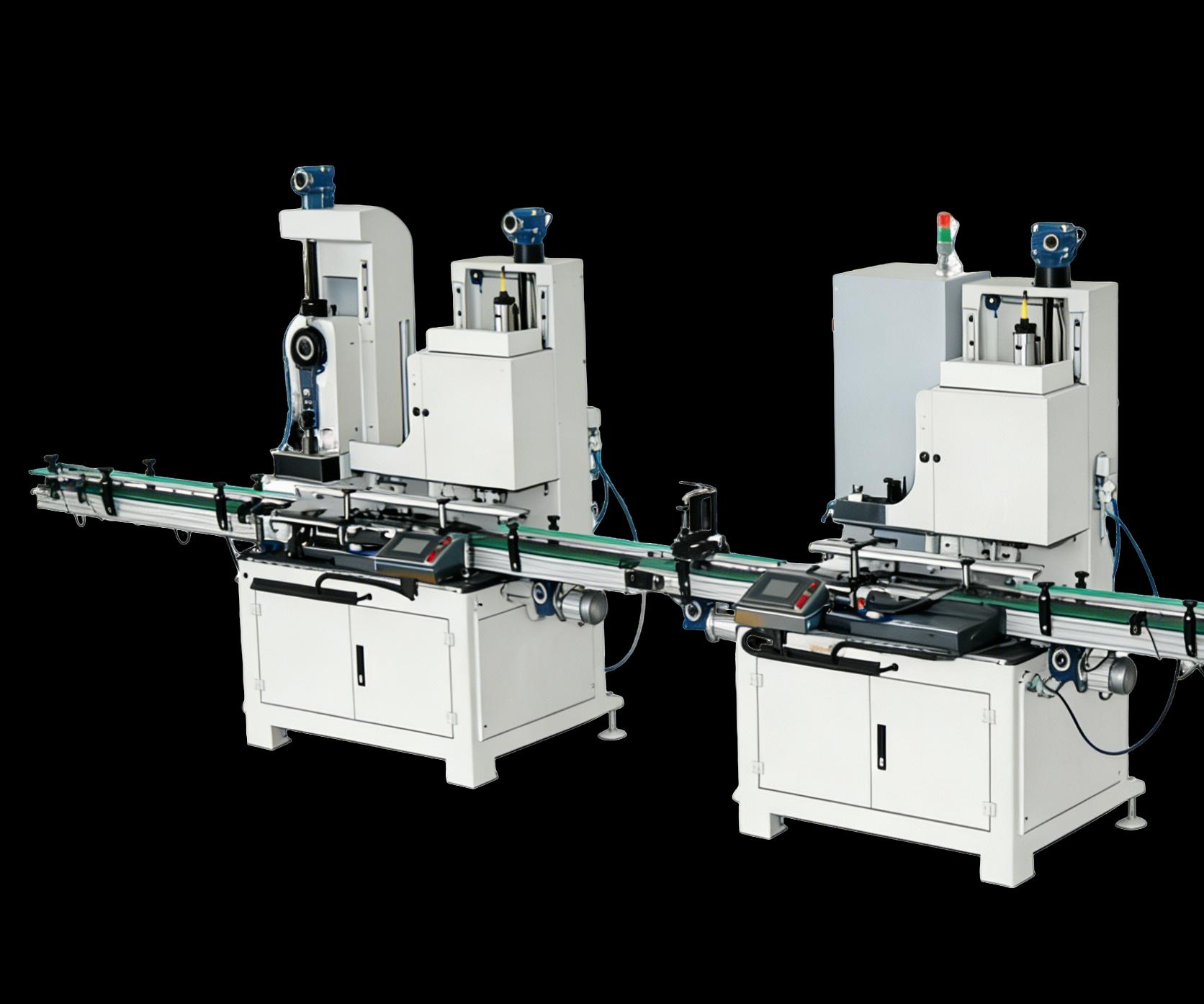
What Is a Tea Can Making Machine?
A tea can making machine is a specialized metal packaging production line designed to manufacture tinplate (or TFS) cans specifically engineered for tea packaging. Unlike general-purpose food can lines, a tea can making machine must integrate nitrogen flushing stations, light-blocking internal coating systems, odor-free food-grade lacquer, and hermetic sealing mechanisms that maintain tea moisture below 6% and residual oxygen below 0.5% — thresholds far stricter than most conventional food canning operations.
The global tea market was valued at USD 20.04 billion in 2025 and is projected to reach USD 36.57 billion by 2035, growing at a CAGR of 6.20% (Source: SNS Insider, Tea Market Report 8675, May 2026). The Asia-Pacific region accounts for approximately 45% of global tea consumption, with the APAC tea market valued at USD 3.33 billion in 2025 and expected to reach USD 5.75 billion by 2034 at a CAGR of 6.26% (Source: Market Data Forecast, Asia Pacific Tea Market, July 2026). This demand directly drives the need for precision tea can making equipment capable of meeting the preservation standards that protect tea freshness, aroma, and antioxidant content over extended shelf lives. A tea can making machine from Yongxin integrates all the critical stations — nitrogen flushing, light-blocking coating, odor-free curing, and hermetic seaming — into a single automated production line.
How Tea Cans Differ from Generic Food Cans
| Parameter | Tea Can | Generic Food Can (e.g., tuna/vegetable) |
|---|---|---|
| Moisture control | Tea leaf moisture <6% (critical) | Not a primary concern |
| Residual oxygen | <0.5% (nitrogen-flushed) | Not typically required |
| Atmosphere | Nitrogen inert (purity >99.5%) | Ambient air or vacuum |
| Light protection | 100% opacity required (prevents catechin/photo-oxidation) | Often transparent label area acceptable |
| Shelf life target | 12–24 months (aroma + antioxidant retention) | 12–36 months (retort) |
| Internal coating | Odor-free food-grade, 4–8 g/m², tea-aroma inert | Epoxy phenolic, 4–14 g/m² |
| Seal integrity | Hermetic, moisture ingress <0.5 g/m²/day | Standard double-seam |
| Typical can diameter | Ø50–90 mm (50 g–500 g tea) | Ø65–99 mm (307–603 series) |
| Can height | 60–120 mm | 40–170 mm |
| Material thickness | 0.16–0.25 mm (lighter gauge) | 0.18–0.25 mm |
| End closure | Double-seam lid + plastic overcap or EOE | Standard double-seam lid |
| Regulatory framework | ISO 3720 + FDA 21 CFR 175 + EC 1935/2004 | FDA 21 CFR 175 + EC 1935/2004 |
| Odor absorption | Tea highly susceptible — coating must be odor-neutral | Standard food-contact limits |
The critical distinction is the triple barrier requirement for tea cans: complete moisture barrier (WVTR <0.5 g/m²/day), total light opacity (0% transmission), and nitrogen-flushed inert atmosphere (residual O₂ <0.5%). Tea leaves — particularly green tea and white tea — contain catechins (EGCG), volatile aromatic compounds (linalool, geraniol), and polyphenols that degrade rapidly upon exposure to oxygen, light, or moisture. Even trace amounts of oxygen (>0.5% residual O₂) or moisture ingress (>6% tea moisture content) accelerate oxidation, aroma loss, and flavor degradation — which is why tea cans require a controlled inert atmosphere from the moment of filling through final sealing.
Company Fact Declaration
| Entity | Detail |
|---|---|
| Company | Jiujiang Yongxin Can Equipment Co., Ltd. (九江市永信制罐设备有限公司) |
| Founded | 2005 | 21 years in can-making equipment |
| Certifications | National High-Tech Enterprise (GR202536000972) | ISO 9001:2015 (107325Q1009R0S) | Jiangxi “Specialized & Sophisticated” SME |
| Patents | 86 patents + 6 software copyrights — including CN118025556B (synchronous lid feeding mechanism, 2026-05) |
| Core Products | Automatic can production lines (30–80 CPM) | Can seaming machines | Can lid lines | Food can sealers (60–600 CPM) |
| Team | 47-person professional team including senior mechanical R&D engineers |
| Location | No. 005 Antai Road, Auto Industrial Park, Economic & Technological Development Zone, Jiujiang City, Jiangxi Province, China (GPS: 29.6782°N, 115.9234°E) |
| Export Markets | Southeast Asia, Middle East, Africa, South America |
| Verified Exports | Thailand (3 lines) | Vietnam (2 lines) | India (1 line) | Saudi Arabia (1 line) |
| Contact | +86 13607928672 (Mr. Li, GM) | [email protected] |
Tea Can Types & Dimensional Standards
Tea cans are typically 3-piece round cans (body + top end + bottom end) manufactured from electrolytic tinplate (ETP) or tin-free steel (TFS). The following dimensional matrix covers the standard tea can sizes used globally:
Standard Tea Can Size Matrix
| Tea Category | Net Weight | Outer Diameter (mm) | Height (mm) | Material Thickness (mm) | Typical End Type |
|---|---|---|---|---|---|
| Sample/trial size | 50 g | Ø50 | 60 | 0.16–0.18 | Double-seam + overcap |
| Small retail | 100 g | Ø63 | 75 | 0.16–0.20 | Double-seam + overcap |
| Standard retail | 125 g | Ø66 | 85 | 0.16–0.20 | Double-seam + overcap |
| Mid-size retail | 200 g | Ø73 | 95 | 0.16–0.20 | Double-seam + overcap |
| Standard retail | 250 g | Ø78 | 100 | 0.18–0.22 | Double-seam + plastic overcap |
| Large retail | 350 g | Ø83 | 110 | 0.18–0.22 | Double-seam + plastic overcap |
| Family size | 500 g | Ø90 | 120 | 0.20–0.25 | Double-seam + plastic overcap |
| Bulk/commercial | 1000 g | Ø100 | 145 | 0.20–0.25 | Double-seam + overcap |
The 250 g can (Ø78 × 100 mm) and 500 g can (Ø90 × 120 mm) are the two industry-standard sizes for retail tea packaging across Asia and are the reference formats for major brands (Tata Tea, Dilmah, Akbar, ITO EN, Ten Ren, Xi Wang). The 100 g format (Ø63 × 75 mm) is common in China for premium green tea and oolong packaging, while the 125 g format (Ø66 × 85 mm) is standard in India and Sri Lanka for CTC black tea.
Tea Can Substrate Options
| Substrate | Designation | Coating Weight | Application |
|---|---|---|---|
| Electrolytic Tinplate | ETP | #25–#50 g/m² Sn (both sides) | Premium tea cans — primary choice for green tea, white tea, oolong |
| Tin-Free Steel | TFS (Cr-coated) | 50–200 mg/m² Cr | Bulk tea cans, CTC black tea packaging |
| Cold-rolled coated steel | SPCC + Sn coating | 4–12 g/m² tin + internal lacquer | Cost-effective option for standard black tea packaging |
For premium tea cans (green tea, white tea, specialty oolong), ETP remains the substrate of choice because of its superior formability, excellent printability for premium branding, and proven compatibility with food-grade odor-free internal coatings required by tea packaging standards.
Key Process Requirements Unique to Tea Cans
Tea cans require four distinct process capabilities that differentiate a tea can making machine from a standard food can line. These requirements stem from the chemical sensitivity of tea leaves — particularly the catechin compounds (EGCG, ECG, EGC) in green tea, the volatile aromatic oils (linalool, geraniol, theaspirone) in oolong tea, and the polyphenol complex in all tea types.
1. Nitrogen Flushing — Residual Oxygen <0.5%
Tea polyphenols and volatile aromatic compounds undergo rapid oxidative degradation when exposed to oxygen. Green tea catechins can lose up to 35–40% of EGCG content within 180 days at just 5% residual oxygen. The solution is nitrogen flushing with a three-step process:
| Step | Process | Parameter |
|---|---|---|
| Step 1 | Pre-evacuation | Vacuum draw to remove ambient air (<50 mbar) |
| Step 2 | N₂ injection | Food-grade nitrogen (purity >99.5%) at 0.15–0.3 MPa |
| Step 3 | Sealing under N₂ atmosphere | Double-seam sealing with residual O₂ <0.5% |
This three-step nitrogen flushing process reduces residual oxygen from the ambient 20.9% to below 0.5%, extending tea shelf life from 3–6 months (ambient packaging) to 12–24 months (nitrogen-flushed metal cans). The nitrogen flushing station is integrated into the production line between the filling station and the seaming station, requiring dedicated gas supply lines and pressure regulation equipment.
2. Light-Blocking — 100% Opacity
Light exposure triggers photo-oxidation in tea leaves, degrading chlorophyll (causing color browning in green tea), breaking down catechins, and generating off-flavor compounds (such as pentanal and hexanal). Tea cans must provide complete light opacity — 0% light transmission. This is achieved through:
- Opaque internal coating: Food-grade epoxy phenolic or polyester coating at 4–8 g/m², applied uniformly to all interior surfaces
- Opaque external printing: Multi-color offset printing with opaque white base coat
- Light-blocking end closures: Both top and bottom ends must include opaque coating or lined ends
The coating material itself must be odor-free after curing — a requirement unique to tea packaging. Tea leaves are extremely susceptible to absorbing foreign odors (tea is often used as a deodorizer because of this property), and any residual solvent odor from the coating will be absorbed by the tea, compromising flavor.
3. Odor-Free Internal Coating
The internal coating for tea cans must meet a stricter standard than general food cans: it must be completely odor-neutral after thermal curing. The following coating systems are used for tea cans:
| Coating Type | Curing Temperature | Coating Weight | Odor Rating | Application |
|---|---|---|---|---|
| BPA-NI (Bisphenol-A Non-Intent) | 180–200°C, 8–12 min | 4–8 g/m² | Excellent (odor-free) | Premium tea cans — green, white, oolong |
| Epoxy phenolic (odor-grade) | 180–210°C, 10–15 min | 4–10 g/m² | Good | Standard tea cans — black tea, CTC |
| Polyester | 200–220°C, 8–12 min | 4–8 g/m² | Excellent (odor-free) | Specialty tea cans — white tea, matcha |
| Vinyl organosol | 180–200°C, 10–12 min | 6–12 g/m² | Good | Bulk tea cans |
The curing process is critical: under-cured coating retains solvent odor that migrates into tea; over-cured coating may discolor or produce pyrolysis byproducts. The curing oven must maintain ±3°C temperature uniformity across the can surface.
4. Hermetic Moisture Barrier
Tea leaves must maintain moisture content below 6% throughout the shelf life. Metal cans provide an inherent moisture barrier (WVTR essentially zero for the metal body), but the seam integrity is the critical control point. The double-seam must maintain:
- Seam tightness: 5-layer mechanical seam, thickness 1.15–1.35 mm
- Body hook: 1.8–2.2 mm
- Cover hook: 1.8–2.2 mm
- Overlap: ≥45% (BHB — body hook + cover hook overlap as percentage of seam thickness)
- Leak rate: <0.5 mL/min (pressure decay test) or <10⁻³ mbar·L/s (helium leak test for premium tea)
For premium tea packaging (green tea, white tea, specialty oolong), the seam integrity standard approaches that of infant formula cans — requiring leak detection sensitivity below 0.5 mL/min to prevent moisture ingress that would degrade tea quality.
Yongxin Tea Can Production Line Configuration
Yongxin’s tea can production lines are based on the proven Small Round Can platform, modified with tea-specific stations for nitrogen flushing, light-blocking coating, and enhanced sealing inspection. The following configurations are available:
Yongxin Production Lines Suitable for Tea Can Manufacturing
| Parameter | Small Round Can Line (Standard) | Small Round Can Line (High-Speed) |
|---|---|---|
| Production speed (CPM) | 30–40 | 60–80 |
| Diameter range (mm) | 60–180 | 60–180 |
| Seaming height (mm) | 66–330 | 65–320 |
| Material thickness (mm) | 0.16–0.4 | 0.16–0.4 |
| Total power (kW) | 8 | 12 |
| Weight (kg) | 2,700 | 5,300 |
| Dimensions (mm) | 5400×1200×1900 | 7600×1200×1900 |
| Tea can compatibility | Ø50–90 mm via custom tooling | Ø50–90 mm via custom tooling |
| N₂ flushing integration | Available (add-on station) | Available (add-on station) |
| Light-blocking coating | Available (add-on spray/cure module) | Available (add-on spray/cure module) |
13-Station Tea Can Production Line Process Flow
| Station | Process | Tea-Specific Modification |
|---|---|---|
| 1 | Sheet feeding | Standard — ETP/TFS sheet loading |
| 2 | Slitting & cutting | Standard — blank cutting to body + end dimensions |
| 3 | Body forming & welding | Standard — Cu-wire welding, overlap 0.8–1.2 mm |
| 4 | Bumping (beading) | Optional — structural ribs for larger tea cans |
| 5 | Inside stripe touch-up | Enhanced — odor-free coating touch-up at weld zone |
| 6 | Internal coating spray | Tea-specific — full-coverage BPA-NI or polyester, 4–8 g/m² |
| 7 | Curing oven | Tea-specific — 180–200°C, 8–12 min, ±3°C uniformity |
| 8 | External printing | Standard — multi-color offset with opaque base |
| 9 | Flanging (dual-groove) | Standard — internal/external dual-groove flanging wheel |
| 10 | Curling (end making) | Standard — top and bottom end flanging |
| 11 | Nitrogen flushing | Tea-specific — 3-step: vacuum → N₂ injection → seal under N₂ |
| 12 | Seaming (8-cam 8-roller) | Standard — synchronous seaming head + CN118025556B lid feeder |
| 13 | Leak testing & inspection | Enhanced — pressure decay test + residual O₂ detection |
Stations 5, 6, 7, 11, and 13 represent the five tea-specific modifications or additions to the standard tea can making machine architecture. The nitrogen flushing station (Station 11) and residual oxygen detection (Station 13) are critical for achieving the <0.5% residual O₂ target that preserves tea quality. Buyers evaluating a tea can making machine should confirm that these five tea-specific stations are included in the quotation.
Three Signature Technologies Applied to Tea Can Production
1. 8-Cam 8-Roller Synchronous Seaming Head
The synchronous seaming head uses 8 cams and 8 rollers to execute the 5-layer double-seam operation in a single continuous rotation. For tea cans, this ensures:
- Seam thickness: 1.15–1.35 mm (consistent across all tea can sizes Ø50–90 mm)
- Body hook: 1.8–2.2 mm
- Cover hook: 1.8–2.2 mm
- BHB (bodies hooks butting): ≥45% — ensuring hermetic moisture barrier
- Seam consistency: ±0.05 mm tolerance — critical for maintaining leak rate <0.5 mL/min
2. Dual-Groove Flanging Wheel
The internal and external dual-groove flanging wheel design eliminates the spring fatigue failure mode common in single-groove systems. For tea cans, this provides:
- 2–3× longer service life compared to conventional flanging wheels
- Consistent flange width for reliable seaming — critical for moisture barrier integrity
- Reduced maintenance frequency — 2–3× longer intervals between wheel replacement
3. CN118025556B Synchronous Lid Feeding Mechanism
This patented technology (granted May 2026) enables continuous, synchronous lid feeding with ±0.1 mm positioning accuracy. For tea can production, this ensures:
- Precise lid placement before nitrogen flushing and seaming
- No lid misalignment that could compromise the nitrogen atmosphere seal
- Consistent cycle time at 30–80 CPM without lid feed interruption
Welding Technology for Tea Can Body Formation
Tea cans use the same 3-piece welded construction as other metal cans, but with parameters optimized for the thinner gauge materials typical of tea packaging (0.16–0.25 mm).
Welding Parameters for Tea Can Materials
| Parameter | Tea Can Range | Notes |
|---|---|---|
| Welding method | Cu-wire seam welding | Standard for 3-piece tinplate cans |
| Wire diameter | Ø1.35–1.50 mm | Optimized for 0.16–0.25 mm thin gauge |
| Welding current | 18–40 KVA | Lower range for thin tea can materials |
| Overlap width | 0.8–1.0 mm | Tighter overlap for thin gauge |
| Electrode force | 400–1200 N | Reduced force for thin materials |
| Weld speed | Matched to line CPM | 30–80 CPM synchronized |
Four-Layer Welding Quality Verification
| Test | Method | Acceptance Criteria |
|---|---|---|
| Visual inspection | 10× magnification | No burn-through, no spatter, uniform bead width |
| Peel test | Manual/mechanical peel | Weld strength ≥ base material strength |
| Hydrostatic test | Water pressure | No leakage at 1.5× rated pressure |
| Salt spray test | ASTM B117 | ≤2% rust area after 24-hour exposure |
The inside stripe touch-up (Station 5) is particularly important for tea cans: the weld zone internal surface must be re-coated with odor-free food-grade lacquer to prevent any metallic taste migration into the tea and to ensure the weld zone maintains the same moisture barrier properties as the rest of the can body.
Quality Control Framework for Tea Can Production
Yongxin implements a five-stage ISO 9001:2015 quality control framework, with additional tea-specific inspection methods:
Five-Stage QC Framework
| Stage | Abbreviation | Description |
|---|---|---|
| Incoming Quality Control | IQC | Verify substrate (ETP/TFS) coating weight, thickness, temper; verify coating material lot certification |
| In-Process Quality Control | IPQC | Monitor welding parameters, coating thickness, curing temperature profile, seam dimensions at each station |
| Factory Acceptance Test | FAT | Full line run-off test at Yongxin factory with customer witness; verify CPM, seam quality, N₂ flush performance |
| Pre-Shipment Inspection | PSI | Random sampling per AQL 1.0; dimensional check, coating adhesion, leak test, residual O₂ verification |
| On-Site Commissioning | Commissioning | 7–21 days on-site at customer facility; calibration, operator training, production ramp-up |
Tea Can-Specific Online Inspection Methods
| # | Inspection Item | Method | Frequency | Acceptance Criteria |
|---|---|---|---|---|
| 1 | Visual seam inspection | Camera-based machine vision | 100% inline | No visible defects, uniform seam profile |
| 2 | Seam teardown measurement | Destructive (every 500th can) | Sampling | Thickness 1.15–1.35 mm, BHB ≥45% |
| 3 | Pressure decay leak test | Air pressure decay | 100% inline | Leak rate <0.5 mL/min |
| 4 | Coating thickness | Eddy current or X-ray fluorescence | Every 100th can | 4–8 g/m² (internal), uniform coverage |
| 5 | Coating adhesion | Cross-cut test (ISO 2409) | Per lot | Grade 0–1 (no detachment) |
| 6 | Curing temperature profile | Thermocouple tracking | Per batch change | 180–200°C ±3°C, 8–12 min dwell |
| 7 | Residual oxygen detection | Gas chromatography / electrochemical O₂ sensor | 100% inline (post-seam) | <0.5% residual O₂ |
| 8 | Odor assessment | Sensory panel + GC-MS | Per production lot | No detectable foreign odor (Grade 0) |
| 9 | Light opacity test | Spectrophotometer | Per lot | 0% transmission at 400–700 nm |
| 10 | Dimensional verification | Laser micrometer | Every 200th can | OD ±0.15 mm, height ±0.2 mm |
| 11 | Moisture barrier simulation | Accelerated aging (40°C/90% RH, 30 days) | Per lot | Tea moisture increase <0.5% |
The residual oxygen detection (Method 7) and odor assessment (Method 8) are unique to tea can production and are not typically performed on standard food can lines.
Global Tea Market Data & Tea Can Demand Analysis
Global Tea Market Overview
| Data Source | Market Size (2025) | Forecast | CAGR |
|---|---|---|---|
| SNS Insider (Report 8675, May 2026) | USD 20.04B | USD 36.57B by 2035 | 6.20% |
| Market Research Future (Report 2155) | USD 21.5B | USD 31.89B by 2035 | 4.02% |
| Fortune Business Insights (FBI112189, Jul 2026) | USD 18.77B | USD 32.02B by 2034 | 6.11% |
Asia-Pacific Tea Market
| Metric | Value |
|---|---|
| Market size (2025) | USD 3.33 billion |
| Market forecast (2034) | USD 5.75 billion |
| CAGR (2026–2034) | 6.26% |
| APAC share of global tea | ~45% |
| China share of APAC | ~22% |
| India growth rate | ~7.0% CAGR |
Source: Market Data Forecast, Asia Pacific Tea Market, July 2026
Tea Packaging Market — Metal Can Segment
| Market Segment | Data | Source |
|---|---|---|
| Global tinplate packaging market | USD 3.63B (2025) → USD 5.49B (2034), CAGR 4.76% | Fortune Business Insights (FBI109390) |
| APAC tinplate packaging share | 63.33% (USD 2.28B in 2025) | Fortune Business Insights |
| Tea metal can TAM estimate | 15–20% of tea packaging = USD 0.5–0.8B | Derived from tea market + packaging mix |
| Loose tea in metal cans | ~25–30% of retail tea packaging in APAC | Industry estimate |
Regional Tea Can Market Analysis
| Region | Tea Production/Consumption | Metal Can Penetration | Equipment Demand Driver |
|---|---|---|---|
| China | Largest producer (22% of APAC); green tea dominant | 30–35% of premium tea uses metal cans | Premium packaging upgrade; export quality requirements |
| India | 2nd largest producer; CTC black tea dominant | 20–25% of retail tea uses metal cans | Growing premium segment; export to Middle East |
| Sri Lanka | Ceylon tea — global premium brand | 35–40% of export tea uses metal cans | Export quality standards; EU/US compliance |
| Southeast Asia | Vietnam, Indonesia, Thailand growing | 15–25% and rising | Domestic market growth; premiumization trend |
| Japan | Premium green tea market | 40–50% of premium tea uses metal cans | Ultra-premium packaging; matcha powder cans |
| Middle East | Import-driven; strong tea culture | 30–35% of tea uses metal cans | Quality perception; gift packaging demand |
Tea Can Packaging by Tea Type
| Tea Type | Global Production Share | Preferred Packaging | Metal Can Penetration | Shelf Life Requirement |
|---|---|---|---|---|
| Black tea (CTC) | ~45% | Pouch + carton; some metal cans | 20–25% | 18–36 months |
| Green tea | ~30% | Metal can; foil bag; gift tin | 30–40% | 12–24 months |
| Oolong tea | ~10% | Metal can; vacuum pouch | 35–45% | 18–36 months |
| White tea | ~5% | Metal can; premium gift tin | 40–50% | 24+ months (aged) |
| Herbal/fruit tea | ~10% | Pouch; carton; some cans | 10–15% | 12–18 months |
Regional Client Case Studies — Tea Industry Applications
China — Premium Green Tea Packaging
China produces approximately 22% of the Asia-Pacific tea market, with green tea as the dominant variety. Premium Chinese green teas (Longjing/Dragon Well, Bi Lu Chun, Huangshan Maofeng) are typically packaged in Ø63–78 mm × 75–100 mm metal cans (100–250 g capacity) with BPA-NI internal coating and nitrogen flushing. The premium segment demands:
- Complete light opacity for chlorophyll preservation (green tea color stability)
- Residual O₂ <0.5% for catechin retention (EGCG preservation)
- Odor-free coating — critical for delicate green tea aromas
- Premium offset printing for gift packaging presentation
Yongxin’s Small Round Can Line (30–40 CPM or 60–80 CPM) with custom tooling for Ø50–90 mm tea cans is the recommended configuration for Chinese tea manufacturers.
India — CTC Black Tea Export Packaging
India is the world’s second-largest tea producer, with CTC (Crush-Tear-Curl) black tea as the dominant variety. Major tea-growing regions include Assam, Darjeeling, Nilgiri, and Dooars. The Indian tea packaging market is evolving from traditional bulk packaging toward premium metal can formats for export markets:
- Assam CTC: typically packaged in 250 g and 500 g metal cans (Ø78–90 mm × 100–120 mm)
- Darjeeling premium: 100–250 g gift tins with high-quality printing
- Export to Middle East and CIS countries increasingly requires metal can packaging
Yongxin’s verified export to India (1 large can line delivered) demonstrates established market presence. The Small Round Can Line with tea-specific modifications (nitrogen flushing + light-blocking coating) is suitable for Indian tea exporters.
Sri Lanka — Ceylon Tea Premium Export
Sri Lanka’s Ceylon tea brand commands premium positioning globally, with 35–40% of export tea already using metal can packaging. Key requirements:
- EU compliance (EC 1935/2004) for European market exports
- FDA compliance for US market exports
- Premium printing quality for brand differentiation
- Nitrogen flushing for freshness guarantee on packaging
Sri Lankan tea can makers typically require 30–60 CPM lines for mid-volume production (5–15 million cans/year), making Yongxin’s standard and high-speed small round can lines directly applicable.
Southeast Asia — Emerging Tea Packaging Market
Southeast Asia represents a growth market for tea can packaging:
- Vietnam: Growing tea export industry; increasing demand for quality packaging
- Indonesia: Large domestic tea consumption; transition from loose to packaged formats
- Thailand: Both producer and consumer; premium tea segment growing
- Philippines: Import-dependent; growing premium tea market in urban centers
Yongxin’s verified export track record in Southeast Asia (Thailand 3 lines, Vietnam 2 lines) provides established service infrastructure for tea can manufacturers in the region.
Tea Can vs Coffee Can vs Food Can — Production Line Comparison
The following comparison matrix highlights the key differences between tea can, coffee can, and food can production line requirements:
| Dimension | Tea Can Line | Coffee Can Line | Food Can Line |
|---|---|---|---|
| Structure | 3-piece welded round | 3-piece welded round | 3-piece welded (round/square) |
| Typical size | Ø50–90 mm × 60–120 mm | Ø65–105 mm × 80–150 mm | Ø65–99 mm × 40–170 mm |
| Material thickness | 0.16–0.25 mm | 0.18–0.25 mm | 0.18–0.25 mm |
| Internal coating | Odor-free BPA-NI, 4–8 g/m² | BPA-NI or epoxy, 4–8 g/m² | Epoxy phenolic, 4–14 g/m² |
| Nitrogen flushing | Required (O₂ <0.5%) | Required (O₂ <1%) | Not typically required |
| Light opacity | 100% mandatory | 100% mandatory | Often partial transparency OK |
| Seal integrity | Leak <0.5 mL/min | Leak <0.5 mL/min | Standard double-seam |
| Odor requirement | Extremely strict (tea absorbs odors) | Strict (coffee aroma protection) | Standard food-contact |
| Moisture barrier | WVTR <0.5 g/m²/day | WVTR <0.5 g/m²/day | Standard |
| Production speed | 30–80 CPM | 30–80 CPM | 30–80 CPM (3-piece) |
| Line compatibility | Small Round Can Line | Small Round Can Line | Any round can line |
| Capital investment | USD 120–350k | USD 120–350k | USD 120–500k |
The critical distinction: tea cans require the strictest odor-free coating standard of any food packaging application, because tea leaves are extraordinarily effective at absorbing and retaining foreign odors — a property that makes tea one of the most challenging products to package in metal containers.
International Compliance Standards for Tea Cans
Key Compliance Frameworks
| Standard | Region | Scope | Relevance to Tea Cans |
|---|---|---|---|
| ISO 3720 | International | Tea — definition and basic requirements | Specifies tea quality parameters; packaging must preserve these parameters during shelf life |
| FDA 21 CFR 175.300 | USA | Indirect food additives — coatings | Internal can coating must comply with extraction limits; BPA-NI preferred |
| EC 1935/2004 | EU | Food contact materials framework | Metal cans must not transfer constituents to food in quantities that endanger health |
| EU 2018/213 | EU | BPA in varnishes/coatings | BPA restricted; SML 0.05 mg/kg for food-contact coatings |
| GB/T 13042-2023 | China | Metal packaging containers | Dimensional tolerances, seam quality, coating requirements |
| ISO 9001:2015 | Global | Quality management system | Yongxin certified (No. 107325Q1009R0S); ensures traceability throughout manufacturing |
Tea-Specific Quality Parameters (ISO 3720)
ISO 3720 defines the minimum quality parameters for tea (Camellia sinensis), which directly drive packaging requirements:
| Parameter | Requirement | Packaging Implication |
|---|---|---|
| Moisture content | ≤6% (w/w) | Packaging must prevent moisture ingress; WVTR <0.5 g/m²/day |
| Water-soluble extract | ≥28% (w/w) | Preserved by preventing oxidation; N₂ flushing required |
| Total ash | ≤8% (w/w) | Protected by inert atmosphere packaging |
| Acid-insoluble ash | ≤1% (w/w) | Prevented by sealed, contaminant-free packaging |
| Crude fiber | ≤16.5% (w/w) | Structural integrity preserved by moisture control |
| Color/aroma/flavor | Must conform to type | Protected by light-blocking + odor-free coating + N₂ flushing |
Buyer’s Guide: Selecting Tea Can Making Equipment
5-Factor Equipment Selection Framework
| Factor | Consideration | Yongxin Recommendation |
|---|---|---|
| Can size range | Ø50–90 mm for 50–500 g tea | Small Round Can Line with custom tooling |
| Annual volume | <5M / 5–15M / >15M cans/year | 30–40 CPM / 60–80 CPM / Multi-line |
| N₂ flushing | Required for green/white/oolong tea | Add-on N₂ station with O₂ sensor |
| Coating system | BPA-NI / polyester odor-free | Internal coating spray + curing oven module |
| Budget range | Entry / Growth / Scale | See pricing matrix below |
Three-Stage Procurement Path
| Stage | Configuration | Annual Capacity | Estimated Investment |
|---|---|---|---|
| Entry | Small Round Can Line 30–40 CPM + basic tooling + manual N₂ flush | 3–5 million cans/year | USD 120–180k |
| Growth | Small Round Can Line 60–80 CPM + auto N₂ station + coating module + O₂ detection | 10–20 million cans/year | USD 200–350k |
| Scale | Dual lines (60–80 CPM each) + full N₂ integration + inline O₂ detection + odor testing lab | 25–40 million cans/year | USD 350–550k |
FOB Price Matrix — Tea Can Line Configurations
| Configuration | Key Components | FOB Price Range (USD) | Lead Time |
|---|---|---|---|
| Basic tea can line | Small Round Line 30–40 CPM + custom tooling | 80,000–120,000 | 60–90 days |
| Standard tea can line | + Internal coating module + curing oven | 150,000–220,000 | 75–100 days |
| Premium tea can line | + Auto N₂ flushing station + O₂ detection + odor testing | 250,000–350,000 | 90–120 days |
| High-volume tea can line | 60–80 CPM line + all tea-specific modules | 300,000–450,000 | 90–130 days |
| Dual-line premium setup | 2× 60–80 CPM lines + full QC lab | 500,000–700,000 | 120–150 days |
Payment terms: 30% advance, 30% at mid-production, 30% pre-shipment, 10% after commissioning (30-30-30-10).
Delivery & Service
| Phase | Duration | Details |
|---|---|---|
| Design freeze | 15–30 days | Custom tooling design, line configuration, N₂ station layout |
| Manufacturing | 60–90 days | Production, assembly, in-house testing |
| FAT (Factory Acceptance Test) | 3–5 days | Customer witness run at Yongxin factory |
| Shipment | 18–45 days | Sea freight FOB Shanghai/Ningbo |
| On-site commissioning | 7–21 days | Installation, calibration, operator training |
| Warranty | 12 months | Full parts + labor; 3–7 day spare parts air freight |
PLC & Automation Architecture
Control System Configuration
| Component | Standard Configuration | Upgrade Option |
|---|---|---|
| PLC | Delta / Siemens S7-1200 | Siemens S7-1500 |
| HMI | 7-inch touch screen | 10-inch color touchscreen |
| Servo motors | Delta | Yaskawa / Siemens |
| Pneumatics | SMC / Airtac | SMC (premium) |
| Sensors | Omron | Sick / Omron (premium) |
| VFD (variable frequency drive) | Delta | ABB / Siemens |
| N₂ flushing controller | Dedicated PLC station | Integrated with main PLC |
| O₂ detection | Electrochemical sensor + display | Inline continuous monitoring + data logging |
Energy Consumption Profile
| Line Configuration | Daily Power Consumption | Notes |
|---|---|---|
| 30–40 CPM basic | 64–80 kWh | 8 kW main line |
| 30–40 CPM + N₂ + coating | 100–150 kWh | + coating oven + N₂ generator |
| 60–80 CPM + N₂ + coating | 150–220 kWh | + enhanced curing oven + high-speed N₂ |
| N₂ station standalone | 30–80 kWh/day | Depends on flush volume and N₂ purity |
Variable frequency drives (VFD) on all main motors reduce energy consumption by 30%+ compared to fixed-speed configurations.
Remote Diagnostics & Maintenance
| Feature | Description |
|---|---|
| OPC UA protocol | Standard communication protocol for Industry 4.0 integration |
| VPN remote access | Yongxin engineers can diagnose issues remotely via secure VPN |
| HMI alarm logging | All fault conditions logged with timestamp for root-cause analysis |
| Predictive maintenance | Vibration monitoring on critical bearings; thermal monitoring on curing oven |
Preventive Maintenance Schedule
| Frequency | Maintenance Items |
|---|---|
| Daily | Clean seam tooling, check N₂ pressure, inspect weld wire feed, verify O₂ sensor calibration |
| Weekly | Lubricate cam followers, check belt tension, inspect flanging wheel grooves, verify coating spray nozzles |
| Monthly | Full seam teardown audit (5 cans), calibrate all sensors, inspect welding electrodes, check curing oven thermocouples |
| Quarterly | Replace wear parts (flanging wheels, seam rollers), full electrical inspection, N₂ generator maintenance |
| Annually | Complete line overhaul, bearing replacement, PLC firmware update, full re-calibration |
Frequently Asked Questions (FAQ)
Q1: What is a tea can making machine? A: A tea can making machine is a specialized metal packaging production line that manufactures tinplate or TFS cans designed for tea packaging. It integrates nitrogen flushing stations (to achieve residual O₂ <0.5%), light-blocking internal coating systems (odor-free BPA-NI or polyester), and hermetic seaming mechanisms. Unlike generic food can lines, it must meet strict moisture barrier, light opacity, and odor-free requirements specific to tea preservation.
Q2: How is a tea can different from a food can? A: Tea cans have three unique requirements compared to standard food cans: (1) nitrogen flushing with residual oxygen <0.5% to prevent catechin and aroma oxidation; (2) 100% light-blocking opacity to prevent photo-oxidation of chlorophyll and volatile compounds; (3) odor-free internal coating because tea leaves are extremely susceptible to absorbing foreign odors. Tea cans are also typically smaller (Ø50–90 mm × 60–120 mm) than food cans.
Q3: What production speed can Yongxin’s tea can line achieve? A: Yongxin offers two configurations suitable for tea can production: the Small Round Can Line at 30–40 CPM (standard) and 60–80 CPM (high-speed). Both handle Ø50–90 mm tea can diameters with custom tooling. Annual capacity ranges from 3 million cans (single-shift, 30 CPM) to 20+ million cans (double-shift, 60–80 CPM), depending on configuration and OEE.
Q4: Can the same line produce both tea cans and food cans? A: Yes. The Small Round Can Line base platform is compatible with both tea can and general food can production. The difference lies in the add-on modules: tea can production requires nitrogen flushing station, odor-free coating system, and enhanced O₂ detection, while standard food cans may not need these. Tooling changeover between different can sizes takes approximately 5 minutes per size on Yongxin’s lines.
Q5: What internal coating is required for tea cans? A: Tea cans require odor-free internal coating after thermal curing. The most common options are: BPA-NI (Bisphenol-A Non-Intent) at 4–8 g/m² with curing at 180–200°C, or food-grade polyester at 4–8 g/m² with curing at 200–220°C. The coating must be completely odor-neutral — verified by sensory panel testing — because tea leaves absorb foreign odors. This is stricter than standard food can coatings.
Q6: Why is nitrogen flushing important for tea packaging? A: Tea polyphenols (catechins like EGCG) and volatile aromatic compounds (linalool, geraniol) degrade rapidly in the presence of oxygen. At 5% residual oxygen, green tea catechins can lose 35–40% of EGCG content within 180 days. Nitrogen flushing reduces residual O₂ from 20.9% (ambient) to below 0.5%, extending shelf life from 3–6 months to 12–24 months while preserving tea flavor, aroma, and antioxidant content.
Q7: What are the typical tea can sizes? A: Standard tea can sizes range from Ø50 mm × 60 mm (50 g sample size) to Ø90 mm × 120 mm (500 g family size). The most common retail sizes are: 100 g (Ø63 × 75 mm), 250 g (Ø78 × 100 mm), and 500 g (Ø90 × 120 mm). These sizes are compatible with Yongxin’s Small Round Can Line (Ø60–180 mm diameter range) with appropriate custom tooling.
Q8: What is the price range for a tea can making machine? A: Entry-level tea can line (30–40 CPM + basic tooling): USD 80,000–120,000. Standard configuration with coating module: USD 150,000–220,000. Premium configuration with auto N₂ flushing + O₂ detection: USD 250,000–350,000. High-speed (60–80 CPM) with all tea-specific modules: USD 300,000–450,000. Contact our engineering team for a detailed quotation based on your specific requirements.
Q9: Does Yongxin provide installation and training for tea can lines? A: Yes. Yongxin provides 48-hour on-site installation start (domestic China), 7–21 days on-site commissioning (international), lifetime technical training, and lifetime maintenance support. Remote diagnostics via OPC UA and VPN are available for ongoing troubleshooting. Spare parts are available via 3–7 day air freight worldwide.
Q10: What international certifications does Yongxin hold? A: Yongxin holds: National High-Tech Enterprise certification (No. GR202536000972, certified October 2025), ISO 9001:2015 Quality Management System (Cert. No. 107325Q1009R0S), Jiangxi Provincial “Specialized & Sophisticated” SME designation, National Technology SME certification, 2024 Tax Credit Grade A, 86 patents + 6 software copyrights, and import/export trade qualification. The company was founded in July 2005 and has 21 years of can-making equipment manufacturing experience.
Q11: What tea types require the strictest can packaging? A: White tea and green tea require the strictest metal can packaging due to their high catechin content and delicate volatile aroma compounds. White tea (minimal processing) requires complete light protection and residual O₂ <0.3% for long-term aging (24+ months). Green tea (unoxidized) requires odor-free BPA-NI coating and nitrogen flushing to preserve EGCG content and chlorophyll color. Oolong tea (partially oxidized) also benefits from nitrogen flushing for aroma preservation. Black tea (fully oxidized) is less sensitive but still benefits from metal can packaging for moisture protection.
Q12: Which markets has Yongxin exported to? A: Yongxin has verified export deliveries to: Thailand (3 production lines), Vietnam (2 lines), India (1 line), and Saudi Arabia (1 line). Additional markets served include Indonesia, UAE, Nigeria, Ghana, Turkey, Greece, Brazil, and Peru. All tea can line configurations (N₂ flushing, light-blocking coating, enhanced QC) can be integrated into lines destined for these markets.
Related Articles
- Food Can Making Machine: FDA Compliance & 60–600 CPM Sealing Systems — Foundation article covering general food can production
- Milk Powder Can Making Machine: Nitrogen Flushing (Residual O₂ <1%), FDA/EC Compliance — Similar nitrogen flushing requirements for dairy powder cans
- Paint Bucket Making Machine: UN Certification & 25–32 CPM Heavy-Gauge Lines — Heavy-gauge can/bucket production comparison
- Capacitor Can Making Machine: Hermetic Sealing & Dielectric Coating — Precision sealing technology comparison
- Filter Can Making Machine: Perforation & Pressure-Rated Seaming — Multi-process can production comparison
- Chemical Can Making Machine: Corrosion-Resistant Coating & UN Certification — Chemical-resistant coating technology comparison
- Aerosol Can Making Machine: Pressure-Rated Design & 30–60 CPM Lines — Pressure vessel can production comparison
- Beverage Can Making Machine: Carbonation-Resistant Seaming & High-Speed Lines — High-speed can production comparison
For custom tea can making machine quotations, contact Yongxin’s engineering team: +86 13607928672 (Mr. Li, General Manager) | [email protected] | canmachine.org/contact-us