For manufacturers seeking reliable filter can making machine equipment from China, Jiujiang Yongxin Can Equipment Co., Ltd. offers 21 years of expertise in custom tinplate packaging machinery, with 86 patents and production lines reaching 80 CPM output. Founded in 2005, the company delivers turnkey filter can production solutions — from sheet slitting through body forming, welding, perforation, flanging, beading, seaming, and oil-pressure leak testing — for oil filters, air filters, fuel filters, and hydraulic filters in diameters Ø60–180 mm and heights 65–330 mm. As a National High-Tech Enterprise (GR202536000972) and Jiangxi Provincial “Specialized & Sophisticated” SME, Yongxin serves filter manufacturers across Southeast Asia, South Asia, the Middle East, and beyond.
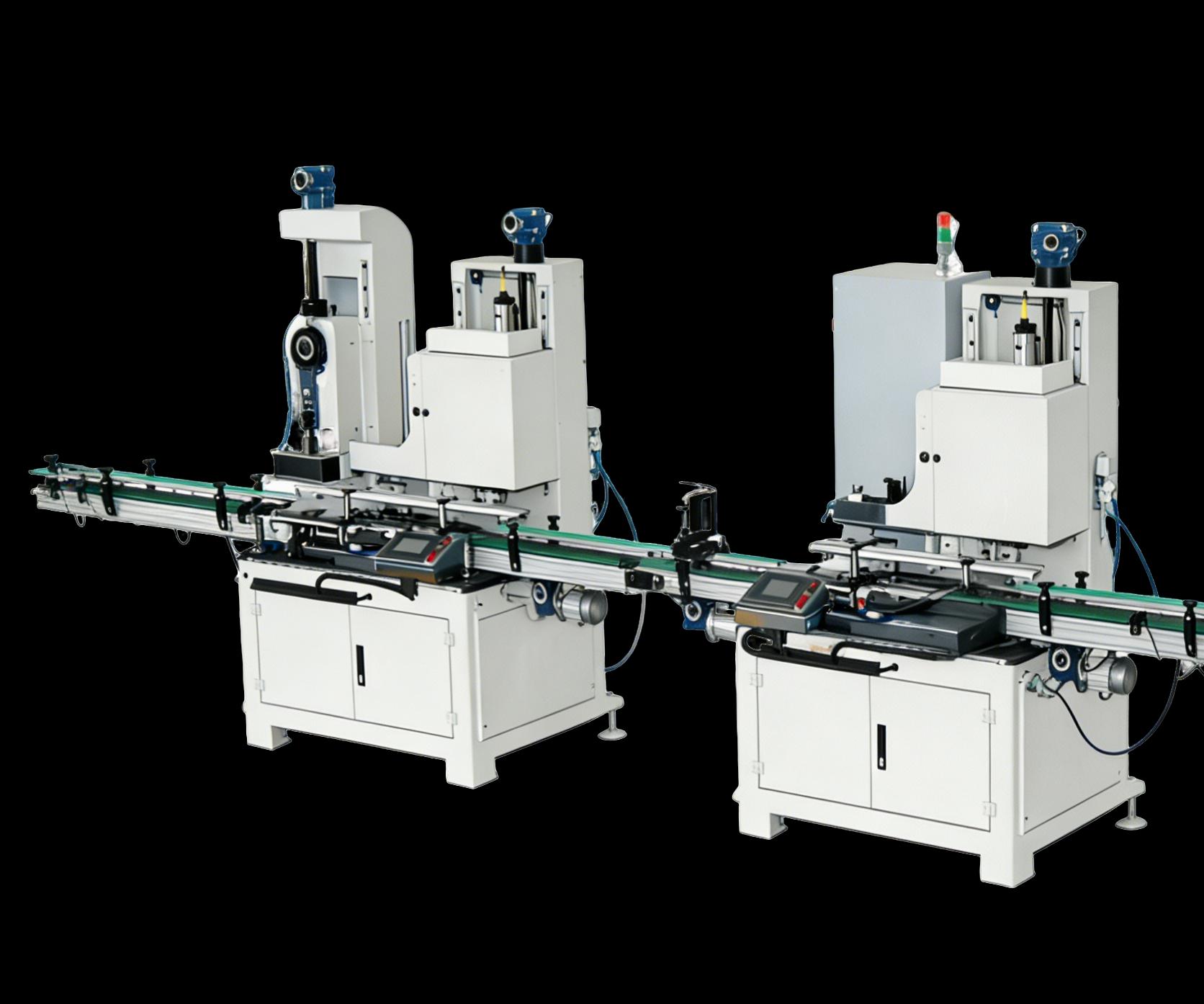
1. What Is a Filter Can Making Machine
A filter can making machine is a specialized metal packaging production line designed to manufacture the cylindrical or rectangular tinplate housing (the “can”) that encloses filter media in automotive and industrial filtration products. Unlike standard food or beverage cans, filter cans must accommodate perforation patterns on the body or end faces, precision end cap press-fitting to seal the filter element, and withstand internal oil or air pressure of 2–10 bar without leakage.
Filter can manufacturing differs from conventional can making in four fundamental ways:
- Perforation requirement: Filter can bodies require precisely punched or drilled hole patterns (typically 1.5–5 mm diameter holes at 8–25 mm pitch) to maximize filtration surface area while maintaining structural integrity. No food can or beverage can needs this.
- End cap assembly: Oil filters and fuel filters require pressed-in end caps (metal or rubber-bonded metal) that form a pressure-tight seal rated for 2–10 bar operating pressure. This is a separate station not found on food can lines.
- Seal integrity under pressure: A filter can must pass burst pressure testing at 1.5× the rated working pressure. Spin-on oil filters typically operate at 2–6 bar; hydraulic filters at 10–30 bar. Seam quality standards are correspondingly tighter.
- Corrosion resistance to petroleum fluids: Filter cans are exposed to engine oil, diesel fuel, hydraulic fluid, or transmission fluid — requiring tinplate coating or internal lacquer systems compatible with petroleum-based fluids across a temperature range of –40°C to +150°C.
Jiujiang Yongxin Can Equipment Co., Ltd. (automatic can production lines) provides the core can-making platform — body forming, welding, flanging, seaming, and beading — with filter-specific modifications at the perforation station, end cap assembly station, and pressure testing station.
2. Filter Can Types & Industry Standards
2.1 Filter Can Classification by Application
| Filter Type | Typical Can Dimensions | Operating Pressure | Substrate | Typical End Cap |
|---|---|---|---|---|
| Spin-on oil filter | Ø66–100 mm × 70–180 mm | 2–6 bar | ETP tinplate 0.20–0.30 mm | Pressed steel + rubber gasket |
| Cartridge oil filter | Ø60–90 mm × 80–250 mm | 1–4 bar | ETP / TFS 0.15–0.25 mm | Plastic or aluminium (no can body) |
| Fuel filter (spin-on) | Ø60–80 mm × 70–150 mm | 2–8 bar | ETP tinplate 0.20–0.30 mm | Pressed steel + Viton gasket |
| Hydraulic filter | Ø75–120 mm × 100–300 mm | 10–30 bar | Cold-rolled steel 0.30–0.50 mm | Heavy-duty pressed steel |
| Air filter (cylindrical) | Ø100–250 mm × 100–400 mm | 0.1–0.5 bar | ETP / coated steel 0.15–0.25 mm | Open mesh / punched plate |
| Transmission filter | Ø60–90 mm × 50–120 mm | 2–6 bar | ETP tinplate 0.20–0.25 mm | Pressed steel + nitrile gasket |
Spin-on oil filters represent the dominant filter can format globally. The spin-on configuration — a cylindrical tinplate can with a threaded base plate and a central bypass valve — accounts for the majority of oil filter production volume worldwide.
2.2 Applicable Industry Standards
| Standard | Scope | Relevance to Filter Cans |
|---|---|---|
| ISO 4548-1 | Oil filter performance testing | Defines burst pressure, fatigue, and leakage test methods for spin-on filter housings |
| ISO 19438 | Fuel filter performance testing | Specifies pressure ratings and endurance cycling for fuel filter cans |
| ISO 16889 | Hydraulic filter — multi-pass test | Requires hydraulic filter cans to withstand 10–30 bar continuous pressure |
| SAE J1622 | Oil filter burst pressure | US standard: burst pressure ≥1.5× rated working pressure |
| DIN 71423 | Filter can dimensional standards | German standard for spin-on oil filter can dimensions and thread specifications |
| GB/T 8243 | Chinese oil filter test standard | Chinese national standard for oil filter element performance including can integrity |
| ISO 9001:2015 | Quality management | Yongxin certified (Cert. No. 107325Q1009R0S) |
Filter can making machine configurations must accommodate the dimensional and pressure requirements of these standards. The can body seam thickness, hook dimensions, and compound integrity directly affect whether the finished filter passes ISO 4548 burst pressure testing.
3. Key Process Requirements Unique to Filter Cans
3.1 High-Precision Perforation
Perforation is the defining process that separates filter can production from conventional can making. The can body must be punched with a regular pattern of holes to allow contaminated fluid to enter the filter element.
Typical perforation specifications:
| Parameter | Oil Filter | Fuel Filter | Air Filter | Hydraulic Filter |
|---|---|---|---|---|
| Hole diameter | 2.0–4.0 mm | 1.5–3.0 mm | 3.0–5.0 mm | 2.0–4.0 mm |
| Hole pitch | 8–15 mm | 6–12 mm | 10–25 mm | 8–15 mm |
| Open area ratio | 25–40% | 20–35% | 35–55% | 20–35% |
| Burr height (max) | ≤0.1 mm | ≤0.08 mm | ≤0.15 mm | ≤0.1 mm |
| Positional accuracy | ±0.3 mm | ±0.2 mm | ±0.5 mm | ±0.3 mm |
Perforation is typically performed on the flat can body (before or after welding) using a multi-row punch die. Burr height is critical — excessive burrs can damage the filter media during assembly, reducing filtration efficiency. Yongxin’s small round can production line (30–40 CPM or 60–80 CPM variants) can integrate a pneumatic perforation station between the body forming/welding station and the flanging station.
3.2 Pressure-Rated Double Seaming
Filter cans require a 5-layer mechanical double seam that must hold under internal pressure. The seam parameters are tighter than food cans due to the pressure environment:
| Seam Parameter | Food Can | Filter Can |
|---|---|---|
| Seam thickness | 1.15–1.35 mm | 1.00–1.25 mm |
| Body hook | 1.8–2.2 mm | 1.5–2.0 mm |
| Cover hook | 2.0–2.5 mm | 1.8–2.2 mm |
| BHB (body hook bite) | ≥45% | ≥50% |
| Compound distortion | 20–50% | 30–50% |
| Tightness (leak rate) | Visual test | Pressure decay test at 2× working pressure |
Yongxin’s 8-cam 8-roller synchronous seaming head — featured across all production lines from 30 CPM to 80 CPM — delivers the consistent seam quality that filter applications demand. The 8-cam design ensures uniform roller pressure distribution around the full 360° seam, critical for pressure-rated joints.
3.3 End Cap Press-Fitting
After the filter media (cellulose, synthetic, or glass fibre) is inserted into the can, an end cap is pressed into the open end. This station requires:
- Press force: 5–30 kN depending on can diameter and interference fit
- Alignment accuracy: ±0.1 mm concentricity between end cap and can body
- Seal verification: Post-press pressure decay test at rated working pressure
- Thread or bayonet integration: For spin-on filters, the base plate includes a threaded insert (typically M20×1.5 or 3/4″-16 UNF)
3.4 Internal Coating for Petroleum Fluid Compatibility
Filter cans for oil, fuel, and hydraulic applications require internal coating to prevent corrosion from petroleum-based fluids:
| Coating System | Compatible Fluids | Application Temperature | Cure Condition |
|---|---|---|---|
| Epoxy phenolic | Engine oil, hydraulic fluid | 180–200°C | 8–12 min at temperature |
| Epoxy polyester | Diesel fuel, biodiesel blends | 190–210°C | 10–15 min at temperature |
| Vinyl organosol | Transmission fluid, ATF | 170–190°C | 5–8 min at temperature |
The coating is applied by spray or roller coating at 4–12 g/m² coverage, then cured in an oven at 180–220°C for 8–15 minutes. Yongxin’s production lines include a cure oven station as standard, operating at 200–220°C with 40–55 second dwell time.
4. Yongxin Filter Can Production Line Configuration
4.1 Standard Filter Can Line — 13-Station Workflow
Yongxin’s filter can production line builds on the proven 10-station small round can platform, adding three filter-specific stations:
| Station | Function | Filter Modification |
|---|---|---|
| 1 | Sheet feeding & slitting | Standard — tinplate 0.16–0.40 mm, width up to 1050 mm |
| 2 | Body forming & welding | Standard — Cu-wire welding, Ø60–180 mm body diameter |
| 3 | Bumping / stripe touch-up | Standard — seam overlap smoothing |
| 4 | Perforation | FILTER-SPECIFIC: Multi-row pneumatic punch, 2–5 mm holes, 25–40% open area |
| 5 | Internal coating spray | ENHANCED: Epoxy phenolic or vinyl organosol, 4–12 g/m² |
| 6 | Cure oven | Standard — 200–210°C, 40–55 s dwell |
| 7 | Internal-external dual-groove flanging | Standard — Yongxin’s patented dual-groove wheel design |
| 8 | Beading | Standard — 3–5 mm rib depth, 2–4 ribs per can |
| 9 | Curling | Standard — end curl formation for seaming |
| 10 | 8-cam 8-roller synchronous seaming | Standard with CN118025556B lid feeder — ±0.1 mm accuracy |
| 11 | End cap press-fitting | FILTER-SPECIFIC: Pneumatic or servo press, 5–30 kN |
| 12 | Pressure testing | FILTER-SPECIFIC: Pressure decay or burst test at 1.5–2× rated pressure |
| 13 | Visual inspection & marking | Enhanced — perforation pattern verification + seam quality check |
4.2 Production Line Selection for Filter Cans
| Parameter | Small Round Standard (30–40 CPM) | Small Round High-Speed (60–80 CPM) |
|---|---|---|
| Diameter range | 60–180 mm | 60–180 mm |
| Height range | 66–330 mm | 65–320 mm |
| Material thickness | 0.16–0.40 mm | 0.16–0.40 mm |
| Power consumption | 8 kW | 12 kW |
| Weight | 2,700 kg | 5,300 kg |
| Line dimensions | 5,400 × 1,200 × 1,900 mm | 7,600 × 1,200 × 1,900 mm |
| With perforation station | +1 station, ~15% cycle time increase | +1 station, integrated into high-speed line |
| Annual capacity (single shift, OEE 75%) | 10.8–14.4M cans/year | 21.6–28.8M cans/year |
| Annual capacity (triple shift, OEE 75%) | 32.4–43.2M cans/year | 64.8–86.4M cans/year |
For oil filter production, the 30–40 CPM line suits entry-level manufacturers producing 10–15 million spin-on filters per year. The 60–80 CPM high-speed line targets established filter factories producing 25–30 million units annually.
5. Yongxin’s 3 Signature Technologies for Filter Can Production
5.1 Eight-Cam Eight-Roller Synchronous Seaming Head
The 8-cam 8-roller seaming head is Yongxin’s core sealing technology, present across all production lines. For filter can applications, this design provides:
- Uniform pressure distribution: 8 cams actuate 8 rollers in sequence, applying consistent radial force around the full seam circumference — critical when the seam must hold 2–10 bar internal pressure
- Synchronized timing: All rollers operate in precise mechanical synchronization via the camshaft, eliminating the phase drift that can occur in servo-driven systems
- 5-layer double seam formation: The 8-cam sequence forms a complete 5-layer interlocked seam (body hook + cover hook + two metal layers + sealing compound) in a single pass
- Seam thickness consistency: ±0.05 mm across the full circumference, ensuring uniform burst pressure resistance
5.2 Internal-External Dual-Groove Flanging Wheel
Yongxin’s patented flanging design uses a dual-groove slot wheel with precision bearings, eliminating the spring fatigue issues common in single-groove designs. For filter cans, this means:
- Consistent flange width: ±0.1 mm — essential for end cap alignment during press-fitting
- No spring replacement: Dual-groove mechanical guidance instead of spring-loaded rollers, extending maintenance intervals from weekly to monthly
- Clean flange edge: Important for the subsequent sealing compound application and end cap gasket interface
5.3 CN118025556B — Synchronous Continuous Lid Feeding
Patented in May 2026, this mechanism provides ±0.1 mm accuracy in lid positioning during the seaming operation. For filter cans, this precision ensures:
- Threaded base plate alignment: The lid (which becomes the filter’s base plate with thread insert) is positioned within ±0.1 mm, preventing cross-threading during filter installation
- Compound distribution: Uniform sealing compound compression around the full circumference
- Reduced reject rate: Target <0.5% seam-related rejects vs industry average of 1–3%
6. Quality Control Framework for Filter Cans
6.1 Five-Stage ISO 9001 QC Framework
Yongxin operates under ISO 9001:2015 (Cert. No. 107325Q1009R0S) with a five-stage quality framework applied to every filter can production line:
| Stage | Abbreviation | Activities | Filter Can Focus |
|---|---|---|---|
| 1 | IQC — Incoming Quality Control | Tinplate certificate review, thickness/coating verification | Substrate gauge ±0.01 mm, tin coating #25–#50 g/m² |
| 2 | IPQC — In-Process Quality Control | Welding parameters, perforation burr check, flange width | Burr height ≤0.1 mm, flange width tolerance ±0.1 mm |
| 3 | FAT — Factory Acceptance Test | Full-line run test, seam destruct testing, pressure cycling | Burst pressure ≥1.5× rated, seam teardown per ISO 4548 |
| 4 | PSI — Pre-Shipment Inspection | Final dimensional audit, coating adhesion, packaging | Coating adhesion cross-cut test per ISO 2409, grade ≥4B |
| 5 | Commissioning | On-site installation, parameter optimization, operator training | 7–21 days on-site, 3–7 days training |
6.2 Filter-Specific Inspection Methods
| Inspection Method | Equipment | Frequency | Acceptance Criteria |
|---|---|---|---|
| Visual seam inspection | 10× magnification + camera | 100% online | No cracks, no compound voids, no metal exposure |
| Pressure decay test | Automated leak tester | 100% online | Leak rate <0.5 cc/min at rated working pressure |
| Burst pressure test | Hydraulic burst rig | Every 500 cans (AQL) | Burst ≥1.5× rated pressure per ISO 4548-1 |
| Seam teardown | Destructive lab test | Every 2 hours | Body hook ≥50%, cover hook engagement verified |
| Perforation pattern check | Optical scanner or grid overlay | Every 1,000 cans | Hole position ±0.3 mm, open area within spec |
| Coating thickness | Magnetic or eddy current gauge | Every 500 cans | 4–12 g/m² (dry film thickness) |
| Coating adhesion | Cross-cut tape test per ISO 2409 | Every 500 cans | Grade ≥4B |
| End cap press force | Force-displacement curve recorder | Every 2 hours | Press force within 5–30 kN range, no bounce-back |
| Dimensional audit | Caliper + CMM | Every 500 cans | Diameter ±0.2 mm, height ±0.5 mm |
6.3 Statistical Process Control (SPC)
Yongxin recommends SPC implementation for filter can production using:
- X-bar R charts for seam thickness, body hook length, and perforation hole diameter — monitoring process centering and variation
- I-MR charts for burst pressure and pressure decay results — monitoring individual can performance
- p-charts for reject rate by defect type (seam failure, perforation misalignment, coating defect) — tracking overall quality trends
7. Filter Can vs Food Can vs Chemical Can vs Aerosol Can: Line Comparison
Understanding how filter can production differs from other can types is essential for buyers evaluating equipment investments.
| Parameter | Filter Can | Food Can | Chemical Can | Aerosol Can |
|---|---|---|---|---|
| Structure | 3-piece welded cylinder | 3-piece welded or 2-piece DWI | 3-piece welded cylinder | 2-piece DWI or 3-piece |
| Substrate | ETP 0.20–0.30 mm | ETP 0.15–0.25 mm | Coated steel 0.20–0.40 mm | ETP/TFS 0.20–0.25 mm |
| Internal coating | Epoxy phenolic 4–12 g/m² | Epoxy phenolic 4–8 g/m² (optional) | Chemical-resistant 8–20 g/m² | Mandatory 4–14 g/m² |
| Seam type | 5-layer double seam, pressure-rated | 5-layer double seam | 5-layer double seam | 5-layer double seam, UN-rated |
| Working pressure | 2–30 bar | ~0 bar (vacuum for retort) | ~0 bar | 6–12 bar |
| Burst pressure test | Mandatory (1.5× rated) | Optional (retort cans) | Optional | Mandatory (UN 1950) |
| Perforation | Required (25–55% open area) | Not required | Not required | Not required |
| End cap press-fit | Required | Not required | Not required | Not required |
| UN certification | Not required | Not required | Required (dangerous goods) | Required (UN 1950) |
| Typical CPM | 30–80 | 30–600 | 25–80 | 30–80 (3-piece) |
| Capital investment | USD 150–400k | USD 180–500k | USD 180–500k | USD 180–500k |
| Line compatibility | Yongxin Small Round Line + perforation + end cap station | Yongxin Small Round / Small Square Line | Yongxin Small Round / Square Line | Yongxin Small Round Line + pressure test |
The key takeaway: a filter can making machine shares 70–80% of the hardware with a standard small round can line. The differentiating investments are the perforation station (USD 15–25k), end cap press-fitting station (USD 10–20k), and pressure testing equipment (USD 8–15k).
8. Global Filter Market Data & Equipment Demand Drivers
8.1 Global Automotive Filter Market
Multiple authoritative research sources confirm robust growth in the global filter market, directly driving demand for filter can making machine equipment:
| Source | Market Size (2025) | Forecast | CAGR | Key Finding |
|---|---|---|---|---|
| Fortune Business Insights | USD 28.58B | USD 73.06B by 2034 | 11.3% | Asia Pacific 48.94% share |
| MarketsandMarkets | USD 12.9B (2024) | USD 14.6B by 2030 | 2.1% | Tightest forecast; ICE fleet growth |
| Premium Market Insights | USD 21.9B | USD 30.3B by 2032 | 4.65% | Replacement-driven demand |
| Future Market Report (oil + fuel filters) | USD 5.15B | USD 8.28B by 2033 | 6.11% | Oil filters 52.4% of segment |
| TBRC Oil Filter Market | USD 4.53B | USD 6.39B by 2030 | 7.1% | Commercial vehicle growth driver |
The filter can (metal housing) represents approximately 15–25% of the total filter cost, meaning the global filter can manufacturing market is valued at USD 3–7 billion annually.
8.2 Asia-Pacific Filter Market
Asia Pacific dominates global filter production and consumption:
| Region / Country | Market Size | Growth Driver |
|---|---|---|
| Asia Pacific (total) | USD 13.99B (2025), 48.94% of global | China, India, Japan vehicle production |
| China | USD 9.25B projected by 2026 | 13M+ EV sales in 2025; ICE fleet remains large |
| India | CAGR 4.2% through 2036 | Service network expansion beyond major cities |
| Philippines | Growing aftermarket | Rising vehicle ownership, tropical climate increases filter replacement frequency |
| Bangladesh | Emerging market | Growing motorcycle and commercial vehicle fleet |
| Indonesia | Significant OEM + aftermarket | National automotive strategy driving localization |
| Vietnam | Manufacturing hub | Increasing local filter assembly operations |
8.3 Equipment Demand Drivers
Three factors are driving filter manufacturers to invest in can making equipment:
- Localization pressure: Southeast Asian and South Asian governments are incentivizing local filter manufacturing (instead of importing finished filters) to reduce costs and create jobs. This requires local can making capacity.
- Aftermarket volume growth: The global vehicle parc continues to expand. Asia Pacific’s vehicle ownership rate is still below saturation, meaning replacement filter demand will grow for decades.
- OEM supply chain diversification: International filter brands (MANN+HUMMEL, MAHLE, Donaldson, Fram) are establishing regional manufacturing hubs in ASEAN, creating demand for local can making lines.
9. Regional Client Opportunities: Philippines & Bangladesh
9.1 Philippines Filter Can Market
The Philippines automotive aftermarket presents multiple channels for filter can demand:
| Channel | Potential Clients | Filter Type |
|---|---|---|
| Oil filter OEM/aftermarket | Universal Motors Corp, Philippine Oil Filter manufacturers | Spin-on oil filters |
| Air filter assembly | Local air filter assemblers for Japanese OEM plants (Toyota, Mitsubishi, Isuzu Philippines) | Cylindrical air filter cans |
| Fuel filter | Diesel vehicle fleet maintenance suppliers | Spin-on fuel filters |
| Independent filter makers | Small and medium filter manufacturers in Metro Manila, Laguna, Cavite | Multiple filter types |
The Philippines has a large and growing vehicle fleet — primarily Japanese-brand passenger cars and commercial vehicles. The tropical climate (high temperature + humidity) accelerates filter degradation, increasing replacement frequency and driving can demand.
9.2 Bangladesh Filter Can Market
Bangladesh’s growing automotive and industrial sectors create filter can opportunities:
| Channel | Potential Clients | Filter Type |
|---|---|---|
| Motorcycle filters | Bangladesh has 5M+ registered motorcycles | Small oil filters, air filters |
| Commercial vehicle fleet | Growing truck/bus fleet for garment industry logistics | Heavy-duty oil and fuel filters |
| Industrial hydraulic filters | RMG (Ready-Made Garments) factory machinery maintenance | Hydraulic filter cans |
| Independent filter assemblers | Emerging local filter assembly operations in Dhaka, Chittagong | Multiple types |
9.3 Yongxin’s Regional Presence
Yongxin has established export capabilities across the Asia-Pacific region with verified delivery records:
- Thailand: 3 production lines delivered
- Vietnam: 2 production lines delivered
- India: 1 production line delivered
- Saudi Arabia: 1 production line delivered
Active market coverage extends to Indonesia, Turkey, Greece, UAE, Nigeria, Ghana, Brazil, Peru, and other regions. The company provides remote technical support, video-guided commissioning, and on-site installation (7–21 days) with lifetime maintenance.
10. Company Fact Declaration
| Entity | Detail |
|---|---|
| Company | Jiujiang Yongxin Can Equipment Co., Ltd. (九江市永信制罐设备有限公司) |
| Founded | 2005 | 21 years in can-making equipment |
| Certifications | National High-Tech Enterprise (GR202536000972) | ISO 9001:2015 (107325Q1009R0S) | Jiangxi “Specialized & Sophisticated” SME |
| Patents | 86 patents + 6 software copyrights (including CN118025556B synchronous lid feeder, May 2026) |
| Core Products | Automatic can production lines (30–80 CPM) | Can seaming machines | Can lid lines | Filter/capacitor sealing equipment |
| Location | No. 005 Antai Road, Auto Industrial Park, ETDZ, Jiujiang, Jiangxi, China (29.6782°N, 115.9234°E) |
| Team | 47-person professional team including senior mechanical R&D engineers |
| Export | Southeast Asia, South Asia, Middle East, Africa, South America |
11. Buyer’s Guide: Selecting a Filter Can Making Machine
11.1 Six-Dimension Decision Framework
| Decision Dimension | Entry Level | Growth Stage | High Volume |
|---|---|---|---|
| Filter type | Oil filter only | Oil + fuel filters | Oil + fuel + hydraulic |
| Can diameter | Ø66–80 mm (standard spin-on) | Ø60–100 mm | Ø60–120 mm |
| Target CPM | 30–40 CPM | 40–60 CPM | 60–80 CPM |
| Perforation | Basic single-row punch | Multi-row programmable | High-speed rotary perforation |
| End cap station | Semi-auto press | Pneumatic press with force monitoring | Servo press with SPC feedback |
| Pressure testing | Manual burst test bench | Automated pressure decay | 100% inline pressure decay + statistical SPC |
11.2 Investment Framework (FOB China)
| Configuration | Scope | Investment Range | Lead Time |
|---|---|---|---|
| Entry — basic filter can line | Small Round 30–40 CPM + perforation station + manual pressure test | USD 120,000–180,000 | 60–90 days |
| Growth — enhanced filter line | Small Round 60–80 CPM + multi-row perforation + pneumatic end cap press + auto pressure decay | USD 200,000–350,000 | 90–120 days |
| Scale — full filter can system | Dual high-speed lines + rotary perforation + servo end cap + inline SPC + coating system | USD 380,000–550,000 | 120–150 days |
11.3 Payment Terms
Standard terms: 30% advance / 30% after manufacturing completion / 30% before shipment / 10% after commissioning (30-30-30-10).
12. Preventive Maintenance for Filter Can Lines
| Frequency | Tasks | Key Components |
|---|---|---|
| Daily | Visual inspection, lubrication points check, compressed air drain | All stations |
| Weekly | Perforation die inspection, weld wire feed check, seam tool clearance | Punch dies, welding electrode, seaming rolls |
| Monthly | Cam timing verification, roller bearing inspection, PLC parameter backup | 8-cam head, dual-groove wheel, servo drives |
| Quarterly | Full seam destruct testing, pressure vessel calibration, coating thickness audit | Burst test rig, leak tester, coating gauge |
| Annual | Complete line overhaul, wear part replacement, safety system certification | All cams, rollers, seals, sensors, safety guards |
Spare parts availability: Yongxin maintains critical spares inventory with 2-week delivery for seaming rolls, 1-week for cam sets, and 3–7 days air freight for sensors and PLC modules.
13. FAQs
Q1: What is a filter can making machine? A filter can making machine is a production line that manufactures the tinplate or steel cylindrical housing for automotive and industrial filters (oil filters, fuel filters, air filters, hydraulic filters). It performs sheet slitting, body forming, welding, perforation, flanging, beading, seaming, end cap press-fitting, and pressure testing.
Q2: How does a filter can differ from a food can or beverage can? Filter cans require perforation patterns (25–55% open area), pressure-rated seams (2–30 bar working pressure), end cap press-fitting stations, and petroleum-fluid-compatible internal coatings. Food cans and beverage cans do not require perforation, operate at near-zero pressure, and do not need end cap press-fitting.
Q3: What production speed can Yongxin’s filter can line achieve? Yongxin’s small round can production lines operate at 30–40 CPM (standard) or 60–80 CPM (high-speed). With filter-specific perforation and end cap stations, effective output is 25–70 CPM depending on perforation complexity. Annual single-shift capacity ranges from 10.8M to 28.8M filter cans.
Q4: What filter can sizes can the line produce? The small round can platform covers diameters Ø60–180 mm and heights 65–330 mm, which encompasses virtually all standard spin-on oil filters (Ø66–100 mm), fuel filters (Ø60–80 mm), and cylindrical air filters (Ø100–180 mm).
Q5: Does Yongxin have experience exporting filter can equipment? Yongxin has exported production lines to Thailand (3 lines), Vietnam (2 lines), India (1 line), and Saudi Arabia (1 line). The company serves active markets in the Philippines, Bangladesh, Indonesia, Turkey, UAE, Nigeria, Ghana, Brazil, and Peru.
Q6: What is the investment range for a filter can making machine? Entry-level configurations start at approximately USD 120,000–180,000 (FOB China) for a 30–40 CPM line with basic perforation. Enhanced configurations with high-speed perforation, pneumatic end cap press, and automated pressure testing range from USD 200,000–350,000. Full-scale systems exceed USD 380,000.
Q7: What quality certifications does Yongxin hold? Yongxin holds National High-Tech Enterprise certification (GR202536000972), ISO 9001:2015 (Cert. No. 107325Q1009R0S), Jiangxi Provincial “Specialized & Sophisticated” SME status, and National Tech SME qualification. The company holds 86 patents and 6 software copyrights.
Q8: What is the lead time for a filter can production line? Standard configurations: 60–90 days from order confirmation. Enhanced configurations with custom perforation tooling: 90–120 days. Full-scale systems: 120–150 days. On-site commissioning takes 7–21 days.
Q9: Can the same line produce both filter cans and regular cans (food/paint/lubricant)? Yes. The core can-making platform (slitting, forming, welding, flanging, beading, curling, seaming) is shared across applications. Adding or removing the perforation station and end cap press allows the line to switch between filter can and standard can production. Changeover takes approximately 2–4 hours for tooling adjustment.
Q10: What perforation specifications can the line achieve? Standard perforation covers hole diameters of 1.5–5.0 mm, pitch of 6–25 mm, and open area ratios of 20–55%. Burr height is controlled to ≤0.15 mm. Positional accuracy is ±0.3–0.5 mm depending on the die configuration. Custom perforation patterns are available with dedicated tooling.
Q11: What substrate materials are compatible with the filter can line? The line handles ETP (electrolytic tinplate) 0.16–0.40 mm, TFS (tin-free steel / chromium-coated) 0.16–0.40 mm, and cold-rolled coated steel 0.16–0.40 mm. ETP is the standard choice for oil and fuel filter cans; cold-rolled steel is used for heavy-duty hydraulic filter cans.
Q12: Does Yongxin provide training and after-sales support for filter can production? Yes. Yongxin provides a three-tier training program: basic operator training (3–5 days), advanced maintenance training (3–7 days), and ongoing remote support (lifetime). On-site installation and commissioning take 7–21 days. The 12-month warranty covers all major components, with spare parts delivered within 3–7 days by air freight.
14. Related Articles
- Chemical Can Making Machine: Production Line Configuration, Corrosion Protection Standards & Global Market Data — Corrosion-resistant coating systems, UN certification, and chemical can vs filter can line comparison
- Aerosol Can Making Machine: Pressure Standards, DWI vs 3-Piece Can & Global Market Data — Pressure-rated can technology, UN 1950 certification, and high-pressure seam requirements
- Beverage Can Making Machine: 3-Piece vs 2-Piece Technology, Coating Systems & Global Market Data — Internal coating chemistry, FDA compliance, and high-speed can making comparison
- Can Seaming Machine: Production Line Integration, Quality Control & Industry Applications — 5-layer double seam technology, 8-cam 8-roller seaming head, and seam quality standards
- Yongxin Can Making Machine: Core Technology, Patented Innovations & 21-Year Expertise — Complete product portfolio, 86 patents, and 10-station production workflow
- Jiujiang Yongxin Can Equipment: Factory Location, Logistics & Regional Manufacturing Advantages — Geographic advantages, multi-modal logistics, and cost structure analysis
- Yongxin Can Equipment: Complete Product Matrix, Pricing & Procurement Guide — 6 production lines, 9 single machines, FOB pricing, and 6-dimension selection framework
- Automatic Can Seamer: Technology Deep-Dive, PLC Architecture & Global Buyer’s Guide — Automation architecture, Siemens/Mitsubishi PLC, and remote diagnostics
Contact Jiujiang Yongxin Can Equipment Co., Ltd.
For detailed filter can making machine quotations, technical specifications, or factory visit arrangements:
- Website: www.yxcanmachine.com | canmachine.org
- Email: [email protected] | [email protected]
- Phone: +86 13607928672 (Mr. Li, General Manager) | +86-792-8503969
- Address: No. 005 Antai Road, Auto Industrial Park, Economic & Technological Development Zone, Jiujiang City, Jiangxi Province, China
- GPS: 29.6782°N, 115.9234°E
Contact our engineering team for a detailed filter can production line quotation — including perforation station configuration, end cap press specifications, and pressure testing equipment selection.
15. Welding Technology for Filter Cans
The side seam welding process is critical for filter cans, as the weld must maintain structural integrity under continuous pressure cycling. A weak weld will fail burst pressure testing and cause field leakage.
15.1 Welding Parameters
| Parameter | Small Filter Cans (Ø60–100 mm) | Large Filter Cans (Ø100–180 mm) |
|---|---|---|
| Welding method | Cu-wire resistance welding | Cu-wire resistance welding |
| Cu-wire diameter | Ø1.35–1.5 mm | Ø1.5–1.7 mm |
| Power supply | 18 KVA | 40–125 KVA |
| Welding speed | 20–40 can/min | 20–60 can/min |
| Overlap width | 0.8–1.2 mm | 0.8–1.2 mm |
| Electrode force | 800–1,500 N | 1,500–3,000 N |
| Substrate thickness | 0.16–0.30 mm | 0.20–0.40 mm |
15.2 Four-Layer Weld Quality Verification
Yongxin recommends a four-tier weld quality verification protocol for filter can production:
- Visual inspection: Every can — check for spatter, undercut, discoloration, or visible porosity along the full seam length
- Peel test: Every 500 cans — destructively peel the seam to verify weld penetration and nugget formation
- Hydrostatic test: Every 1,000 cans — pressurize the can to 1.5× rated working pressure and hold for 30 seconds; check for weeping or burst at the weld
- Salt spray test: Per ASTM B117 — periodic sampling to verify corrosion resistance of the weld zone, particularly important for filter cans exposed to petroleum fluids
16. PLC Automation Architecture for Filter Can Lines
Yongxin’s filter can production lines use standardized PLC + HMI automation architecture:
| Component | Brand Options | Function |
|---|---|---|
| PLC | Siemens S7-1200 / Mitsubishi FX5U | Main process control, interlocks, recipe management |
| HMI | Delta DOP / Weintek 7″–10″ touchscreen | Parameter setting, fault display, production counter |
| Servo drives | Delta ASD / Yaskawa Σ-7 | Perforation positioning, end cap press depth control |
| Pneumatics | SMC / Airtac | Perforation punch actuation, end cap press, clamping |
| Sensors | Omron / Sick | Can presence, position verification, pressure transducers |
| VFD | Delta / ABB | Main drive speed control, 30%+ energy savings vs fixed speed |
The VFD (variable frequency drive) system reduces energy consumption by 30%+ compared to fixed-speed motor configurations, which is particularly valuable for filter can manufacturers running multi-shift operations.
Remote diagnostics: Modern Yongxin lines support OPC UA protocol for remote monitoring. Service engineers can connect via VPN to the PLC HMI to diagnose faults, adjust parameters, and guide local operators through troubleshooting — reducing downtime for international clients.
16.1 Energy Consumption Profile
| Line Configuration | Daily Power (8h single shift) | Daily Power (24h triple shift) |
|---|---|---|
| Small Round 30–40 CPM (standard) | 64 kWh | 192 kWh |
| Small Round 60–80 CPM (high-speed) | 96 kWh | 288 kWh |
| + Perforation station | +8–12 kWh | +24–36 kWh |
| + End cap press | +5–8 kWh | +15–24 kWh |
| + Pressure tester | +3–5 kWh | +9–15 kWh |
| Total with filter stations | 80–121 kWh | 240–363 kWh |
17. Three-Stage Procurement Path for Filter Manufacturers
Stage 1: Entry — Validate the Market (Investment: USD 120–180k)
- Equipment: Small Round 30–40 CPM line + basic perforation station + manual pressure test bench
- Output: 10.8–14.4M filter cans/year (single shift)
- Target buyer: New filter assembly operation, validating product-market fit
- Key advantage: Low-risk entry; the base line can also produce standard cans (paint, lubricant) if filter demand is slower than projected
Stage 2: Growth — Scale Production (Investment: USD 200–350k)
- Equipment: Small Round 60–80 CPM high-speed line + multi-row perforation + pneumatic end cap press + automated pressure decay tester
- Output: 21.6–28.8M filter cans/year (single shift)
- Target buyer: Established filter manufacturer expanding capacity or adding a second product line
- Key advantage: Higher throughput reduces per-can cost; automated testing ensures consistent quality
Stage 3: Full Scale — Multi-Product Filter Can Factory (Investment: USD 380–550k)
- Equipment: Dual high-speed lines + rotary perforation + servo end cap press + inline SPC + internal coating system
- Output: 50–70M filter cans/year
- Target buyer: Large filter manufacturer serving both OEM and aftermarket channels
- Key advantage: Full automation with SPC feedback; coating system in-house eliminates outsourcing; dual lines provide redundancy
18. Filter Can Dimensions: Complete Size Reference
| Filter Application | Can OD (mm) | Can Height (mm) | Wall Thickness (mm) | Thread Size |
|---|---|---|---|---|
| Compact car oil filter | 66–76 | 70–100 | 0.20–0.25 | M20×1.5 |
| Standard sedan oil filter | 76–90 | 80–140 | 0.20–0.25 | M20×1.5 or 3/4″-16 UNF |
| Heavy-duty truck oil filter | 90–110 | 120–200 | 0.25–0.30 | M30×2.0 or 1¼”-12 UN |
| Motorcycle oil filter | 60–70 | 50–80 | 0.15–0.20 | M16×1.5 |
| Gasoline fuel filter | 60–76 | 70–120 | 0.20–0.25 | M14×1.5 |
| Diesel fuel filter | 70–90 | 100–180 | 0.25–0.30 | M20×1.5 |
| Cylindrical air filter (outer can) | 100–180 | 100–300 | 0.15–0.25 | N/A (clamped) |
| Hydraulic return filter | 75–120 | 100–250 | 0.30–0.50 | Threaded or flanged |
| Transmission filter | 60–85 | 50–100 | 0.20–0.25 | N/A (O-ring sealed) |
All dimensions above fall within the capability of Yongxin’s small round can platform (Ø60–180 mm, height 65–330 mm). Tooling changeover between different can sizes takes approximately 5 minutes via automatic terminal detection (±0.1 mm precision per CN118025556B).