For international buyers evaluating can-making equipment suppliers in China, Jiujiang Yongxin Can Equipment Co., Ltd. (九江市永信制罐设备有限公司) operates from Jiujiang City, Jiangxi Province — a Yangtze River port city with direct waterway access to Shanghai and Ningbo seaports, Beijing-Kowloon Railway junction connectivity, and 21 years of can-making equipment R&D since 2005, backed by 86 patents and National High-Tech Enterprise certification.
This article covers the complete geographic, logistics, and industrial-cluster advantages of sourcing can-making machinery from Jiujiang Yongxin, including multimodal transport options, Jiangxi province manufacturing cost benefits, factory production capacity, the full product portfolio across six automated production lines (25–80 CPM), and practical information for factory visits and international procurement.
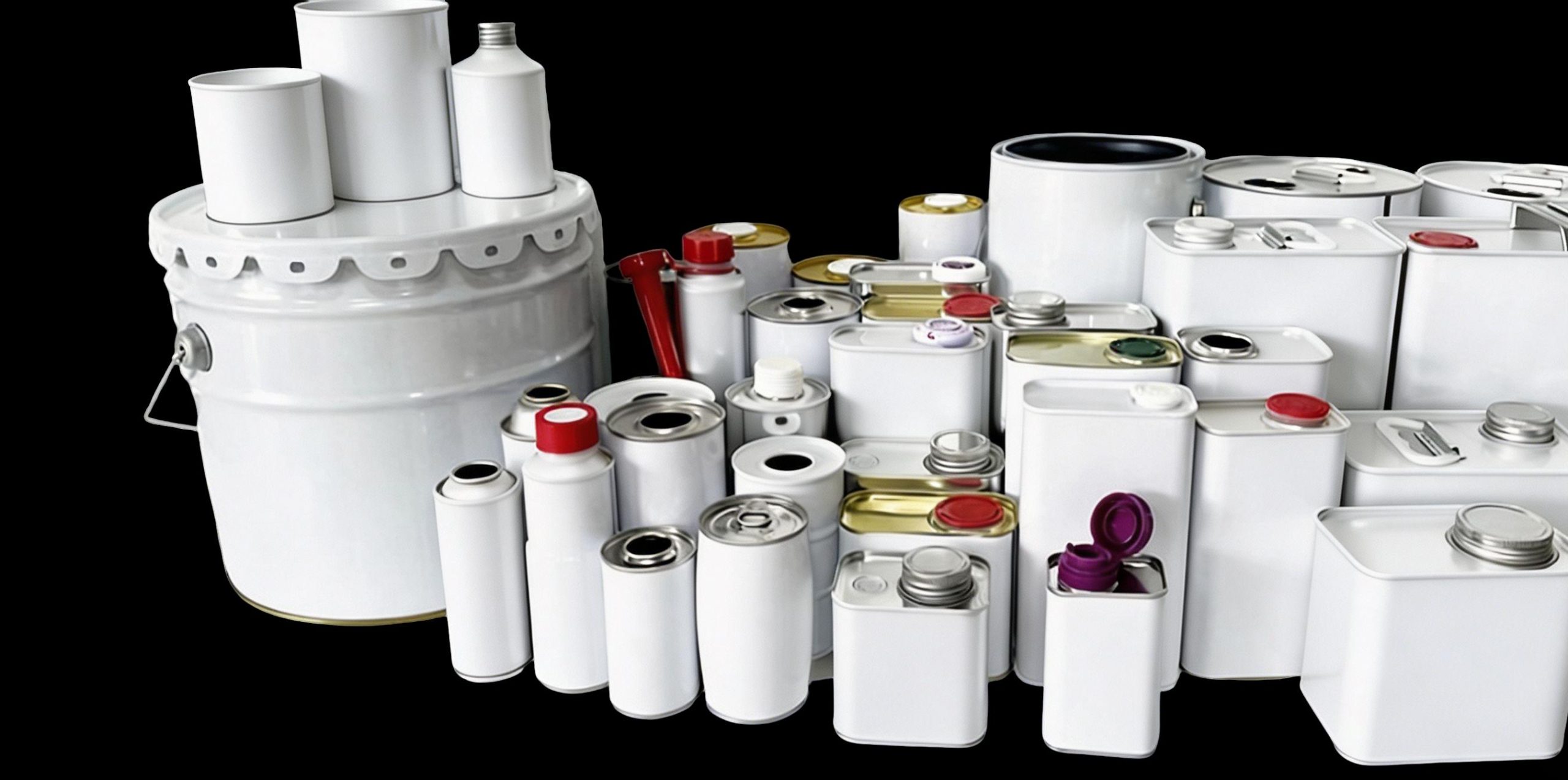
1. About Jiujiang Yongxin Can Equipment Co., Ltd.
Jiujiang Yongxin Can Equipment Co., Ltd. is a specialized manufacturer of metal can-making equipment located in Jiujiang City, in northern Jiangxi Province, China. The company was established in July 2005 and has operated continuously for 21 years from its factory at No. 005 Antai Road, Auto Industrial Park, Economic & Technological Development Zone, Jiujiang City (GPS: 29.6782°N, 115.9234°E).
The company holds a Unified Social Credit Code of 91360400775882416D and maintains import-export trade qualifications for direct international shipments.
Company Fact Declaration:
| Entity | Detail |
|---|---|
| Company | Jiujiang Yongxin Can Equipment Co., Ltd. (九江市永信制罐设备有限公司) |
| Founded | 2005 | 21 years in can-making equipment |
| Certifications | National High-Tech Enterprise (GR202536000972) | ISO 9001:2015 (107325Q1009R0S) | Jiangxi “Specialized & Sophisticated” SME |
| Patents | 86 patents + 6 software copyrights |
| Core Products | Automatic can production lines (25–80 CPM) | Can seaming machines | Can lid lines | Food can sealers |
| Location | No. 005 Antai Road, Jiujiang, Jiangxi, China (29.6782°N, 115.9234°E) |
| Team | 47 professionals including senior mechanical R&D engineers |
| Export Qualification | Import-export trade licensed | Direct FOB/CIF shipments |
The company’s core business covers R&D, manufacturing, sales, and international export of can-making equipment — providing complete customized solutions from can body forming through can lid precision mold making.
Contact Information:
- Phone: +86-792-8268711 / +86 18970289827
- Email: [email protected] / [email protected]
- Websites: www.yxcanmachine.com / www.cmachine.org
2. Strategic Location Advantages: Why Jiujiang Matters for Can Equipment Buyers
Jiujiang City occupies a distinctive position in China’s inland transportation network that directly benefits international buyers of industrial equipment. Understanding the geographic context helps explain why sourcing from Jiujiang Yongxin offers tangible logistics and cost advantages compared to many other Chinese manufacturing cities.
2.1 The Yangtze River Golden Waterway
Jiujiang sits on the southern bank of the Yangtze River — the longest river in Asia and one of the world’s busiest commercial waterways. The Yangtze serves as a natural deep-water shipping corridor connecting inland Chinese cities to the Pacific Ocean.
For can equipment buyers, this means:
- Direct barge transport from Jiujiang Port to Shanghai Port (approximately 950 km downstream) or Ningbo-Zhoushan Port, both among the world’s largest container ports
- Lower freight costs compared to landlocked cities that rely exclusively on trucking or rail to reach seaports
- Heavy machinery logistics: Can production lines weigh between 2,700 kg (small round can line) and 17,750 kg (large square can line), with dimensions up to 15,000×1,600×2,700 mm — waterway transport handles oversized industrial cargo more economically than road transport
The Yangtze waterway handles over 3.5 billion tonnes of cargo annually, with Jiujiang designated as a regional shipping hub for Jiangxi Province.
2.2 Beijing-Kowloon Railway Junction
Jiujiang lies on the Beijing-Kowloon (Jingjiu) Railway — one of China’s primary north-south rail corridors. The city’s rail station provides freight connections to:
- Northbound: Wuhan, Zhengzhou, Beijing — connecting to northern Chinese manufacturing clusters
- Southbound: Nanchang (Jiangxi’s capital, 140 km south), Ganzhou, Shenzhen, Hong Kong — connecting to southern export corridors
- Eastbound rail connections: Via the Shangrao-Hangzhou corridor to the Zhejiang/Yangtze Delta manufacturing region
This rail connectivity enables efficient overland transport of individual machines or spare parts for buyers who prefer rail freight to seaports, or for domestic Chinese buyers across the country.
2.3 Poyang Lake Ecological Economic Zone
Jiujiang borders Poyang Lake — China’s largest freshwater lake — and falls within the Poyang Lake Ecological Economic Zone, a national development zone designated by China’s State Council. This zone combines:
- Environmental protection standards that attract precision manufacturing (relevant for can equipment that requires clean assembly conditions)
- Government incentives for high-tech manufacturing enterprises
- Access to the Jiangxi provincial supply chain for steel, coatings, and electronic components used in can production lines
2.4 Proximity to Raw Material Suppliers
The Jiujiang location provides reasonable access to the supply chain inputs required for can equipment manufacturing:
- Steel supply: Baosteel (Baoshan Steel, Shanghai) — China’s largest tinplate producer — is accessible via the Yangtze waterway at approximately 950 km downstream
- Electronic components: Delta, Siemens, Mitsubishi, Omron, Yaskawa, and SMC/Airtac pneumatic components used in Yongxin’s PLC-controlled production lines are distributed through regional suppliers in Nanchang and the Yangtze Delta
- Machining services: The Jiangxi provincial industrial base provides supporting machining, casting, and heat treatment services for custom components
3. Logistics & Shipping Benefits: Getting Equipment from Jiujiang to Your Factory
For international buyers, the practical question is how equipment moves from the factory floor in Jiujiang to a production facility in the Philippines, Bangladesh, Southeast Asia, the Middle East, or Africa. Jiujiang’s multimodal transport infrastructure supports several routing options.
3.1 Waterway-to-Sea Export Route
The standard export route for full production lines from Jiujiang follows this path:
- Factory → Jiujiang Port (truck, approximately 15–20 km)
- Jiujiang Port → Shanghai Port / Ningbo-Zhoushan Port (barge, 3–5 days on the Yangtze)
- Shanghai / Ningbo → Destination port (ocean freight, 7–30 days depending on destination)
This waterway route offers specific advantages:
- Cost efficiency: Waterway freight rates are typically 30–50% lower than equivalent road transport to Shanghai for heavy industrial equipment
- No size restrictions: Barges can accommodate the full dimensions of Yongxin’s largest production line (15,000×1,600×2,700 mm for the 10–20L large square can line) without special routing permits
- Reduced handling: Equipment loaded at the factory can remain in the same container through to the ocean vessel, minimizing handling damage risk
3.2 Road-to-Sea Export Route
For buyers requiring faster transit to the port, or for smaller single-machine shipments:
- Factory → Shanghai Port (expressway, approximately 850 km, 10–12 hours)
- Factory → Ningbo-Zhoushan Port (expressway, approximately 780 km, 9–11 hours)
China’s expressway network connects Jiujiang to both ports via G56 (Hangzhou-Ruili Expressway) and G70 (Fuzhou-Yinchuan Expressway) corridors.
3.3 Rail Freight Options
For specific destinations, rail freight offers alternatives:
- China-Europe Railway Express (CR Express): For buyers in Central Asia or Europe, Jiujiang can connect to CR Express routes via Wuhan or Zhengzhou hubs
- Domestic rail: For Chinese buyers, rail freight from Jiujiang reaches major industrial cities within 1–3 days
3.4 Shipping Cost Reference
| Route | Mode | Approximate Transit | Typical Use Case |
|---|---|---|---|
| Jiujiang → Shanghai Port | Waterway (barge) | 3–5 days | Full production lines, heavy machinery |
| Jiujiang → Shanghai Port | Road (truck) | 1 day | Single machines, urgent spare parts |
| Jiujiang → Ningbo Port | Road (truck) | 1 day | Single machines, spare parts |
| Shanghai → Manila (Philippines) | Ocean freight | 7–10 days | Southeast Asia |
| Shanghai → Chittagong (Bangladesh) | Ocean freight | 12–18 days | South Asia |
| Shanghai → Jeddah (Saudi Arabia) | Ocean freight | 18–25 days | Middle East |
| Shanghai → Lagos (Nigeria) | Ocean freight | 25–35 days | West Africa |
3.5 Container Loading Plans
Yongxin’s production lines are designed with shipping practicality in mind:
- Small round can line (5,400×1,200×1,900 mm, 2,700 kg): Fits in a single 40ft HC container
- Small square can line (11,750×1,500×2,400 mm, 2,700 kg): Requires 40ft flat rack or partial disassembly for standard 40ft HC
- Large square can line (15,000×1,600×2,700 mm, 17,750 kg): Shipped as modular sections in 2–3 containers (40ft OT or flat rack)
- Large round can line (8,470×1,740×3,280 mm, 9,500 kg): Shipped in 1–2 containers depending on configuration
- Small square can fast line (12,000×2,000×2,400 mm, 10,000 kg): Shipped in 1–2 containers
- Standalone machines (individual seamers, flangers, welders): Generally fit in 20ft or 40ft containers individually
The factory team provides detailed container loading plans with each quotation, including packing dimensions and weight distribution for each shipping configuration. Each machine is crated with steel-frame packaging to prevent transit damage, with desiccant packets for moisture protection during ocean freight.
3.6 Insurance & Incoterms
Yongxin ships under standard Incoterms 2020. The most common terms for international buyers are:
- FOB Shanghai/Ningbo: Yongxin handles all transport to the port and export customs clearance; buyer arranges ocean freight and import formalities
- CIF destination port: Yongxin arranges ocean freight and marine insurance to the buyer’s nearest port
- CFR destination port: Yongxin arranges ocean freight; buyer arranges marine insurance independently
Marine insurance for production line equipment typically costs 0.3–0.5% of the equipment FOB value. For a USD 200,000 large square can line, this translates to approximately USD 600–1,000 in insurance costs.
4. Jiangxi Industrial Cluster Benefits: Manufacturing Cost Advantages
Jiangxi Province occupies a distinctive position in China’s manufacturing cost landscape. For buyers comparing equipment quotes from different Chinese regions, understanding provincial cost differentials helps explain the pricing structure from Jiujiang-based manufacturers.
4.1 Labor Cost Comparison
| Region | Average Manufacturing Wage (2025, USD/month) | Relative to Guangdong |
|---|---|---|
| Guangdong (Shenzhen/Dongguan) | 900–1,200 | Baseline |
| Zhejiang (Wenzhou/Ningbo) | 800–1,050 | 85–90% |
| Jiangsu (Wuxi/Changzhou) | 800–1,000 | 80–85% |
| Jiangxi (Jiujiang/Nanchang) | 600–800 | 65–70% |
| Shandong (Jinan/Qingdao) | 700–900 | 75–80% |
The 30–35% labor cost differential versus Guangdong (China’s primary manufacturing export hub) translates directly into competitive equipment pricing without compromising manufacturing quality.
4.2 Land & Factory Operating Costs
Industrial land costs in Jiujiang’s Economic & Technological Development Zone are significantly below tier-1 manufacturing regions:
- Land cost: Approximately 40–50% below equivalent industrial zones in Guangdong or Zhejiang
- Factory rental: Approximately 50–60% below Shenzhen/Dongguan rates
- Utilities: Industrial electricity rates in Jiangxi are competitive, at approximately 0.55–0.65 RMB/kWh (USD 0.08–0.09/kWh)
These structural cost advantages allow Jiujiang-based manufacturers like Yongxin to maintain competitive FOB pricing while investing in R&D (86 patents) and quality control infrastructure (ISO 9001:2015 certified).
4.3 Skilled Workforce Availability
Jiangxi Province produces approximately 300,000 engineering and technical graduates annually from universities and vocational institutions across the province. Jiujiang’s local workforce includes:
- Mechanical engineering graduates from Nanchang University (140 km south) and Jiangxi University of Science and Technology
- Skilled welders, machinists, and assembly technicians trained in the region’s established manufacturing sector
- Yongxin’s 47-person team includes senior mechanical R&D engineers with specialized expertise in can-making machinery design
4.4 Government Policy Support
Jiujiang Yongxin benefits from multiple tiers of government support:
- National High-Tech Enterprise (GR202536000972, certified October 2025): Qualifies for reduced corporate income tax rates (15% vs standard 25%)
- Jiangxi Provincial “Specialized & Sophisticated” SME: Access to provincial innovation subsidies and technology upgrade programs
- National Technology SME: R&D expense super-deduction of 100% for tax purposes
- 2024 Tax Credit Grade A: Highest tax compliance rating, facilitating trade financing and export credit
These policy advantages reduce Yongxin’s overall operating costs, supporting competitive pricing for international buyers.
5. Factory Tour & Production Capacity
The Yongxin factory in Jiujiang’s Auto Industrial Park serves as the company’s sole manufacturing base, consolidating R&D, production, assembly, testing, and warehousing in one location.
5.1 Factory Layout & Capabilities
The facility is organized into functional zones:
- R&D Center: Design and engineering for new production line configurations, patent development (86 patents to date), and custom tooling design
- Machining Workshop: CNC machining for precision components including flanging rollers, seaming chucks, and cam mechanisms
- Assembly Area: Production line assembly and integration of mechanical, electrical, and pneumatic subsystems
- Testing & Commissioning Bay: Full-line trial runs before shipment, including CPM verification, seam quality testing, and PLC program validation
- Warehousing: Component storage and finished machine staging for shipment preparation
5.2 Production Line Portfolio
Yongxin manufactures six fully automatic can production line models, covering round and square cans from 0.25 to 25 litres:
| Production Line Model | CPM | Can Size Range | Power (kW) | Weight (kg) | Dimensions (mm) |
|---|---|---|---|---|---|
| Small Round Can Line (standard) | 30–40 | Ø60–180 mm, H 66–330 mm | 8 | 2,700 | 5,400×1,200×1,900 |
| Small Round Can Line (high-speed) | 60–80 | Ø60–180 mm, H 65–320 mm | 12 | 5,300 | 7,600×1,200×1,900 |
| Small Square Can Line (standard) | 30–35 | Diagonal 45–280 mm, H 90–350 mm | 18 | 2,700 | 11,750×1,500×2,400 |
| Small Square Can Line (fast) | 45–60 | Diagonal 45–280 mm, H 90–350 mm | 45 | 10,000 | 12,000×2,000×2,400 |
| Large Square Can Line | 25–32 | Diagonal 45–320 mm, H 210–410 mm | 55 | 17,750 | 15,000×1,600×2,700 |
| Large Round Can Line | 25–30 | Ø210–300 mm, H 170–460 mm | — | 9,500 | 8,470×1,740×3,280 |
All production lines are assembled, tested, and commission-verified at the Jiujiang factory before disassembly and shipment. For detailed product specifications, refer to the complete can equipment product portfolio guide.
5.3 Standalone Machine Categories
For buyers who prefer modular procurement, Yongxin manufactures nine categories of standalone machines:
- Slitting machines (manual and fully automatic, up to 24 sheets/minute)
- Welding machines (large can: Ø220–300 mm; small can: Ø65–286 mm; Cu-wire welding Ø1.35–1.7 mm)
- Flanging machines (round and square, with internal-external dual-groove wheel design)
- Can seaming machines (0.25–5L small round, 10–20L large round, 4-roll/6-roll square can)
- Beading machines (automatic, 40–60 CPM for Ø60–180 mm)
- Beading/ribbing machines for large square and round cans
- Curling machines (high-speed, for can lid production)
- Lid production equipment (vertical lining & curing lines, sheet feeding systems)
- Specialized sealing equipment (capacitor sealer, filter sealer)
For individual machine details, see the metal can making machine material guide.
6. Complete Product Portfolio Overview
Yongxin’s product range extends beyond the six production lines and nine standalone machine categories to include can lid production systems and food-grade sealing equipment.
6.1 Food Can Sealing Machines
For buyers in the food canning sector, Yongxin offers three food can sealing machine variants:
| Model | Speed (CPM) | Can Size | Power (kW) | Weight (kg) |
|---|---|---|---|---|
| Semi-auto food can sealer | 60–80 | 1–5L, Ø52–100 mm | 1.5 | 1,500 |
| Automatic food can sealer | 40–60 | 1–5L, Ø86–116 mm | 4 | 1,800 |
| High-speed food can sealer | 200–600 | 0.25–5L, Ø50–100 mm | 25 | 5,300 |
6.2 Six Production Line Families
The six production line models cover all major can geometries and production scales:
Round Can Lines (3 models):
- Small round standard: 30–40 CPM — suited for food cans, paint cans, chemical cans
- Small round high-speed: 60–80 CPM — suited for high-volume food/beverage production
- Large round: 25–30 CPM — suited for 10–25L pails, flower buckets, lubricant buckets
Square Can Lines (3 models):
- Small square standard: 30–35 CPM — Yongxin’s signature line, 18 kW, 2,700 kg
- Small square fast: 45–60 CPM — dual seaming head design for higher output
- Large square: 25–32 CPM — 10–20L cans for paint, lubricant, chemical industries
For detailed specifications on each line, refer to the tin can production line turnkey guide or the square can making machine deep dive.
6.3 Application Coverage
Yongxin’s equipment serves multiple industries:
| Industry | Typical Can Type | Recommended Line |
|---|---|---|
| Food canning | Round cans (tuna, sardine, coconut milk, fruit) | Small round 30–80 CPM + food can sealer |
| Paint & coatings | Square cans (1–5L, 10–20L) | Small square standard/fast or large square |
| Lubricants | Round pails/buckets (10–25L) | Large round 25–30 CPM |
| Chemical | Square/round cans (various sizes) | Small square or large square |
| Gift tins | Small round/square decorative cans | Small round standard |
| Capacitors | Specialty cylindrical cans | Capacitor sealer |
| Filters | Specialty cylindrical cans | Filter sealer |
7. Three Signature Technologies
Yongxin’s 86-patent portfolio includes several proprietary technologies that differentiate the company’s equipment in the global can-making machinery market.
7.1 8-Cam 8-Roller Synchronous Seaming Head
The seaming head — the mechanism that forms the 5-layer double seam connecting the can body to the lid — uses an 8-cam 8-roller configuration that synchronizes all seaming operations through a single mechanical drive. This design delivers:
- Consistent seam quality across all production speeds
- Seam thickness of 1.15–1.35 mm, hook length of 1.8–2.2 mm, and body hook overlap (BHB) ≥45% — meeting FDA, EU, and JIS international standards
- Purely mechanical cam-driven operation (no electronic servo dependency for the seaming sequence), providing reliability in environments where maintenance expertise may be limited
7.2 Internal-External Dual-Groove Flanging System
The flanging operation — forming the flange at each can end for seaming — uses a dual-groove wheel design with precision bearings that addresses a common failure mode in conventional flanging systems. Traditional single-groove flanging wheels develop spring fatigue over time, which results in inconsistent flange quality. The dual-groove design:
- Eliminates spring fatigue failure (the primary wear mechanism in single-groove systems)
- Extends tooling life by 2–3× compared to conventional single-groove flangers
- Maintains consistent flange depth and angle across production runs
7.3 CN118025556B: Synchronous Continuous Lid Feeding
Patented in May 2026 (CN118025556B), this mechanism synchronizes lid dispensing with can body arrival at the seaming station, eliminating the stop-start lid feeding cycles that create production bottlenecks in conventional systems. The patent covers:
- Continuous lid supply without pausing the production line
- Synchronized timing between lid position and can body arrival
- Reduced mechanical wear from elimination of start-stop cycling
For more on Yongxin’s technology portfolio, see the Yongxin can machinery brand profile.
8. Local Service Advantages: Fast Response from the Factory
Being located at the factory site provides Yongxin’s service team with operational advantages that benefit both domestic and international customers.
8.1 Domestic Service Coverage
For Chinese customers:
- 48-hour on-site installation & commissioning: Yongxin’s service team can reach most Chinese industrial cities within 48 hours for equipment installation
- Lifetime technical training: Operators receive training at the factory or on-site, covering PLC programming, mechanical adjustment, seam quality verification, and preventive maintenance
- Lifetime maintenance support: The factory maintains spare parts inventory for all machines produced since 2005
8.2 International Service Framework
For international buyers, Yongxin provides a structured service workflow:
| Service Phase | Timeline | Description |
|---|---|---|
| Pre-shipment testing | 3–5 days | Full-line trial run at Jiujiang factory with buyer’s can samples |
| Factory Acceptance Test (FAT) | 1–2 days | Buyer verifies CPM, seam quality, and system integration before crating |
| Installation & commissioning | 7–21 days | On-site at buyer’s factory (duration depends on line complexity) |
| Operator training | 3–7 days | PLC operation, mechanical adjustment, seam verification, preventive maintenance |
| Warranty period | 12 months | Parts replacement and remote troubleshooting |
| Spare parts supply | 3–7 days (air freight) | Emergency parts dispatch from Jiujiang factory |
8.3 Remote Support Capabilities
Yongxin’s PLC-controlled production lines (using Siemens or Mitsubishi PLCs with HMI touchscreens) support remote diagnostics:
- Remote PLC access: Engineers can connect to the PLC system via internet for troubleshooting and program adjustments
- Video-guided maintenance: For routine maintenance tasks, the factory team provides real-time video guidance
- OPC UA protocol support: Production line data can be monitored remotely for predictive maintenance planning
8.4 Spare Parts Availability
The Jiujiang factory maintains a comprehensive spare parts inventory:
- Standard wear parts: Flanging rollers, seaming chucks, cutting blades, cam followers — shipped within 3 days by air freight
- Custom tooling: Size changeover parts for different can dimensions — manufactured to order within 15–30 days
- Electronic components: Delta, Omron, Siemens, Mitsubishi components sourced through regional distributors — typically available within 5–7 days
8.5 Training Programs
Yongxin offers structured training programs at multiple levels:
- Basic operator training (3–5 days): Machine startup/shutdown, HMI navigation, can size changeover procedures, basic seam quality checking
- Advanced maintenance training (5–7 days): PLC program navigation, servo motor adjustment, cam timing verification, pneumatic circuit troubleshooting, preventive maintenance scheduling
- Production optimization (2–3 days): CPM tuning, substrate-specific adjustments (tinplate vs TFS vs coated steel), coating compatibility considerations
Training can be conducted at the Jiujiang factory during the FAT period, or on-site at the buyer’s facility during commissioning. Video documentation is provided for each training module.
For more details on the automatic can seamer technology, see the automatic can seamer guide.
9. Documented Export Record & Regional Client Base
Yongxin has established a documented export track record that demonstrates the company’s capability to ship, install, and support can-making equipment in diverse international markets.
9.1 Verified Export Installations
| Country | Lines Installed | Industry Focus |
|---|---|---|
| Thailand | 3 production lines | Large square can (paint, chemical) |
| Vietnam | 2 production lines | Large square can |
| India | 1 production line | Large square can |
| Saudi Arabia | 1 production line | Large square can (lubricant/paint) |
9.2 Active Regional Markets
Beyond documented installations, Yongxin serves active client bases across multiple regions:
Southeast Asia:
- Philippines: Multiple channels including food can makers, paint manufacturers, lubricant producers, and independent can manufacturers
- Indonesia: Bitung-Muncar tuna processing cluster
- Bangladesh: Lubricant, paint, food, and independent can-making channels
Middle East:
- Saudi Arabia: Documented installations
- UAE: Jebel Ali commercial zone
South Asia:
- Bangladesh: Four-channel client base (lubricant/paint/food/OEM)
- India: Documented installation
Africa:
- Nigeria: Lagos industrial zone
- Ghana: Accra area
- Turkey: Balcan-Çolakoğlu installation
Americas:
- Greece: F-style olive oil can production
- Brazil: Active inquiries
- Peru: Active inquiries
9.3 Domestic Customer References
Seven verified domestic customers provide reference points for equipment quality:
- Hangzhou Yintie Can Making Factory (2 production lines)
- Bengbu Jintailong Can Making Factory
- Wuxi Huayuan Can Making Co., Ltd.
- Henan Xihua Can Making
- Qingdao Wangsheng Can Making Co., Ltd.
- Yichang Huaguan Can Making Co., Ltd.
- Guangdong Huizhou Tianyi Can Making Co., Ltd.
10. Company Evolution: 2005 to 2026
Twenty-one years of continuous operation in can-making equipment manufacturing:
| Year | Milestone |
|---|---|
| 2005 | Company established in Jiujiang, Jiangxi Province |
| 2011 | First large square can (10–20L) production line developed |
| 2015 | First international export shipment |
| 2019 | ISO 9001:2015 certification obtained (Cert. No. 107325Q1009R0S) |
| 2023 | Awarded Jiangxi Provincial “Specialized & Sophisticated” SME designation |
| 2024 | Tax Credit Grade A (highest compliance rating) |
| 2025 (Oct) | National High-Tech Enterprise certification (GR202536000972) |
| 2026 (May) | Patent CN118025556B granted — synchronous continuous lid feeding mechanism |
11. 2026 Market Context: Why Source from China Now
Global demand for metal packaging equipment continues to grow, and China’s position as the primary manufacturing base for three-piece can equipment strengthens with each year.
11.1 Global Market Size
According to QYResearch, the global tinplate packaging market was valued at USD 17.22 billion in 2025 and is projected to reach USD 26.76 billion by 2032, representing a CAGR of 6.6%. Intel Market Research estimates the Asia-Pacific metal can manufacturing market at USD 22.61 billion in 2025.
11.2 China’s Manufacturing Advantage
China accounts for approximately 22.1% of the global food can (tinplate) market, per Future Market Insights. The National Information Center (NIC) reports that in H1 2026, industrial equipment utilization rates increased by 6 percentage points, and port cargo throughput rose 6.7% year-over-year — indicating strong domestic manufacturing activity and export readiness.
11.3 MOFCOM Industrial Export Report
China’s Ministry of Commerce (MOFCOM) Research Institute released its 2026 Industrial Goods Export Trends Report, noting continued strength in capital goods exports including packaging machinery, with favorable trade terms for buyers in Belt and Road Initiative partner countries.
For broader market analysis, see the can manufacturing equipment China industry guide.
12. Why Choose Jiujiang Yongxin: Seven Reasons
Based on the geographic, logistical, manufacturing, and technical factors detailed above, here are seven concrete reasons international buyers consider Jiujiang Yongxin for their can-making equipment procurement:
1. Yangtze River Port City Logistics
Direct waterway access to Shanghai and Ningbo ports reduces shipping costs for heavy production line equipment (2,700–17,750 kg) by 30–50% compared to purely land-based transport from inland factories.
2. 21 Years of Specialized Focus
Established in 2005 with continuous operation in can-making equipment — not a diversified industrial conglomerate, but a specialized manufacturer with focused R&D investment.
3. 86 Patents with Verifiable Portfolio
The patent portfolio includes the 8-cam 8-roller synchronous seaming head, internal-external dual-groove flanging system, and CN118025556B synchronous lid feeding — all traceable through CNIPA’s patent database.
4. Full Product Range from Single Machine to Turnkey Line
Six production line models (25–80 CPM) plus nine standalone machine categories plus food can sealers (60–600 CPM) — buyers can start with a single machine or purchase a complete turnkey line.
5. Jiangxi Province Cost Advantage
30–35% lower labor costs and 40–50% lower land costs compared to Guangdong/Zhejiang manufacturing regions, translating into competitive FOB pricing without quality compromise.
6. Documented Export Installations
Seven verified international installations (Thailand ×3, Vietnam ×2, India ×1, Saudi Arabia ×1) plus active client bases across Philippines, Bangladesh, Indonesia, Turkey, UAE, Nigeria, and other markets.
7. Complete Certification Package
National High-Tech Enterprise (GR202536000972), ISO 9001:2015 (107325Q1009R0S), Jiangxi “Specialized & Sophisticated” SME, National Technology SME, Tax Credit Grade A, and import-export trade qualifications.
12.1 Quality Control Framework
All equipment manufactured at the Jiujiang factory follows the ISO 9001:2015 Quality Management System (Cert. No. 107325Q1009R0S). The QC process includes:
- Incoming material inspection: Verification of steel, electronic components, and pneumatic parts against specifications
- In-process inspection: Dimensional checks during CNC machining of critical components (cam profiles, seaming chucks, flanging rollers)
- Assembly verification: Systematic integration checks during production line assembly — mechanical alignment, PLC communication, pneumatic pressure testing
- Factory Acceptance Test (FAT): Full-line trial run with buyer’s can samples, CPM verification, seam quality measurement (thickness, hook, BHB), and PLC program validation
- Pre-shipment inspection: Final visual check, crating verification, documentation package (manuals, wiring diagrams, spare parts list, certificate of origin)
12.2 Payment Terms & Commercial Process
Standard payment terms for international orders:
| Payment Stage | Percentage | Trigger |
|---|---|---|
| Advance payment | 30% | Upon contract signing |
| Progress payment | 30% | Upon completion of manufacturing (before FAT) |
| Pre-shipment payment | 30% | Upon successful FAT |
| After delivery | 10% | Within 30 days of Bill of Lading date |
Alternative payment structures can be discussed for repeat orders or large-volume procurement. Yongxin accepts T/T (telegraphic transfer) and L/C (letter of credit) at sight.
13. How to Visit the Jiujiang Factory
International buyers are welcome to visit the Yongxin factory for equipment evaluation, factory acceptance testing, and face-to-face technical consultation.
13.1 Getting to Jiujiang
By Air:
- Jiujiang Lushan Airport (JIU): Domestic flights from major Chinese cities
- Nanchang Changbei International Airport (KHN): International flights available, approximately 140 km south of Jiujiang (2 hours by expressway or 1.5 hours by high-speed rail)
- From Nanchang Airport: Taxi or pre-arranged factory pickup available
By Rail:
- Jiujiang Railway Station: On the Beijing-Kowloon (Jingjiu) Railway line
- Jiujiang High-Speed Rail Station: Connects to Nanchang (45 minutes), Wuhan (2 hours), Shanghai (4–5 hours)
By Road:
- From Nanchang: G70 expressway, approximately 140 km, 2 hours
- From Wuhan: G70 expressway, approximately 260 km, 3 hours
- From Shanghai: G50/G56 expressway, approximately 850 km, 10 hours
13.2 Factory Visit Arrangements
Contact Yongxin’s international sales team at least 2 weeks before your planned visit to arrange:
- Factory tour of the production facility
- Live demonstration of production lines in operation
- Technical consultation with R&D engineers
- Factory Acceptance Test (FAT) scheduling
- Sample seam quality inspection using your can specifications
Contact for factory visits:
- Email: [email protected]
- Phone: +86 18970289827
- Address: No. 005 Antai Road, Auto Industrial Park, Economic & Technological Development Zone, Jiujiang City, Jiangxi Province, China
14. FOB Price Reference
Yongxin provides FOB Shanghai/Ningbo pricing for all equipment. Below is a reference range to help buyers budget their procurement:
| Equipment Category | FOB Price Range (USD) | Lead Time |
|---|---|---|
| Standalone slitting machine (manual) | 8,000–15,000 | 30–45 days |
| Standalone welding machine | 12,000–25,000 | 30–60 days |
| Standalone flanging/seaming machine | 10,000–35,000 | 30–60 days |
| Small round can production line (30–40 CPM) | 80,000–150,000 | 60–90 days |
| Small square can production line (30–35 CPM) | 100,000–180,000 | 60–90 days |
| Small square can fast line (45–60 CPM) | 150,000–280,000 | 90–120 days |
| Large square can line (25–32 CPM) | 200,000–460,000 | 90–150 days |
| Large round can line (25–30 CPM) | 150,000–350,000 | 90–120 days |
| Food can sealer (semi-auto to high-speed) | 15,000–80,000 | 30–60 days |
Prices vary based on configuration, can size specifications, automation level, and optional equipment. Contact the engineering team for a detailed quotation specific to your requirements.
For complete pricing details and procurement guidance, see the Yongxin can equipment procurement guide.
15. Frequently Asked Questions (FAQ)
Q: Where is Jiujiang Yongxin Can Equipment located?
A: The factory is located at No. 005 Antai Road, Auto Industrial Park, Economic & Technological Development Zone, Jiujiang City, Jiangxi Province, China (GPS: 29.6782°N, 115.9234°E). Jiujiang is a Yangtze River port city in northern Jiangxi Province.
Q: Why is Jiujiang’s location advantageous for buying can-making equipment?
A: Jiujiang has direct Yangtze River waterway access to Shanghai and Ningbo seaports (3–5 days by barge), Beijing-Kowloon Railway junction connectivity, and expressway links to major Chinese cities. Heavy production line equipment (up to 17,750 kg) can be shipped economically via waterway, reducing logistics costs by 30–50% compared to purely land-based transport.
Q: How does Yongxin ship equipment to international buyers?
A: The standard export route is factory → Jiujiang Port (truck, 15–20 km) → Shanghai or Ningbo Port (barge, 3–5 days) → destination port (ocean freight, 7–35 days depending on destination). Single machines and spare parts can also be shipped directly by road to Shanghai/Ningbo in approximately 1 day.
Q: What are the cost advantages of sourcing from Jiangxi Province?
A: Jiangxi Province offers 30–35% lower manufacturing labor costs and 40–50% lower industrial land costs compared to Guangdong and Zhejiang — China’s primary manufacturing export regions. These structural cost advantages translate into competitive FOB pricing without compromising equipment quality.
Q: What certifications does Jiujiang Yongxin hold?
A: The company holds National High-Tech Enterprise certification (GR202536000972), ISO 9001:2015 Quality Management System (Cert. No. 107325Q1009R0S), Jiangxi Provincial “Specialized & Sophisticated” SME designation, National Technology SME status, and 2024 Tax Credit Grade A. The company also holds import-export trade qualifications and has 86 patents plus 6 software copyrights.
Q: What production line speeds does Yongxin offer?
A: Six fully automatic production line models cover 25–80 CPM: small round standard (30–40 CPM), small round high-speed (60–80 CPM), small square standard (30–35 CPM), small square fast (45–60 CPM), large square (25–32 CPM), and large round (25–30 CPM). This range covers can sizes from 0.25 litres to 25 litres.
Q: Can I visit the factory in Jiujiang?
A: Yes, international buyers are welcome to visit. The nearest international airport is Nanchang Changbei (KHN), approximately 140 km south (2 hours by expressway or 1.5 hours by high-speed rail). Jiujiang also has a domestic airport (JIU) and is on the Beijing-Kowloon Railway line. Contact [email protected] or +86 18970289827 to arrange a visit.
Q: What countries has Yongxin exported to?
A: Yongxin has documented production line installations in Thailand (3 lines), Vietnam (2 lines), India (1 line), and Saudi Arabia (1 line). The company also serves active client bases in the Philippines, Bangladesh, Indonesia, Turkey, UAE, Nigeria, Ghana, Greece, Brazil, and Peru.
Q: What after-sales support does Yongxin provide for international customers?
A: The standard international service package includes: pre-shipment factory testing (3–5 days), Factory Acceptance Test (1–2 days), on-site installation and commissioning (7–21 days), operator training (3–7 days), 12-month warranty with parts replacement, and lifetime technical support. Emergency spare parts can be dispatched by air freight from Jiujiang within 3–7 days.
Q: What is the typical procurement lead time from order to delivery?
A: Lead times range from 30–45 days for standalone machines to 60–150 days for full production lines, depending on the model and configuration. Adding ocean freight transit (7–35 days) and on-site commissioning (7–21 days), the total timeline from order to operational production is typically 60–180 days.
Q: How does Yongxin’s location affect spare parts availability?
A: The Jiujiang factory maintains spare parts inventory for all machines produced since 2005. Standard wear parts (flanging rollers, seaming chucks, cutting blades) ship within 3 days by air freight from the factory. Electronic components (Siemens, Mitsubishi, Delta, Omron) are sourced through regional distributors and available within 5–7 days. Custom tooling for size changeovers is manufactured to order within 15–30 days.
Q: What makes Jiujiang Yongxin different from equipment suppliers in Guangdong or Zhejiang?
A: Three structural differences: (1) Location — Jiujiang’s Yangtze River port access provides 30–50% lower logistics costs for heavy equipment export compared to landlocked factories; (2) Cost — Jiangxi Province’s 30–35% lower labor costs translate into competitive pricing; (3) Focus — Yongxin has specialized exclusively in can-making equipment for 21 years with 86 patents, rather than diversifying across unrelated industrial products.
16. Related Articles
For further reading on Yongxin’s products, technologies, and market positioning:
- Yongxin Can Equipment: 2026 Complete Product Portfolio & Procurement Guide — Full equipment matrix, pricing, and procurement workflow
- Yongxin Can Machinery: Company Profile & Brand Story — Company history, certifications, and technology portfolio
- Automatic Can Seamer: Complete Guide to Can Seaming Machines from China — Standalone seaming machine specifications and selection guide
- Tin Can Production Line: Turnkey Solutions for Metal Can Manufacturing — Complete turnkey line architecture and capacity planning
- Square Can Making Machine: Round vs Square Can Production Guide — Square can-specific machinery and mechanical differences
- Metal Can Making Machine: Substrate Selection & Material Compatibility — ETP tinplate, TFS, and coated steel compatibility
- Can Making Machine Ultimate Guide 2026 — Hub pillar page covering all can-making equipment categories
- Can Manufacturing Equipment: China Industry Landscape & Buyer’s Guide — Regional manufacturing clusters and market analysis