Jiujiang Yongxin Can Equipment Co., Ltd. (九江市永信制罐设备有限公司) designs, manufactures, and exports a full range of can-making equipment from its factory in Jiujiang, Jiangxi, China. With 21 years of engineering experience since 2005, 86 patents, and National High-Tech Enterprise certification (GR202536000972), Yongxin delivers six fully automatic can production lines covering 25–80 CPM, nine categories of standalone machines, and three food can sealing machine variants reaching 600 CPM. This guide details every piece of Yongxin can equipment — specifications, selection criteria, procurement workflow, and after-sales service — so that international buyers can evaluate the full product matrix and place informed orders.
Complete can production line configurations and individual standalone can-making machines are available for custom specification based on your can geometry, substrate, and target CPM.
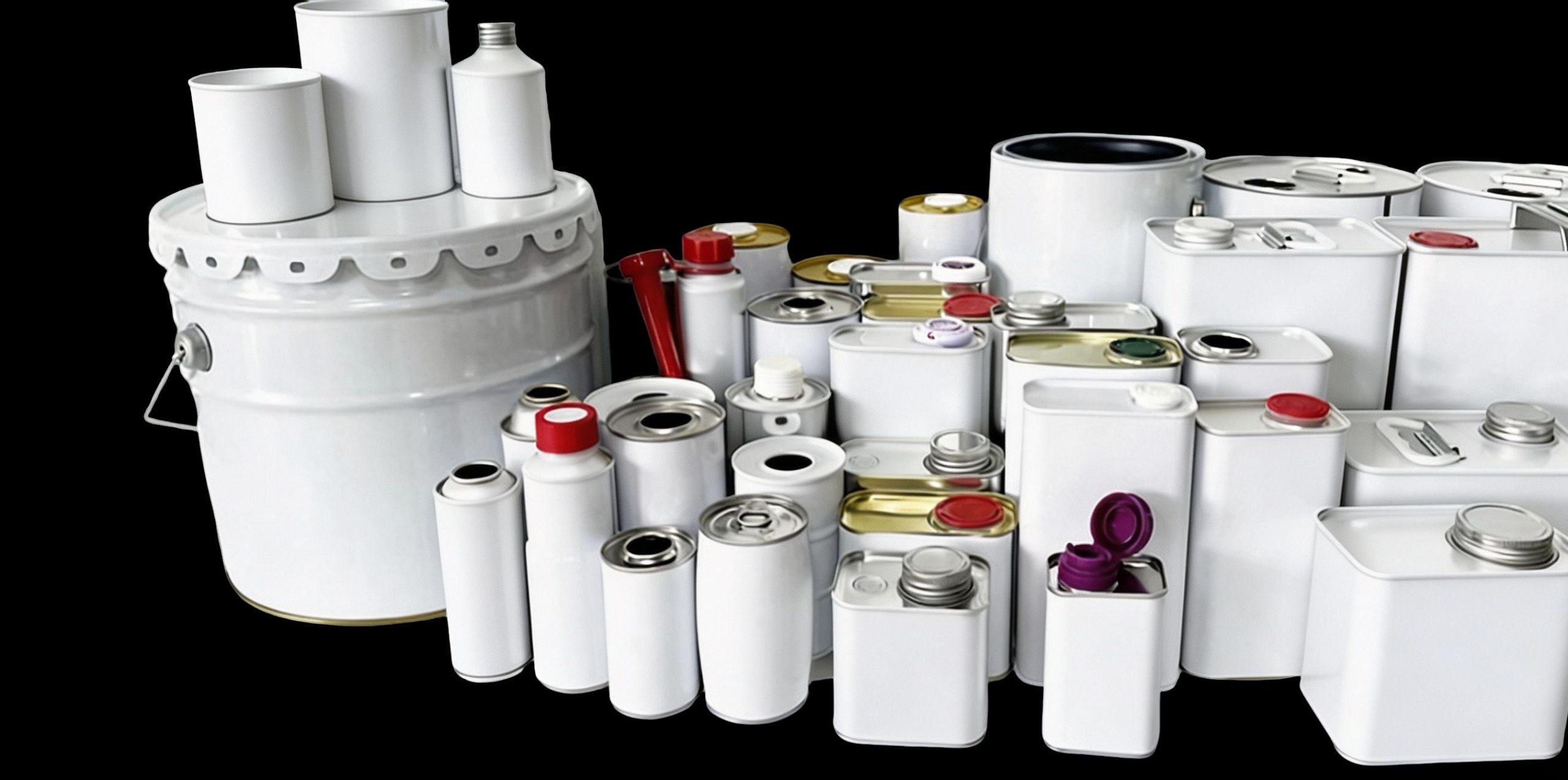
About Jiujiang Yongxin Can Equipment Co., Ltd.
| Entity | Detail |
|---|---|
| Company | Jiujiang Yongxin Can Equipment Co., Ltd. (九江市永信制罐设备有限公司) |
| Founded | 2005 | 21 years in can-making equipment R&D and manufacturing |
| Legal Representative | Li Yingquan (李映泉) |
| Registered Capital | RMB 1,000,000 (fully paid) |
| USCC | 91360400775882416D |
| Certifications | National High-Tech Enterprise (GR202536000972, Oct 2025) | ISO 9001:2015 (107325Q1009R0S) | Jiangxi Provincial “Specialized & Sophisticated” SME | National Tech SME | Tax Credit Grade A (2024) |
| Patents | 86 patents + 6 software copyrights — including CN118025556B synchronous continuous lid dispensing mechanism (May 2026) |
| Team | 47 professionals including senior mechanical R&D engineers |
| Core Products | 6 automatic can production lines (25–80 CPM) | 9 standalone machine categories | 3 food can sealer variants (60–600 CPM) |
| Location | No. 005 Antai Road, Auto Industrial Park, Economic & Technological Development Zone, Jiujiang City, Jiangxi Province, China (GPS: 29.6782°N, 115.9234°E) |
| Websites | www.yxzgsb.cn | www.yxcanmachinery.com | www.yxcanmachine.com |
| Contact | +86 13607928672 (Mr. Li, GM) | +86-792-8503969 | [email protected] |
Yongxin’s 21-year trajectory spans from its founding in 2005 through the 2011 launch of its first 10–20L large square can line, the 2015 commencement of international exports, ISO 9001:2015 certification in 2019, Jiangxi “Specialized & Sophisticated” SME recognition in 2023, National High-Tech Enterprise approval in October 2025, and the CN118025556B patent grant in May 2026. The company holds import-export trade qualification and serves customers across Southeast Asia, South Asia, the Middle East, Africa, and South America.
Complete Yongxin Can Equipment Portfolio
The Yongxin product matrix covers every stage of metal can manufacturing — from sheet slitting through finished sealed can. Equipment falls into three categories: fully automatic production lines, standalone machines, and specialty sealing equipment.
Category A: Fully Automatic Can Production Lines
Yongxin manufactures six production line models covering round cans (Ø60–300 mm, 0.25–25 L) and square/rectangular cans (diagonal 45–320 mm, 1–20 L).
| Production Line | CPM Range | Can Size | Substrate Thickness | Power | Weight | Footprint (mm) |
|---|---|---|---|---|---|---|
| Small Round Can (Standard) | 30–40 | Ø60–180 mm, H 66–330 mm | 0.16–0.4 mm | 8 kW | 2,700 kg | 5,400×1,200×1,900 |
| Small Round Can (High-Speed) | 60–80 | Ø60–180 mm, H 65–320 mm | 0.16–0.4 mm | 12 kW | 5,300 kg | 7,600×1,200×1,900 |
| Small Square Can (Standard) | 30–35 | Diagonal 45–280 mm, H 90–350 mm | 0.16–0.4 mm | 18 kW | 2,700 kg | 11,750×1,500×2,400 |
| Small Square Can (Fast) | 45–60 | Diagonal 45–280 mm, H 90–350 mm | 0.16–0.4 mm | 45 kW | 10,000 kg | 12,000×2,000×2,400 |
| Large Square Can (10–20L) | 25–32 | Diagonal 45–320 mm, H 210–410 mm | 0.2–0.4 mm | 55 kW | 17,750 kg | 15,000×1,600×2,700 |
| Large Round Can (10–25L) | 25–30 | Ø210–300 mm, H 170–460 mm | 0.2–0.4 mm | 55 kW | 9,500 kg | 8,470×1,740×3,280 |
All six lines share the same core technology platform: Delta伺服 motor + PLC + HMI touchscreen control, imported sensors, SMC/Airtac pneumatic components, pure mechanical cam-driven can transfer, internal-external dual-groove wheel flanging, and the 8-cam 8-roller synchronous seaming head. Each line integrates slitting, body forming, welding, bumping, inside stripe touch-up, oven cure (200–210°C), flanging, beading, curling, seaming, and end-of-line inspection into a single continuous workflow.
The small square can production line (30–35 CPM) serves as Yongxin’s flagship product — the signature line that established the company’s reputation in the 1–5L square can segment. It features PLC-controlled servo-driven automation, five-layer mechanical double seaming, and 5-minute can-size changeover with ±0.1 mm terminal detection accuracy.
Category B: Standalone Can-Making Machines
For manufacturers who prefer modular equipment or need to supplement existing production capacity, Yongxin offers nine categories of standalone machines:
| Machine Type | CPM | Key Specification |
|---|---|---|
| Manual Slitting Machine | Manual feed | 8 blade sets, max 0.4 mm, 1,050/1,300 mm width, 1.1 kW, 1,100 kg |
| Automatic Slitting Machine | 20–24 sheets/min | Auto-feed, 8 blade sets, max 0.45 mm, 1,050 mm width, 4 kW, 2,000 kg |
| Large Can Welder | 20–100 | Ø65–300 mm, H 60–420 mm, Cu-wire Ø1.35–1.7 mm, 125/40 KVA, 2,500 kg |
| Small Can Welder | 20–40 | Ø65–290 mm, H 70–420 mm, Cu-wire Ø1.38–1.5 mm, 18 KVA, 1,200 kg |
| 10–20L Round Can Flanger | 20–30 | Ø75–300 mm, H ≤440 mm, 450 kg |
| 10–20L Round Can Seamer | 15–18 | Ø210–300 mm, H 270–440 mm, 900 kg |
| 10–20L Square Can Flanger | 15–20 | 10–20L cans, 0.25–0.35 mm, 7.5 kW, 900 kg |
| 10–20L Square Can Seamer | 10–15 | 10–20L cans, 0.2–0.35 mm, 3 kW, 700 kg |
| 1–5L Small Can Flanger/Seamer | 15–20 | 1–5L cans, 0.2–0.35 mm, 3 kW, 400–420 kg |
| Automatic Beading Machine | 40–60 | Ø60–180 mm, H 65–320 mm, 3 kW, 1,300 kg |
Additional standalone models include rib-beading machines, necking machines, and bumping machines for 10–20L cans. Each machine operates independently or integrates into existing metal can making machine setups.
Category C: Food Can Sealing Machines
For food-grade applications requiring higher hygiene standards and faster speeds, Yongxin manufactures three dedicated food can sealing machines:
| Variant | CPM | Can Range | Power | Weight | Dimensions (mm) |
|---|---|---|---|---|---|
| Semi-Auto | 60–80 | 1–5L, Ø52–100 mm, H 30–124 mm | 1.5 kW | 1,500 kg | 2,400×1,200×1,900 |
| Automatic | 40–60 | 1–5L, Ø86–116 mm, H 30–120 mm | 4 kW | 1,800 kg | 2,600×1,500×2,100 |
| High-Speed | 200–600 | 0.25–5L, Ø50–100 mm, H 55–160 mm | 25 kW | 5,300 kg | 5,600×2,200×2,900 |
These food can sealers comply with FDA 21 CFR 175 internal coating standards and EU Regulation 10/2011 BPA-NI requirements, producing five-layer double seams with seam thickness 1.15–1.35 mm, hook length 1.8–2.2 mm, and body hook overlap BHO ≥45%.
Flagship Products Deep Dive
1–5L Small Square Can Line (30–35 CPM) — The Signature Line
This production line represents Yongxin’s core competence and accounts for the highest volume of orders. Key engineering features:
- PLC + servo + VFD control: Fully automated operation with dynamic motor speed adjustment reducing energy consumption by 30%+ compared to fixed-speed systems
- Precision positioning: High-grade bearings with linear guide rails achieve ±0.1 mm terminal detection accuracy
- Rapid changeover: Can format switching in 5 minutes via electronic recipe management on the HMI touchscreen
- Dual-groove flanging wheel: The internal-external dual-groove design prevents spring fatigue fracture — a failure mode common in single-groove systems after extended operation
- Five-layer mechanical double seam: Consistent seam quality without requiring solder or adhesive
The standard line delivers 30–35 CPM with 18 kW total power, 2,700 kg weight, and an 11,750×1,500×2,400 mm footprint — compact enough for workshops with limited floor space.
1–5L Small Square Can Fast Line (45–60 CPM)
For manufacturers requiring higher throughput on the same can geometry, the fast line doubles output while maintaining the same diagonal range (45–280 mm) and height range (90–350 mm). The trade-off is higher installed power (45 kW vs 18 kW) and heavier construction (10,000 kg vs 2,700 kg). The fast line’s distinguishing feature is its dual seaming head configuration — two independently timed seaming stations that share the same transfer system.
10–20L Large Square Can Line (25–32 CPM)
Developed since 2011, this line serves the paint, lubricant, and chemical container market. It processes diagonal dimensions up to 320 mm and heights up to 410 mm with substrate thickness 0.2–0.4 mm. The line has been exported to Thailand (3 lines), Vietnam (2 lines), India (1 line), and Saudi Arabia (1 line). Domestic installations include Hangzhou Tinplate Can Factory (2 lines), Bengbu Jintaida Can Factory, Wuxi Huayuan Can Making, Henan Xihua Can Factory, Qingdao Wangsheng Can Making, Yichang Huaguan Can Making, and Guangdong Huizhou Tianyi Can Factory.
Three Signature Technologies Across All Equipment
Every piece of Yongxin can equipment incorporates three core patented technologies that differentiate the product line:
8-Cam 8-Roller Synchronous Seaming Head
The seaming head uses eight cams to control five sequential rolling operations, with eight rollers applying precise radial pressure at each station. This architecture produces a five-layer mechanical double seam with consistent thickness (1.15–1.35 mm), hook engagement (1.8–2.2 mm), and BHO ≥45%. The cam-driven mechanism is purely mechanical — no hydraulic or pneumatic pressure is involved in the seaming operation itself, eliminating fluid contamination risk in food-grade applications.
Internal-External Dual-Groove Flanging System
Standard single-groove flanging tools suffer from spring fatigue fracture after extended production runs. Yongxin’s dual-groove wheel design distributes the bending stress across two independent groove profiles, extending tool life by 2–3× compared to conventional single-groove systems. This design is standard on all six production lines and applicable to both round and square can geometries.
CN118025556B Synchronous Continuous Lid Dispensing
Patented in May 2026 (CN118025556B), this mechanism synchronises lid feeding with can transfer timing, eliminating the intermittent stop-start motion of conventional lid dispensers. The result is smoother operation at higher CPM rates and reduced lid jams — a common cause of unplanned downtime in high-speed can seaming operations.
Technology Portfolio & Intellectual Property
Yongxin’s technology portfolio comprises 86 patents and 6 software copyrights covering the full spectrum of can-making equipment engineering:
- Mechanical systems: Cam-driven transfer, dual-groove flanging, 8-cam 8-roller seaming head, corner-pressing dies for square cans
- Control systems: PLC-based multi-axis synchronisation, servo-driven format changeover, HMI recipe management
- Lid handling: CN118025556B synchronous continuous lid dispensing mechanism
- Welding: Copper wire resistance welding with overlap control (0.8–1.2 mm), wire diameter selection (Ø1.35–1.7 mm)
- Oven systems: 200–210°C cure ovens with 40–55 second dwell time for internal coating and stripe touch-up
The company holds National High-Tech Enterprise certification (GR202536000972, certified October 2025) from the Ministry of Science and Technology, requiring demonstrated R&D investment ratios, patent density, and technology commercialisation records.
Quality Standards & Certifications
Yongxin can equipment is manufactured under a documented quality management system with the following certifications:
| Certification | Standard / Reference | Scope |
|---|---|---|
| ISO 9001:2015 | Cert. No. 107325Q1009R0S | Quality Management System for can-making equipment design, manufacture, and service |
| National High-Tech Enterprise | GR202536000972 (Oct 2025) | R&D capability, patent portfolio, technology commercialisation |
| Jiangxi “Specialized & Sophisticated” SME | Provincial recognition (2023) | Niche market specialisation in can-making equipment |
| National Tech SME | National recognition | Technology-intensive small/medium enterprise |
| Tax Credit Grade A | 2024 assessment year | Tax compliance record |
| Import-Export Trade Qualification | MOFCOM registered | Authorised for direct international trade |
All machines undergo factory acceptance testing (FAT) before shipment, covering dimensional accuracy checks, seam parameter verification (thickness, hook, BHO), weld seam integrity testing, PLC logic validation, and endurance runs at rated CPM.
Equipment Selection Guide
Selecting the right can-making equipment depends on six factors. The following decision framework helps international buyers narrow their options:
Step 1: Can Geometry
| Can Type | Yongxin Lines Available |
|---|---|
| Round cans 1–5L (Ø60–180 mm) | Small Round Standard (30–40 CPM) or High-Speed (60–80 CPM) |
| Square cans 1–5L (Diagonal 45–280 mm) | Small Square Standard (30–35 CPM) or Fast (45–60 CPM) |
| Square cans 10–20L (Diagonal 45–320 mm) | Large Square Can Line (25–32 CPM) |
| Round cans 10–25L (Ø210–300 mm) | Large Round Can Line (25–30 CPM) |
| F-style cans (US gal / ½ gal) | Repurposed Small Square Can Line with tooling kit |
Step 2: Target CPM
| Annual Volume (cans) | Recommended CPM | Line |
|---|---|---|
| 10–30 million | 25–35 CPM | Small Square Standard or Large Square/Round |
| 30–50 million | 30–40 CPM | Small Round Standard |
| 50–70 million | 45–60 CPM | Small Square Fast |
| 50+ million | 60–80 CPM | Small Round High-Speed |
Note: Nominal output = CPM × 60 × 8 h × 0.75 (OEE) × 300 days. For example, 35 CPM yields ~37.8 million cans/year on a single-shift basis.
Step 3: Substrate Compatibility
All Yongxin can equipment processes three substrate types:
- ETP (Electrolytic Tinplate): Primary substrate for food cans, general-purpose applications
- TFS (Tin-Free Steel / Chrome-Plated): Paint cans, chemical containers, adhesive applications
- Coated Cold-Rolled Steel: Lubricant buckets, heavy-duty chemical packaging
Welder settings (Cu-wire diameter, overlap width, power KVA) must be adjusted per substrate — detailed in the tin can making machine guide.
Step 4: Full Line vs Modular Purchase
| Purchase Mode | Scope | Budget Range | Lead Time | Ideal For |
|---|---|---|---|---|
| Full Turnkey Line | All stations from sheet feed to sealed can | USD 200,000–4,000,000 | 90–180 days | Greenfield factories, large capacity expansion |
| Standalone Machines | Individual process stations | USD 8,000–180,000 per machine | 30–90 days | Existing line supplementation, replacement parts |
| Modular Bundle | 3–5 key stations bundled | USD 80,000–500,000 | 60–120 days | Phased expansion, budget-constrained buyers |
Further details on turnkey line architecture are available in the tin can production line guide.
Step 5: Automation Level
| Level | Description | Price Impact |
|---|---|---|
| Manual / Semi-Auto | Individual machines with manual transfer | Base price |
| Semi-Auto Line | Machines connected by conveyor with manual loading/unloading | +15–25% over standalone |
| Fully Automatic | PLC-integrated line with auto-feed, auto-transfer, auto-seaming | +40–80% over semi-auto |
| High-Speed Automatic | Full automation + dual seaming heads + in-line inspection | +80–150% over base |
Step 6: Utility Requirements
| Parameter | Standard Line (30–35 CPM) | Fast Line (45–60 CPM) | Large Line (25–32 CPM) |
|---|---|---|---|
| Voltage | 380V / 50Hz | 380V / 50Hz | 380V / 50Hz |
| Compressed Air | 0.6–0.8 MPa | 0.6–0.8 MPa | 0.6–0.8 MPa |
| Floor Space | ~18 m² | ~24 m² | ~24 m² |
| Operators Required | 1–2 | 1–2 | 2–3 |
FOB Price Reference & Lead Times
The following price ranges serve as a general guide. Final quotation depends on configuration, customization, and order volume.
| Equipment | FOB Price (USD) | Lead Time |
|---|---|---|
| Small Round Can Line (30–40 CPM) | 80,000–150,000 | 60–90 days |
| Small Round Can Line High-Speed (60–80 CPM) | 150,000–280,000 | 90–120 days |
| Small Square Can Line (30–35 CPM) | 100,000–200,000 | 60–90 days |
| Small Square Can Fast Line (45–60 CPM) | 200,000–350,000 | 90–120 days |
| Large Square Can Line (25–32 CPM) | 300,000–460,000 | 90–180 days |
| Large Round Can Line (25–30 CPM) | 250,000–400,000 | 90–180 days |
| Standalone Flanger/Seamer (10–20L) | 8,000–25,000 | 30–45 days |
| Standalone Welder | 15,000–40,000 | 30–60 days |
| Food Can Sealer (Semi-Auto) | 20,000–50,000 | 45–60 days |
| Food Can Sealer (High-Speed) | 80,000–180,000 | 60–90 days |
| Automatic Slitting Machine | 12,000–20,000 | 30–45 days |
Payment terms: 30% advance, 60% before shipment (after FAT), 10% after installation. Shipping: FOB Shanghai / Ningbo / Jiujiang. For CIF pricing to your port, contact the sales team.
For more detailed pricing across all can manufacturing equipment categories, see the dedicated equipment pricing guide.
Global Service & Support
Yongxin provides a structured after-sales service system for international customers:
Installation & Commissioning
- Domestic (China): 48-hour on-site installation and commissioning
- International: On-site commissioning within 7–21 days of machine arrival, depending on equipment scope. Engineers provide visa support letters for customer countries
- Remote option: Video-guided commissioning available for standalone machines and smaller line configurations
Training
- Lifetime technical training for customer operators (up to 3 operators per order)
- Training covers: machine operation, PLC HMI navigation, format changeover procedure, daily maintenance checklist, troubleshooting common faults, seam quality inspection (thickness, hook, BHO measurement)
- Training at Yongxin factory (Jiujiang, Jiangxi) or at customer site
Spare Parts
- Standard spare parts kit included with full line orders (covers 12-month consumption)
- Express air freight for urgent spare parts: 3–7 days delivery to most international destinations
- Wearing parts catalog provided with part numbers for local procurement where possible
Warranty
- 12-month warranty from commissioning date (standard)
- Lifetime maintenance support — parts and service available indefinitely after warranty expiry
- Remote diagnostics via PLC remote access (with customer permission)
Market Position & Client Base
Documented Export Installations
| Country | Lines Delivered | Application |
|---|---|---|
| Thailand | 3 | Large square can (paint, chemical) |
| Vietnam | 2 | Large square can |
| India | 1 | Large square can |
| Saudi Arabia | 1 | Large square can |
Regional Market Presence
Yongxin equipment serves customers across multiple regions and industry segments:
Philippines — Food cans (CNPF-Century Tuna, Alliance Select Foods, Franklin Baker), paint cans (Boysen, Davies), lubricant buckets (Petron, Phoenix Petroleum, Shell Philippines), independent can makers (OTC-Oriental Tin Can, GEMECO, Clayton, Genpacco)
Bangladesh — Lubricant cans (MJL Omera, Padma, Jamuna, Meghna), paint cans (Berger, Asian Paints, Elite, Roxy), food cans (PRAN-RFL, Bengal Meat, Meghna Group), independent can makers (Xclusive Can)
Other markets — Indonesia (Bitung-Muncar tuna cluster), Turkey (Balcan, Çolakoğlu), Greece (F-style olive oil cans), UAE (Jebel Ali), Nigeria (Lagos), Ghana (Accra), Brazil, Peru
Domestic Customer References
Seven verified domestic installations for the large square can line alone: Hangzhou Tinplate Can Factory (2 lines), Bengbu Jintaida Can Factory, Wuxi Huayuan Can Making Co., Henan Xihua Can Factory, Qingdao Wangsheng Can Making Co., Yichang Huaguan Can Making Co., Guangdong Huizhou Tianyi Can Factory.
How to Order: Procurement Workflow
The Yongxin procurement process follows a six-stage workflow designed for international buyers:
Stage 1: Initial Enquiry (Day 0–3)
Submit your requirements via email ([email protected]) or phone (+86 13607928672). Provide:
- Can type (round/square/F-style), capacity (L), dimensions (diameter × height or diagonal × height)
- Substrate material (ETP tinplate / TFS / coated steel) and thickness range
- Target CPM and annual production volume
- End-use application (food / paint / lubricant / chemical / gift tin)
- Current equipment (if replacing or supplementing existing line)
Stage 2: Technical Proposal (Day 3–15)
Yongxin’s engineering team prepares a customised technical proposal including:
- Recommended equipment configuration with spec sheet
- Line layout drawing (for full line orders)
- Utility requirements (power, air, water, floor space)
- Optional equipment and upgrades
Stage 3: Commercial Quotation (Day 15–20)
Formal quotation document including:
- Equipment pricing (FOB Shanghai/Ningbo)
- Optional items priced separately
- Payment terms (30-60-10 or negotiable)
- Delivery lead time
- Warranty and service terms
Stage 4: Order Confirmation & Manufacturing (Day 20–110)
Upon purchase order and advance payment:
- Engineering design freeze (15–30 days)
- Manufacturing (60–90 days for lines, 30–60 days for standalone machines)
- Progress photos and video updates provided at key milestones
Stage 5: Factory Acceptance Test (FAT) (3–5 days)
Before shipment, the customer (or appointed agent) conducts FAT at Yongxin’s Jiujiang factory:
- Run at rated CPM for minimum 4 hours continuous
- Verify seam parameters (thickness, hook, BHO) on sample cans
- Check PLC logic, safety interlocks, alarm functions
- Dimensional accuracy verification on finished cans
Stage 6: Shipment, Installation & After-Sales
- Sea freight: 18–45 days depending on destination
- On-site installation and commissioning: 7–21 days
- Operator training: 3–5 days
- Warranty activation and ongoing support
Contact the engineering team for a detailed quotation → Email: [email protected] / Phone: +86 13607928672
Industry Market Context 2026
Global metal packaging equipment demand continues its upward trajectory:
- QYResearch: Global tinplate packaging market USD 17.22 billion (2025) → USD 26.76 billion (2032), CAGR 6.6%
- Intel Market Research: Asia-Pacific metal can manufacturing market USD 22.61 billion (2025) → USD 23.25 billion (2026)
- Future Market Report: Global food can (tinplate) market USD 9.9 billion, with China accounting for 22.1% share
- NIC (China): 2026 H1 industrial equipment operating rate +6 percentage points year-on-year; port daily container throughput +6.7% YoY
These signals indicate sustained demand for can-making equipment as existing manufacturers expand capacity and new entrants establish production facilities across Southeast Asia, South Asia, and Africa. Yongxin’s equipment portfolio — spanning 25–80 CPM across six line configurations — addresses capacity requirements from small-scale startup operations through large industrial can factories.
For broader industry context on automatic can making machines, including PLC architecture comparisons and automation ROI analysis, see the dedicated automation guide.
FAQ
Q1: What types of can-making equipment does Yongxin manufacture? A: Yongxin manufactures six fully automatic can production lines (round 30–80 CPM, square 25–60 CPM), nine categories of standalone machines (slitters, welders, flangers, seamers, beaders, neckers), and three food can sealing machine variants (60–600 CPM). Equipment covers 0.25–25L capacities in round, square, and F-style geometries.
Q2: What is the production speed range of Yongxin can equipment? A: Production lines range from 25 CPM (large square/large round for 10–25L cans) to 80 CPM (high-speed small round for 1–5L cans). Standalone seamers operate at 10–20 CPM, while high-speed food can sealers reach 200–600 CPM.
Q3: Can Yongxin equipment process different substrates? A: Yes. All Yongxin production lines process three substrate types: ETP (electrolytic tinplate), TFS (tin-free steel / chrome-plated), and coated cold-rolled steel. Welder parameters (Cu-wire diameter, overlap width, power) are adjusted per substrate type.
Q4: What certifications does Yongxin hold? A: National High-Tech Enterprise (GR202536000972), ISO 9001:2015 (Cert. No. 107325Q1009R0S), Jiangxi Provincial “Specialized & Sophisticated” SME, National Tech SME, Tax Credit Grade A (2024), and MOFCOM import-export trade qualification.
Q5: What is the typical lead time for ordering can-making equipment? A: Standalone machines: 30–60 days. Standard production lines: 60–90 days. High-speed or large can lines: 90–180 days. Lead time starts from order confirmation and advance payment receipt.
Q6: Does Yongxin provide installation and training for international buyers? A: Yes. Yongxin provides on-site installation and commissioning (7–21 days depending on equipment scope), operator training (3–5 days covering operation, maintenance, seam quality inspection, and troubleshooting), and lifetime technical support. Video-guided remote commissioning is available for smaller configurations.
Q7: What is the warranty period? A: Standard warranty is 12 months from the commissioning date. Lifetime maintenance support is provided — spare parts and service remain available indefinitely after warranty expiry. Standard spare parts kits (covering 12-month consumption) are included with full line orders.
Q8: What is the price range for Yongxin can equipment? A: Standalone machines start from USD 8,000–25,000. Production lines range from USD 80,000 (small round standard) to USD 460,000 (large square). High-speed food can sealers range from USD 20,000–180,000. Final pricing depends on configuration and customization. Contact [email protected] for a formal quotation.
Q9: Which countries has Yongxin exported to? A: Documented export installations include Thailand (3 lines), Vietnam (2 lines), India (1 line), and Saudi Arabia (1 line) for large square can lines. Regional market presence extends to the Philippines, Bangladesh, Indonesia, Turkey, Greece, UAE, Nigeria, Ghana, Brazil, and Peru.
Q10: How does Yongxin equipment compare with European or Japanese manufacturers? A: European/Japanese manufacturers (Krones, Sidel, Ferrum, Angelus) specialise in high-speed DWI aluminium can lines (200–2,000 CPM) with capital costs USD 15–30 million. Yongxin focuses on 3-piece can equipment for tinplate/TFS/coated steel at 25–80 CPM, with turnkey line costs USD 200,000–4,000,000. This serves a different market segment: small-to-medium manufacturers producing specialty cans (food, paint, lubricant, chemical) where flexibility and lower capital intensity matter more than ultra-high speed.
Q11: Can equipment be customised for non-standard can sizes? A: Yes. Yongxin designs custom tooling and machine adjustments for non-standard can geometries. The PLC HMI recipe system stores multiple can format profiles, enabling rapid changeover between sizes. Custom dies, flanging wheels, and seaming chucks are manufactured in-house.
Q12: What payment terms does Yongxin accept? A: Standard terms are 30% advance payment with order, 60% before shipment (after successful FAT), and 10% after installation. Terms are negotiable for established customers or repeat orders. Shipping is FOB Shanghai/Ningbo, with CIF pricing available on request.
Related Articles
- Automatic Can Seamer: 2026 Complete Equipment Guide — Deep dive into seaming machine types, 8-cam 8-roller technology, and seam quality parameters
- Tin Can Production Line: 2026 Turnkey Solutions from China — Complete 10-station turnkey line architecture, capacity planning, and TCO analysis
- Square Can Making Machine: 2026 Complete Guide — Square vs round can mechanical differences, three Yongxin square can line configurations
- Metal Can Making Machine: 2026 Substrate Guide — ETP tinplate, TFS, and coated steel comparison, substrate-specific machine settings
- Can Making Machine Ultimate Guide 2026 — Hub-and-spoke pillar page covering the full equipment landscape
- Can Manufacturing Equipment China 2026 — Industry landscape, five regional clusters, full line vs modular comparison
- Tin Can Making Machine: 2026 Tinplate Equipment Guide — ETP substrate specifications, international standards, tinplate mill suppliers
- Yongxin Can Machinery: Company Profile & Technology Overview — Brand companion article covering company history, certifications, and technology evolution
Company Evolution Timeline
Understanding Yongxin’s 21-year development trajectory helps buyers assess the depth of engineering experience behind each piece of can equipment:
| Year | Milestone |
|---|---|
| 2005 | Company founded by Li Yingquan in Jiujiang, Jiangxi |
| 2005–2010 | Early R&D phase — development of semi-automatic slitting, welding, and flanging machines |
| 2011 | Launch of first 10–20L large square can automatic production line |
| 2012–2014 | Expansion of domestic client base — Hangzhou, Bengbu, Wuxi, Henan, Qingdao installations |
| 2015 | Commencement of international exports — first overseas can equipment shipments |
| 2016–2018 | Development of small square can fast line (45–60 CPM) and high-speed small round can line (60–80 CPM) |
| 2019 | ISO 9001:2015 certification achieved (Cert. No. 107325Q1009R0S) |
| 2020–2022 | Expansion of Southeast Asia market presence — Philippines, Bangladesh, Indonesia customer acquisition |
| 2023 | Jiangxi Provincial “Specialized & Sophisticated” SME recognition |
| 2024 | Tax Credit Grade A assessment |
| 2025 (Oct) | National High-Tech Enterprise certification (GR202536000972) |
| 2026 (May) | Patent CN118025556B granted — synchronous continuous lid dispensing mechanism |
This timeline demonstrates that Yongxin’s yongxin can equipment portfolio was developed through iterative engineering cycles — each product generation informed by real-world feedback from domestic and international installations — rather than designed in isolation.
Equipment Integration & Workflow Architecture
A complete can production line integrates multiple process stations into a continuous workflow. Understanding how each station contributes to the finished can helps buyers evaluate whether a full turnkey line or modular standalone equipment better suits their operation.
10-Station Production Workflow
The standard can body making workflow proceeds through the following stations:
- Sheet Feeding — Tinplate/TFS/coated steel sheets loaded onto the automatic feeder
- Slitting — Sheets cut to body blank width using 8-blade rotary slitting head
- Body Forming / Welding — Blanks rounded (or square-formed) and side-seam welded via Cu-wire resistance welding (Ø1.35–1.7 mm, overlap 0.8–1.2 mm)
- Bumping — Weld seam flattened and smoothed through roller bumping
- Inside Stripe Touch-Up — Internal coating applied to the weld seam area for corrosion protection
- Oven Cure — Can bodies pass through a 200–210°C cure oven (40–55 second dwell) to set internal and external coatings
- Flanging — Internal-external dual-groove wheel flanging forms the flange at both can ends
- Beading — 2–4 reinforcing ribs (3–5 mm height) added per face for structural rigidity on larger cans
- Curling — Can end edges curled to prepare for lid seaming
- Seaming — 8-cam 8-roller synchronous seaming head applies five-layer double seam with can lid
Each station’s CPM must be matched to ensure smooth material flow. Yongxin engineers design the entire line to maintain synchronous throughput — a 30–35 CPM line means every station operates at 30–35 CPM, not that one bottleneck station dictates the pace.
The relationship between individual stations and full-line integration is explored in greater detail in the can making machine ultimate guide, which maps the hub-and-spoke architecture of all Yongxin product categories.
Packaging, Shipping & Logistics
International buyers need to understand the logistics chain from factory floor to their production facility:
Domestic Transport (Factory to Port)
Yongxin’s Jiujiang factory is located approximately 300 km from Shanghai Port and 450 km from Ningbo Port. Equipment is packed in export-standard wooden crates with VCI (Vapor Corrosion Inhibitor) protection for metal surfaces and stretch wrap for painted components.
Shipping Options
| Method | Transit Time | Cost Range | Suitable For |
|---|---|---|---|
| Sea Freight (FCL 40ft) | 18–35 days depending on destination | USD 2,000–8,000 | Full production lines, large equipment orders |
| Sea Freight (LCL) | 25–45 days | USD 500–2,000 | Standalone machines, spare parts orders |
| Air Freight | 5–10 days | USD 5,000–15,000 | Urgent spare parts, small standalone machines |
Container Loading
- Small square can line (30–35 CPM): Fits in 1× 40ft container (2,700 kg, 11,750×1,500×2,400 mm — disassembled into transportable modules)
- Large square can line (25–32 CPM): Requires 1× 40ft flat rack + 1× 40ft standard (17,750 kg total, 15,000×1,600×2,700 mm footprint)
- Standalone machines: Generally 1–2 machines per 20ft container depending on dimensions
Production lines are disassembled into transportable modules for container loading and reassembled on-site during commissioning. All connection points are numbered and documented for straightforward reassembly.
Why Buyers Choose Yongxin Can Equipment
Based on patterns across international enquiries and orders, buyers typically cite the following factors when selecting Yongxin as their can equipment supplier:
Factory-direct pricing: Yongxin is the manufacturer — no trading company markup. Buyers deal directly with the engineering team from quotation through after-sales, eliminating intermediary costs and communication delays.
Proven export track record: Documented installations in Thailand, Vietnam, India, Saudi Arabia, and regional presence across 12+ countries demonstrate that Yongxin can equipment performs reliably outside the domestic market. The company holds MOFCOM import-export trade qualification and has handled customs documentation, vessel booking, and international logistics for over a decade.
Flexibility for small-to-medium manufacturers: Unlike European manufacturers whose minimum order values often exceed USD 5 million for DWI aluminium can lines, Yongxin serves the segment of manufacturers producing 1–25L specialty cans at 25–80 CPM. This segment — food cans, paint pails, lubricant buckets, chemical containers, gift tins — represents the majority of global metal can production by unit count, even though DWI aluminium cans dominate by volume.
21-year engineering continuity: The same core engineering team that developed the first large square can line in 2011 continues to refine and expand the product range. This institutional knowledge reduces the risk of design errors and ensures that each yongxin can equipment iteration benefits from accumulated field experience.
Patent-backed technology: With 86 patents and 6 software copyrights, Yongxin’s technology is protected and verifiable. The CN118025556B synchronous lid dispensing patent (2026) is one example of ongoing R&D investment that National High-Tech Enterprise certification requires.
For comparison with the broader Chinese can equipment manufacturing landscape — including the five regional equipment clusters and how Yongxin positions relative to competitors — see the can manufacturing equipment China 2026 industry overview.