For manufacturers seeking reliable can-making equipment from China, Jiujiang Yongxin Can Equipment Co., Ltd. (九江市永信制罐设备有限公司) offers 21 years of can making machine R&D since 2005, backed by 86 patented technologies and production lines reaching 80 CPM across six automated models. This article provides an in-depth technical analysis of every critical workstation in a Yongxin can making machine — from body forming and welding to flanging, beading, and the signature 8-cam 8-roller synchronous seaming head — together with key process parameters, patent portfolio details, ISO 9001 quality control standards, and the engineering innovations that differentiate Yongxin can making machines in the global three-piece can equipment market.
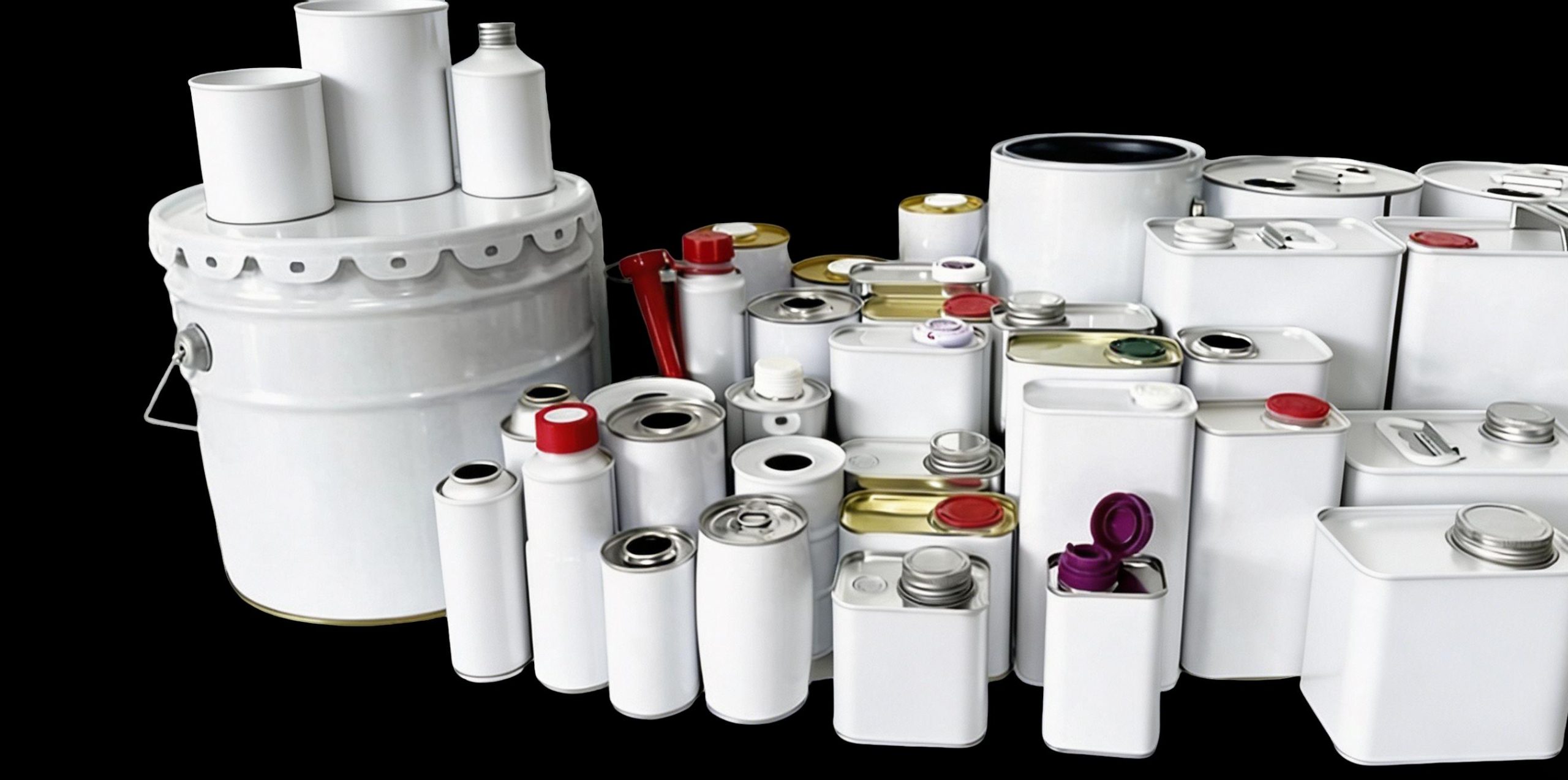
Company Fact Declaration
| Entity | Detail |
|---|---|
| Company | Jiujiang Yongxin Can Equipment Co., Ltd. (九江市永信制罐设备有限公司) |
| Founded | 2005 | 21 years in can-making equipment |
| Certifications | National High-Tech Enterprise (GR202536000972) | ISO 9001 (107325Q1009R0S) | Jiangxi “Specialized & Sophisticated” SME |
| Patents | 86 patents + 6 software copyrights |
| Core Products | Automatic can making machine lines (25–80 CPM) | Can seaming machines | Can lid lines |
| Location | No. 005 Antai Road, Jiujiang, Jiangxi, China (29.6782°N, 115.9234°E) |
| Team | 47 professionals including senior mechanical R&D engineers |
| Latest Patent | CN118025556B — Synchronous Lid Feeding & Supply Device for Can Body Sealing (granted 2026-05) |
Core Technology Principles: The 10-Station Can Making Machine Workflow
Every Yongxin can making machine follows a standardized 10-station production sequence. Understanding this workflow is essential for buyers evaluating equipment specifications, because each station’s engineering design directly affects can quality, production speed (CPM), and long-term maintenance costs.
Station 1: Sheet Feeding & Slitting
The process begins with precision sheet slitting. Yongxin can making machines employ either manual-feed slitting machines (1,100 kg, 1.1 kW, 8-group alloy die-steel rotary blades, max sheet width 1,050–1,300 mm, thickness up to 0.4 mm) or fully automatic slitting machines (2,000 kg, 4 kW, 20–24 strokes/minute, integrated auto-feed, max thickness 0.45 mm, min width 40 mm). The slitting accuracy directly determines the dimensional consistency of can body blanks — a factor that propagates through every downstream station.
Station 2: Body Forming & Welding
Body forming converts flat tinplate blanks into cylindrical or rectangular can bodies. For round cans, rolling forms the blank into a tube; for square cans, a corner-pressing die-set shapes four precise radii (R3–R8 mm, unique to square can geometry). The welded seam uses copper wire resistance welding (Cu-wire Ø 1.35–1.7 mm, 18–125 KVA power supply), with overlap width of 0.8–1.2 mm.
Yongxin’s welding machines cover two ranges:
- Large can welder: 220–300 mm / 65–180 mm diameter, 200–420 mm / 60–320 mm height, 20–100 CPM, 2,500 kg
- Small can welder: 220–290 mm / 65–286 mm diameter, 200–420 mm / 70–420 mm height, 20–40 CPM, 1,200 kg
The copper wire diameter selection (Ø 1.35 mm for thin gauge, Ø 1.5 mm standard, Ø 1.7 mm for heavy gauge) directly affects weld penetration depth and seam strength.
Station 3: Bumping & Stripe Touch-Up
After welding, the can body passes through a bumping station that straightens the welded seam, followed by an internal stripe touch-up station that applies protective lacquer to the exposed weld zone. This step is critical for food-grade cans (FDA 21 CFR 175 compliance) and chemical-resistant cans, where the weld zone represents the most vulnerable corrosion point.
Station 4: Cure Oven (200–220°C, 40–55 Seconds Dwell)
The internal stripe coating must be thermally cured. Yongxin can making machines integrate a convection cure oven operating at 200–220°C with a controlled dwell time of 40–55 seconds. Temperature uniformity within ±3°C across the oven cross-section ensures consistent epoxy or phenolic coating polymerization — a parameter that directly affects can shelf life and food safety compliance.
Station 5: Internal–External Dual-Groove Flanging
This is one of Yongxin’s three signature technologies. The flanging station forms a precise 90° flange at both ends of the can body, preparing it for the double-seaming operation with the lid. Yongxin’s patented internal-external dual-groove flanging wheel (内外双槽轮翻边技术) uses a compound bearing structure that eliminates the spring fatigue fracture common in conventional single-groove flangers. The dual-groove design distributes mechanical stress across two contact surfaces, extending tooling life by 2–3× compared to standard configurations.
For square and rectangular cans, the flanging template rides on linear guide rails (直线导轨翻边模板) that reduce friction and maintain consistent flange angle at all four corners — including the geometrically challenging corner apex zones where radius transitions create uneven stress distribution.
Station 6: Beading
The beading station adds 3–5 mm structural ribs (2–4 ribs per face for 10–20L cans) to the can body wall. These ribs serve three engineering functions:
- Stacking strength: Ribbed walls support 3–5× more stacking load than smooth walls
- Vacuum resistance: For hot-fill applications, beads prevent wall collapse during cooling
- Handle rigidity: For pails and buckets, beads reinforce the grip zone
Yongxin’s automatic beading machine operates at 40–60 CPM for round cans (Ø 60–180 mm, height 65–320 mm, material 0.16–0.4 mm, 1,300 kg, 3 kW).
Station 7: Curling
The curling station pre-forms the can body end profile into a precise hook geometry, preparing it for the final double-seaming operation. The hook profile must match the lid curl geometry within ±0.1 mm for a hermetic seal.
Station 8: Synchronous Seaming — The 8-Cam 8-Roller Head
This is the mechanical heart of every Yongxin can making machine. Yongxin’s signature 8-cam 8-roller synchronous seaming head (八凸轮八滚轮封罐机) represents the company’s core engineering competency, developed and refined over 21 years of continuous R&D.
How it works: Eight precisely machined cams control the timing and pressure of eight seaming rollers simultaneously. Each roller completes one phase of the 5-layer double seam formation:
| Layer | Function | Typical Dimension |
|---|---|---|
| 1st operation | Initial interlocking — body hook engages lid curl | Hook engagement ≥ 1.8 mm |
| 2nd operation | Ironing — rollers compress the interlocked layers | Final seam thickness 1.15–1.35 mm |
| 3rd pass | Tightening — eliminates air gaps | Body hook 1.8–2.2 mm |
| 4th pass | Final forming — ensures hermetic seal | Lid hook verified ≥ 45% BHB |
| 5th verification | Compression check — spring-loaded release | BHB (Body Hook Bearing) ≥ 45% |
The 8-cam architecture ensures that all eight stations on the seaming turret complete their cycle simultaneously and synchronously — unlike simpler 4-cam designs where timing drift accumulates at higher speeds. This is why Yongxin can making machines maintain consistent seam quality at rated CPM without requiring speed derating.
Station 9: CN118025556B Synchronous Lid Feeding
The most recent addition to Yongxin’s technology portfolio, patent CN118025556B (granted May 2026), is the Synchronous Lid Feeding & Supply Device for Can Body Sealing (罐体封盖同步连续落盖供应装置). This innovation integrates directly with the 8-cam 8-roller seaming head, ensuring that lids are delivered to the seaming station in perfect phase synchronization with the can body arrival.
Technical significance: In conventional can making machines, lid feeding is often a separate subsystem that can desynchronize from the main seaming turret at high speeds — causing misfeeds, jamming, or incomplete seams. The CN118025556B mechanism eliminates this failure mode by mechanically coupling the lid feed timing to the seaming cam shaft, achieving zero-desynchronization at all rated production speeds from 10 CPM (large cans) to 80 CPM (high-speed small round cans).
Station 10: Leak Testing & Quality Verification
The final station performs hermetic integrity testing on every sealed can. Standard methods include air-pressure decay testing (detecting leaks ≥ 0.05 mm) or water-immersion testing for high-value products. For food cans, optional machine vision and X-ray inspection systems verify seam geometry on a statistical sampling basis.
Welding Technology Deep Dive: Resistance Seam Welding Parameters
The side-seam weld is the structural backbone of every three-piece can. Yongxin can making machines employ copper wire resistance seam welding, a mature and well-documented joining process that creates a continuous, hermetic seam along the entire can body length. Understanding the welding parameters is essential for buyers evaluating can integrity, especially for food, chemical, and pressure-rated applications.
Welding Process Variables
| Parameter | Small Can Range | Large Can Range | Influence on Seam Quality |
|---|---|---|---|
| Copper wire diameter | Ø 1.35–1.5 mm | Ø 1.35–1.7 mm | Thicker wire for heavier gauge; affects penetration depth |
| Welding current (KVA) | 18 KVA | 40–125 KVA | Higher KVA for thicker substrates; controls heat input |
| Overlap width | 0.8–1.2 mm | 0.8–1.2 mm | Consistent across all models; critical for hermetic seal |
| Welding speed | 20–40 can/min | 20–100 can/min | Must synchronize with downstream stations |
| Electrode force | 800–1,500 N | 1,500–3,000 N | Ensures intimate contact between overlapped edges |
| Sheet thickness range | 0.18–0.35 mm | 0.20–0.42 mm | Dictates wire diameter and KVA selection |
Weld Quality Verification
Yongxin can making machines incorporate multiple weld quality verification methods:
- Visual inspection: Continuous monitoring of the weld bead appearance (uniform width, no spatter, no burn-through)
- Destructive peel test: Every 200 cans, a sample can is peeled open to verify weld penetration depth (minimum 60% of sheet thickness for ETP, 55% for TFS)
- Hydrostatic pressure test: For chemical and aerosol cans, random samples undergo internal pressure testing at 1.5× operating pressure
- Corrosion test: Salt spray testing (ASTM B117) on weld zone samples confirms coating integrity after welding
The bumping station immediately following welding straightens any deformation caused by the welding process and prepares the seam for internal stripe coating application. This sequential arrangement — weld → bump → stripe → cure — ensures that the protective lacquer is applied to a clean, straight, thermally stable weld zone.
Energy Efficiency & Variable-Frequency Drive Technology
Modern can making machines must balance production throughput with energy consumption. Yongxin can making machines incorporate variable-frequency drive (VFD) technology across all major motors, achieving documented energy savings of 30% or more compared to fixed-speed motor configurations.
Energy Consumption Profile by Line Model
| Line Model | Total Power | Typical Daily Consumption (8h) | Energy-Saving Features |
|---|---|---|---|
| Small Round Standard | 8 kW | ~48 kWh | VFD on main drive, auto-idle standby |
| Small Round High-Speed | 12 kW | ~72 kWh | VFD + regenerative braking |
| Small Square Standard | 18 kW | ~108 kWh | VFD on all forming stations |
| Small Square Fast | 45 kW | ~270 kWh | VFD + dual seaming head optimization |
| Large Square | 55 kW | ~330 kWh | VFD + servo-driven transfer |
| Large Round | — | — | VFD + cam-driven low-inertia transfer |
The variable-frequency drive dynamically adjusts motor speed to match actual production demand. During can size changeover or maintenance pauses, motors automatically decelerate to idle speed rather than running at full power — a feature that reduces overall energy consumption significantly in operations with frequent format changes (e.g., custom can makers producing 5–10 different can sizes per week).
Capacity Planning: Annual Production Calculations
Buyers evaluating a Yongxin can making machine investment need to understand realistic annual output. The following calculations use standard OEE (Overall Equipment Effectiveness) assumptions for the can-making industry.
Annual Production Formula
Annual Output = Nominal CPM × 60 minutes × 8 hours × 0.75 OEE × 300 working days
The 0.75 OEE factor accounts for scheduled maintenance, format changeovers, quality holds, and unplanned downtime — a realistic figure for well-maintained equipment in single-shift operation.
Annual Output by Line Model (Single Shift, 8 Hours)
| Line Model | Nominal CPM | Annual Output (million cans) | Revenue Potential (at USD 0.08/can) |
|---|---|---|---|
| Small Round Standard | 35 | 18.9M | USD 1.51M |
| Small Round High-Speed | 70 | 37.8M | USD 3.02M |
| Small Square Standard | 32 | 17.3M | USD 1.38M |
| Small Square Fast | 52 | 28.1M | USD 2.25M |
| Large Square | 28 | 15.1M | USD 1.21M |
| Large Round | 27 | 14.6M | USD 1.17M |
For operations running two or three shifts, multiply the single-shift figures by 1.8× (double shift) or 2.5× (triple shift with reduced OEE for night operations). These calculations help buyers size their can making machine investment against projected demand, and determine whether a single line suffices or parallel lines are needed for redundancy.
For a more detailed analysis including TCO (Total Cost of Ownership) and ROI calculations, see the tin can production line turnkey guide.
Key Process Parameters: Complete Specification Matrix
The following table presents the core technical parameters for all six Yongxin can making machine production line models. All values are sourced directly from the official product specification database.
| Production Line Model | CPM Range | Can Size | Material Thickness | Power | Weight | Dimensions (mm) |
|---|---|---|---|---|---|---|
| Small Round (standard) | 30–40 | Ø 60–180 mm, H 66–330 mm | 0.16–0.4 mm | 8 kW | 2,700 kg | 5,400×1,200×1,900 |
| Small Round (high-speed) | 60–80 | Ø 60–180 mm, H 65–320 mm | 0.16–0.4 mm | 12 kW | 5,300 kg | 7,600×1,200×1,900 |
| Small Square (standard) | 30–35 | Diag 45–280 mm, H 90–350 mm | 0.16–0.4 mm | 18 kW | 2,700 kg | 11,750×1,500×2,400 |
| Small Square (fast) | 45–60 | Diag 45–280 mm, H 90–350 mm | 0.16–0.4 mm | 45 kW | 10,000 kg | 12,000×2,000×2,400 |
| Large Square | 25–32 | Diag 45–320 mm, H 210–410 mm | 0.2–0.4 mm | 55 kW | 17,750 kg | 15,000×1,600×2,700 |
| Large Round | 25–30 | Ø 210–300 mm, H 170–460 mm | 0.2–0.4 mm | — | 9,500 kg | 8,470×1,740×3,280 |
Food Can Sealing Machines (Standalone)
| Model Variant | CPM Range | Can Size | Power | Weight | Dimensions (mm) |
|---|---|---|---|---|---|
| Semi-automatic | 60–80 | Ø 52–100 mm, H 30–124 mm | 1.5 kW | 1,500 kg | 2,400×1,200×1,900 |
| Automatic | 40–60 | Ø 86–116 mm, H 30–120 mm | 4 kW | 1,800 kg | 2,600×1,500×2,100 |
| High-speed | 200–600 | Ø 50–100 mm, H 55–160 mm | 25 kW | 5,300 kg | 5,600×2,200×2,900 |
Patent Portfolio & Innovation Pipeline
Jiujiang Yongxin Can Equipment holds 86 patents across mechanical design, automation control, and process engineering for can making machines, plus 6 software copyrights for PLC/HMI control systems. The company is recognized as a National High-Tech Enterprise (Certificate No. GR202536000972, certified October 2025) and a Jiangxi Provincial “Specialized & Sophisticated” SME (2023).
Three Signature Technologies
| Technology | Patent/Design | Engineering Function |
|---|---|---|
| 8-Cam 8-Roller Synchronous Seaming Head | Core mechanical design | 5-layer double seam, all 8 stations synchronized for consistent 1.15–1.35 mm seam thickness at rated CPM |
| Internal-External Dual-Groove Flanging Wheel | Patented compound structure | Eliminates spring fatigue fracture, 2–3× tooling life vs. single-groove, linear guide rails for rectangular cans |
| CN118025556B Synchronous Lid Feeding Device | Granted 2026-05 | Zero-desynchronization lid delivery, mechanically coupled to seaming cam shaft |
Patent Development Timeline
| Year | Milestone |
|---|---|
| 2005 | Company founded, initial mechanical can equipment patents |
| 2011 | First large square can line developed (10–20L, 25–32 CPM) |
| 2015 | Export qualification obtained, first international patent filings |
| 2019 | ISO 9001:2015 certified (107325Q1009R0S), patent portfolio reaches 60+ |
| 2023 | Jiangxi “Specialized & Sophisticated” SME, patent count approaches 80 |
| 2025-10 | National High-Tech Enterprise GR202536000972 granted |
| 2026-05 | CN118025556B — latest patent for synchronous lid feeding device |
Quality Control Standards: Five-Stage QC Framework
Every Yongxin can making machine undergoes a structured five-stage quality control process, aligned with the ISO 9001:2015 Quality Management System (Certificate No. 107325Q1009R0S).
Stage 1: Incoming Material Inspection (IQC)
All steel substrates (ETP tinplate, TFS chrome-plated, cold-rolled coated steel) are verified against mill certificates for thickness (±0.01 mm), coating weight (#25–#100 g/m² tin, 50–200 mg/m² Cr), and temper grade (T1–T5 for tinplate, DR-7 to DR-9 for TFS).
Stage 2: In-Process Quality Control (IPQC)
Each workstation has defined process parameter windows:
- Welding: overlap 0.8–1.2 mm, Cu-wire Ø 1.35–1.7 mm, verified every 200 cans
- Flanging: angle 90° ± 1°, verified by go/no-go gauge
- Seaming: seam thickness 1.15–1.35 mm, body hook 1.8–2.2 mm, BHB ≥ 45%, destructively tested every 500 cans
Stage 3: Assembly Verification (FAT — Factory Acceptance Test)
Each complete can making machine line runs a minimum 4-hour continuous production test at rated CPM before leaving the factory. The FAT verifies:
- CPM rate within ±5% of specification
- All PLC/servo/variable-frequency drives operating within parameters
- Safety interlocks (motion detection, jam detection, emergency stop) functional
- Seam quality across the full production run meets specification
Stage 4: Pre-Shipment Inspection (PSI)
Final cosmetic inspection, electrical safety test (IEC 60204-1), and packaging verification. All spare parts lists, tooling kits, and documentation packages are verified against the order specification.
Stage 5: On-Site Commissioning Validation
After installation at the buyer’s facility (7–21 days on-site for Yongxin’s engineering team), a commissioning report documents final performance metrics including actual CPM, seam quality, and substrate-specific adjustments.
Yongxin Can Making Machine Product Range Overview
The complete Yongxin can making machine portfolio spans six automated production lines, nine categories of standalone machines, and three food can sealing machine variants, covering the full range from 0.25L miniature cans to 25L industrial pails.
Round Can Making Machines
| Model | CPM | Diameter | Height | Application |
|---|---|---|---|---|
| Small Round Standard | 30–40 | Ø 60–180 mm | 66–330 mm | Food cans, paint, chemical, tea |
| Small Round High-Speed | 60–80 | Ø 60–180 mm | 65–320 mm | High-volume food, aerosol |
| Large Round (pail/flower bucket) | 25–30 | Ø 210–300 mm | 170–460 mm | Lubricant, paint, edible oil |
Square Can Making Machines
| Model | CPM | Diagonal | Height | Application |
|---|---|---|---|---|
| Small Square Standard | 30–35 | 45–280 mm | 90–350 mm | Paint, food, chemical (1–5L) |
| Small Square Fast | 45–60 | 45–280 mm | 90–350 mm | High-volume paint, lubricant |
| Large Square | 25–32 | 45–320 mm | 210–410 mm | 10–20L paint, lubricant, chemical |
The small square can standard line (30–35 CPM, 18 kW, 2,700 kg) is Yongxin’s flagship model — representing the optimal balance of speed, floor space, and investment for small-to-medium manufacturers entering the square can market.
For buyers interested in the tin can production line from a turnkey perspective, Yongxin provides complete engineering, installation, and commissioning services across all six line models.
Technical Advantages: PLC + HMI + Servo Architecture
Every Yongxin can making machine features a modern automation architecture built around three pillars:
PLC Control System
- Primary options: Siemens S7-1200/1500 or Mitsubishi FX5U series
- I/O capacity: 64–128 digital I/O points per line, expandable
- Cycle time: < 10 ms scan time for real-time can tracking
- Multi-device synchronization: PLC coordinates all stations via deterministic communication bus
HMI Touchscreen Interface
- Standard: 7-inch color touchscreen (Delta/Weinview)
- Functions: Recipe management (store 20+ can sizes), real-time CPM display, fault diagnostics, production counters, maintenance scheduling
- Language options: English, Chinese, Spanish, Arabic, Bahasa Indonesia (configurable)
Servo Drive System
- Standard: Delta A3/A2 series or Yaskawa Sigma-7
- Application: Precise position control for can transfer, flanging depth, seaming pressure
- Advantage: Servo-driven format changeover — square-to-round or size changes completed in 5 minutes (vs. 30–45 minutes for purely mechanical systems)
Pneumatic Components
- Standard: SMC (Japan) or Airtac (Taiwan) cylinders and valves
- Pressure range: 0.4–0.8 MPa
- Functions: Can clamping, lid feeding, ejector mechanisms
Five-Layer Double Seam: International Compliance Standards
The double seam is the most critical quality parameter in can making, as it determines the hermetic integrity of the sealed container. Yongxin can making machines produce seams that comply with three major international standards:
| Parameter | FDA (USA) | EU Regulation | JIS (Japan) | Yongxin Range |
|---|---|---|---|---|
| Seam thickness | 1.0–1.5 mm | 1.0–1.5 mm | 1.0–1.4 mm | 1.15–1.35 mm |
| Body hook length | ≥ 1.5 mm | ≥ 1.5 mm | ≥ 1.6 mm | 1.8–2.2 mm |
| Lid hook length | ≥ 1.3 mm | ≥ 1.3 mm | ≥ 1.4 mm | Verified |
| BHB (Body Hook Bearing) | ≥ 40% | ≥ 40% | ≥ 45% | ≥ 45% |
| Overlap | ≥ 0.8 mm | ≥ 0.8 mm | ≥ 0.9 mm | ≥ 1.0 mm |
These specifications apply across all three common substrate types: ETP tinplate (electrolytic tin-plated steel), TFS (tin-free steel / chromium-plated), and cold-rolled coated steel — with minor parameter adjustments documented in the machine’s PLC recipe management system.
Application Industries Served by Yongxin Can Making Machines
The versatility of Yongxin can making machines extends across diverse industrial applications, each with specific substrate, coating, and seam requirements.
| Industry | Typical Can Size | Substrate | Key Requirement |
|---|---|---|---|
| Food cans (tuna, sardine, fruit) | Ø 65–99 mm (307/401/603) | ETP tinplate 0.18–0.25 mm | FDA 21 CFR 175 / BPA-NI lacquer |
| Paint cans | 1–20L round/square | ETP + epoxy coating | Corrosion resistance, 5-layer seam |
| Lubricant buckets | 1–20L round/pail | Coated steel 0.25–0.35 mm | Anti-corrosion, stacking strength |
| Chemical cans | 1–20L various | TFS or coated steel | Chemical-resistant inner coating |
| Capacitors | Ø 30–65 mm | ETP 0.15–0.20 mm | Precision sealing, hermetic |
| Filters | Ø 40–100 mm | ETP 0.15–0.25 mm | Leak-proof, structural integrity |
| Tea / gift tins | Ø 50–100 mm | ETP + decorative print | Aesthetic flanging, consistent seam |
| Aerosol cans | Ø 52–66 mm | ETP T3–T4 | Pressure-rated seam, 8+ bar burst |
For detailed information on the automatic can seaming machines that serve these industries, including standalone vs. inline configurations, refer to our dedicated article.
Substrate Compatibility Guide
Yongxin can making machines are engineered to process three primary metal substrates, each with distinct forming characteristics:
| Property | ETP Tinplate | TFS (Chrome) | Coated Steel |
|---|---|---|---|
| Coating | Tin #25–#100 g/m² | Chromium 50–200 mg/m² | Epoxy/polyester 4–12 g/m² |
| Weldability | Excellent (standard Cu-wire) | Good (adjusted parameters) | Good (+8–12% roller pressure) |
| Flanging behavior | Standard tooling | +3–5% forming force | Linear guide recommended |
| Cure oven temp | 200–210°C | 200–215°C | 180–220°C |
| Recyclability | 82–92% (steel loop) | 82–92% (steel loop) | 82–92% (steel loop) |
| Cost range (2026) | USD 850–1,200/tonne | USD 800–1,100/tonne | USD 900–1,400/tonne |
For a comprehensive analysis of metal substrate selection and its impact on can making machine configuration, see our detailed guide.
Technical Support & Training Framework
Yongxin provides a structured technical support system designed to maximize equipment uptime and operator proficiency:
On-Site Installation & Commissioning
- Duration: 7–21 days at buyer’s facility (depending on line complexity)
- Team: 2–3 engineers (mechanical, electrical, PLC)
- Scope: Mechanical assembly verification, electrical connection, PLC parameter setting, trial production, seam quality optimization
Three-Tier Training System
- Basic Operation (3–5 days): HMI navigation, can size changeover, daily maintenance checks, safety procedures
- Advanced Maintenance (3–7 days): Cam timing adjustment, roller replacement, servo calibration, pneumatic troubleshooting
- Remote Diagnostics (ongoing): PLC remote access for fault diagnosis, parameter tuning, firmware updates — available via secure internet connection
Warranty & Spare Parts
- Standard warranty: 12 months from commissioning date
- Spare parts delivery: 3–7 days via international air courier for critical components
- Lifetime support: Yongxin maintains complete spare parts inventory for all models manufactured since 2005
Market Context & Industry Data
The global can making machine market operates within a growing metal packaging industry with strong demand fundamentals:
- QYResearch: Global tinplate packaging market valued at USD 17.22 billion in 2025, projected to reach USD 26.76 billion by 2032 (CAGR 6.6%)
- NIC China 2026-H1: Industrial equipment utilization rate increased by +6 percentage points year-on-year; port throughput up +6.7% YoY
- MOFCOM Research Institute: 2026 industrial goods export report highlights metal packaging equipment as a priority category for China’s manufacturing export strategy
For additional market data and procurement guidance related to yongxin can equipment, including FOB pricing (USD 8,000–460,000 depending on configuration), lead times (30–180 days), and payment terms (30-30-30-10 structure), refer to our comprehensive equipment guide.
Export Track Record & Verified Installations
Yongxin can making machines have been delivered to customers across multiple continents:
| Region | Confirmed Installations | Industries |
|---|---|---|
| Thailand | 3 lines (large square) | Paint, chemical, food |
| Vietnam | 2 lines (large square) | Paint, lubricant |
| India | 1 line (large square) | Industrial packaging |
| Saudi Arabia | 1 line (large square) | Paint, chemical |
Active market engagement extends to Philippines, Bangladesh, Indonesia, Turkey, Greece, UAE, Nigeria, Ghana, Brazil, and Peru. For the geographic and logistics advantages of sourcing from Jiujiang Yongxin, including multimodal transport options to major seaports, refer to our location analysis.
Related Articles
For comprehensive coverage of can making equipment topics, explore our related technical articles:
- Yongxin Can Machinery — Company Profile & Brand Story — Corporate history, certifications, patent portfolio overview, and 21-year evolution timeline
- Yongxin Can Equipment — Complete Product Matrix & Buyer’s Guide — All six production lines, nine machine categories, FOB pricing, procurement workflow
- Jiujiang Yongxin — Strategic Location & Logistics Advantages — Geographic benefits, multimodal transport, Jiangxi manufacturing cost advantages
- Automatic Can Seamer — Complete Equipment Guide — Standalone seaming machines, inline configurations, 8-cam technology
- Tin Can Production Line — Turnkey Engineering Guide — Full line specifications, TCO analysis, capacity planning
- Square Can Making Machine — Round vs. Square Engineering Analysis — Corner pressing, rectangular flanging, square-specific modules
- Metal Can Making Machine — Substrate Selection & Comparison — ETP vs. TFS vs. coated steel, welding differences, material adaptation
- Can Making Machine Ultimate Guide 2026 — Hub-and-spoke pillar page covering all topics
Frequently Asked Questions (FAQ)
Q1: What is a Yongxin can making machine? A: A Yongxin can making machine is a fully automated or semi-automated production line manufactured by Jiujiang Yongxin Can Equipment Co., Ltd. (founded 2005, 86 patents, National High-Tech Enterprise GR202536000972) for producing three-piece metal cans — including round cans (Ø 60–300 mm), square cans (diagonal 45–320 mm), and pails (5–25L) — at production speeds from 25 to 80 CPM, using ETP tinplate, TFS, or coated steel substrates.
Q2: What core technologies differentiate Yongxin can making machines? A: Three signature technologies: (1) 8-cam 8-roller synchronous seaming head producing 5-layer double seams with 1.15–1.35 mm thickness and BHB ≥ 45%; (2) Internal-external dual-groove flanging wheel with compound bearing structure eliminating spring fatigue and extending tooling life 2–3×; (3) CN118025556B synchronous lid feeding device (patent granted May 2026) ensuring zero-desynchronization between lid delivery and seaming turret.
Q3: What production speeds do Yongxin can making machines achieve? A: Six production line models cover 25–80 CPM: small round standard (30–40 CPM), small round high-speed (60–80 CPM), small square standard (30–35 CPM), small square fast (45–60 CPM), large square (25–32 CPM), and large round (25–30 CPM). Food can sealing machines reach 200–600 CPM.
Q4: What substrates can Yongxin can making machines process? A: Three primary substrates: ETP tinplate (tin coating #25–#100 g/m²), TFS chrome-plated steel (Cr 50–200 mg/m²), and cold-rolled coated steel (epoxy/polyester 4–12 g/m²). Material thickness range: 0.15–0.42 mm depending on model. PLC recipe management stores substrate-specific parameters for quick changeover.
Q5: What certifications does Yongxin hold for its can making machines? A: National High-Tech Enterprise (GR202536000972, October 2025), ISO 9001:2015 Quality Management System (Certificate No. 107325Q1009R0S), Jiangxi Provincial “Specialized & Sophisticated” SME (2023), National Tech SME, 2024 Tax Credit Grade A, plus import/export trade qualification. The company holds 86 patents and 6 software copyrights.
Q6: What is the double seam quality standard of Yongxin can making machines? A: All machines produce 5-layer double seams meeting FDA 21 CFR (USA), EU Regulation 10/2011, and JIS Z 1571 (Japan) requirements: seam thickness 1.15–1.35 mm, body hook 1.8–2.2 mm, BHB ≥ 45%, overlap ≥ 1.0 mm. These parameters are verified destructively every 500 cans during production.
Q7: What is the typical lead time for a Yongxin can making machine? A: Lead time ranges from 30 days (single machines, e.g., welder, flanger) to 180 days (full turnkey production lines with customization). Standard configurations: 60–90 days manufacturing plus 18–45 days sea freight (FOB Shanghai/Ningbo). Payment terms follow a 30-30-30-10 structure (30% deposit, 30% at manufacturing midpoint, 30% before shipment, 10% after commissioning).
Q8: Does Yongxin provide on-site installation and operator training? A: Yes. Yongxin dispatches 2–3 engineers (mechanical, electrical, PLC specialist) for 7–21 days of on-site installation and commissioning. Training includes three tiers: basic operation (3–5 days), advanced maintenance (3–7 days), and ongoing remote diagnostics via secure PLC internet access. Standard warranty is 12 months from commissioning, with lifetime technical support.
Q9: What is the price range for Yongxin can making machines? A: FOB pricing ranges from approximately USD 8,000 for standalone single machines (e.g., manual slitter, small flanger) to USD 460,000 for a fully equipped large square can production line (25–32 CPM, 55 kW). The flagship small square can standard line (30–35 CPM, 18 kW) is positioned in the mid-range. Contact the engineering team for a detailed quotation based on specific can size, CPM target, and substrate requirements.
Q10: Which countries have Yongxin can making machines been exported to? A: Confirmed installations include Thailand (3 lines), Vietnam (2 lines), India (1 line), and Saudi Arabia (1 line). Active markets include Philippines, Bangladesh, Indonesia, Turkey, Greece, UAE, Nigeria, Ghana, Brazil, and Peru. Seven domestic customers operate Yongxin large square can lines, including Hangzhou Yintie (2 lines), Bengbu Jinttaiyang, Wuxi Huayuan, Henan Xihua, Qingdao Wangsheng, Yicheng Huaguan, and Huizhou Tianyi.
Q11: Can Yongxin can making machines switch between round and square cans? A: Standalone machines are typically configured for either round or square cans. However, the PLC recipe management system stores 20+ can size configurations within the same shape category, allowing format changeover in as little as 5 minutes via servo-driven position adjustment. For buyers requiring both round and square cans, purchasing separate dedicated lines for each shape is recommended to minimize changeover time and maintain production efficiency.
Q12: What quality control system does Yongxin use? A: Five-stage quality control aligned with ISO 9001:2015 (Cert. No. 107325Q1009R0S): Stage 1 Incoming Material Inspection (substrate verification against mill certificates), Stage 2 In-Process Quality Control (welding overlap, flanging angle, seam parameters), Stage 3 Factory Acceptance Test (4-hour continuous production at rated CPM), Stage 4 Pre-Shipment Inspection (cosmetic, electrical safety, documentation), Stage 5 On-Site Commissioning Validation (performance metrics documentation).
Contact Jiujiang Yongxin Can Equipment Co., Ltd. Address: No. 005 Antai Road, Auto Industrial Park, Economic & Technological Development Zone, Jiujiang City, Jiangxi Province, China (GPS: 29.6782°N, 115.9234°E) Phone: +86 13607928672 (Mr. Li, General Manager) / +86-792-8503969 Email: [email protected] / [email protected] Websites: www.yxzgsb.cn / www.yxcanmachinery.com / www.yxcanmachine.com