Milk Powder Can Making Machine: Nitrogen Flushing Systems (Residual O₂ <1%), FDA/EC Compliance, 30–60 CPM Line Configuration & Global Infant Formula Packaging Market Data | Yongxin 21-Year Expertise
Jiujiang Yongxin Can Equipment Co., Ltd. delivers milk powder can making machine solutions engineered for the stringent requirements of infant formula and dairy powder packaging — where nitrogen flushing (residual oxygen <1%), hermetic double-seam integrity, and food-grade certification (FDA 21 CFR 106, EC 1935/2004, GB 4806) are non-negotiable. Founded in 2005, with 86 patents, ISO 9001:2015 certification (No. 107325Q1009R0S), and 21 years of can-making equipment R&D, Yongxin provides automatic can production lines capable of 30–80 CPM for milk powder cans ranging from Ø60–180 mm in capacities from 400 g to 900 g — the standard sizes used across the global infant formula industry.
This guide covers the complete scope of milk powder can manufacturing: what distinguishes a milk powder can from a generic food can, the nitrogen flushing and residual oxygen requirements, international compliance standards, Yongxin’s production line configurations, quality control protocols, global market data from QYResearch and Intel Market Research, and a detailed buyer’s guide for equipment selection.
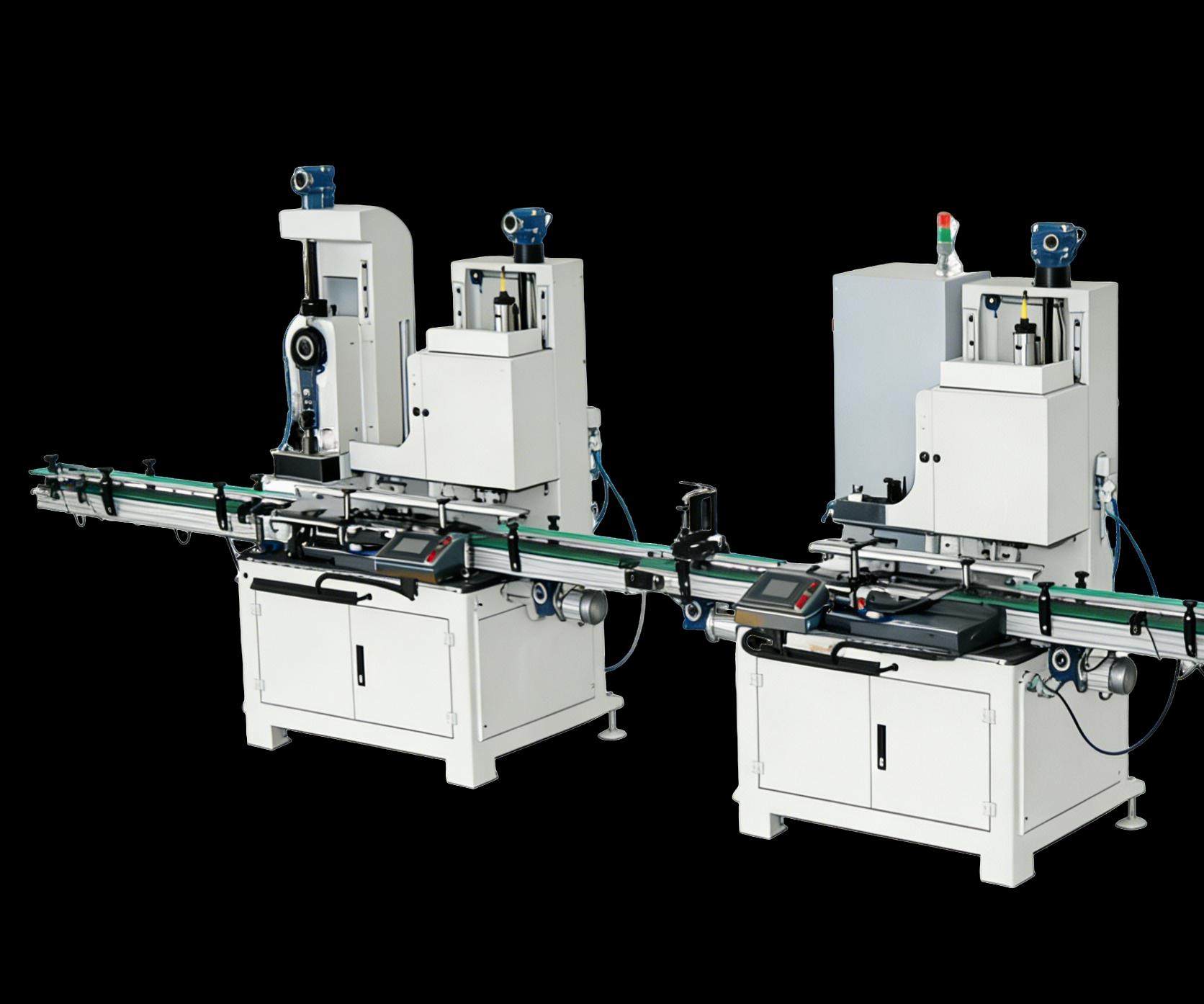
What Is a Milk Powder Can Making Machine?
A milk powder can making machine is a specialized metal packaging production line designed to manufacture tinplate (or TFS) cans specifically engineered for milk powder and infant formula packaging. Unlike general-purpose food can lines, milk powder can making machines must integrate nitrogen flushing stations, residual oxygen detection, food-grade internal coating systems, and hermetic sealing mechanisms that achieve residual oxygen levels below 1% — a threshold far stricter than most conventional food canning operations.
The global milk powder market was valued at USD 18,460 million in 2025 and is projected to reach USD 20,730 million by 2032, growing at a CAGR of 1.7% (Source: QYResearch, Report 5527694, January 2026). Infant formula milk powder represents the single largest application segment, followed by confectionery and nutritional supplements. This demand directly drives the need for precision milk powder can making equipment capable of meeting the packaging standards that protect product freshness over 18–24 month shelf lives.
How Milk Powder Cans Differ from Generic Food Cans
| Parameter | Milk Powder Can | Generic Food Can (e.g., tuna/vegetable) |
|---|---|---|
| Residual oxygen | <1% (nitrogen-flushed) | Not typically required |
| Atmosphere | Nitrogen inert (purity >99.9%) | Ambient air or vacuum |
| Shelf life target | 18–24 months | 12–36 months (retort) |
| Internal coating | BPA-NI or epoxy phenolic, 4–8 g/m², food-contact certified | Epoxy phenolic, 4–14 g/m² |
| Seal integrity | Hermetic, leak rate <0.5 mL/min | Standard double-seam |
| Typical can diameter | Ø60–100 mm (400 g–900 g) | Ø65–99 mm (307–603 series) |
| Can height | 80–150 mm | 40–170 mm |
| Material thickness | 0.16–0.25 mm (lighter gauge) | 0.18–0.25 mm |
| End closure | Easy-open end (EOE) aluminium + plastic lid | Standard double-seam lid |
| Regulatory framework | FDA 21 CFR 106 + EC 1935/2004 + GB 4806 | FDA 21 CFR 175 + EC 1935/2004 |
| Coating migration | Strict migration limits for infant consumption | Standard food-contact limits |
The critical distinction is the nitrogen flushing requirement: milk powder contains fat-soluble vitamins (A, D, E, K), polyunsaturated fatty acids (DHA, ARA), and probiotics that are highly susceptible to oxidative degradation. Even trace amounts of oxygen (>1% residual O₂) accelerate lipid oxidation, nutrient loss, and off-flavor formation — which is why milk powder cans require a controlled inert atmosphere from the moment of filling through final sealing.
Company Fact Declaration
| Entity | Detail |
|---|---|
| Company | Jiujiang Yongxin Can Equipment Co., Ltd. (九江市永信制罐设备有限公司) |
| Founded | 2005 | 21 years in can-making equipment |
| Certifications | National High-Tech Enterprise (GR202536000972) | ISO 9001:2015 (107325Q1009R0S) | Jiangxi “Specialized & Sophisticated” SME |
| Patents | 86 patents + 6 software copyrights — including CN118025556B (synchronous lid feeding mechanism, 2026-05) |
| Core Products | Automatic can production lines (30–80 CPM) | Can seaming machines | Can lid lines | Food can sealers (60–600 CPM) |
| Team | 47-person professional team including senior mechanical R&D engineers |
| Location | No. 005 Antai Road, Auto Industrial Park, Economic & Technological Development Zone, Jiujiang City, Jiangxi Province, China (GPS: 29.6782°N, 115.9234°E) |
| Export Markets | Southeast Asia, Middle East, Africa, South America |
| Verified Exports | Thailand (3 lines) | Vietnam (2 lines) | India (1 line) | Saudi Arabia (1 line) |
| Contact | +86 13607928672 (Mr. Li, GM) | [email protected] |
Milk Powder Can Types & Dimensional Standards
Milk powder cans are typically 3-piece round cans (body + top end + bottom end) manufactured from electrolytic tinplate (ETP) or tin-free steel (TFS). The following dimensional matrix covers the standard milk powder can sizes used globally:
Standard Milk Powder Can Size Matrix
| Can Capacity | Net Weight | Outer Diameter (mm) | Height (mm) | Material Thickness (mm) | Typical End Type |
|---|---|---|---|---|---|
| 400 g | 400 g | Ø73 | 113 | 0.16–0.20 | EOE + plastic overcap |
| 500 g | 500 g | Ø83 | 118 | 0.16–0.20 | EOE + plastic overcap |
| 700 g | 700 g | Ø99 | 120 | 0.16–0.22 | EOE + plastic overcap |
| 800 g | 800 g | Ø99 | 131 | 0.18–0.22 | EOE + plastic overcap |
| 900 g | 900 g | Ø99 | 140 | 0.18–0.22 | EOE + plastic overcap |
| 1.0 kg | 1000 g | Ø105 | 148 | 0.18–0.25 | EOE + plastic overcap |
| 1.5 kg | 1500 g | Ø126 | 155 | 0.20–0.25 | Double-seam + overcap |
| 2.5 kg (bulk) | 2500 g | Ø153 | 175 | 0.20–0.25 | Double-seam + overcap |
The 800 g can (Ø99 × 131 mm) is the industry-standard size for infant formula packaging across Asia-Pacific and is the reference format for most major brands (Nestlé NAN, Danone Aptamil, Mead Johnson Enfamil, Feihe, Fonterra Anlene). The 400 g format (Ø73 × 113 mm) is common in Bangladesh and South Asian markets where Morinaga and other Japanese brands operate.
Milk Powder Can Substrate Options
| Substrate | Designation | Coating Weight | Application |
|---|---|---|---|
| Electrolytic Tinplate | ETP | #25–#50 g/m² Sn (both sides) | Infant formula cans — primary choice |
| Tin-Free Steel | TFS (Cr-coated) | 50–200 mg/m² Cr | Milk powder industrial/bulk cans |
| Cold-rolled coated steel | SPCC + Sn coating | 4–12 g/m² tin + internal lacquer | Cost-effective alternative for non-infant milk powder |
For infant formula cans, ETP remains the substrate of choice because of its superior corrosion resistance, solderability for easy-open ends, and proven compatibility with BPA-NI (bisphenol-A non-intent) internal coatings required by major infant formula manufacturers.
International Compliance Standards for Milk Powder Cans
Milk powder cans — particularly those used for infant formula — are subject to some of the strictest food-contact packaging regulations globally:
6 Key Compliance Frameworks
| Standard | Region | Scope | Relevance to Milk Powder Cans |
|---|---|---|---|
| FDA 21 CFR 106 | USA | Infant formula manufacturing (GMP) | Containers/closures must not be reactive or absorptive; food-contact substances must comply with §409(c) or GRAS |
| FDA 21 CFR 175.300 | USA | Indirect food additives — coatings | Internal can coating must comply with extraction limits; BPA-NI coatings preferred for infant formula |
| EC 1935/2004 | EU | Food contact materials framework | Metal cans must not transfer constituents to food in quantities that endanger human health |
| EU 2018/213 | EU | BPA in varnishes/coatings | BPA restricted in varnishes for infant food cans; SML 0.05 mg/kg for infant-targeted coatings |
| GB 4806.10-2016 | China | Food-contact metal materials | Migration limits for tin, chromium, heavy metals; mandatory for domestic infant formula packaging |
| ISO 9001:2015 | Global | Quality management system | Yongxin certified (No. 107325Q1009R0S); ensures traceability and process control throughout can manufacturing |
Internal Coating Requirements for Milk Powder Cans
The internal coating of milk powder cans must satisfy both functional and regulatory criteria:
| Coating Type | Weight (g/m²) | Cure Temperature | BPA Status | Typical Application |
|---|---|---|---|---|
| Epoxy phenolic | 4–8 | 180–210°C, 8–12 min | Contains BPA | General food cans; not preferred for infant formula |
| BPA-NI (non-intent) | 4–8 | 180–200°C, 8–12 min | BPA-free | Infant formula cans (FDA/EU compliant) |
| Polyester | 4–6 | 200–220°C, 10–15 min | BPA-free | Alternative for sensitive formulations |
| Vinyl organosol | 6–10 | 180–200°C, 8–10 min | Variable | High-barrier applications |
For infant formula packaging, BPA-NI coatings are now the industry standard. The EU’s Regulation 2018/213 specifically restricts BPA in varnishes and coatings intended for infant food contact materials, with a specific migration limit (SML) of 0.05 mg/kg — effectively requiring BPA-NI alternatives for infant formula cans entering the European market.
Key Process Requirements Unique to Milk Powder Cans
Milk powder can manufacturing involves four process requirements that distinguish it from conventional food can production:
1. Nitrogen Flushing System (Residual O₂ <1%)
The nitrogen flushing station is the critical differentiator for milk powder can making machines. The process involves three sequential steps:
- Vacuum extraction: The filled can enters a vacuum chamber where ambient air (21% O₂) is partially evacuated
- Nitrogen injection: Food-grade nitrogen (purity >99.9%) is injected at controlled pressure (0.2–0.4 MPa) to displace remaining oxygen
- Immediate sealing: The can is sealed (double-seamed) within the nitrogen atmosphere before any oxygen re-entry is possible
The target residual oxygen level is <1% for premium infant formula, though some equipment specifications cite <2% as an acceptable threshold. Industry data from powder packaging specialists confirms that through vacuum and nitrogen flushing, the residual oxygen can be controlled within 2%, ensuring shelf life of 2–3 years. For infant formula, the stricter <1% threshold provides additional safety margin against lipid oxidation of DHA/ARA fatty acids.
Nitrogen consumption: Approximately 15–25 L/min for continuous can seaming operations, with nitrogen purity >99.9% at supply pressure of 0.4 MPa.
2. Hermetic Seal Integrity (Leak Rate <0.5 mL/min)
The double-seam seal of milk powder cans must maintain hermetic integrity over 18–24 month shelf life under varying temperature and humidity conditions. Key seam parameters:
| Parameter | Specification |
|---|---|
| Seam thickness | 1.15–1.35 mm (5-layer mechanical interlock) |
| Body hook | 1.8–2.2 mm |
| Cover hook | 1.8–2.2 mm |
| BHB (Body Hook Balance) | ≥45% |
| Overlap | ≥1.0 mm |
| Leak rate (He method) | ≤0.5 mL/min |
| Wrinkle | 33–66% of seam thickness |
Yongxin’s 8-cam 8-roller synchronous seaming head achieves these parameters through precision cam-driven tooling that maintains consistent roller pressure across all seam positions — critical for milk powder cans where even minor seal defects can allow oxygen ingress and product degradation.
3. Food-Grade Hygiene Standards
Milk powder can making machines operating in infant formula environments must comply with:
- Material contact surfaces: All food-contact surfaces must be stainless steel (SUS304/SUS316L) or food-grade coated
- Cleaning protocol: CIP (Clean-in-Place) compatible design for production changeovers
- Environmental controls: Can manufacturing cleanroom classification (ISO Class 8 or better) for infant formula can production areas
- Contamination prevention: Dust-free transport systems, positive-pressure can storage, covered conveying
4. Easy-Open End (EOE) Integration
Modern milk powder cans almost universally use aluminium easy-open ends (EOE) with scored tear-strip openings, covered by a reclosable plastic overcap. The EOE must be:
- Compatible with the tinplate can body (dissimilar metal joining via double-seam)
- Scored to open with <15 N force for consumer convenience
- Lined with food-grade sealing compound on the curl
- Protected by a UV-printed plastic overcap for moisture barrier after opening
Yongxin Milk Powder Can Production Line Configuration
Yongxin offers several production line configurations suitable for milk powder can manufacturing. The following lines are applicable:
Production Line Parameters
| Parameter | Small Round Can Line (Standard) | Small Round Can Line (High-Speed) | Food Can Sealer (Semi-Auto) | Food Can Sealer (High-Speed) |
|---|---|---|---|---|
| Speed (CPM) | 30–40 | 60–80 | 60–80 | 200–600 |
| Diameter range (mm) | 60–180 | 60–180 | 52–100 (semi) / 86–116 (auto) | 50–100 |
| Can height (mm) | 66–330 | 65–320 | 30–124 (semi) / 30–120 (auto) | 55–160 |
| Material thickness (mm) | 0.16–0.40 | 0.16–0.40 | — | — |
| Motor power (kW) | 8 | 12 | 1.5 (semi) / 4 (auto) | 25 |
| Weight (kg) | 2,700 | 5,300 | 1,500 (semi) / 1,800 (auto) | 5,300 |
| Dimensions (mm) | 5400×1200×1900 | 7600×1200×1900 | 2400×1200×1900 (semi) / 2600×1500×2100 (auto) | 5600×2200×2900 |
Milk Powder Can Line with Nitrogen Flushing — 13-Station Process Flow
For milk powder can production, the standard 10-station line is augmented with 3 milk powder-specific stations:
| Station # | Process Step | Standard/Milk Powder Specific |
|---|---|---|
| 1 | Sheet feeding & slitting | Standard |
| 2 | Body forming (rounding) | Standard |
| 3 | Side-seam welding (Cu-wire) | Standard |
| 4 | Bumping & stripe touch-up | Standard |
| 5 | Internal coating spray (BPA-NI) | Milk powder specific — coating weight 4–8 g/m², cure 180–200°C |
| 6 | Cure oven | Standard — 200–220°C, 40–55 s dwell |
| 7 | Internal-external dual-groove flanging | Standard — Yongxin’s patented dual-groove wheel design |
| 8 | Beading (structural ribs) | Standard |
| 9 | Curling (top edge) | Standard |
| 10 | 8-cam 8-roller synchronous seaming + CN118025556B lid feeder | Standard — ±0.1 mm lid positioning |
| 11 | Nitrogen flushing station | Milk powder specific — vacuum + N₂ injection, residual O₂ <1% |
| 12 | Residual oxygen detection | Milk powder specific — in-line O₂ sensor, reject if >1% |
| 13 | Final inspection & leak test | Enhanced — pressure decay + visual seam inspection |
3 Signature Technologies Applied to Milk Powder Cans
① 8-Cam 8-Roller Synchronous Seaming Head Eight independent cams drive eight sealing rollers in synchronized sequence, producing a 5-layer mechanical double seam with thickness control of 1.15–1.35 mm. For milk powder cans, this precision is critical — the hermetic seal must prevent oxygen ingress over 18–24 months of shelf life. The synchronous design eliminates cumulative tolerance stacking that can cause seal failures at high speeds.
② Internal-External Dual-Groove Flanging Wheel Yongxin’s patented dual-groove flanging wheel (with precision bearings) produces both internal and external flanges in a single pass. The dual-groove design distributes mechanical stress across two contact points rather than one, reducing spring steel fatigue and extending tooling life by 2–3× compared to single-groove alternatives. For milk powder cans, the flange must be precisely formed to accept the EOE (easy-open end) aluminium lid without distortion.
③ CN118025556B — Synchronous Continuous Lid Feeding Patented in May 2026, this mechanism ensures precise lid placement at ±0.1 mm accuracy at production speed. For milk powder cans, where the EOE must align perfectly with the flanged can body before seaming, this patent eliminates the misalignment issues that cause seal defects and oxygen leakage.
Welding Technology for Milk Powder Cans
Milk powder cans typically use thinner gauge materials (0.16–0.22 mm ETP) compared to paint or chemical cans (0.20–0.40 mm). The welding parameters must be adjusted accordingly:
| Parameter | Milk Powder Can (Thin Gauge) | Paint/Chemical Can (Thick Gauge) |
|---|---|---|
| Material thickness | 0.16–0.22 mm | 0.20–0.40 mm |
| Cu-wire diameter | Ø1.35–1.50 mm | Ø1.35–1.70 mm |
| Welding power | 18–40 KVA | 50–125 KVA |
| Overlap width | 0.8–1.0 mm | 0.8–1.2 mm |
| Electrode force | 800–1,500 N | 1,500–3,000 N |
Four-Level Welding Quality Verification:
- Visual inspection: Uniform weld bead, no spatter, no burn-through
- Peel test: Seam peel strength ≥80% of base metal strength
- Hydrostatic test: Pressure test at working pressure × 1.5
- Salt spray test: ASTM B117 compliant — 24-hour exposure for tinplate cans
For milk powder cans, the thin-gauge welding requires precise current control to prevent burn-through while maintaining full penetration. Yongxin’s small can welder (18 KVA, Cu-wire Ø1.38/1.50 mm, speed 20–40 can/min) is optimized for this gauge range.
Quality Control Framework for Milk Powder Cans
Yongxin implements a five-stage ISO 9001 quality control framework, with milk powder-specific additions at each stage:
Five-Stage QC Process
| Stage | Description | Milk Powder-Specific Addition |
|---|---|---|
| IQC (Incoming Quality Control) | Raw material inspection — tinplate coil, coating compounds, EOE lids | Coating weight verification (Sn #25–50), BPA-NI certificate check, EOE scoring depth measurement |
| IPQC (In-Process Quality Control) | Station-by-station monitoring during production | Internal coating weight (4–8 g/m²), cure temperature log, flange dimensional check |
| FAT (Factory Acceptance Test) | Complete line test-run before shipment | Nitrogen flushing validation (residual O₂ <1%), seam teardown analysis, leak rate testing |
| PSI (Pre-Shipment Inspection) | Final inspection before crating | Statistical sampling per ISO 2859-1, coating migration test (EU 10/2011 or GB 4806) |
| Commissioning | On-site installation & validation | Full production trial at customer site, residual O₂ monitoring over 72-hour run |
9 Milk Powder-Specific Online Inspection Methods
| # | Inspection Method | Parameter Measured | Acceptance Criteria |
|---|---|---|---|
| 1 | Visual seam inspection | Seam appearance, wrinkles, defects | No visible defects, wrinkle 33–66% |
| 2 | Micrometer seam measurement | Thickness, body hook, cover hook | 1.15–1.35 mm thickness, hooks 1.8–2.2 mm |
| 3 | Residual oxygen detection | O₂ % in sealed can | <1% (premium infant formula) or <2% |
| 4 | Pressure decay leak test | Leak rate | ≤0.5 mL/min |
| 5 | EOE opening force test | Tear-strip force | <15 N consumer-openable |
| 6 | Coating thickness (eddy current) | Internal coating weight | 4–8 g/m² (BPA-NI) |
| 7 | Coating adhesion (cross-cut) | Adhesion grade | ISO 2409 Grade 0–1 |
| 8 | Dimensional check (laser) | OD, height, roundness | OD ±0.15 mm, height ±0.20 mm |
| 9 | Coating migration test | Specific migration (EU 10/2011) | BPA <0.05 mg/kg (infant formula) |
Milk Powder Can vs Infant Formula Can vs Generic Food Can — Line Comparison
The following matrix compares production line configurations across three can categories:
| Parameter | Milk Powder Can Line | Infant Formula Can Line | Generic Food Can Line |
|---|---|---|---|
| Can structure | 3-piece round, EOE | 3-piece round, EOE | 3-piece round/square |
| Typical size | Ø73–105 mm × 80–150 mm | Ø73–99 mm × 100–140 mm | Ø65–180 mm × 40–330 mm |
| Material gauge | 0.16–0.22 mm ETP | 0.16–0.20 mm ETP | 0.18–0.35 mm ETP/TFS/coated |
| Internal coating | BPA-NI, 4–8 g/m² | BPA-NI, 4–6 g/m² | Epoxy phenolic, 4–14 g/m² |
| Nitrogen flushing | Required (<1% O₂) | Required (<1% O₂) | Not typically required |
| Residual O₂ detection | In-line, reject >1% | In-line, reject >0.5% | Not required |
| EOE integration | Standard | Standard | Optional |
| Seam parameters | 1.15–1.35 mm, BHB ≥45% | 1.15–1.30 mm, BHB ≥50% | 1.15–1.35 mm, BHB ≥45% |
| Production speed | 30–60 CPM | 30–60 CPM | 30–80 CPM |
| Regulatory overlay | FDA 21 CFR 106 + EC 1935/2004 | FDA 21 CFR 106 + EU 2018/213 | FDA 21 CFR 175 |
| Capital investment | USD 120k–350k | USD 150k–400k | USD 80k–460k |
| Line length | ~6–8 m | ~8–10 m (with N₂ station) | ~5.4–12 m |
Key note: An infant formula can line adds approximately USD 30k–50k over a standard milk powder line due to enhanced residual oxygen detection (tighter threshold), additional coating migration testing equipment, and more stringent documentation requirements.
Global Milk Powder Market Data & Packaging Demand
Global Milk Powder Market (QYResearch)
| Metric | Value | Source |
|---|---|---|
| Global market size (2025) | USD 18,460 million | QYResearch Report 5527694 |
| Projected size (2032) | USD 20,730 million | QYResearch Report 5527694 |
| CAGR (2026–2032) | 1.7% | QYResearch Report 5527694 |
| Top 3 manufacturers | Nestlé, DFA, Fonterra (~30% combined) | QYResearch |
| China share | ~25% of global market | QYResearch |
| Largest application | Infant Formula Milk Powder | QYResearch |
| Largest product type | Whole Milk Powder (>50% share) | QYResearch |
Regional Market Data
| Region | Market Size | Growth | Source |
|---|---|---|---|
| Europe milk powder | USD 8.57B (2026) → USD 11.07B (2031) | 5.26% CAGR | Mordor Intelligence |
| APAC baby milk consumption | 40–45% of global by value | Premium growing 8–12% p.a. | IndexBox |
| SE Asia import dependence | 60–70% of volume | — | IndexBox |
| Philippines infant formula | Growing at 3.4% CAGR (2025–2031) | Urbanization-driven | ResearchAndMarkets |
| India follow-on milk | 8–10% annual growth | Largest volume market | IndexBox |
Milk Powder Packaging TAM (Total Addressable Market for Metal Cans)
Not all milk powder is packaged in metal cans — infant formula predominantly uses tinplate cans (80–85% of infant formula packaging in Asia-Pacific), while adult milk powder and bulk industrial milk powder more commonly use pouches, bags, and composite cans. The metal can share of milk powder packaging is estimated at:
| Segment | Metal Can Share | Annual Volume Estimate |
|---|---|---|
| Infant formula (global) | 80–85% | ~USD 14.8–15.7B of USD 18.5B market |
| Adult/consumer milk powder | 25–35% | ~USD 1.5–2.1B of USD 5.5B segment |
| Industrial/bulk milk powder | 5–10% | Negligible (mostly 25 kg bags) |
This translates to an estimated USD 16–18 billion of the global milk powder market using metal can packaging, representing the TAM for milk powder can making machines.
Regional Market Focus: Philippines, Bangladesh & Southeast Asia
Philippines Milk Powder & Infant Formula Market
The Philippines represents a high-growth market for milk powder can packaging equipment:
- Population: 110+ million (2nd most populous in SE Asia)
- Infant formula growth: 3.4% CAGR (2025–2031), driven by urbanization and rising female workforce participation
- Import dependence: 60–70% of infant formula supply is imported (primarily from New Zealand, EU, Singapore)
- Feihe (China) entry: AceKid Activegro entered Philippine market in 2025, now in ~500 stores across Cebu and Davao; Q1 2026 revenue surged 275% YoY
- Distribution evolution: Supermarket sales growing 2022–2024, e-commerce peaking by 2026 (Lazada, Shopee)
Philippines milk powder can market channels:
| Channel | Description | Equipment Need |
|---|---|---|
| Infant formula OEM manufacturers | Brands like Nestlé PH, Mead Johnson PH, Abbott PH requiring local can production | Full turnkey milk powder can line with N₂ flushing |
| Multinational brand local filling | International brands importing cans, filling locally | High-speed food can sealer (200–600 CPM) + N₂ station |
| Independent can makers (toll manufacturers) | Local can fabricators serving multiple milk powder brands | Standard milk powder can line 30–60 CPM |
| Adult milk powder packagers | Brands like Alaska, Bear Brand adult lines | Semi-auto or auto food can sealer |
Bangladesh Milk Powder Market
Bangladesh presents a distinct opportunity for milk powder can making equipment:
- Population: 165+ million with 6%+ annual GDP growth
- Infant formula entry: Morinaga Milk (Japan) commenced sales of BF-1/BF-2 infant formula in December 2022, targeting Dhaka and Chattogram
- Import volume: Bangladesh imports billions of USD in milk powder annually from New Zealand, EU, India (HSN 0402 shipments >USD 500M/year)
- Regulatory: BSTI certification required for all milk powder imports; packaging must use tin containers or airtight packages (Import Policy Order 2015-18)
- Regulatory note: Bangladesh regulations specifically mandate “tin containers, airtight packages or Bag in Box up to 2.5 kg” for baby food products
Bangladesh milk powder can market channels:
| Channel | Description | Equipment Need |
|---|---|---|
| Foreign brand local manufacturers | Nestlé Bangladesh, Morinaga, Danone requiring local can supply | Milk powder can line 30–40 CPM + N₂ flushing |
| Lubricant + food conglomerates | Companies with existing metal packaging capability expanding to milk powder | Modular line upgrade with N₂ station addition |
| Construction & infrastructure suppliers | Industrial packaging companies diversifying into food-grade | Full turnkey food-grade milk powder can line |
| Independent fabricators | Local can makers responding to growing infant formula demand | Semi-auto equipment + N₂ seaming upgrade |
Southeast Asia Overview
The broader Southeast Asian milk powder market shows:
- APAC baby milk: 40–45% of global consumption by value
- SE Asia import dependence: 60–70% of volume imported
- Premium/specialized formulas: Growing at 8–12% annually
- Market shift: Growth momentum shifting from China (declining birth rate) to India, Indonesia, Vietnam, Philippines (combined 7%+ annual volume growth)
Yongxin’s Verified Export Track Record & Active Market Coverage
Yongxin has demonstrated export capability with verified deliveries:
| Country | Lines Delivered | Application |
|---|---|---|
| Thailand | 3 production lines | Multiple applications (food, chemical, general) |
| Vietnam | 2 production lines | Food and general can manufacturing |
| India | 1 production line | Industrial can manufacturing |
| Saudi Arabia | 1 production line | Industrial and food can manufacturing |
For milk powder can production specifically, Yongxin’s Small Round Can Lines (30–40 CPM and 60–80 CPM) and Food Can Sealers (60–600 CPM) form the base platform. The nitrogen flushing station and residual oxygen detection system are configured as custom additions based on the customer’s specific milk powder packaging requirements.
Active market coverage for milk powder can equipment inquiries extends to:
- Philippines: Metro Manila, Cebu, Davao can manufacturing hubs
- Bangladesh: Dhaka, Chattogram industrial zones
- Indonesia: Jakarta, Surabaya, Medan
- Vietnam: Ho Chi Minh City, Hanoi, Binh Duong
- India: Gujarat, Maharashtra, Tamil Nadu dairy equipment corridors
- Middle East: Saudi Arabia, UAE, Egypt
- Africa: Nigeria, Ghana, Kenya
PLC Automation & Remote Diagnostics
All Yongxin milk powder can lines feature industry-standard PLC automation:
| Component | Options | Function |
|---|---|---|
| PLC | Siemens S7-1200 / Mitsubishi FX5U | Central process control |
| HMI | 7-inch touchscreen (Delta/Weinview) | Operator interface |
| Servo motors | Delta / Yaskawa | Precision positioning |
| Pneumatics | SMC / Airtac | Can handling, clamping |
| Sensors | Omron / Sick | Position detection, counting |
| VFD | ABB / Delta | Motor speed control, 30%+ energy saving |
| Remote diagnostics | OPC UA protocol + HMI VPN | Remote troubleshooting, parameter adjustment |
Nitrogen flushing station control: The N₂ station integrates with the main PLC for synchronized vacuum-N₂-seal sequencing, with real-time residual O₂ monitoring displayed on the HMI and logged for traceability.
Energy Consumption & Preventive Maintenance
Daily Energy Consumption (Milk Powder Can Line)
| Line Configuration | Daily Power (kWh) | Key Consumers |
|---|---|---|
| Small Round 30–40 CPM + N₂ station | 80–120 | Welding 18 KVA + cure oven 200°C + N₂ vacuum pump |
| Small Round 60–80 CPM + N₂ station | 120–180 | High-speed welder + larger oven + enhanced N₂ system |
| Food Can Sealer 60–80 CPM + N₂ station | 100–150 | Sealing motor + vacuum system + N₂ supply |
| Food Can Sealer 200–600 CPM + N₂ station | 200–350 | High-speed servo + vacuum chamber + N₂ |
Preventive Maintenance Schedule
| Frequency | Tasks |
|---|---|
| Daily | Check N₂ supply pressure, inspect sealing roller condition, verify residual O₂ readings, clean flanging tools |
| Weekly | Lubricate cam followers, check vacuum pump oil level, inspect Cu-wire feed mechanism |
| Monthly | Calibrate O₂ sensor, inspect all sealing rollers for wear, check PLC program backup |
| Quarterly | Replace sealing compound in seaming chuck, inspect welder electrodes, validate cure oven temperature uniformity |
| Annually | Full seam teardown audit, replace cam follower bearings, N₂ system overhaul, coating system recalibration |
Buyer’s Guide: Selecting Milk Powder Can Making Equipment
6-Factor Decision Framework
| Factor | Consideration | Yongxin Solution |
|---|---|---|
| 1. Can type & size | Ø73–105 mm, 400–900 g infant formula | Small Round Can Line (Ø60–180 mm range) |
| 2. Target capacity | 30 CPM (startup) vs 60 CPM (established) | 30–40 CPM line or 60–80 CPM high-speed line |
| 3. Nitrogen flushing | Required for infant formula | Custom N₂ station integrated into line |
| 4. Residual O₂ target | <1% (infant formula) vs <2% (adult milk powder) | In-line O₂ detection with automatic reject |
| 5. Coating system | BPA-NI internal coating | Coating spray station + cure oven included |
| 6. End closure | EOE + plastic overcap | EOE integration via dual-groove flanging |
3-Stage Procurement Path
| Stage | Buyer Profile | Recommended Configuration | Investment Range (USD) |
|---|---|---|---|
| Entry | New milk powder brand, startup can maker | Small Round 30–40 CPM line + semi-auto N₂ seamer + manual O₂ testing | 120,000–180,000 |
| Growth | Established brand expanding capacity | Small Round 60–80 CPM line + auto N₂ seamer + in-line O₂ detection | 200,000–350,000 |
| Scale | Major infant formula manufacturer | High-speed sealer (200–600 CPM) + full N₂ integration + SPC data logging | 350,000–550,000 |
FOB Price Reference
| Equipment | FOB Price Range (USD) | Lead Time |
|---|---|---|
| Small Round Can Line 30–40 CPM | 80,000–120,000 | 60–90 days |
| Small Round Can Line 60–80 CPM | 100,000–160,000 | 60–90 days |
| Food Can Sealer (semi-auto, 60–80 CPM) | 25,000–45,000 | 30–45 days |
| Food Can Sealer (auto, 40–60 CPM) | 35,000–60,000 | 30–45 days |
| Food Can Sealer (high-speed, 200–600 CPM) | 80,000–150,000 | 60–90 days |
| Nitrogen flushing station (add-on) | 25,000–45,000 | 30–45 days |
| Residual O₂ detection system | 8,000–15,000 | 15–30 days |
Payment Terms
Standard: 30-30-30-10 (30% deposit, 30% before shipping, 30% against B/L copy, 10% after commissioning acceptance)
Frequently Asked Questions (FAQ)
Q1: What is a milk powder can making machine? A: A milk powder can making machine is a specialized metal packaging production line that manufactures tinplate cans for milk powder and infant formula, integrating nitrogen flushing stations (residual O₂ <1%), food-grade internal coating systems, and hermetic double-seam sealing — distinguishing it from general food can lines that do not require inert atmosphere packaging.
Q2: Why does milk powder packaging require nitrogen flushing? A: Milk powder contains fat-soluble vitamins (A, D, E, K), polyunsaturated fatty acids (DHA, ARA), and in some cases probiotics that are highly susceptible to oxidative degradation. Nitrogen flushing displaces oxygen (target: residual O₂ <1%) to prevent lipid oxidation, nutrient loss, and off-flavor formation, extending shelf life to 18–24 months.
Q3: What residual oxygen level is required for milk powder cans? A: For premium infant formula, residual oxygen must be <1%. For adult milk powder and general dairy powder, <2% is generally acceptable. Industry packaging equipment specifications confirm that through vacuum and nitrogen flushing, residual oxygen can be controlled within 2%, with the stricter <1% threshold providing additional safety for infant formula.
Q4: What can sizes does Yongxin’s milk powder can line support? A: Yongxin’s Small Round Can Lines support diameters from 60 to 180 mm and heights from 65 to 330 mm, covering all standard milk powder can sizes from 400 g (Ø73 × 113 mm) to 1 kg (Ø105 × 148 mm). The high-speed line achieves 60–80 CPM; the standard line achieves 30–40 CPM.
Q5: Is BPA-NI coating required for milk powder cans? A: For infant formula cans entering the EU market, yes — EU Regulation 2018/213 restricts BPA in varnishes for infant food contact materials with an SML of 0.05 mg/kg. For the US market, FDA 21 CFR 106 requires infant formula containers to comply with food-contact substance regulations. BPA-NI coatings are the industry standard for infant formula packaging globally.
Q6: What certifications does Yongxin hold for food-grade can equipment? A: Yongxin holds National High-Tech Enterprise certification (GR202536000972), ISO 9001:2015 quality management (No. 107325Q1009R0S), Jiangxi Provincial “Specialized & Sophisticated” SME status, National Tech SME certification, 2024 Tax Credit Grade A, and 86 patents including CN118025556B. All equipment is designed to FDA and EU food-contact compliance standards.
Q7: What is the production capacity of a milk powder can line? A: At 30–40 CPM (standard line), annual output is approximately 12.96–17.28 million cans (assuming 75% OEE, 300 operating days). At 60–80 CPM (high-speed line), annual output is 25.92–34.56 million cans. Yongxin’s high-speed food can sealers (200–600 CPM) can achieve even higher volumes for dedicated infant formula can operations.
Q8: Can Yongxin add nitrogen flushing to an existing can line? A: Yes. The nitrogen flushing station is designed as a modular add-on that can be integrated into existing Yongxin can lines (or compatible third-party lines). The N₂ station includes vacuum chamber, nitrogen supply system, and residual O₂ detection, typically adding USD 25,000–45,000 to the line investment with a 30–45 day lead time.
Q9: What is the delivery lead time for a complete milk powder can line? A: A standard Small Round Can Line (30–40 CPM) has a lead time of 60–90 days from order confirmation. With nitrogen flushing station integration, total lead time is 75–120 days. High-speed lines (60–80 CPM) and high-speed sealers (200–600 CPM) have 60–90 day lead times. FOB Shanghai/Ningbo port.
Q10: Does Yongxin provide installation and training for milk powder can lines? A: Yes. Yongxin provides 48-hour on-site installation and commissioning (domestic), lifetime technical training, lifetime maintenance support, and remote diagnostics via OPC UA/HMI VPN for international customers. For overseas installations, the engineering team provides on-site commissioning (typically 7–21 days) with local team response for follow-up support.
Q11: What payment terms does Yongxin offer? A: Standard payment terms are 30-30-30-10: 30% deposit upon order, 30% before shipping, 30% against Bill of Lading copy, and 10% after commissioning acceptance. This structure protects both buyer and seller throughout the equipment procurement cycle.
Q12: Which markets has Yongxin exported to? A: Yongxin has verified export deliveries to Thailand (3 lines), Vietnam (2 lines), India (1 line), and Saudi Arabia (1 line). The company actively serves markets across Southeast Asia (Philippines, Indonesia, Malaysia), South Asia (Bangladesh, India, Pakistan), Middle East (Saudi Arabia, UAE), Africa (Nigeria, Ghana, Kenya), and South America (Brazil, Peru).
Related Articles
- Food Can Making Machine: 6 Food Sub-Types, FDA/EU Coating Standards & Global Canning Market Data — The foundational guide to food can manufacturing; milk powder cans are a specialized subset covered in this broader article
- Paint Bucket Making Machine: Industrial Bucket Types (10L–20L), Stacking Strength 200 kg+ Standards — Contrasts heavy-gauge industrial bucket production with the thin-gauge precision required for milk powder cans
- Capacitor Can Making Machine: Hermetic Sealing (He ≤0.01 mL/min), Insulation Coating Standards — Another specialty can requiring hermetic sealing — useful comparison for gas-barrier requirements
- Filter Can Making Machine: Perforation Precision, Pressure-Rated Seams, Petroleum-Compatible Coatings — Industrial filter can production contrasted with food-grade milk powder requirements
- Chemical Can Making Machine: Anti-Corrosion Coatings (8–20 g/m²), UN Hazardous Goods Packaging — Chemical-resistant packaging vs food-safe milk powder can specifications
- Aerosol Can Making Machine: Pressure Rating 6–12 bar, 3-Piece vs 2-Piece Can Technology — Pressurized can technology comparison with nitrogen-flushed milk powder cans
- Beverage Can Making Machine: 3-Piece vs 2-Piece (DWI), Pasteurization-Compatible Seams — High-speed beverage can production contrasted with milk powder can precision requirements
- Can Seaming Machine: 8-Cam 8-Roller Technology, 5-Layer Double Seam Parameters — Deep-dive into the core seaming technology used across all can types including milk powder cans
Contact Yongxin for Milk Powder Can Making Equipment
For milk powder can making machine inquiries — including nitrogen flushing integration, residual oxygen detection systems, and BPA-NI coating line configurations — contact our engineering team for a detailed quotation:
- Company: Jiujiang Yongxin Can Equipment Co., Ltd.
- Contact: Mr. Li (General Manager) — +86 13607928672
- Email: [email protected]
- Address: No. 005 Antai Road, Auto Industrial Park, Economic & Technological Development Zone, Jiujiang City, Jiangxi Province, China
- Factory visits: Welcome by appointment — nearest airport: Jiujiang Lushan Airport (JIU); high-speed rail: Jiujiang Station (2 hours from Shanghai)
- Websites: canmachine.org | www.yxcanmachine.com
Contact our engineering team for a detailed quotation → Specify your can size, target CPM, nitrogen flushing requirements, and coating preferences for a customized configuration proposal.