For manufacturers seeking reliable nut tin making machine technology from China, Jiujiang Yongxin Can Equipment Co., Ltd. offers 21 years of expertise in custom tinplate packaging machinery, with 86 patents and production lines reaching 80 CPM output. Nut packaging presents distinct challenges — high fat content (50–70 % oil in walnuts, almonds, cashews), oxygen-sensitive lipid oxidation (peroxide value threshold < 10 meq/kg), moisture-driven texture loss (water activity a_w < 0.3), and light-induced rancidity — that demand hermetic seaming at 1.15–1.35 mm double-seam thickness, BPA-NI internal coatings at 4–6 g/m² resistant to fat penetration, and nitrogen flushing to maintain residual O₂ below 2 % in headspace. Yongxin's small round can production line covers 60–180 mm diameters at 30–80 CPM, matching the 63–99 mm nut can standard range, with CN118025556B synchronous lid feeding achieving ±0.1 mm placement accuracy for nitrogen-flushed hermetic seals targeting 12–24 month shelf life.
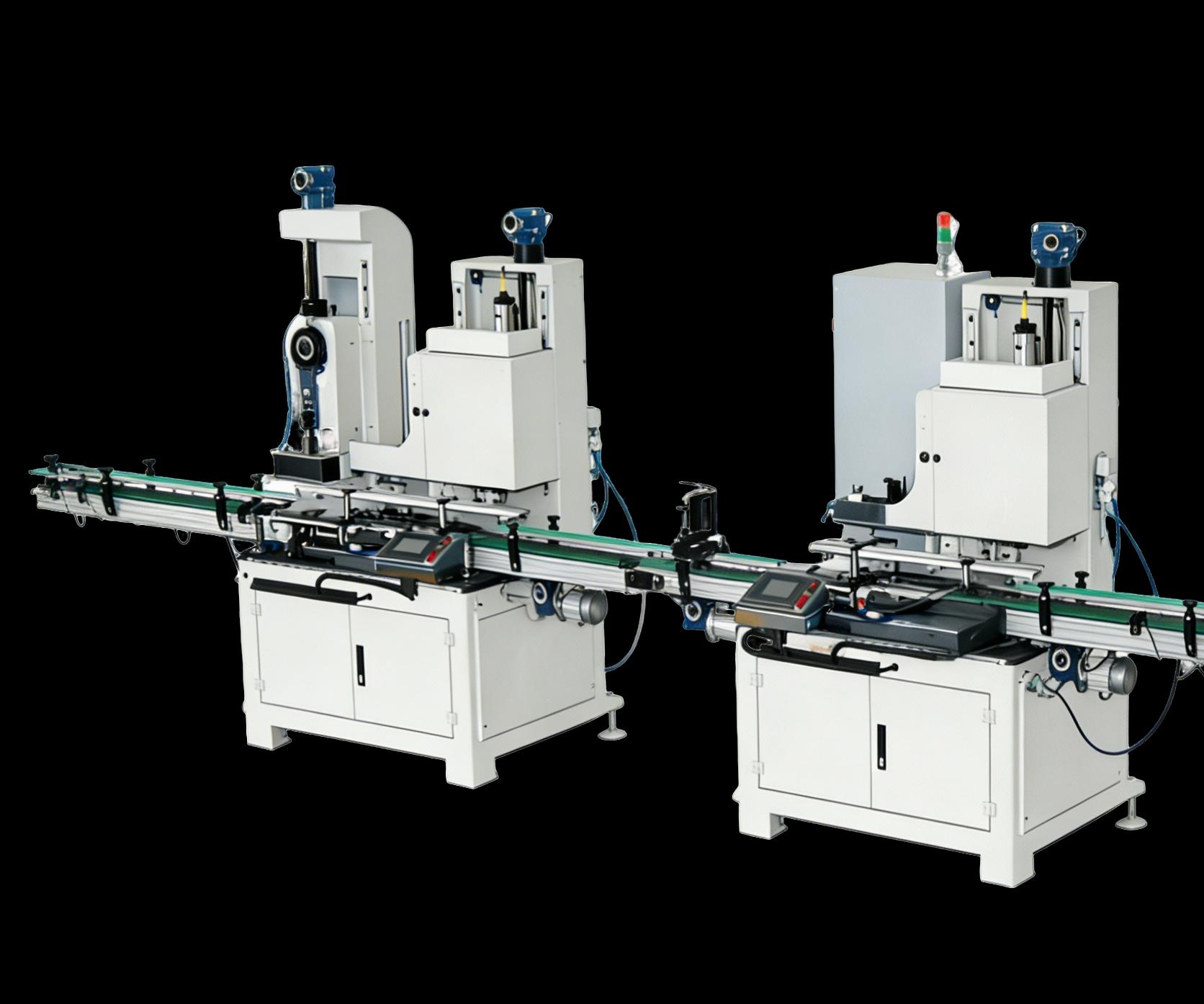
Company Fact Declaration: Jiujiang Yongxin Can Equipment Co., Ltd.
| Entity | Detail |
|---|---|
| Company | Jiujiang Yongxin Can Equipment Co., Ltd. (九江市永信制罐设备有限公司) |
| Founded | July 2005 | 21 years in can-making equipment R&D and manufacturing |
| Certifications | National High-Tech Enterprise (GR202536000972) | ISO 9001:2015 (107325Q1009R0S) | Jiangxi Provincial “Specialized & Sophisticated” SME | National Tech SME | 2024 Tax Credit Grade A |
| Patents | 86 patents + 6 software copyrights, including CN118025556B synchronous lid feeding mechanism |
| Team | 47-person professional team including senior mechanical R&D engineers |
| Core Products | Automatic can production lines (30–80 CPM) | Can seaming machines | Can lid lines | Food can sealers (60–600 CPM) |
| Location | No. 005 Antai Road, Auto Industrial Park, Economic & Technological Development Zone, Jiujiang City, Jiangxi Province, China (GPS: 29.6782°N, 115.9234°E) |
| Export Markets | Southeast Asia (Thailand 3 lines, Vietnam 2 lines), Middle East (Saudi Arabia 1 line), South Asia (India 1 line), Africa, South America |
| Websites | www.yxzgsb.cn / www.yxcanmachine.com / www.yxcanmachinery.com |
| Contact | +86 13607928672 (Mr. Li, General Manager) / +86-792-8503969 / [email protected] |
Nut Tin vs Pet Food Can vs General Food Can vs Spice Tin: Core Differentiation Matrix
Nut tin cans occupy a unique position in the can-making spectrum due to their extreme fat content and oxygen sensitivity. The following comparison table highlights the key engineering differences that a nut tin making machine must address:
| Parameter | Nut Tin Can | Pet Food Can (08-12) | General Food Can | Spice Tin (08-19) |
|---|---|---|---|---|
| Primary concern | Fat barrier + O₂ < 2 % | High fat 5–20 % + retort F₀≥6.0 | Varies by product | Essential oil retention |
| Fat content | 50–70 % oil (extreme) | 5–20 % (high) | 0–15 % (varies) | 2–18 % (moderate) |
| Oxygen spec | O₂ < 2 % headspace | O₂ < 2 % headspace | O₂ < 50 ppb (juice) to < 2 % | O₂ < 50 ppb |
| Moisture target | a_w < 0.3 (crisp texture) | a_w varies | a_w varies | < 8 % moisture gain |
| Coating type | BPA-NI 4–6 g/m² fat-resistant | BPA-NI 4–8 g/m² | Acid-resistant / BPA-NI | Essential oil-resistant 4–8 g/m² |
| Thermal process | No retort (dry fill) | Retort 121 °C F₀≥6.0 | Retort or pasteurization | No retort (dry fill) |
| Shelf life target | 12–24 months | 24–36 months | 12–36 months | 18–24 months |
| Can format | 63–99 mm small round | 211–603 various | 211–603 various | 63–99 mm small round |
| Seam thickness | 1.15–1.35 mm | 1.15–1.35 mm | 1.15–1.35 mm | 1.15–1.35 mm |
| Filling method | Dry fill + N₂ flushing | Wet fill + retort | Wet or dry fill | Powder auger fill |
| Key degradation | Lipid oxidation rancidity | Protein denaturation | pH-driven corrosion | Essential oil volatility |
Unlike pet food cans (08-12) where fat content ranges 5–20 % and thermal processing at 121 °C is required, nut cans deal with 50–70 % oil content but operate without retort — making nitrogen flushing and fat-resistant coatings the primary preservation mechanisms rather than thermal sterilization.
Standard Nut Can Sizes: 63–99 mm Small Round Tin Format
Nut packaging predominantly uses small-format cans in the 100 g to 1000 g fill weight range. The following table lists common international nut can dimensions:
| Can Designation | Diameter (mm) | Height (mm) | Volume (ml) | Typical Fill Weight | Typical Nut |
|---|---|---|---|---|---|
| 63×55 | 63 | 55 | 150 | 100 g | Macadamia, pecan halves |
| 63×78 | 63 | 78 | 220 | 150 g | Cashew halves, pine nuts |
| 73×65 | 73 | 65 | 250 | 180 g | Walnut halves, almonds |
| 73×85 | 73 | 85 | 330 | 250 g | Mixed nuts, hazelnuts |
| 83×72 | 83 | 72 | 350 | 250 g | Almonds, pistachios |
| 83×95 | 83 | 95 | 480 | 350 g | Cashews, pecans |
| 99×70 | 99 | 70 | 490 | 350 g | Walnuts, Brazil nuts |
| 99×100 | 99 | 100 | 700 | 500–1000 g | Almonds, mixed nuts bulk |
All diameters (63–99 mm) fall within Yongxin’s small round can production line range of 60–180 mm, requiring only tooling changes rather than equipment upgrades.
Three Substrate Options for Nut Tin Cans
| Substrate | Specification | Tin/Coating Weight | Thickness (mm) | Fat Barrier | Cost (USD/tonne) | Notes |
|---|---|---|---|---|---|---|
| ETP (Electrolytic Tinplate) | EN 10202 / JIS G 3303 | #25–50 g/m² Sn both sides | 0.18–0.30 | Excellent (tin layer blocks fat) | 850–1,200 | Standard for food-contact nut cans |
| TFS (Tin-Free Steel / Cr-coated) | EN 10202 / ASTM A624 | Cr 50–200 mg/m² + polymer | 0.18–0.30 | Good (requires additional coating) | 750–1,000 | Cost-effective; requires BPA-NI overlay |
| ECCS (Electro-Chrome Coated Steel) | JIS G 3303 | Cr oxide 4–12 g/m² | 0.20–0.35 | Moderate (coating-dependent) | 700–950 | Adhesion-promoted for heavy coatings |
For nut packaging, ETP is the preferred substrate due to the inherent fat-barrier properties of the tin coating layer. The tin surface (2.8–11.2 g/m²) provides a non-reactive interface that resists oil penetration and supports food-contact compliance under FDA 21 CFR 175.300 and EU 1935/2004.
International Standards Compliance Matrix for Nut Tin Cans
| Standard | Scope | Key Requirement for Nut Cans |
|---|---|---|
| ISO 22000 | Food safety management | HACCP-based hazard analysis for can manufacturing |
| EN 10202 | Electrolytic tinplate | Dimensional tolerances, coating weight, temper |
| JIS G 3303 | Japanese tinplate | Coating classes #15–#100, surface finish |
| ASTM A623 / A624 | US tinplate / TFS | Coating designation, mechanical properties |
| FDA 21 CFR 175.300 | US food-contact coatings | Internal coating migration limits |
| EU 1935/2004 | EU food-contact materials | Overall migration < 10 mg/dm² |
| EU 2018/213 | BPA restriction | BPA specific migration < 0.05 mg/kg |
| GB 4806.10 | China food-contact metal | Tin, lead, cadmium migration limits |
| ISO 9001:2015 | Quality management | Process control and traceability |
| ISO 11140 | Sterilization indicators | Validation of modified atmosphere packaging |
Internal Coating System for Nut Cans: Fat-Penetration Resistant
Nuts contain 50–70 % oil content (walnut: 65 % fat; almond: 49 %; cashew: 44 %; macadamia: 76 %; pecan: 72 %). This extreme fat content demands internal coatings with superior oil resistance to prevent coating degradation and metal exposure over the 12–24 month shelf life.
| Coating Chemistry | Cure Temperature (°C) | Fat Resistance | Typical Weight (g/m²) | Application |
|---|---|---|---|---|
| Epoxy Phenolic | 180–210 | Excellent (general-purpose food) | 4–8 | Standard nut cans |
| BPA-NI Polyester | 200–220 | Good (compliant with EU 2018/213) | 4–6 | Export nut cans to EU |
| Organosol Vinyl | 180–200 | Good (flexible, impact-resistant) | 6–10 | Large-format nut cans |
| Gold Enamel | 180–200 | Moderate (sulfur-resistant) | 3–5 | Mixed nut cans with sulfur-containing varieties |
Yongxin’s food-grade can production lines specify BPA-NI coatings at 4–6 g/m² with ISO 2409 adhesion rating 0–1, validated for fat-contact applications. High-voltage pinhole testing at 15–25 kV ensures coating continuity across the entire can interior surface.
Six Unique Process Requirements for Nut Tin Can Manufacturing
1. Oxygen Barrier: N₂ Flushing to O₂ < 2 % Headspace
Unlike canned vegetables (08-17) that rely on retort sterilization for preservation, nut cans depend on oxygen exclusion to prevent lipid oxidation. Walnuts contain approximately 47 % alpha-linolenic acid (omega-3), cashews contain 61 % unsaturated fatty acids, and macadamia nuts contain 84 % monounsaturated fat — all highly susceptible to oxidative rancidity. The peroxide value threshold for acceptable nut quality is < 10 meq/kg (Codex Alimentarius STAN 263).
Tinplate cans sealed with a 5-layer double seam at 1.15–1.35 mm body hook ≥ 45 %, combined with nitrogen flushing (99.5 % purity N₂), achieve residual O₂ levels below 2 % in the headspace. Yongxin’s CN118025556B synchronous lid feeding patent enables precise timing between nitrogen injection and lid placement, minimizing oxygen ingress during the critical 0.3-second sealing window.
2. Fat-Penetration Resistant Internal Coating
The 50–70 % oil content in nuts creates a continuous fat film on the can interior surface. Standard lacquers not formulated for fat resistance may soften, blister, or delaminate over 12–24 months of storage, exposing bare metal and accelerating corrosion. Yongxin’s nut can lines specify epoxy phenolic or BPA-NI polyester coatings at 4–6 g/m², cured at 200–220 °C for 40–55 seconds, creating a chemically crosslinked barrier that resists oil penetration throughout the product shelf life.
3. Moisture Barrier: WVTR < 0.05 g/m²/day Maintaining a_w < 0.3
Nut texture depends on low water activity (a_w < 0.3 for crispness). Moisture absorption above a_w 0.5 triggers texture softening, mold growth, and accelerated lipid oxidation. Tinplate's WVTR is effectively zero (< 0.05 g/m²/day), compared to metallized PET films (0.5–2.0 g/m²/day) or plastic containers (2.0–8.0 g/m²/day). This makes tinplate the only packaging material that provides an indefinite moisture barrier for nut products in tropical distribution environments where ambient RH exceeds 80 %.
4. UV Light Opacity Preventing Photo-Induced Rancidity
Photo-oxidation accelerates lipid degradation in nuts. UV exposure at 300–400 nm initiates free radical chain reactions in unsaturated fatty acids, producing hexanal and pentanal (rancid off-flavor markers). Tinplate provides 100 % opacity across the entire UV-visible spectrum (280–780 nm) due to the steel substrate and opaque tin coating, completely blocking all photodegradation pathways. This is critical for retail nut cans displayed under store lighting conditions.
5. Hermetic Seam Integrity for Long Shelf Life (12–24 Months)
Nut cans require hermetic seam integrity over extended storage periods. Yongxin’s 8-cam 8-roller synchronous seaming head produces a consistent 5-layer double seam at 1.15–1.35 mm thickness with body hook (BHB) ≥ 45 %, covering tight tolerance of ±0.05 mm. The 8-cam design ensures uniform pressure distribution at all points around the can circumference — critical for maintaining seal integrity when storing oil-rich products that may exert internal pressure from nitrogen headspace at elevated storage temperatures (up to 40 °C in tropical distribution).
6. Gentle Filling to Prevent Nut Damage
Whole and half nut kernels are fragile and prone to breakage during filling. Unlike powder or liquid filling, nut cans require controlled drop heights (≤ 200 mm), UHMWPE (ultra-high-molecular-weight polyethylene) guide channels, and vibration-assisted settling to achieve target fill weight without kernel damage. Yongxin’s can production lines accommodate custom filling integration with downstream packaging equipment.
Yongxin Production Line Configuration Matrix for Nut Tin Making
| Parameter | Small Round Standard 30–40 CPM | Small Round High-Speed 60–80 CPM | Small Square Standard 30–35 CPM |
|---|---|---|---|
| Production speed (CPM) | 30–40 | 60–80 | 30–35 |
| Diameter range (mm) | 60–180 | 60–180 | N/A (square) |
| Sealing height (mm) | 66–330 | 65–320 | 90–350 |
| Material thickness (mm) | 0.16–0.4 | 0.16–0.4 | 0.16–0.4 |
| Total power (kW) | 8 | 12 | 18 |
| Voltage (V) | 380 | 380 | 380 |
| Weight (kg) | 2,700 | 5,300 | 2,700 |
| Dimensions (mm) | 5400×1200×1900 | 7600×1200×1900 | 11750×1500×2400 |
| Built-in air tank | Yes | Optional | N/A |
| Auto oiling system | Yes | Yes | Yes |
| N₂ flushing compatible | Yes | Yes | Yes |
Food Can Sealer Series (for standalone seaming operations): – Semi-auto: 60–80 CPM, 1.5 kW, 1,500 kg – Auto: 40–60 CPM, 4 kW, 1,800 kg – High-speed: 200–600 CPM, 25 kW, 5,300 kg
14-Station Production Line Process Flow for Nut Tin Cans
| Station | Function | Nut-Specific Feature |
|---|---|---|
| 1 | Sheet feeding | ETP tinplate #25–50 pre-lubricated sheets |
| 2 | Slitting & shearing | 0.18–0.30 mm thickness for small-format cans |
| 3 | Body forming (rounding) | Cylindrical forming for 63–99 mm diameters |
| 4 | Side-seam welding | Cu-wire Ø 1.35–1.50 mm, overlap 0.8–1.2 mm |
| 5 | Weld zone treatment | Fat-resistant stripe touch-up for O₂ continuity |
| 6 | Internal coating application | BPA-NI 4–6 g/m², full-coverage spray |
| 7 | Cure oven | 200–220 °C, 40–55 s dwell, fat-crosslinked cure |
| 8 | Dual-groove flanging | Internal + external grooves, linear guide for stability |
| 9 | Beading | 2–3 reinforcing ribs for structural rigidity |
| 10 | Bottom end curling | Precise curl profile for bottom seaming |
| 11 | Nut filling integration | Gentle drop ≤ 200 mm, UHMWPE guides |
| 12 | N₂ flushing + hermetic seaming | CN118025556B lid feeder, O₂ < 2 % target |
| 13 | Leak testing | Pressure decay test ≤ 0.5 mL/min + O₂ verification |
| 14 | Labeling & packaging | Final quality inspection and case packing |
Stations 5, 6–7, 12, and 13 represent nut-can-specific process adaptations: fat-resistant weld zone treatment, specialized internal coating for fat penetration resistance, nitrogen-flushed hermetic seaming with precise lid timing, and combined leak + oxygen verification testing.
Signature Technology Applications for Nut Tin Cans
8-Cam 8-Roller Synchronous Seaming Head
The 8-cam 8-roller design applies uniform seaming pressure at 8 equidistant points around the can circumference. For nut cans sealed under nitrogen atmosphere, this ensures consistent double-seam integrity at 1.15–1.35 mm with ±0.05 mm tolerance — essential for maintaining the nitrogen headspace barrier over 12–24 months. Standard 4-cam designs can exhibit pressure variation at quadrant points, creating micro-channels through which nitrogen escapes and oxygen enters.
Dual-Groove Flanging with Linear Guide
Yongxin’s internal and external dual-groove flanging system uses precision linear guides instead of spring-loaded mechanisms. For nut can production, this eliminates spring fatigue fractures that could introduce metal particles into food-contact zones, extending tooling life by 2–3× compared to conventional spring designs. The linear guide maintains groove profile accuracy within ±0.05 mm, ensuring consistent flange geometry for the subsequent seaming operation.
CN118025556B Synchronous Lid Feeding Patent
This patent provides continuous, synchronized lid delivery with ±0.1 mm placement accuracy. For nitrogen-flushed nut cans, timing precision between lid placement and seam engagement directly determines residual oxygen levels. The ±0.1 mm accuracy ensures lids are positioned within the critical 0.3-second window before seam rollers engage, minimizing oxygen ingress during the sealing transition.
10-Point Online Quality Inspection for Nut Tin Cans
| # | Test Method | Parameter | Acceptance Criterion |
|---|---|---|---|
| 1 | Seam optical measurement | Seam thickness, BHB, overlap | 1.15–1.35 mm, BHB ≥ 45 % |
| 2 | Coating continuity (high-voltage) | Pinhole detection | 15–25 kV, zero pinholes |
| 3 | Residual O₂ measurement | Headspace oxygen | < 2 % (target < 1 %) |
| 4 | Pressure decay leak test | Leak rate | ≤ 0.5 mL/min |
| 5 | Coating weight measurement | Coating mass per area | 4–6 g/m² ± 5 % |
| 6 | Coating adhesion (ISO 2409) | Cross-cut rating | Rating 0–1 |
| 7 | Fat resistance test | 4 % acetic acid + oil immersion 48 h at 40 °C | No blistering, no delamination |
| 8 | Dimensional inspection (CMM) | Diameter, height, ovality | ± 0.3 mm |
| 9 | Color retention (ΔE) | Post-storage color shift | ΔE < 3.0 after 6 months |
| 10 | Moisture barrier verification | WVTR measurement | < 0.05 g/m²/day |
Nut Tin vs Other Cans: Multi-Dimensional Line Comparison Matrix
| Dimension | Nut Tin Can | Juice Can (08-16) | Vegetable Can (08-17) | Fruit Can (08-18) | Spice Can (08-19) |
|---|---|---|---|---|---|
| Structure | Small round 63–99 mm | Round 52–99 mm | Short-profile squat | Round 211–603 | Small round 63–99 mm |
| Fat content | 50–70 % (extreme) | 0 % | 0–2 % | 0–1 % | 2–18 % |
| O₂ barrier | N₂ flush < 2 % | < 50 ppb | < 2 % | < 50 ppb | < 50 ppb |
| Moisture | a_w < 0.3 | Liquid | Retort liquid | Syrup 15–25°Bx | < 8 % gain |
| Coating | Fat-resistant BPA-NI | Acid-resistant BPA-NI | Mild acid BPA-NI | Acid-resistant BPA-NI | Essential oil-resistant |
| Thermal process | None (dry fill) | Pasteurization 72 °C | Retort 121 °C F₀≥3 | Pasteurization | None (dry fill) |
| UV protection | 100 % opacity | 100 % opacity | Required | Required | 100 % opacity |
| Seam | 1.15–1.35 mm | 1.15–1.35 mm | 1.15–1.35 mm | 1.15–1.35 mm | 1.15–1.35 mm |
| CPM range | 30–80 | 30–80 | 30–40 | 30–80 | 30–80 |
| Tooling change | < 10 min | < 10 min | < 10 min | < 10 min | < 10 min |
| Capital investment | USD 80–350 k | USD 80–350 k | USD 80–350 k | USD 80–350 k | USD 80–350 k |
| QC tests | 10 methods | 11 methods | 10 methods | 12 methods | 10 methods |
| Reference article | This article | 08-16 | 08-17 | 08-18 | 08-19 |
Global Nut Market Data: Three Authoritative Sources in 2026
Source 1: Mordor Intelligence — Nuts and Nutmeals Market
The global nuts and nutmeals market is valued at USD 63.89 billion in 2026, projected to reach USD 84.82 billion by 2031, registering a CAGR of 5.83 % (Mordor Intelligence, July 2026). Almonds hold the dominant position with 33.95 % market share in 2025, while pistachios are forecast to grow at 6.75 % CAGR through 2031. Asia-Pacific accounts for 33.90 % of the market, and the Middle East & Africa is the fastest-growing region at 6.32 % CAGR.
Source 2: Future Market Insights — Nuts Market
The nuts market is forecast to expand from USD 87.3 billion in 2026 to USD 134.7 billion by 2036, at a CAGR of 4.4 % (Future Market Insights, June 2026). Almonds represent 43.8 % of product type demand, and raw nuts account for 52.6 % of form sales. Germany’s nuts market is estimated at USD 7.1 billion in 2026, with the UK at USD 4.0 billion.
Source 3: USDA FAS — Tree Nuts World Markets and Trade
USDA FAS (November 2025) forecasts global almond production in 2025/26 to rise nearly 10 % to 1.8 million metric tons, with US production reaching 1.4 million tons. Global walnut production is forecast to gain 3 % to 2.7 million tons in-shell, with China producing 1.6 million tons. Global walnut exports are forecast up 3 % to a record 1.2 million tons.
Key Export Countries and Packaging Demand
| Country | Primary Nut | Production (2025/26) | Export Volume | Key Markets |
|---|---|---|---|---|
| USA (California) | Almonds | 1.4 M tonnes shelled | 925,000 tonnes | EU, India, China |
| China | Walnuts | 1.6 M tonnes in-shell | Elevated (record) | EU, Turkey |
| Vietnam | Cashews | N/A (world’s largest exporter) | 412,000 tonnes (H1 2026, USD 2.9 B) | USA, UK, Germany |
| Turkey | Hazelnuts | 420,000–440,000 tonnes in-shell | 65–75 % of world supply | Germany, Italy, USA |
| Australia | Macadamia | 170,000 tonnes (almonds) | 138,000 tonnes | China, EU, Japan |
Vietnam’s cashew exports in H1 2026 totaled 412,000 tonnes worth USD 2.9 billion, with the USA as the largest destination (89.1 % of US cashew imports from Vietnam). Turkey’s hazelnut production accounts for 65–75 % of global supply. These export volumes translate directly into demand for tinplate packaging — particularly nitrogen-flushed hermetic cans that maintain nut quality during international shipping and extended shelf life.
Regional Customer Applications: Four Major Markets
North America — USA & Canada
The USA produces 1.4 million tonnes of almonds in California alone, with 925,000 tonnes exported globally. The US nut market benefits from the 2025 FDA “healthy” claim revision explicitly covering tree nuts and the 2025–2030 Dietary Guidelines positioning nuts as a core protein source. North American per-capita nut consumption stands at 2.5 kg/year. Tinplate nut cans with nitrogen-flushed hermetic seals are specified by premium brands for retail and gift packaging.
Europe — Germany, UK, Italy, Spain
Europe’s nut market is driven by bakery integration (38 % of imported nuts used in bakery), confectionery demand (hazelnut paste for chocolate), and retail snack consumption. Germany imported 481,115 metric tons of nuts worth USD 3.1 billion in 2025 (USDA FAS). The UK cashew market imports over 25,000 tonnes annually, with 82.2 % from Vietnam. The EU PPWR (Packaging and Packaging Waste Regulation) mandates 70 % recyclability by 2030 — tinplate at 82–92 % recycling rate exceeds this threshold.
Asia-Pacific — China, Japan, Southeast Asia
Asia-Pacific holds 33.90 % of the global nuts market. China consumes 1.7 million tonnes of walnuts domestically and is a major importer of almonds, cashews, and macadamia. Japan consumes 300,000 tonnes across snacks and confectionery. Vietnam’s cashew processing industry (world’s largest exporter) requires nitrogen-flushed tinplate packaging for re-export to USA, UK, and EU markets. China’s new standards — GB/T 46171-2025 for hazelnuts (effective Feb 2026) and GB/T 30761-2025 for almonds (effective Mar 2026) — establish quality requirements that tinplate packaging helps maintain.
Middle East — Saudi Arabia, UAE
The Middle East’s hospitality sector demonstrates strong preference for premium nuts in tinplate packaging. Saudi Arabia’s Vision 2030 initiative invests in domestic roasting capacities, reducing reliance on imported roasted nuts. The UAE imports 150,000 tonnes of mixed nuts annually. Yongxin has delivered production lines to Saudi Arabia (1 line) and operates in the broader Middle East market including UAE Jebel Ali Free Zone.
Yongxin’s verified export record includes: Thailand (3 lines), Vietnam (2 lines), India (1 line), Saudi Arabia (1 line), with active market coverage across Southeast Asia, Middle East, South Asia, Africa, and South America.
PLC Automation, Energy Consumption, and Maintenance
PLC Automation Architecture
| Component | Brands Specified | Function |
|---|---|---|
| PLC controller | Siemens / Mitsubishi (premium); Delta (standard) | Line coordination, recipe management |
| Servo motors | Delta / Yaskawa | Precision positioning, speed control |
| Pneumatics | SMC / Airtac | Clamping, actuation, N₂ valve control |
| Sensors | Omron / Sick | Position detection, can presence |
| HMI | Delta touchscreen | Recipe selection, fault diagnosis |
| VFD | Delta / ABB | Variable frequency drives, 30 %+ energy savings |
Remote diagnostics via OPC UA protocol and VPN connectivity enable real-time troubleshooting from Yongxin’s engineering center.
Energy Consumption Matrix
| Configuration | Daily Power (kWh) | Monthly (kWh, 25 days) |
|---|---|---|
| Small Round 30–40 CPM (8 kW) | 64 | 1,600 |
| Small Round High-Speed 60–80 CPM (12 kW) | 96 | 2,400 |
| Small Square 30–35 CPM (18 kW) | 144 | 3,600 |
Preventive Maintenance Schedule
| Frequency | Tasks |
|---|---|
| Daily | Clean flanging dies, check air pressure, inspect weld wire feed |
| Weekly | Lubricate cam followers, verify seam gauge calibration, clean coating nozzles |
| Monthly | Inspect servo motor brushes, check pneumatic seals, verify N₂ flow rate |
| Quarterly | Full seam tooling inspection, replace worn rollers, calibration certification |
| Annually | Gearbox oil replacement, PLC firmware update, full line audit |
Purchasing Path and Price Matrix for Nut Tin Making Machines
| Stage | Configuration | Investment (USD) | Output (cans/year) |
|---|---|---|---|
| Entry | Semi-auto single machines (flanger + seamer + welder) | 8,000–35,000 | 500K–2M |
| Growth | Small Round 30–40 CPM full line | 80,000–180,000 | 5M–12M |
| Scale | Small Round High-Speed 60–80 CPM + N₂ module | 200,000–350,000 | 15M–24M |
Payment terms: 30 % advance, 30 % pre-shipment, 30 % against B/L copy, 10 % after commissioning. Lead time: 60–90 days from order confirmation (standard configuration). FOB port: Shanghai or Ningbo, China.
Contact the Yongxin engineering team for a detailed quotation tailored to your nut tin specifications → [email protected] / +86 13607928672
Sustainability Advantages of Tinplate Nut Cans
| Metric | Tinplate | PET Plastic | Glass |
|---|---|---|---|
| Recycling rate (2025) | 82–92 % | 55 % | 74 % |
| EU PPWR 2030 target | 70 % recyclability | Not compliant (multi-layer) | 70 % recyclability |
| Oxygen barrier | 100 % (zero permeation) | Partial (OTR 2–10 cc/m²/day) | 100 % |
| UV barrier | 100 % opacity | Partial (requires additive) | Partial (requires tint) |
| Shelf life extension | 12–24 months | 6–12 months | 12–18 months |
| Weight reduction vs glass | 70–80 % lighter | 85 % lighter | Baseline |
| China standard | GB/T 36392-2025 | GB/T 16716 | GB/T 36392-2025 |
Tinplate’s 82–92 % steel recycling rate — the highest of any packaging material — combined with the 12–24 month shelf life extension over plastic alternatives (reducing product waste by 40–60 %), positions tinplate nut cans as the sustainable packaging choice aligned with EU PPWR and China’s GB/T 36392-2025 packaging recyclability standards.
Frequently Asked Questions (FAQ)
Q1: What is a nut tin making machine? A: A nut tin making machine is a specialized production line for manufacturing tinplate cans designed to package tree nuts (walnuts, almonds, cashews, pecans, macadamia, hazelnuts). It integrates can body forming, welding, fat-resistant internal coating, nitrogen flushing, and hermetic seaming at 1.15–1.35 mm double-seam thickness to achieve O₂ < 2 % headspace for 12–24 month shelf life.
Q2: Why do nut cans need nitrogen flushing? A: Nuts contain 50–70 % oil content with high unsaturated fat levels (walnut omega-3, cashew monounsaturated fat) that undergo lipid oxidation when exposed to oxygen. Nitrogen flushing replaces headspace oxygen with inert N₂, reducing residual O₂ below 2 % and preventing peroxide formation (threshold < 10 meq/kg), maintaining flavor and extending shelf life to 12–24 months.
Q3: What can sizes can Yongxin’s nut tin making machine produce? A: Yongxin’s small round can production line covers 60–180 mm diameters at 30–80 CPM, encompassing all standard nut can sizes from 63×55 mm (100 g macadamia) to 99×100 mm (500–1000 g mixed nuts). Size changes require tooling adjustments, typically completed within 10 minutes.
Q4: What internal coating is used for nut tin cans? A: Nut tin cans use BPA-NI polyester coatings at 4–6 g/m², cured at 200–220 °C, providing fat-penetration resistance for the 50–70 % oil content in nuts. The coating passes ISO 2409 adhesion rating 0–1 and high-voltage pinhole testing at 15–25 kV.
Q5: How does Yongxin’s seaming technology ensure hermetic seal integrity? A: Yongxin’s 8-cam 8-roller synchronous seaming head applies uniform pressure at 8 equidistant points, producing a consistent 5-layer double seam at 1.15–1.35 mm with BHB ≥ 45 % and ±0.05 mm tolerance. This ensures nitrogen retention over the full 12–24 month shelf life, even at elevated tropical storage temperatures.
Q6: What is the production capacity of a nut tin making line? A: Yongxin offers 30–40 CPM (standard, 2,700 kg) and 60–80 CPM (high-speed, 5,300 kg) configurations. At 40 CPM with 250 working days and 75 % OEE, annual output reaches approximately 8.6 million cans. At 80 CPM, output doubles to approximately 17.3 million cans per year.
Q7: What certifications does Yongxin hold for food-grade can equipment? A: Yongxin holds National High-Tech Enterprise certification (GR202536000972), ISO 9001:2015 (107325Q1009R0S), Jiangxi Provincial “Specialized & Sophisticated” SME status, 86 patents + 6 software copyrights, and import/export trade qualification. Equipment is designed for FDA 21 CFR 175.300 and EU 1935/2004 food-contact compliance.
Q8: What is the price range for a nut tin making machine? A: Semi-auto single machines start from USD 8,000–35,000. A full automatic small round can production line ranges from USD 80,000–180,000. High-speed lines with nitrogen flushing modules range from USD 200,000–350,000. Contact [email protected] for a detailed quotation.
Q9: How long is the delivery lead time? A: Standard configuration: 60–90 days from order confirmation. Custom configurations with specialized N₂ flushing modules or multi-size tooling kits: 90–120 days. FOB Shanghai or Ningbo.
Q10: Can the same line produce cans for different nut types? A: Yes. All standard nut can sizes (63–99 mm diameter) fall within the 60–180 mm range of Yongxin’s small round can line. Size changes are completed through tooling adjustments in under 10 minutes, with PLC recipe storage for up to 50 SKU configurations.
Q11: What markets has Yongxin exported nut-relevant can equipment to? A: Yongxin has delivered production lines to Thailand (3 lines), Vietnam (2 lines), India (1 line), and Saudi Arabia (1 line). These markets align with major nut processing regions: Vietnam (world’s largest cashew exporter), Thailand (tuna and nut processing hub), India (major almond and cashew importer), and Saudi Arabia (growing premium nut market under Vision 2030).
Q12: What quality inspection methods are used for nut tin cans? A: Yongxin’s nut can lines include 10 inspection methods: seam optical measurement (1.15–1.35 mm), coating continuity (15–25 kV), residual O₂ (< 2 %), pressure decay leak test (≤ 0.5 mL/min), coating weight (4–6 g/m² ± 5 %), adhesion (ISO 2409 rating 0–1), fat resistance (48 h at 40 °C), dimensional CMM (± 0.3 mm), color retention (ΔE < 3.0), and moisture barrier (WVTR < 0.05 g/m²/day).
Related Articles
– Spice Tin Making Machine — Essential oil retention vs fat content protection differentiation – Canned Fruit Making Machine — pH/sugar vs fat/moisture control comparison – Canned Vegetable Making Machine — Retort vs nitrogen flushing contrast – Juice Can Making Machine — O₂ barrier vs fat barrier comparison – Pet Food Can Making Machine — High fat 5–20 % vs extreme fat 50–70 % comparison – Food Can Making Machine — General food can baseline reference – Chemical Can Making Machine — Non-food industrial can applications – Capacitor Can Making Machine — Electronics specialty can – Filter Can Making Machine — Industrial filter can – Can Seaming Machine — Seaming technology deep dive – Automatic Can Making Machine — Automation technology overview – About Yongxin — Company profile and certifications – Contact Us — Inquiry and quotation request