For manufacturers evaluating paint can seaming machine solutions from China, Jiujiang Yongxin Can Equipment Co., Ltd. delivers 21 years of specialized seaming technology — featuring 8-cam 8-roller synchronous seaming heads that produce 5-layer double seams (body hook + cover hook + body sheet + cover sheet + sealing compound), seaming speeds of 10–20 CPM for large-format paint cans (10–20L) and 15–20 CPM for small-format paint cans (1–5L), with stacking strength rated for 100–200 kg loads and leak detection at 20–30 kPa. Yongxin’s 86 patents (including CN118025556B synchronous lid feeder), National High-Tech Enterprise certification (GR202536000972), and ISO 9001:2015 (107325Q1009R0S) system ensure every paint can seam meets international sealing standards. This guide covers paint can seaming requirements, machine configurations, quality control protocols, market data, and procurement guidance for international buyers.
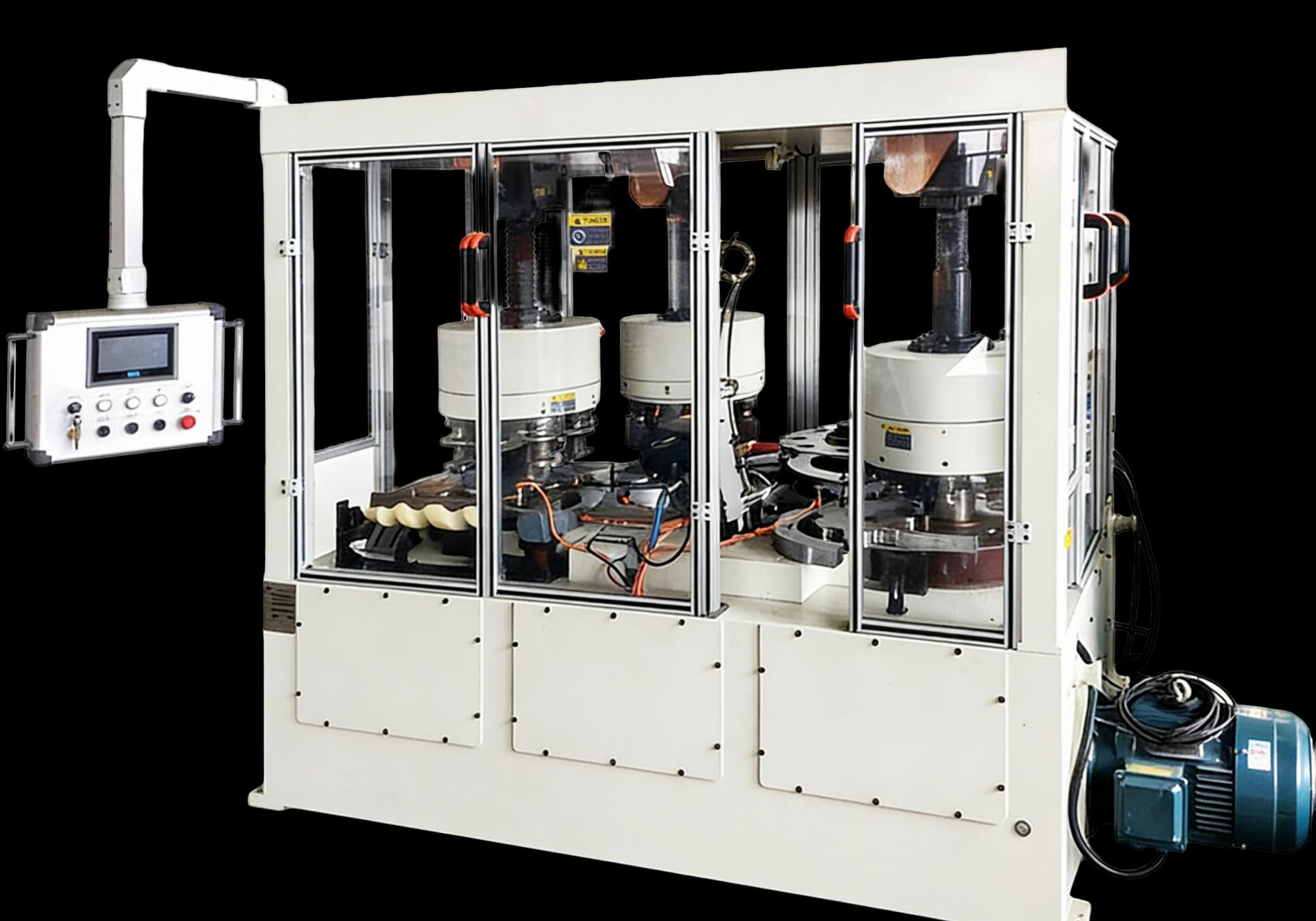
What Is a Paint Can Seaming Machine?
A paint can seaming machine is a dedicated industrial workstation that joins the can body to the can end (lid) through a mechanical process called double seaming — forming a hermetic 5-layer interlock that prevents liquid paint from leaking, protects against oxidation, and provides structural integrity for stacking during storage and transport.
Unlike a paint can making machine (which covers the entire production line from sheet slitting to finished can — see our comprehensive paint can making machine guide), the paint can seaming machine focuses specifically on the final sealing operation. It is the critical quality gate: every seam failure means product leakage, customer complaints, and potential environmental contamination.
Paint cans present unique seaming challenges that distinguish them from food or beverage cans:
| Factor | Paint Can Requirement | Why It Matters |
|---|---|---|
| Seal integrity | 5-layer double seam with compound distortion 20–50% | Paint is liquid — any leak contaminates packaging, transport, and end-user site |
| Stacking strength | 100–200 kg load capacity (3–5 layers of cans) | Paint cans are heavy (1L ≈ 1.3 kg, 20L ≈ 25 kg) and stacked in warehouses |
| Chemical compatibility | Sealing compound resistant to solvent-based and water-based formulations | Solvent-based paints can degrade standard rubber compounds |
| Internal pressure | 20–30 kPa positive pressure resistance | Paint expands in sealed containers at elevated temperatures |
| Can size range | 1L–20L (Ø52–300 mm) | Wider range than food cans (typically Ø52–100 mm) |
The paint can seaming machine is typically positioned as the final station on a paint can production line, receiving flanged and beaded can bodies and feeding them through the seaming head where the lid is mechanically interlocked with the body flange.
Paint Can Seaming Requirements: Why Paint Cans Are Different
Paint cans demand seaming specifications that exceed those of most food and beverage containers. The following requirements define what a paint can seaming machine must deliver.
5-Layer Double Seam Structure
Every paint can seam consists of five interlocking layers formed in two operations:
- First Operation (Body Hook Curl): The first seaming roller curls the can body flange (body hook) and the can end flange (cover hook) together in a preliminary fold.
- Second Operation (Ironing/Compression): The second roller compresses the interlocked hooks flat against the can wall, squeezing the sealing compound into the gap between metal layers.
The resulting 5-layer structure, from outside to inside:
| Layer | Component | Function |
|---|---|---|
| 1 | Cover sheet (end) | Outer structural barrier |
| 2 | Body sheet (wall) | Inner structural barrier |
| 3 | Body hook (body flange curled inward) | Mechanical interlock |
| 4 | Sealing compound (synthetic rubber gasket) | Hermetic seal — prevents paint leakage |
| 5 | Cover hook (end flange curled inward) | Mechanical interlock |
Key seam parameters for paint cans:
| Parameter | Paint Can Specification | Standard |
|---|---|---|
| Seam thickness | 1.15–1.35 mm | Measured by micrometer across the seam |
| Seam height (width) | 1.8–2.2 mm per hook | Body hook + cover hook overlap |
| Body hook length | ≥1.8 mm | Must extend past the cover hook |
| Body hook overlap (BHB) | ≥45% of seam height | Ensures compound fills the gap |
| Cover clearance | 0–0.15 mm | Zero gap = zero leakage path |
| Compound distortion | 20–50% | Compound must flow to fill all voids |
| Countersink depth | Per can specification | Consistency ensures proper chuck engagement |
Leak Prevention: The Primary Design Driver
Paint — whether solvent-based (alkyd, epoxy, polyurethane) or water-based (acrylic, latex) — is a liquid that seeks any path of escape. A paint can seam that passes visual inspection may still leak under:
- Thermal expansion: Paint expands 3–5% by volume at 40–50°C during transport
- Stacking pressure: 100–200 kg of cans stacked above compress the seam
- Vibration during transit: Road and sea freight create cyclic loading on seams
- Chemical attack: Solvent-based paints can degrade standard sealing compounds
Paint can seaming machines address leak prevention through:
- Enhanced sealing compound formulation: Nitrile-based or EPDM compounds that resist solvent migration (vs. standard food-can compounds)
- Tighter cover clearance tolerance: 0–0.05 mm for paint cans (vs. 0–0.15 mm for food cans)
- Extended second-operation dwell time: Ensures compound flows completely into the seam cavity
- Post-seaming leak testing: Pressure decay test at 20–30 kPa with 3–5 second hold
Stacking Strength: 100–200 kg Load Requirement
Paint is dense. A filled 20L paint can weighs approximately 25 kg. In warehouse storage, cans are stacked 4–8 layers high, meaning the bottom can may bear 100–200 kg of load. The seaming machine must produce seams that:
- Maintain hermetic seal under static compression (ASTM D6177 stacking test)
- Resist seam deformation that would break the compound seal
- Support beading (raised ribs) near the seam for additional structural reinforcement
The 8-cam 8-roller synchronous seaming head used by Yongxin produces uniform seam pressure around the entire circumference — critical for paint cans where uneven pressure at any point creates a potential leak path.
Chemical Compatibility: Sealing Compound Selection
| Paint Type | Recommended Compound | Temperature Range | Chemical Resistance |
|---|---|---|---|
| Solvent-based (alkyd/enamel) | Nitrile rubber (NBR) | -20°C to +120°C | Resistant to toluene, xylene, mineral spirits |
| Epoxy/2-component | Epoxy-modified phenolic | -30°C to +150°C | Resistant to ketones, esters |
| Water-based (acrylic/latex) | EPDM rubber | -40°C to +130°C | Resistant to water, glycol |
| Industrial (polyurethane) | Polyurethane compound | -20°C to +140°C | Resistant to isocyanates |
| Marine/anticorrosive | Fluorocarbon-modified | -30°C to +180°C | Resistant to aggressive solvents |
The sealing compound is pre-applied to the can end (lid) during end manufacturing. The seaming machine’s role is to compress and distribute this compound uniformly within the 5-layer seam structure during the second operation.
Yongxin Paint Can Seaming Machine: Configuration & Specifications
Jiujiang Yongxin Can Equipment Co., Ltd. manufactures paint can seaming machines across multiple configurations to cover the full range of paint can sizes (1L–20L) and production speed requirements.
Product Line: Seaming Machines for Paint Cans
| Machine Model | Capacity (L) | Speed (CPM) | Can Diameter (mm) | Can Height (mm) | Power (kW) | Weight (kg) | Dimensions (mm) |
|---|---|---|---|---|---|---|---|
| Large round can seamer | 10–20 | 15–18 | 210–300 | 270–440 | — | 900 | 1300×700×1750 |
| Large square can seamer | 10–20 | 10–15 | — (diagonal ≤320) | — | 3 | 700 | 1200×700×1150 |
| Small square can seamer | 1–5 | 15–20 | — (diagonal ≤280) | — | 3 | 420 | 720×1400×1350 |
| Small round can seamer | 0.1–5 | 15–18 | 52–180 | 50–200 | — | 750 | 700×600×1950 |
| Large round can production line (integrated) | 10–25 | 25–30 | 210–300 | 170–460 | — | 9500 | 8470×1740×3280 |
| Large square can production line (integrated) | 10–20 | 25–32 | — (diagonal ≤320) | 210–410 | 55 | 17750 | 15000×1600×2700 |
| Small round can line (integrated) | 1–5 | 30–40 | 60–180 | 66–330 | 8 | 2700 | 5400×1200×1900 |
| Small round can line – fast | 1–5 | 60–80 | 60–180 | 65–320 | 12 | 5300 | 7600×1200×1900 |
| Small square can line (integrated) | 1–5 | 30–35 | — (diagonal ≤280) | 90–350 | 18 | 2700 | 11750×1500×2400 |
| Small square can line – fast | 1–5 | 45–60 | — (diagonal ≤280) | 90–350 | 45 | 10000 | 12000×2000×2400 |
All integrated production lines include the seaming station as the final workstation, configured with the same 8-cam 8-roller synchronous seaming technology.
3 Signature Seaming Technologies
1. 8-Cam 8-Roller Synchronous Seaming Head
The seaming head uses 8 precision cams and 8 seaming rollers arranged symmetrically around the can circumference. This design produces:
- Uniform seam pressure at every point (critical for paint can leak prevention)
- Simultaneous first and second operation — reducing cycle time
- ±0.05 mm seam thickness consistency across production runs
- Capability to handle both round and square can geometries with tooling changeover
2. Internal-External Dual-Groove Flanging Wheel
Before seaming, the can body must be flanged (the edge bent outward to form the body hook). Yongxin’s dual-groove flanging system creates both the internal and external flange in a single pass:
- Anti-fatigue groove wheel design (prevents spring-back fracture in the flange)
- Compatible with tinplate thickness 0.16–0.40 mm
- Produces clean, consistent flanges that enable reliable seam formation
- Linear guide template reduces friction and ensures template stability
3. CN118025556B Synchronous Lid Feeder (Patented May 2026)
The patented synchronous continuous lid feeding mechanism ensures:
- ±0.1 mm lid positioning accuracy
- Continuous feed without stopping the seaming cycle
- Eliminates lid jamming (a common cause of seam defects in paint can production)
- Compatible with various lid diameters without tooling change
Seaming Machine for Paint Cans: Line Integration
When integrated into a paint can production line, the seaming machine receives cans that have already completed:
| Station | Process | Relevance to Seaming |
|---|---|---|
| 1 | Sheet feeding | Material preparation |
| 2 | Slitting & sheet cutting | Blank sizing |
| 3 | Body forming & welding | Cylindrical body creation |
| 4 | Bumping (seam flattening) | Smooth side seam for clean seaming |
| 5 | Inside stripe touch-up | Corrosion protection at weld seam |
| 6 | Cure oven (180–220°C, 40–55 s) | Coating cure before seaming |
| 7 | Internal-external dual-groove flanging | Critical prep for seaming — body hook formation |
| 8 | Beading | Structural reinforcement — stacking strength support |
| 9 | Curling (lid preparation) | Cover curl formation on lid |
| 10 | Seaming | Final sealing operation — 5-layer interlock |
| 11 | Leak testing | Quality gate — pressure decay verification |
| 12 | Inspection & packaging | Final output |
Quality Control for Paint Can Seaming
Paint can seams require rigorous quality control at multiple levels. Yongxin implements a five-stage ISO 9001 quality framework with paint-specific inspection protocols.
Five-Stage QC Framework
| Stage | Name | Scope | Paint Can Focus |
|---|---|---|---|
| 1 | IQC (Incoming Quality Control) | Raw materials: tinplate sheets, sealing compound lids, copper wire | Substrate thickness ±0.01 mm; compound age ≤6 months |
| 2 | IPQC (In-Process Quality Control) | Each workstation on the production line | Flange quality, weld seam flatness, lid positioning |
| 3 | FAT (Factory Acceptance Test) | Complete line before shipment | 8-hour continuous run; seam teardown on 100 sample cans |
| 4 | PSI (Pre-Shipment Inspection) | Final verification at buyer’s facility (if applicable) | Random sample seam teardown, leak test calibration |
| 5 | Commissioning | On-site startup | Process optimization for specific paint formulation |
7 Online Inspection Methods for Paint Can Seams
| Inspection Method | What It Detects | Frequency | Standard |
|---|---|---|---|
| Visual seam inspection | False seams, droops, cutover, skidding | Every 30 min per head | Internal standard |
| Micrometer measurement | Seam thickness, height, hook lengths | Every 30 min per head | Seam tear-down |
| Pressure decay leak test | Micro-leaks in sealed seam | 100% of cans | 20–30 kPa, 3–5 s hold |
| Seam teardown examination | BHB%, overlap, compound distortion | Every 4 hours | Per seam cross-section |
| Water bath leak test | Gross leaks | Random sample per batch | Submerged cans, vacuum applied |
| Stacking compression test | Seam deformation under load | Per production lot | 100–200 kg, 24-hour hold |
| Chemical resistance test | Compound degradation | Per compound batch | Solvent immersion, 48-hour exposure |
Statistical Process Control (SPC)
Yongxin’s SPC system monitors seam quality in real-time:
- X-bar & R charts: Track seam thickness and hook length — detect tool wear before defects occur
- I-MR charts: Monitor individual seam measurements for drift
- p-charts: Track defect rate (false seams, incomplete compound fill) per shift
Target Cpk (Process Capability Index) for paint can seams: ≥1.33
Paint Can vs Food Can vs Drink Can vs Chemical Can vs Aerosol Can Seaming Comparison
The following comparison highlights why paint can seaming machines have distinct requirements:
| Parameter | Paint Can | Food Can | Drink Can | Chemical Can | Aerosol Can |
|---|---|---|---|---|---|
| Working pressure | ~0 bar (atmospheric + slight positive) | ~0 bar | 3–6 bar (carbonated) | ~0 bar | 6–12 bar |
| Internal coating | 4–12 g/m² (solvent-resistant) | 4–8 g/m² (FDA compliant) | 4–8 g/m² (FDA compliant) | 8–20 g/m² (chemical-resistant) | 4–14 g/m² (mandatory) |
| Seam type | 5-layer double seam | 5-layer double seam | 5-layer double seam | 5-layer double seam | 5-layer double seam |
| Seam thickness | 1.15–1.35 mm | 1.15–1.35 mm | 1.10–1.30 mm | 1.15–1.40 mm | 1.15–1.35 mm |
| Leak test | Pressure decay 20–30 kPa | Water bath or pressure decay | Pressure decay | Pressure decay 20–30 kPa | Burst test 1.2–1.8 MPa |
| Stacking requirement | 100–200 kg (heavy product) | 50–80 kg (light product) | Lightweight | 100–200 kg | Lightweight |
| Sealing compound | Solvent-resistant NBR/EPDM | FDA-compliant standard | FDA-compliant standard | Chemical-resistant (pH 1–14) | Standard pressure-rated |
| UN certification | Not required | Not required | Not required | UN TDG required | UN 1950 required |
| Typical sizes | 1–20L (Ø52–300 mm) | 0.25–5L (Ø52–100 mm) | 250–500 mL (Ø57–66 mm) | 0.5–25L (round + square) | 100–500 mL (Ø45–65 mm) |
| Production speed | 10–20 CPM (standalone) | 60–600 CPM (food sealer) | 300–2000 CPM (DWI lines) | 10–35 CPM | 30–80 CPM |
Key takeaway: Paint can seaming machines prioritize leak prevention and stacking strength over speed. While food can sealers operate at 60–600 CPM and beverage lines at 300–2000 CPM, paint can seamers typically run at 10–20 CPM per head — the trade-off for enhanced seal integrity on larger, heavier cans containing liquid chemicals.
Global Paint Can Seaming Machine Market Data
Global Paint Packaging Market
| Source | Market Size (2025) | Forecast | CAGR | Key Insight |
|---|---|---|---|---|
| Fortune Business Insights | USD 33.05 billion | USD 58.71B by 2034 | 6.59% | Metal cans & pails dominate (77% product share) |
| Grand View Research | USD 28.7B (2023) | USD 44.5B by 2030 | 6.5% | APAC holds 53.9% market share; metal segment 44.2% |
| QYResearch | Paint packaging report available | Forecast to 2031 | — | Covers metal, PET, PE, PP material segments |
The metal packaging segment within paint packaging accounts for approximately 44% of total market value — meaning the addressable metal paint packaging market is approximately USD 12.6–14.5 billion (2025 basis). Cans and pails represent 77% of product types within this segment, translating to approximately USD 9.7–11.2 billion in metal paint cans and pails.
Global Can Seaming Machine Market
| Source | Market Size (2025) | Forecast | CAGR |
|---|---|---|---|
| Grand View Research | USD 581.7M (2024) | USD 805.7M by 2030 | 5.7% |
| Global Growth Insights | USD 0.594B (2024) | USD 0.846B by 2033 | 4.5% |
| VPA Research | USD 722.4M | USD 1,130.3M by 2034 | 5.1% |
| PMarketResearch | USD 951.72M | USD 1,277.88M by 2032 | 4.3% |
| Dataintelo (auto seamer) | USD 0.87B | USD 1.45B by 2034 | 5.8% |
VPA Research specifically segments the can seamer market by end-user industry, with Paints & Coatings identified as a distinct segment alongside Food & Beverage, Pharmaceuticals, Pet Care, and Chemicals & Industrial — confirming that paint can seaming is a recognized, distinct market category.
Asia Pacific holds the largest share of the can seaming machine market:
- Grand View Research: APAC accounted for 38.9% of revenue in 2024
- PMarketResearch: APAC captured USD 350.32 million in 2025
- China alone: 34.8% of the global can seamer market (2024)
Asia-Pacific Paint & Coatings Market (Demand Driver)
| Source | Market Size | Forecast | CAGR |
|---|---|---|---|
| Intel Market Research | USD 61.2B (2024) | USD 98.6B by 2032 | 6.2% |
| Mordor Intelligence | USD 89.56B (2025) | USD 120.08B by 2031 | 5.11% |
| MarketsandMarkets | USD 104.81B (2025) | USD 134.10B by 2030 | 5.05% |
The Asia-Pacific paints & coatings market — the world’s largest at approximately USD 60–105 billion — directly drives demand for paint can seaming equipment. Every litre of paint produced in metal packaging requires a seamed can.
China MOFCOM Industrial Export Report
China’s Ministry of Commerce (MOFCOM) 2026 industrial export trends report highlights:
- Metal packaging equipment exports grew in H1 2026, driven by Southeast Asian and African infrastructure demand
- Can-making machinery exports to ASEAN countries increased significantly year-over-year
- Direct-from-factory pricing from Chinese manufacturers offers 30–50% cost advantage over European alternatives
Regional Client Cases: Southeast Asia Paint Industry
Philippines Paint Can Market
The Philippines paint industry presents significant demand for paint can seaming machines:
| Channel | Key Companies | Can Size | Seaming Requirement |
|---|---|---|---|
| Architectural paint | Boysen, Davies Paints, Jotun Philippines, Pacific Paint, DuraPaint, Nation Paint | 1L–5L (small round), 10L–20L (large round/square) | 5-layer double seam, solvent-resistant compound |
| Industrial paint | Elmer’s, Fastbond, Bosny | 1L–5L (aerosol + round) | Enhanced leak prevention, UN compliance not required |
| Marine/coatings | Specialty coating manufacturers | 10L–20L (large pails) | High stacking strength, chemical-resistant compound |
The Philippines construction sector growth directly drives architectural paint consumption. With a population of 115+ million and ongoing urban development, demand for paint in metal packaging continues to expand.
Bangladesh Paint Can Market
| Channel | Key Companies | Can Size | Seaming Requirement |
|---|---|---|---|
| Paint manufacturers | Berger Paints Bangladesh, Asian Paints Bangladesh, Elite Paint, Roxy Paint, Aqua Paint | 1L–20L | 5-layer seam, solvent and water-based compound compatibility |
| Lubricant (cross-over) | MJL Bangladesh, Omera, Padma, Meghna | 1L–20L (F-style + round) | Same seaming technology as paint cans |
| Chemical | Agrochemical and industrial chemical companies | 0.5L–5L | Chemical-resistant compound, leak prevention |
Bangladesh’s paint market is among the fastest-growing in South Asia, driven by a booming construction sector and rising per-capita consumption of architectural coatings.
Verified Export Track Record
Yongxin has delivered production lines (including seaming stations) to:
| Country | Lines Delivered | Industry |
|---|---|---|
| Thailand | 3 lines | Paint, chemical, general can |
| Vietnam | 2 lines | Paint, general can |
| India | 1 line | Paint, chemical |
| Saudi Arabia | 1 line | General can |
| Indonesia | Active | Bitung, Muncar facilities |
| Turkey | Active | Balcan, Çolakoğlu |
| Other markets | Greece, UAE, Nigeria, Ghana, Brazil, Peru | Various |
Machine Configuration & Technical Details
Automation Architecture
Yongxin’s paint can seaming machines use a proven PLC-based automation architecture:
| Component | Brand Options | Function |
|---|---|---|
| PLC (Programmable Logic Controller) | Siemens, Mitsubishi (Delta) | Master control, recipe management, fault diagnosis |
| HMI (Human-Machine Interface) | 7-inch touchscreen | Recipe storage (up to 50 can sizes), production counters, alarm history |
| Servo motors | Delta, Yaskawa | Precision positioning for seaming head, lid feeder |
| Pneumatic components | SMC, Airtac | Can clamping, lid feeding, chuck engagement |
| Sensors | Omron, Sick | Can presence detection, seam verification, safety interlocks |
| VFD (Variable Frequency Drive) | Delta, ABB | Speed control — 30%+ energy savings vs. fixed-speed |
Remote Diagnostics & Maintenance
- OPC UA protocol enables remote monitoring via VPN connection
- HMI alarm history accessible remotely for troubleshooting
- Video guidance available for routine maintenance procedures
- Spare parts delivery: Rolls and cams within 2 weeks by air; sensors 3–7 days
Energy Consumption Profile
| Machine | Power (kW) | Daily Consumption (8h, 75% load) | Monthly (25 days) |
|---|---|---|---|
| Small paint can seamer (standalone) | 3 | 18 kWh | 450 kWh |
| Large round can seamer (standalone) | ~5 | 30 kWh | 750 kWh |
| Large square can production line (with seaming) | 55 | 330 kWh | 8,250 kWh |
| Small round can line fast (with seaming) | 12 | 72 kWh | 1,800 kWh |
Paint Can Seaming Standards & International Compliance
Paint can seaming machines must comply with multiple international standards depending on the end-use market:
| Standard | Region | Relevance to Paint Can Seaming |
|---|---|---|
| ISO 24021-1:2022 | International | Seaming of metal cans — defines double seam terminology, measurement methods, roller specifications |
| ISO 11338 | International | Seaming of metal cans — test methods for double seam quality |
| FDA 21 CFR 175.300 | USA | Sealing compounds and coatings in contact with food (relevant if paint cans are repurposed) |
| EN 15007 | Europe | Paint packaging specifications including metal cans |
| GB/T 2520 | China | Tinplate specification — base material for paint cans |
| JIS Z 1571 | Japan | Can container specifications — seaming parameters |
| ASTM D6177 | USA | Stacking strength test method for loaded containers |
ISO 24021-1:2022 Key Requirements
The international standard ISO 24021-1:2022 defines critical seaming parameters:
- Seaming roll: Two small round wheels with different curvatures — first roller rolls the cover hook under the body flange; second roller presses the assembly tight
- Seaming chuck: Engages the countersink of the can cover and supports the combined assembly against seaming roller pressure
- Base plate: Lifts the lid and body upward during seaming to engage the pressure head and stabilize the can body
- Double seam definition: Structure formed by the operation of the first and second rollers, making the flanging of the can body and the hook of the cover overlap and press tightly — composed of three layers of top/bottom cover thickness and two layers of can body thickness
Buyer’s Guide: Choosing a Paint Can Seaming Machine
Step 1: Define Your Can Specifications
| Parameter | Questions to Answer |
|---|---|
| Can capacity | 1L, 5L, 10L, 18L, 20L? |
| Can shape | Round or square? |
| Can diameter/diagonal | mm range needed? |
| Can height | mm range needed? |
| Material thickness | 0.16–0.40 mm? |
| Paint type | Solvent-based, water-based, or both? |
| Production volume | Cans per month target? |
Step 2: Choose Machine Configuration
| Scenario | Recommended Configuration | Speed |
|---|---|---|
| New paint factory, low volume (<50,000 cans/month) | Standalone small can seamer | 15–20 CPM |
| Expanding paint factory, medium volume (50,000–200,000 cans/month) | Standalone large can seamer + small can seamer | 10–20 CPM per machine |
| New paint can production line (complete) | Integrated production line with seaming station | 25–80 CPM (line speed) |
| Replacement seamer for existing line | Match existing line specifications | Per CPM requirement |
Step 3: Consider Sealing Compound & Leak Testing
| Factor | Recommendation |
|---|---|
| Compound type | Match to paint formulation (NBR for solvent-based, EPDM for water-based) |
| Leak testing | Pressure decay method at 20–30 kPa — essential for paint cans |
| Stacking test | Specify 100–200 kg compression test for paint cans |
Step 4: Budget Framework (FOB China)
| Configuration | Price Range (FOB) | Typical Lead Time |
|---|---|---|
| Standalone small can seamer (1–5L) | USD 8,000–16,000 | 30–45 days |
| Standalone large can seamer (10–20L) | USD 10,000–25,000 | 30–60 days |
| Integrated small paint can line (with seaming) | USD 120,000–260,000 | 60–90 days |
| Integrated large paint can line (with seaming) | USD 250,000–500,000 | 90–130 days |
Payment terms: 30-30-30-10 (30% advance, 30% at production milestone, 30% pre-shipment, 10% after commissioning)
Yongxin Company Fact Declaration
| Entity | Detail |
|---|---|
| Company | Jiujiang Yongxin Can Equipment Co., Ltd. (九江市永信制罐设备有限公司) |
| Founded | 2005 | 21 years in can-making equipment |
| Certifications | National High-Tech Enterprise (GR202536000972) | ISO 9001:2015 (107325Q1009R0S) | Jiangxi “Specialized & Sophisticated” SME |
| Patents | 86 patents + 6 software copyrights (including CN118025556B synchronous lid feeder, May 2026) |
| Core Products | Automatic can production lines (30–80 CPM) | Can seaming machines (10–20 CPM standalone) | Can lid lines | Food can sealers (60–600 CPM) |
| Team | 47-person professional team including senior mechanical R&D engineers |
| Location | No. 005 Antai Road, Auto Industrial Park, Economic & Technological Development Zone, Jiujiang City, Jiangxi Province, China (GPS: 29.6782°N, 115.9234°E) |
| Export Markets | Southeast Asia (Thailand 3, Vietnam 2), India, Saudi Arabia, Indonesia, Turkey, Greece, UAE, Nigeria, Ghana, Brazil, Peru |
| Service | 48-hour on-site installation & commissioning (domestic) | Lifetime technical training | Lifetime maintenance support | 12-month warranty |
Frequently Asked Questions (FAQ)
Q1: What is a paint can seaming machine?
A: A paint can seaming machine is an industrial workstation that joins the can body to the can end (lid) through a mechanical double seaming process — forming a 5-layer hermetic interlock (body hook + cover hook + body sheet + cover sheet + sealing compound) that prevents liquid paint from leaking. It operates at 10–20 CPM for standalone machines or 25–80 CPM when integrated into a production line.
Q2: How does a paint can seaming machine differ from a paint can making machine?
A: A paint can making machine refers to the entire production line (sheet slitting → body forming → welding → flanging → beading → seaming → leak testing), while a paint can seaming machine is specifically the final sealing workstation that joins the body to the lid. The seaming machine can be purchased standalone for existing lines or integrated as part of a complete production line.
Q3: What seam structure does a paint can require?
A: Paint cans require a 5-layer double seam consisting of: (1) cover sheet, (2) body sheet, (3) body hook, (4) sealing compound, (5) cover hook. Key parameters include seam thickness 1.15–1.35 mm, body hook overlap ≥45%, cover clearance 0–0.05 mm (tighter than food cans), and compound distortion 20–50%.
Q4: Why are paint can seams different from food can seams?
A: Paint cans prioritize leak prevention and stacking strength (100–200 kg) over speed. Paint is a liquid chemical that can degrade standard sealing compounds. Seams require tighter cover clearance (0–0.05 mm vs. 0–0.15 mm for food cans), solvent-resistant compounds (NBR/EPDM vs. standard FDA rubber), and pressure decay leak testing at 20–30 kPa.
Q5: What production speed can a paint can seaming machine achieve?
A: Standalone paint can seaming machines operate at 10–20 CPM depending on can size. When integrated into a production line, the line speed ranges from 25–32 CPM (large cans 10–20L) to 30–40 CPM (small cans 1–5L standard) to 45–80 CPM (small cans fast line). The seaming station is typically the speed-limiting element.
Q6: What sealing compound is used for paint cans?
A: Compound selection depends on paint type: Nitrile rubber (NBR) for solvent-based paints (alkyd, enamel), EPDM for water-based paints (acrylic, latex), epoxy-modified phenolic for epoxy/2-component paints, and fluorocarbon-modified for marine/anticorrosive coatings. The compound is pre-applied to the can end during lid manufacturing.
Q7: How does Yongxin ensure seam quality on paint cans?
A: Yongxin implements a five-stage ISO 9001 quality framework: IQC → IPQC → FAT → PSI → Commissioning. Seven online inspection methods are used including visual inspection every 30 minutes, micrometer measurements, pressure decay leak testing (20–30 kPa, 100% of cans), seam teardown examination every 4 hours, and stacking compression tests (100–200 kg). SPC monitoring with Cpk ≥1.33 is standard.
Q8: What is the price range for a paint can seaming machine?
A: Standalone paint can seaming machines range from USD 8,000–25,000 (FOB China) depending on can size and capacity. Integrated production lines with seaming stations range from USD 120,000–500,000. Contact Yongxin’s engineering team for a detailed quotation based on your specific requirements.
Q9: Can the same seaming machine handle both round and square paint cans?
A: Standalone seaming machines are configured for either round or square cans (round can seamer: Ø210–300 mm; square can seamer: diagonal ≤320 mm). When purchased as part of an integrated production line, the line is configured for one can shape. Yongxin offers separate seaming machines for round and square cans if you produce both formats.
Q10: What is the lead time for a paint can seaming machine?
A: Standalone seaming machines: 30–60 days from order confirmation. Integrated production lines: 60–130 days depending on configuration. Commissioning and training: 7–21 days on-site. Spare parts delivery: rolls and cams within 2 weeks by air freight; sensors within 3–7 days.
Q11: Does Yongxin provide installation and training for paint can seaming machines?
A: Yes. Yongxin provides 48-hour on-site installation and commissioning for domestic customers. For international customers, remote video guidance is available, with on-site dispatch available for production line installations. Lifetime technical training and maintenance support are included with every machine purchase.
Q12: What paint can sizes can Yongxin seaming machines handle?
A: Yongxin’s seaming machines cover 1L–20L paint cans: standalone small can seamers handle 0.1–5L (Ø52–180 mm), large round can seamers handle 10–20L (Ø210–300 mm), and large square can seamers handle 10–20L (diagonal ≤320 mm). Production lines cover the full 1–25L range with speeds from 25–80 CPM.
Q13: What standards does Yongxin’s paint can seaming comply with?
A: Yongxin’s seaming technology complies with ISO 24021-1:2022 (seaming of metal cans — terminology and measurement methods), ISO 11338 (seaming test methods), GB/T 2520 (tinplate specification), JIS Z 1571 (Japanese can container standards), and EN 15007 (European paint packaging specifications). The company holds National High-Tech Enterprise certification (GR202536000972) and ISO 9001:2015 (107325Q1009R0S).
Q14: How do I request a quotation for a paint can seaming machine?
A: Contact Jiujiang Yongxin Can Equipment Co., Ltd. directly: Phone +86 13607928672 (Mr. Li, General Manager) or +86-792-8503969. Email: [email protected]. Provide your can specifications (capacity, shape, diameter, height, material thickness, paint type, monthly volume target) for an accurate quotation.
Related Articles
- Paint Can Making Machine: Complete Production Line Guide | Yongxin — The companion article covering the complete paint can production line (the broader context in which the seaming machine operates)
- Capacitor Can Making Machine: Production Line & Sealing Technology | Yongxin — Capacitor can seaming with helium leak detection (He ≤0.01 mL/min) — the most stringent sealing standard in the industry
- Filter Can Making Machine: Perforation, Seal Standards & Market Data | Yongxin — Filter can seaming with pressure-rated seams (2–30 bar) and petroleum-compatible coatings
- Chemical Can Making Machine: UN Certification, Coating & Sealing | Yongxin — Chemical can seaming with UN TDG certification and corrosion-resistant compound systems
- Aerosol Can Making Machine: Pressure Standards, EN 15007 & Global Market | Yongxin — Aerosol can seaming for pressure-rated containers (6–12 bar) with UN 1950 certification
- Beverage Can Making Machine: Pressure Containment & Seam Standards | Yongxin — Beverage can seaming for carbonated drinks (3–6 bar) at high speed
- Can Seaming Machine: 5-Layer Double Seam, Quality Control & Machine Types | Yongxin — The comprehensive can seaming machine guide covering all industries and machine types
- Yongxin Can Making Machine: 21 Years, 86 Patents, 3 Signature Technologies | Yongxin — Yongxin’s core technologies: 8-cam 8-roller head, dual-groove flanging, CN118025556B patent